Investigative journalism mechanics and 4 proven rules that unmask corrupt power
Behind every society-shaking exposé lies an uncompromising, methodical discipline that turns whispered tips into bulletproof evidence. Discover the foundational mechanics that hold power accountable when silence is the default.

Mastering investigative journalism mechanics requires peeling back the romanticized Hollywood fantasy of late-night parking garage whispers and stepping into the grueling reality of data ledgers. True accountability reporting is never an impulsive act of heroic bravado. It is an exacting craft built on forensic accounting, structural analysis, cross-jurisdictional verification, and an unwavering commitment to evidentiary rigor. Every historic exposé that ever shook an empire stood on meticulous process rather than lucky breaks.
Daily beat reporters perform a critical civic service by capturing the immediate flash fire of breaking events, yet their timeline is measured in minutes and hours. The investigative desk operates on an entirely different rhythm. Where standard news reporting records what authorities claim happened, investigative methodologies dismantle the institutional machinery to discover what actually transpired behind closed doors. This fundamental distinction defines the entire architecture of watchdog reporting.
The invisible architecture behind every groundbreaking investigation
An investigation does not begin with prose; it begins with an evidentiary hypothesis. Before a single sentence is typed for publication, seasoned reporters build structured databases designed to test whether an apparent anomaly is an isolated mistake or evidence of systemic malfeasance. This phase demands emotional detachment. If an investigator falls in love with their theory before assembling the balance sheet, cognitive bias inevitably corrupts the finding.
The foundational framework relies on creating exhaustive timelines and relationship matrices. By plotting corporate filings, regulatory disclosures, contract award dates, and internal personnel movements along a chronological axis, patterns emerge that no single document could reveal on its own. A procurement officer signs a major tender on Tuesday; an offshore shell company registered to their sibling purchases prime commercial real estate on Thursday. Neither record constitutes wrongdoing in isolation, but their intersection creates an evidentiary bridge.
This structured discipline prevents premature disclosure. When targets realize they are under scrutiny, paper shredders spin up, servers are wiped, and institutional narratives solidify into ironclad deflections. Maintaining operational silence during the mapping phase is the only way to safeguard the trail of documentary evidence before the subjects recognize the shape of the inquiry.
Why institutional secrecy defaults to defensive silence
Large institutions, whether state agencies, multinational conglomerates, or philanthropic foundations, possess an innate preservation reflex. When operational failure or illicit behavior occurs, administrative systems rarely default to transparent contrition. Instead, institutional antibodies deploy public relations barriers, non-disclosure agreements, and bureaucratic friction designed to exhaust outside inquiries.
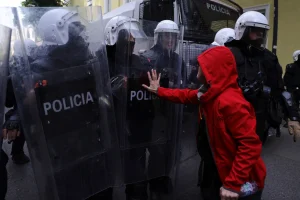
Understanding core investigative journalism mechanics means recognizing that whistleblowers rarely emerge unprompted from a vacuum. Potential sources exist within environments of severe professional and legal jeopardy. When public outrage spills into the streets over systemic graft, as documented in our breakdown of how the Albania Protests Escalate With 4 Major Turning Points Pushing Tirana Past The Boiling Point, reporters cannot simply broadcast the noise; they must trace the institutional breakdown that triggered the upheaval. Without documentary proof, public passion dissolves into partisan shouting matches.
The reporter must anticipate the defensive perimeter long before making direct contact. This involves analyzing public audit exemptions, understanding FOIA denial templates, and mapping the legal jurisdictions under which the target operates. By the time an investigator knocks on a door, they should already understand the target’s operating manual better than the middle manager answering the questions.
The 4 proven rules that turn scattered tips into bulletproof exposés
When dissecting robust investigative journalism mechanics, successful operations rely on rigorous discipline rather than impulsive scoops. Reputable newsrooms do not gamble their survival on hunches. They deploy structured frameworks that transform chaotic fragments into irrefutable records.
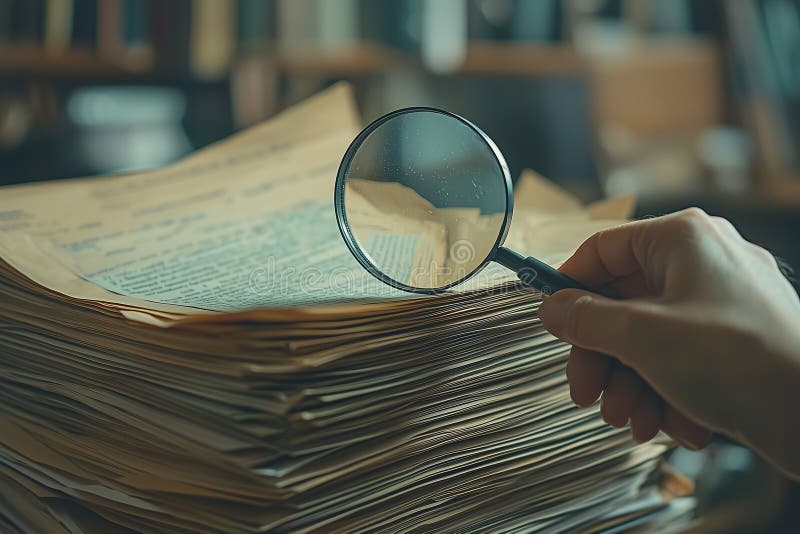
Follow the bureaucratic paper trail before talking to a single human
Human beings lie, misremember dates, panic under pressure, and harbor personal grudges that poison legal standing. Paper, by contrast, possesses no ego. A stamped manifest, an internal ledger entry, an encrypted audit log, or an unredacted land title provides an objective baseline that cannot be cross-examined out of existence.
According to long-standing Investigative Reporters and Editors standards for document-driven reporting, grounding an inquiry in public records before interviewing witnesses establishes an informational asymmetry. When a reporter enters an interview holding the invoices, the subject loses the ability to fabricate a benign alternative timeline. The interview shifts from an open-ended fishing expedition into a structured validation of established physical evidence.
Anchor every confidential allegation to independent secondary corroboration
Within rigorous investigative journalism mechanics, an anonymous tip serves only as a roadmap toward non-human evidence. No ethical news organization publishes an accusation of corruption based entirely on the word of a single unnamed source, regardless of their perceived credibility or rank.
Corroboration requires strict independence. If Source A and Source B both assert that a cabinet minister accepted illicit payments, the reporter must establish that Source B did not simply hear the rumor from Source A at an office lunch. True secondary corroboration means pairing the testimony of Source A with a physical bank statement, a travel itinerary, or an encrypted correspondence chain that exists entirely outside the conversational circle of the original claimant.
Construct ironclad defensive dossiers before delivering the confrontation memo
The hallmark of serious investigative reporting is the confrontation memo, often referred to as the formal request for comment. Far from a polite inquiry, this document represents a comprehensive, multi-page indictment that outlines every substantive finding, date, transaction, and allegation intended for print.
Delivering a precise confrontation memo serves two indispensable purposes. Legally, it obliterates future claims that the subject was ambushed or denied due process. Operationally, it forces the subject to reveal their defensive strategy before publication. If the target possesses an exculpatory document that disproves a central claim, the reporter wants to see it while the draft can still be corrected, not in a defamation complaint filed thirty days after the headline goes live.
Map institutional incentives rather than hunting individual villains
Sensational tabloids fixate on personal villainy, framing corruption as the moral failing of a single degenerate actor. Serious investigative methodology examines the structural incentives that made the corruption profitable, sustainable, and inevitable. Bad actors do not survive without enabling systems.
When an investigator maps the flow of capital, regulatory capture, and compliance loopholes, the story transcends petty gossip to deliver genuine public accountability. Removing a corrupt bureaucrat while leaving the broken procurement mechanism intact accomplishes nothing; the system will simply produce another identical actor within six months. True watchdog work diagnoses the disease within the machinery itself.
Surviving legal weaponization and structural retaliation
Exposing entrenched power invariably triggers aggressive pushback. Defamation lawsuits, retaliatory audits, targeted surveillance, and coordinated character assassination are standard defensive tactics employed by well-funded targets. Surviving this onslaught requires newsrooms to operate with operational security protocols comparable to intelligence units.
Defensive legal preparation represents one of the most perilous frontiers where investigative journalism mechanics either hold firm or shatter under pressure. Pre-publication libel vetting is an adversarial process where media attorneys stress-test every noun, verb, and modifying adjective. A lawyer representing the publication does not act as a cheerleader; they assume the persona of the target’s most aggressive litigator, demanding proof for every assertion down to the comma.
Beyond courtroom threats, digital hygiene has become an existential operational requirement. Handling sensitive digital leaks requires air-gapped computers disconnected from physical and wireless networks, cryptographic key management, and rigorous scrubbing of document metadata. A single forgotten printer tracking code or camera EXIF tag can land a heroic institutional whistleblower in a prison cell for decades.
The enduring civic necessity of adversarial accountability
In an ecosystem inundated with algorithmic content generation, rapid-response partisan commentary, and shallow press releases disguised as analysis, rigorous investigative reporting is more fragile—and more vital—than at any point in modern history. It is an inherently expensive, slow, and legally hazardous enterprise that generates few commercial rewards.
Yet without this forensic discipline, accountability becomes a hollow platitude. Powerful institutions naturally expand their authority and conceal their errors when left unexamined. Ultimately, enduring investigative journalism mechanics function as a mirror that forces democratic societies to confront their own institutional rot. The craft does not exist to comfort readers or confirm comfortable tribal biases. It exists to verify the difficult truths that power works hardest to keep hidden.