Sprint acceleration mechanics and 4 proven rules that create explosive speed
True sprint speed is not determined by how fast your feet cycle through thin air, but by the horizontal violence of each footstrike. Unpack the physics of ground reaction force and the four mechanical principles that turn raw effort into pure linear velocity.

Mastering sprint acceleration mechanics transforms raw human effort into blistering velocity on the track, court, or open turf. Most athletes imagine that running fast is simply a matter of moving their legs as quickly as humanly possible. They envision churning feet, frantic breathing, and sheer muscular will. Yet high-speed cameras and laboratory force plates tell an entirely different story. Speed is not born from how fast you cycle your feet through empty air. It is decided by the violence, direction, and mechanical precision with which you slam your feet into the earth.
The physics of horizontal ground reaction force
When a sprinter bursts from the blocks or an athlete accelerates from a dead stop, inertia mounts immediate resistance. To overcome stationary mass, the human body must produce staggering amounts of force in tiny fractions of a second. But sheer strength is useless without directional intent.
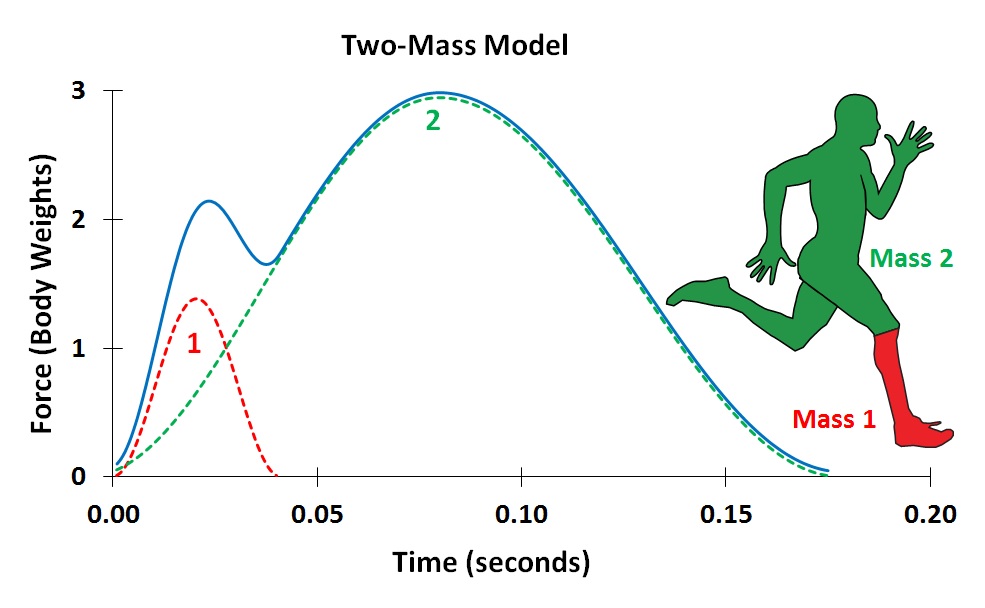
When sports scientists examine sprint acceleration mechanics in elite sprinters, one variable consistently separates world-class performers from the rest of the field: horizontal force application. Elite sprinters do not merely push down into the track to stay upright. They project their center of mass horizontally by directing ground reaction forces rearward. According to landmark ground force application research published by the American Physiological Society, elite runners produce immense mass-specific force during contact times lasting less than a tenth of a second.
During the initial acceleration phase, ground contact times are longer, typically lasting between 0.15 and 0.20 seconds. This fleeting window gives the neuromuscular system its only chance to project force backward into the track. Think of acceleration as launching a human missile from a diagonal ramp. Every ground contact is a controlled collision. If your foot strikes the ground ahead of your center of mass, you create a braking force that actively slows you down. If your foot strikes directly beneath or slightly behind your hips with an aggressive backward trajectory, every ounce of muscular tension propels you forward.
Why traditional speed training fails the acceleration test
Walk into almost any athletic facility, and you will witness the same technical breakdown. An athlete takes off into a sprint and immediately stands tall after their second stride. Their head jerks upward, their hips drop, and their feet reach forward in a desperate attempt to pull the ground underneath them.
Most amateur athletes butcher sprint acceleration mechanics by rushing upright because their visual sensory system mistakes vertical height for speed. When you stand up tall, the horizon rushes past your eyes with sudden clarity, tricking your nervous system into feeling fast. In reality, standing upright prematurely kills acceleration dead in its tracks. The moment your torso becomes vertical, your ground reaction force shifts from forward propulsion to vertical maintenance. You are no longer driving the earth backward; you are merely bouncing up and down to keep from falling.
Another common error is the circular clawing reflex. When athletes try to run fast without technical coaching, they instinctively mimic the rotary cycling action of maximum velocity sprinting. They fling their feet forward, pawing at the turf like a frightened horse. This over-striding generates massive braking impulses, spiking hamstring strain and destroying linear momentum. Acceleration is not a circle; it is an uncompromising piston.
Four proven rules that build devastating acceleration
Escaping the friction of inertia and unlocking the true potential of sprint acceleration mechanics requires technical discipline. By stripping away extraneous motion and treating each stride as an engineered impulse, you can rebuild your acceleration from the ground up.
Drive the ground with a pure piston action
Forget the circular heel recovery that defines top-end sprint velocity. During initial acceleration, circular movement is wasted time and wasted kinetic energy. The leg must operate as a mechanical piston.
As your trail leg leaves the ground, the thigh punches forward aggressively while the heel stays tucked tight beneath the hip. This compact recovery shortens the swing leg’s rotational radius, allowing the hip flexors to fire the limb forward with blistering speed. Once the knee reaches full flexion ahead of the pelvis, the foot does not float forward in a searching reach. Instead, the glutes and hamstrings violently reverse the limb, driving the foot down and back into the turf.
The foot must strike the surface directly beneath or slightly behind the hips in a stiff, claw-free punch. Think of driving a sledgehammer downward through a concrete slab. The stiffer the ankle joint upon impact, the less elastic energy leaks into the ground.
Maintain rigid positive shin angles
Your shin angle dictates your force trajectory. If your shin is perpendicular to the ground when your foot lands, your force goes straight down into the dirt, propelling you straight up into the air. If you want to travel forward, your shin must point forward.
A positive shin angle occurs when the knee is positioned noticeably ahead of the ankle at the moment of ground contact. During the first five to seven steps of a maximal sprint, maintaining this acute forward angle ensures that the resultant ground reaction force drives through the center of mass at a low, penetrating trajectory, which lies at the very heart of sprint acceleration mechanics.
Maintaining positive shin angles requires immense ankle stiffness and profound dorsiflexion. You must cock the toes upward toward the shin before contact, locking the Achilles tendon into a loaded spring. When that coiled spring impacts the earth, it returns energy without collapsing at the joint.
Split and rip the arms to balance rotary torque
The upper body does not simply hang along for the ride during a sprint. The arms act as critical counterbalance levers that nullify the tremendous rotary torque generated by the churning hips. Without aggressive arm action, your hips and torso would rotate wildly from side to side, leaking force across transverse planes rather than channeling it down the track.
During acceleration, adopt an exaggerated split and rip pattern. As one arm punches upward toward eye level with an open hand or relaxed fist, the opposite elbow violently hammers rearward past the ribcage. This rearward elbow drive activates the latissimus dorsi, creating a stiff diagonal sling connecting through the thoracolumbar fascia to the contralateral gluteus maximus. This anatomical cross-body sling stabilizes the spine and turns your entire torso into a rigid transmission system capable of transferring raw torque into linear thrust.
Stack force through a progressive rise
The transition from deep acceleration into upright top speed is not an abrupt shift. It is a seamless, rhythmic unfolding of the posture over twenty to thirty meters.
Think of an airplane ascending smoothly from a runway rather than an elevator shooting straight up an elevator shaft. With each consecutive footstrike, your body angle should rise by approximately three to five degrees. This gradual rise happens naturally as forward momentum builds and ground contact times decrease. Your eyes should remain focused on the ground several meters ahead of your feet rather than gazing at the horizon. By keeping your chin neutral and your ribcage locked down over your pelvis, you preserve the forward lean without bending at the waist. Bending at the waist breaks the kinetic chain; true acceleration lean comes from the ankles, keeping the head, spine, and rear driving leg in one straight, unbroken line of power.
Translating track mechanics to field and court sports
Track sprinters possess the luxury of starting from stationary blocks with clear, predetermined lanes and zero defenders trying to tackle them. Field and court athletes face chaotic, reactive environments where acceleration must happen from varied stances, decelerations, and lateral cuts. Yet the foundational physics remain identical.
Whether you are an outfielder chasing a fly ball, a soccer winger breaking past a defensive line, or a point guard driving into the lane, the first three steps decide the contest. In team sports, athletes rarely reach absolute maximum velocity because playing boundaries and defensive schemes limit continuous linear runs to fifteen or twenty yards. Acceleration is king. Much like how tennis serve biomechanics and 4 proven rules that unlock devastating power rely on the kinetic chain flowing from the ground up, field acceleration demands an unbroken transfer of ground force through an aligned torso.
Coaches drill sprint acceleration mechanics using heavy sled pushes and wall drills to train these exact motor patterns under load. Sled pushes, in particular, serve as an unbeatable teaching tool because the resistance forces the athlete into an artificial lean, instantly revealing whether their shins are angled correctly and whether their feet are driving like pistons or reaching forward into passive braking traps.
The path to real-world speed mastery
Building elite acceleration requires abandoning the seductive illusion that moving your limbs with frantic frenzy translates to speed. Speed is a byproduct of violent, disciplined patience. It requires trusting the diagonal angle, holding your posture against the crushing pull of gravity, and driving the ground away with ruthless mechanical efficiency.
When you step onto the track or grass tomorrow, leave the high-knee dancing and frantic shuffling behind. Lock your ankles, set your positive shin angles, punch your knees forward, and drive the earth rearward with every ounce of physical power you command. Ultimately, dialling in your sprint acceleration mechanics turns explosive intent into unstoppable linear motion.