Cast iron seasoning mechanics and 4 proven rules that prevent ruined sticky pans
Cast iron pans fail because cooks treat seasoning like grease rather than polymer chemistry. Discover the exact physical mechanics that build an indestructible, glass-smooth natural nonstick surface.
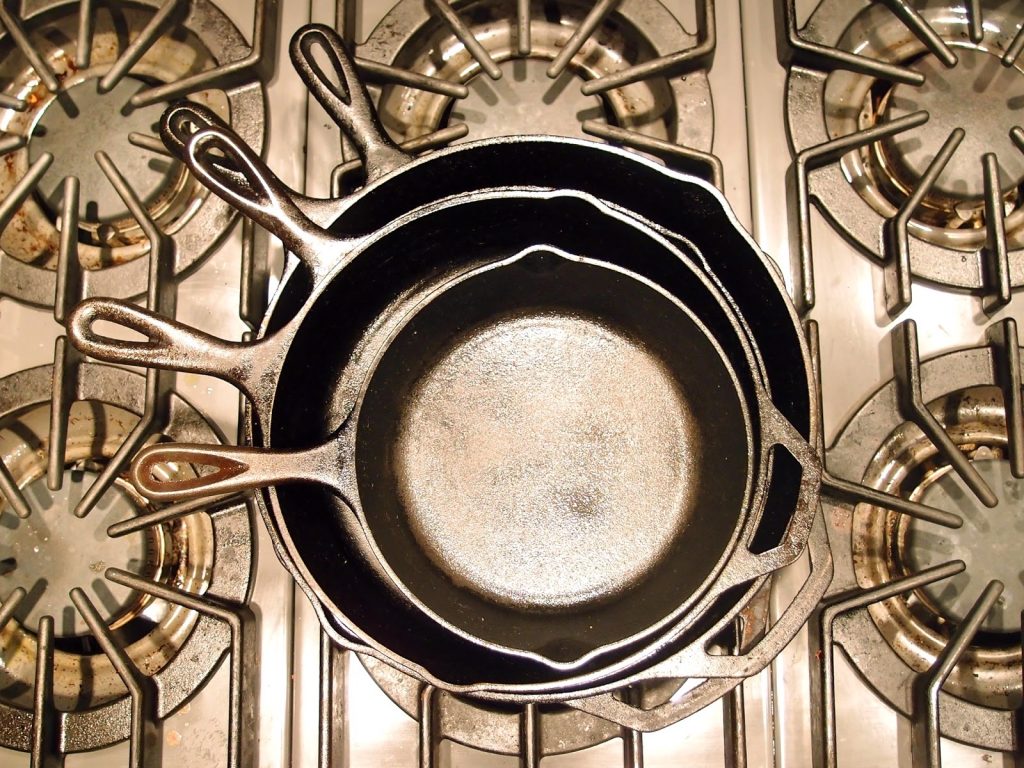
Mastering cast iron seasoning mechanics allows any cook to transform a porous, abrasive slab of raw metal into a slick culinary workhorse. For generations, home cooks have approached the black skillet with a blend of reverence and superstition, treating its maintenance like an arcane ritual passed down from great-grandmothers who swore by unwashed bacon grease. The reality has nothing to do with culinary folklore and everything to do with materials science. Seasoning is not a layer of cooked-on lard, nor is it an oily barrier that rubs off on a paper towel. It is a specialized, rock-hard plastic synthesized directly on your stove.
When iron meets fat under specific thermal conditions, the liquid undergoes a profound molecular transformation. Fats break apart, bond with oxygen, and knit together into an insoluble, cross-linked solid. Understanding this transformation liberates cooks from the endless cycle of sticky brown gunk, flaking black specks, and rusted cook surfaces. Once you grasp the molecular forces at play, you can maintain flawless cookware indefinitely without relying on luck or old wives' tales.
The chemical reality behind polymerized oil layers
At the atomic level, cast iron seasoning mechanics rely on high-temperature lipid auto-oxidation and free-radical cross-linking. Raw cast iron appears smooth from across the kitchen, but beneath a microscope, its topography resembles an arid mountain range. Molten gray iron cools into a matrix studded with micro-fractures, voids, and crystalline graphite flakes. If you pour water or oil onto this untreated surface, liquids pool in deep microscopic valleys, trapping moisture and triggering oxidation within minutes.
Seasoning cures this structural vulnerability by creating an organometallic bond. When you heat an unsaturated fat across the threshold of thermal breakdown, the triglycerides disassociate into volatile compounds, glycerol, and free fatty acids. Carbon-carbon double bonds in the fatty acid chains break open under the influence of atmospheric oxygen, creating hungry, short-lived free radicals. These radicals immediately seek stability by bonding with adjacent fatty acid chains.
This cascading reaction transforms microscopic droplets of liquid oil into a three-dimensional polymer network. Rather than sloshing across the pan as separate molecules, the fat chains cross-link into a dense, continuous sheet of bio-plastic that conforms perfectly to every fissure in the metal substrate. The iron itself acts as a heterogeneous catalyst, accelerating the polymerization process along the boundary layer. The resulting hard glaze is physically locked into the metal pores, creating an impenetrable barrier against oxygen, moisture, and corrosive food compounds.
Why conventional seasoning advice produces flaking black sludge
Most failed skillets suffer from well-intentioned advice inherited from the pre-industrial kitchen. When cooks misunderstand cast iron seasoning mechanics, they inevitably mistake charred food debris and sticky unpolymerized fat for a genuine protective patina. The most common offender is the thick pour of grease. Many enthusiasts slather their pans with a generous tablespoon of shortening or bacon fat, bake the pan for an hour, and pull out a blotchy, tacky skillet that smells rancid within days.
Liquid fat expands as it heats. When applied in heavy pools, the top layer of oil oxidizes and skins over before the underlying liquid can cross-link against the metal. Trapped beneath this semi-solid skin, the lower layer of oil never receives sufficient oxygen to complete its polymer chain reaction. It remains viscous, gummy, and structurally incompetent. The moment high heat hits the pan during searing, this trapped under-cured fat boils, bubbling upward and breaking the weak bond with the iron.
Another fatal flaw is relying on saturated animal fats for initial seasoning. Saturated fats, such as lard, tallow, and butter, lack the open chemical bonds required for rapid cross-linking. Their carbon chains are already fully saturated with hydrogen atoms, meaning they cannot easily form the free-radical bridges that generate a tough, resilient polymer matrix. Under extreme heat, saturated fats skip polymerization almost entirely and transition straight to thermal carbonization. The result is brittle, loose charcoal that flakes directly into your morning eggs rather than a smooth, resilient glaze.
Four proven rules that build a permanent slick surface
Executing proper cast iron seasoning mechanics requires strict adherence to physical chemistry rather than nostalgic kitchen folklore. If you want a nonstick surface capable of sliding fried eggs without hesitation, every step of the seasoning cycle must favor maximum polymer density and minimum layer thickness.
Choose drying oils with high iodine numbers
Every fat possesses an iodine value, a chemical metric reflecting the number of reactive double bonds present along its fatty acid chains. The higher the iodine number, the more unsaturated the fat, and the more readily it will polymerize into a continuous solid matrix. Traditional cooking fats like butter, coconut oil, and bacon fat feature low iodine numbers below sixty, making them abysmal film formers.
To build a bulletproof foundation, select oils classified as drying or semi-drying oils with iodine numbers above one hundred and twenty. Refined grapeseed oil, sunflower oil, and cold-pressed organic flaxseed oil represent the upper echelon of polymer-forming lipids. Flaxseed oil, packed with alpha-linolenic acid, forms the absolute hardest polymer available in culinary science. However, its rigidity means it must be applied in microscopic increments; otherwise, thermal expansion can cause brittle micro-cracking. For everyday resilience, refined grapeseed oil strikes the ideal balance between high cross-linking speed and thermal elasticity.
Wipe the skillet until it appears completely dry
The single most crucial physical habit in skillet maintenance is aggressive wiping. When preparing a pan for seasoning, apply a small pool of oil, spread it thoroughly across every square millimeter of iron, and then spend the next three minutes attempting to buff it completely away with clean cotton rags or blue shop towels.
This microscopic discipline sits at the very heart of cast iron seasoning mechanics, turning what would otherwise be a tacky mess into a glass-smooth floor. Capillary action naturally retains an ultra-thin film of oil, measured in mere microns, clinging directly to the crags of the iron. You cannot wipe this film off without chemical solvents. What you have removed is all excess bulk that would otherwise puddle, form surface tension beads, and curdle into sticky brown spots during heating. The pan should look completely matte and dry to the eye before it ever enters a hot oven.
Exceed the smoke point to trigger thermal polymerization
Many cooks fear smoke, pulling their pans from heat the moment a wisp of vapor rises from the metal. This premature cooling locks the oil in an incomplete state of decomposition. Polymerization does not occur efficiently at room temperature or low simmering heats; it demands energy to shatter chemical bonds and forge new cross-linked networks.
To achieve full conversion, you must heat the oiled iron twenty-five to fifty degrees Fahrenheit above the smoke point of your chosen oil. When using grapeseed oil with a smoke point around four hundred and twenty degrees, run your oven at four hundred and seventy-five degrees Fahrenheit for a full hour. This intense thermal environment forces the oil past initial evaporation into radical cross-linking, boiling away loose volatile compounds and baking the carbon matrix directly onto the crystalline substrate. As documented in this American Chemical Society analysis on cast iron polymerization, this controlled thermal breakdown is the precise catalyst required to yield an inert, insoluble patina.
Build multiple microscopic films rather than one heavy layer
A single seasoning cycle produces a film only fractions of a millimeter thick. While chemically sound, one layer remains vulnerable to physical abrasion from spatulas and microscopic scouring from ingredients. Durability requires lamination, stacking three to five ultra-thin coats sequentially.
Each baked layer serves as a pristine substrate for the next, filling remaining micro-crevices and building structural depth. Much like calibrating asset horizons against interest rate fluctuations in Bond Duration Mechanics and 4 Proven Rules That Prevent Devastating Portfolio Losses, managing cast iron requires balancing incremental layers against high thermal stresses so the overall structure never fractures under abrupt operational pressure. When five microscopic coats are thermally bonded atop one another, they create an elastic, monolithic shield capable of withstanding metal utensils and extreme searing temperatures without delamination.
The everyday maintenance physics of acid and dish soap
Understanding everyday cast iron seasoning mechanics also demystifies the infamous debate surrounding dish soap and cast iron pans. The persistent myth that soap destroys cast iron dates back to when household cleansers contained high concentrations of unreacted lye (sodium hydroxide). Lye is an aggressive alkaline base capable of saponifying organic fats and stripping ester bonds within polymerized coatings.
Modern commercial dish soaps are not lye-based soaps; they are gentle synthetic liquid detergents composed of surfactants like sodium laureth sulfate. These molecules possess a hydrophilic head and a lipophilic tail designed to surround free-floating, unpolymerized oil droplets and suspend them in rinse water. Because cured seasoning is a cross-linked covalent polymer chemically bonded to the metal, mild dish detergent cannot dissolve it. Washing your pan with warm water, mild soap, and a non-abrasive sponge removes rancid food oils without harming the hardened foundation beneath.
Acid, however, is a genuine chemical adversary. Vinegar, citrus juices, wine, and tomato reductions possess high concentrations of free hydrogen ions. If food acidity drops below a pH of roughly 4.5, these ions migrate through microscopic imperfections in the polymer layer, attacking the raw iron beneath. When acid contacts iron, it leaches metal ions into your sauce, leaving an astringent metallic aftertaste while dissolving the anchor points holding the polymer in place. While a pan with five or six mature polymer coats can easily handle a quick pan deglazing with white wine, slow-simmering a rich marinara for hours remains the job of enameled Dutch ovens or stainless steel.
Diagnosing surface failure and peeling carbon buildup
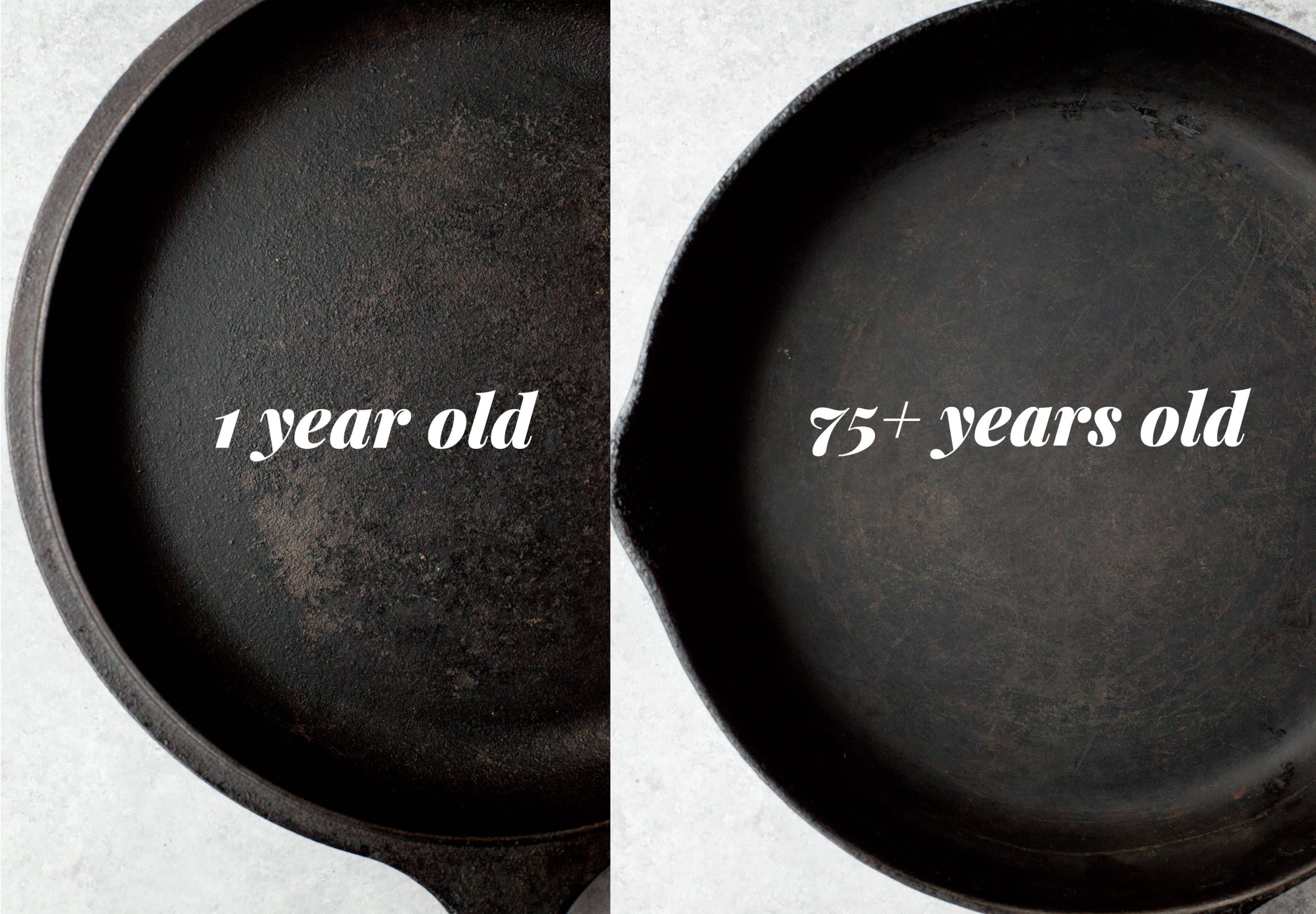
Cooks frequently panic when a black skillet begins flaking small, jagged chips into their food, assuming their precious seasoning is disintegrating. In nearly every case, the flaking substance is not the polymer seasoning at all, but rather baked-on carbon crust. When meats and marinades burn onto a pan, sugars and proteins denature into brittle carbon residue. If you fail to scrub this residue away because you fear damaging the pan, the carbon crust grows thicker over time, trapping steam beneath it during cooking and eventually shearing off in ugly black flakes.
To test your surface integrity, run your bare fingertips across the bottom of the skillet. A properly seasoned pan feels uniform, dense, and satiny smooth, resembling slate stone. If the surface feels gritty, pebbled, or uneven, you are feeling accumulated food residue rather than seasoning. Removing this carbon requires firm mechanical friction using coarse kosher salt or a chainmail scrubber. The genuine polymerized seasoning beneath will easily withstand the abrasive cleaning, leaving behind an authentic, uncompromised nonstick surface.
A systematic grasp of cast iron seasoning mechanics eliminates kitchen guesswork, replacing rustic superstition with repeatable science. When you view your skillet not as fragile, temperamental ironware, but as a deliberate fusion of porous metallurgy and cross-linked lipid chemistry, the pan becomes virtually indestructible. Treated with thin layers, high heat, and regular cleaning, cast iron remains the most reliable, enduring cooking tool in the modern home kitchen.