Forex Factory Highlights 5 Critical Global Market Pressures Hitting Traders Today
A sudden convergence of central bank warnings and geopolitical escalations has sent search interest surging. Here is what the latest macroeconomic wire data reveals about the global economy.
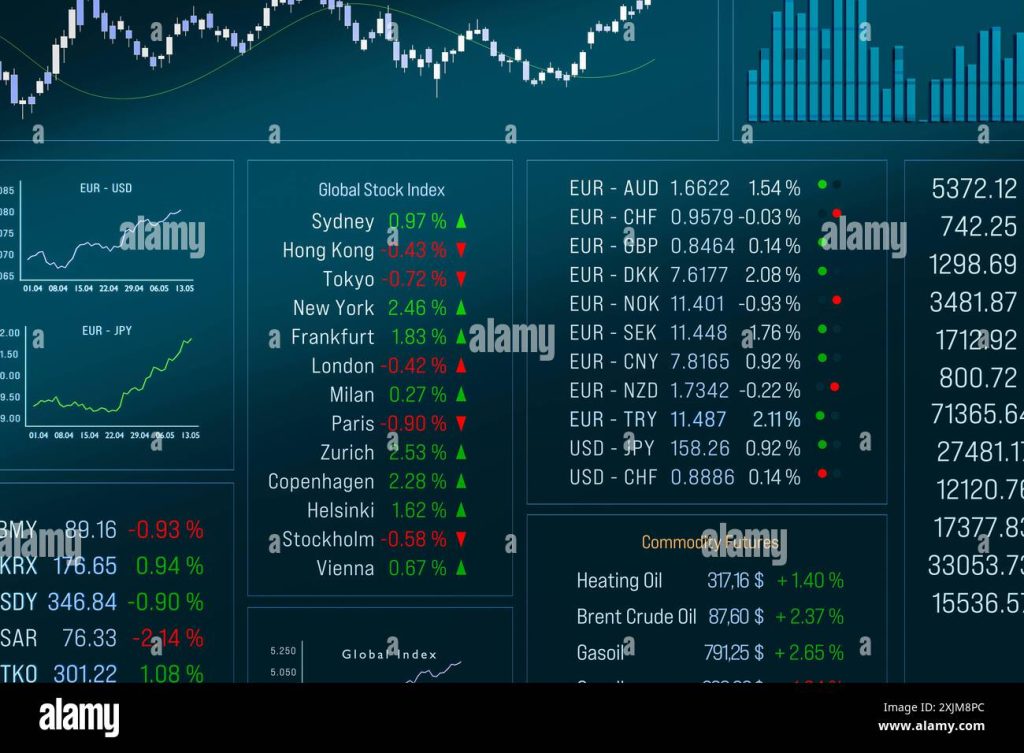
Active market participants tracking Forex Factory encountered an intense convergence of macro crosscurrents this week as central bank leadership across three continents issued coordinated warnings on inflation, interest rate trajectories, and systemic debt. The sudden spike in retail and institutional traffic reflects an uneasy reality across financial markets. Investors are grappling with renewed geopolitical instability in the Red Sea, stubborn energy shocks that refuse to dissipate, and an impending electoral cycle that complicates central bank independence.
For decades, macroeconomic trading desks have relied on digital wire services to gauge second-by-second sentiment. When multiple monetary policy officials deliver consequential assessments within hours of one another, the digital trading floor experiences immediate friction. The latest updates published across financial channels reveal that central banks are not yet ready to declare victory over inflation, even as underlying corporate sectors show initial signs of balance sheet strain.
The Anatomy of a Global Trading Surge
Financial search volume rarely accelerates in isolation. Instead, spikes occur when fragmented geopolitical events suddenly intersect with monetary policy decisions. In this instance, as the economic calendar on Forex Factory began flashing red across major currency pairs, algorithmic trading systems and manual execution desks reacted in tandem. Traders found themselves parsing hawkish declarations from Federal Reserve officials alongside frank admissions from European monetary leaders that energy prices continue to distort consumer price indexes.
Currency valuations function as the ultimate economic shock absorber. When unexpected policy divergences emerge between the US dollar, the British pound, and the euro, foreign exchange markets repriced sovereign risk in milliseconds. This dynamic was exacerbated by emerging political rhetoric concerning maritime security and historical data regarding monetary shifts during US presidential campaigns. The resulting environment has forced portfolio managers to reevaluate their forward projections for global interest rates.
Five Critical Market Pressures Unfolding on the Terminal Wire
A closer look at the news aggregation feeds across Forex Factory illuminated five distinct developments driving the current wave of market volatility. Each narrative contributes a specific layer of uncertainty to global asset pricing.
Fed Policymaker Williams Pushes for Another Rate Hike
Federal Reserve Bank of New York President John Williams disrupted market consensus by stating that one more interest rate hike remains appropriate this year. Addressing economic conditions during recent remarks, Williams emphasized that the American economy is not overheating, yet underlying pricing pressures require sustained vigilance from the Federal Open Market Committee. His assessment indicates that while macroeconomic growth remains stable, the central bank maintains a clear bias toward tightening rather than prematurely loosening monetary policy.
The assertion caught rate-cut optimists off guard. Market participants had increasingly priced in a prolonged pause, anticipating that prior hikes had exerted sufficient downward momentum on consumer spending. By explicitly leaving the door open for additional rate action, Williams signaled that the Federal Reserve refuses to be constrained by market expectations when assessing price stability.
Lagarde Confronts Europe Sticky Energy Inflation and Second Round Effects
Across the Atlantic, European Central Bank President Christine Lagarde delivered an equally sobering perspective on the euro area. Speaking on regional price trends, Lagarde noted that inflation has been increasing mainly, though not solely, due to volatile energy prices. More critically, the ECB chief pointed to brewing second-round effects, where elevated input costs begin trickling into wage demands and service sector pricing.
Europe’s geographic proximity to disrupted supply lines and its persistent structural dependence on external power generation leave the continent singularly exposed. Lagarde’s warnings confirm that European policymakers remain trapped between sluggish economic expansion and the real threat of stagflation driven by energy markets beyond their direct control.
Bailey Warns Prolonged Energy Hits Threaten Leveraged Finance
Adding to the cautious tone among global governors, Bank of England Governor Andrew Bailey issued a direct warning regarding the duration of current commodity pressures. Bailey observed that the longer an energy hit lasts, the harder economic mitigation becomes for national treasuries and central banks. His commentary highlighted an escalating structural vulnerability that has received limited public attention, specifically noting that there is far more leveraged finance embedded across modern balance sheets than during previous economic downturns.
This reality compounds credit risk. When heavily indebted enterprises face both elevated borrowing benchmarks and prolonged power costs, debt service coverage ratios erode rapidly. As data compiled by Forex Factory shows, sterling volatility spiked following Bailey’s frank assessment, reflecting investor anxiety over corporate defaults in a high-rate environment.
Election Year Headwinds Shape Federal Reserve Monetary Strategy
Monetary policy does not operate in a political vacuum, despite the statutory independence of the Federal Reserve. Historical policy analysis tracking how the Fed handles benchmark rates near an election revealed that the FOMC previously raised rates on September 16, marking the first hike since July of that historical cycle. The review examined the delicate tightrope central bankers walk when macroeconomic data dictates policy action during highly contested political seasons.
While central bank officials consistently state that domestic politics play zero role in interest rate decisions, market participants scrutinize historical precedence to anticipate policy inertia. The intersection of impending electoral timelines and persistent core inflation creates acute forecasting challenges for bond traders attempting to time the start of an eventual easing cycle.
Geopolitical Escalation and Maritime Risk Resurface with Trump Remarks
Geopolitical turbulence injected further unpredictability into financial wires following public comments from former US President Donald Trump regarding the Middle East. Trump stated that the Houthis in Yemen are behaving very badly, declaring that he believed the group had learned their lesson a year ago following military strikes against them. The commentary drew renewed focus to commercial shipping choke points across the Red Sea and Gulf of Aden.
Maritime disruption remains one of the fastest conduits for global supply chain inflation. When freight operators reroute tankers around the Cape of Good Hope, maritime insurance premiums surge and delivery timelines stretch by weeks. The prospect of expanded military engagements or escalating maritime attacks threatens to reignite oil benchmark rallies, feeding directly back into the inflation metrics monitored by the Fed and the ECB.

The Systemic Vulnerability of Energy Dependencies and Corporate Leverage
The dual warnings from Bailey and Lagarde pinpoint a systemic hazard that extends far beyond daily currency fluctuations. When persistent energy inflation collides with elevated financing costs, corporate margins face intense contraction. Highly leveraged enterprises that structured their debt facilities during the decade of zero interest rates are now forced to refinance at substantially higher yields. If corporate operating cash flows simultaneously diminish due to increased utility and logistical expenses, balance sheet distress becomes inevitable.
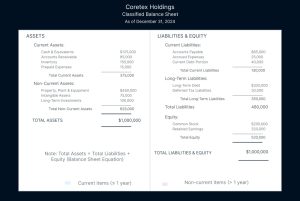
Corporate managers are discovering that cost-cutting alone cannot compensate for structural macro headwinds. When corporate balance sheets absorb persistent upstream energy shocks while debt servicing costs ratchet higher, understanding Operating leverage mechanics and 4 proven rules that prevent catastrophic profit collapse becomes critical for treasurers and equity analysts alike. Companies with elevated fixed overheads and excessive leveraged debt are structurally ill-equipped to survive sustained periods of elevated interest rates.
Furthermore, threads dominating discussion boards across Forex Factory illustrate a deepening rift between market expectations and institutional reality. While speculative retail positions frequently anticipate aggressive monetary pivots, central bank balance sheets remain constrained by persistent headline inflation numbers. Central bankers cannot ease financial conditions if energy spikes threaten to unanchor long-term inflation expectations, creating a prolonged environment of corporate margin compression.
Strategic Realities for Modern Currency Traders
The convergence of these five distinct market drivers underscores the necessity of intermarket analysis in modern portfolio management. Currency values are not governed solely by domestic GDP prints. They are deeply influenced by the price of Brent crude, geopolitical stability in maritime choke points, and the structural debt burdens carried by the corporate sector.
As the international monetary system navigates this phase of persistent rates, market volatility will remain elevated. Central bankers like Williams, Lagarde, and Bailey have effectively shattered the narrative of a swift, frictionless return to pre-pandemic interest rate conditions. Traders seeking to navigate these turbulent conditions must look beyond headline statistics and analyze the structural pressures shaping central bank decisions. In an era marked by geopolitical fractures and sticky energy inflation, the real-time dashboard of Forex Factory remains an essential barometer for tracking where institutional capital flows next.