Bond duration mechanics and 4 proven rules that prevent devastating portfolio losses
Fixed income portfolios face severe hidden risks when interest rates shift without warning. Mastering duration mechanics and convexity allows investors to immunize cash flows and defend capital.
Understanding bond duration mechanics is the single most vital skill for preserving capital when central banks adjust interest rates without warning. Fixed income is widely marketed to everyday savers as a tranquil harbor, a sleepy haven insulated from the wild gyrations of equities. Yet when market benchmark yields climb by even a few hundred basis points, unhedged portfolios frequently suffer double-digit declines that catch asset owners completely off guard. The error does not stem from unpredictable economic forces, but from a widespread failure to understand how cash flow timing dictates bond price behavior.
Maturity tells an investor when a principal check arrives at the finish line, but duration measures the true journey of money across time. Every cash distribution along the path pulls capital back to the investor sooner, altering sensitivity to the prevailing cost of capital. By decomposing fixed-income instruments into their mathematical components, allocators can eliminate dangerous surprises, structure dependable defensive reserves, and turn volatile yield environments into predictable accumulation engines.
The Hidden Physics of Fixed Income Capital Preservation
Bond prices move in an inverse dance with interest rates. When benchmark yields across the financial system increase, newly issued debt instruments offer higher yields, making existing bonds that carry lower payouts instantly less attractive. To equilibrate that yield disparity in the secondary marketplace, the dollar price of older debt must drop. Conversely, falling rates send older high-coupon obligations soaring to a premium. This balance sounds elementary, yet predicting the precise magnitude of that price swing requires measuring temporal sensitivity.
A ten-year bond does not simply behave like a ten-year exposure. If that instrument pays a substantial coupon every six months, an investor recovers a meaningful fraction of their original purchasing power well before the decade concludes. That incoming capital can immediately be deployed elsewhere at prevailing market rates. That reality is why mastering bond duration mechanics separates professional fixed-income allocators from amateurs who simply chase nominal yields without assessing balance sheet vulnerability. Without calculating the weighted timeline of every individual dollar, capital preservation remains pure guesswork.
According to comprehensive CFA Institute analysis on fixed income risk and return, duration serves as the primary linear approximation of how interest rate shocks transmit through debt portfolios. Measuring that transmission requires distinguishing between the length of a contract and the economic center of gravity of its cash payments.
How Maturity Differs Drastically from True Temporal Exposure
Maturity is a contractual date, whereas duration is a mathematical balance point. The classic metric pioneered by Frederick Macaulay measures the weighted average time until an investor receives all cash flows, where the weights correspond to the present value of each payment divided by the bond’s total price. A zero-coupon note paying zero interim distributions has a Macaulay duration identical to its maturity date because every single dollar arrives at the terminal moment. A thirty-year zero-coupon bond exposes an investor to the maximum possible swing in market value for that maturity tier.
Introduce an eight percent annual coupon to that same maturity profile, and the mathematical equilibrium shifts dramatically toward the present. Because heavy coupon payments arrive in years one through five, the investor recovers significant capital early in the lifecycle. That incoming liquidity compresses the instrument’s effective exposure to later yield shifts, cutting its duration down to a fraction of its final maturity calendar.
Once you break down bond duration mechanics to their mathematical core, maturity reveals itself as merely an outer boundary rather than an indicator of risk. Two sovereign securities can share the exact same maturity date while carrying radically divergent capital risk profiles. Recognizing this fundamental distinction prevents conservative allocators from mistakenly buying aggressive duration volatility disguised under seemingly ordinary maturity dates.
Four Proven Rules That Shield Portfolios from Interest Rate Traps
Navigating debt markets without an explicit temporal strategy invites unnecessary drawdowns. Putting sound bond duration mechanics into practice requires systematic discipline rather than macro forecasting, using four structural rules to keep portfolios resilient across every monetary regime.
Calculate Modified Duration to Measure Immediate Price Sensitivity
Modified duration converts the abstract timeline of Macaulay duration into an actionable percentage price change estimate. By dividing Macaulay duration by one plus the bond’s yield per compounding period, investors obtain a direct multiplier. If a portfolio possesses a modified duration of six years, a one percentage point rise in prevailing interest rates causes an approximate six percent decline in total asset value. Conversely, an identical rate decrease lifts the portfolio value by roughly six percent.
Tracking this metric across your entire portfolio provides an instantaneous stress test. It strips away marketing labels like short-term, intermediate, or core, replacing vague terminology with precise quantitative loss exposure. Knowing your exact modified duration prevents you from taking on equity-level capital risk inside assets intended to serve as safe liquidity.
Exploit Positive Convexity to Cushion Rate Spikes and Amplify Rallies
Modified duration assumes price changes occur along a straight line, but actual bond pricing follows an upward-curving line known as convexity. Because of this curved relationship, a bond’s price rises more when rates fall than it falls when rates rise by that exact same margin. Positive convexity is the investor’s greatest ally during severe macroeconomic instability.
When yields surge upward, positive convexity slows down the rate of capital depreciation. When yields plummet, positive convexity accelerates capital gains. Option-free sovereign bonds and high-grade corporate notes naturally offer positive convexity. Seeking out positive convexity cushions portfolios against unexpected monetary shocks, providing an asymmetric mathematical advantage that linear calculations fail to capture.
Align Investment Horizons with Macaulay Duration to Immunize Reinvestment Risk
Price risk and reinvestment risk sit on opposite sides of a mechanical see-saw. When interest rates rise, bond prices fall, inflicting immediate paper losses. However, the coupons arriving from those bonds can now be reinvested at higher rates, compounding future wealth faster. When rates drop, bond prices rise, but reinvested coupons earn less over time.
Portfolio immunization solves this dilemma by matching the Macaulay duration of an asset pool directly to an investor’s target spending date. When duration precisely equals the investment horizon, price losses and reinvestment gains offset each other with near-perfect mathematical precision. Whether interest rates climb or crash over that period, the terminal portfolio value lands right on target, neutralizing macro volatility for goals with defined future payouts.
Barbell Shorter Papers with Long Strips to Exploit Yield Curve Twists
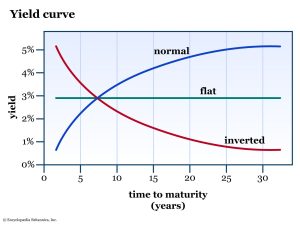
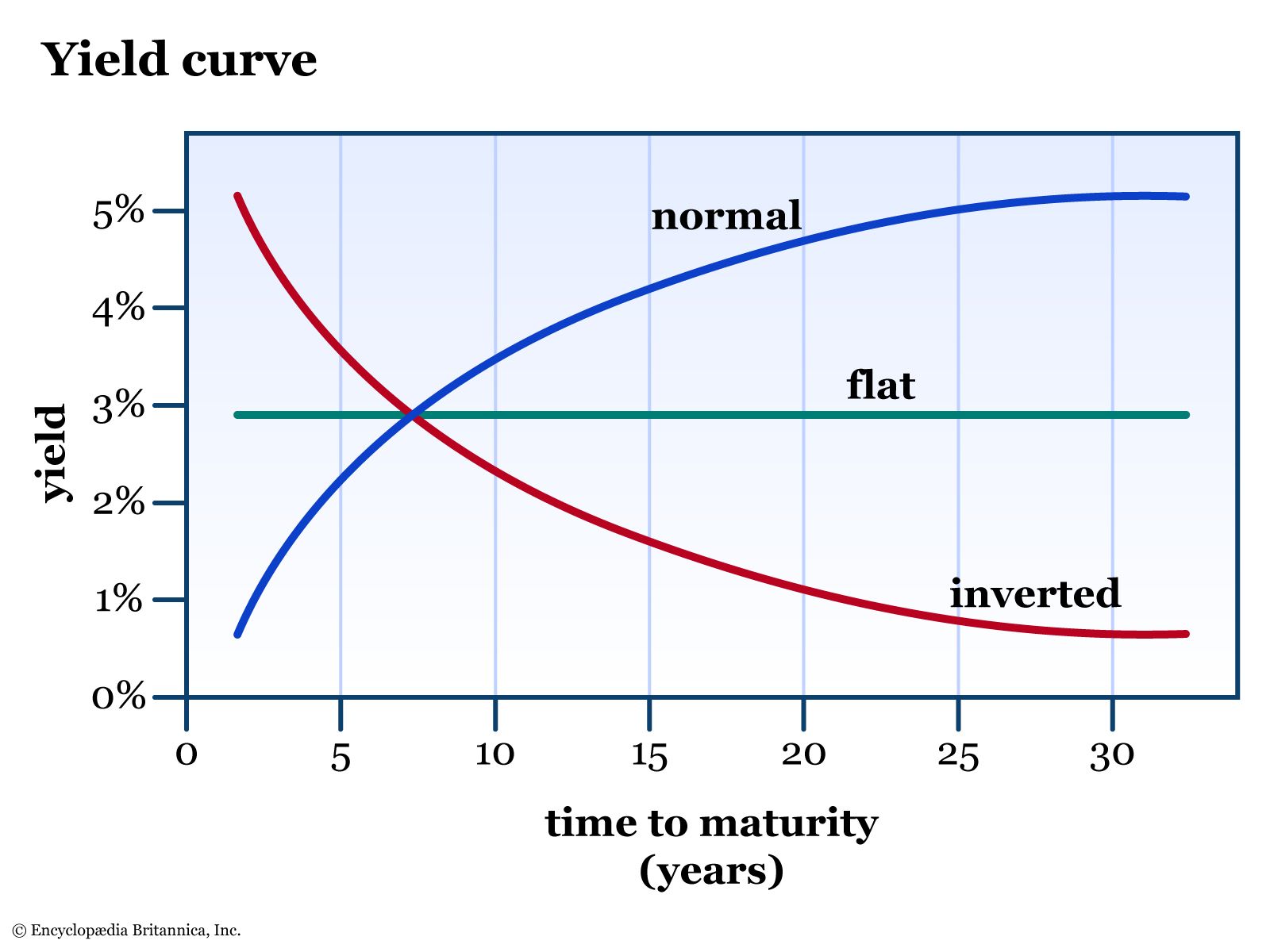
Yield curves rarely shift in neat parallel lines. Short-term rates may spike due to central bank tightening while long-term rates remain anchored by growth expectations, causing flattening or inversions. Rather than clustering all holdings into a single intermediate maturity bucket, sophisticated managers frequently implement a barbell allocation.
A barbell pairs ultra-short instruments with long-duration paper, matching the overall duration target of an intermediate portfolio while unlocking superior flexibility. The short-term segment provides continuous liquidity and rapid coupon reinvestment as yields climb. Meanwhile, the long-dated portion locks in duration and provides explosive capital appreciation if economic conditions soften. This dual architecture creates agility that a static intermediate ladder cannot match.
Common Fallacies That Distort Duration in Everyday Portfolios
The most dangerous trap in retail fixed income is confusing an individual bond with a continuous bond fund. An individual bond matures, meaning its duration steadily declines as time passes until it reaches zero on the day principal returns. An open-ended bond mutual fund or exchange-traded fund, by contrast, targets a fixed duration band indefinitely. Managers constantly sell maturing notes and acquire new issuance to maintain that mandate, making the portfolio perpetually exposed to rate shifts without ever reaching a self-liquidating conclusion.
Investors who fail to distinguish between these vehicles often panic during monetary tightening cycles. When sudden market volatility hits or sensational headlines erupt—much like the strange media virality examined in the breakdown of the RJ Mitte death at 34 and 3 major truths shaking Hollywood—investors often act on gut reaction rather than hard structural mathematics. Dumping fixed-income holdings at the exact moment yields peak locks in temporary duration drawdowns right before reinvestment compounding can repair the balance sheet.
A frequent mistake occurs when investors treat bond duration mechanics as a static linear formula rather than a dynamic curve. Instruments with embedded options, like callable corporate debt and mortgage-backed securities, suffer from negative convexity. When interest rates fall, homeowners refinance and corporate borrowers call in high-interest paper, capping capital appreciation. When interest rates spike, borrowers hold onto their loans, stretching duration outward precisely when price sensitivity hurts the investor most. Overlooking embedded options leads investors to take on massive hidden duration risk during turbulent markets.
Building an All Weather Defensive Core Through Duration Discipline
Fixed income should never be treated as an unmanaged speculative bet on the whims of central bankers. Capital preservation requires respecting the physical laws of financial contracts, tracking cash flow distributions across time, and calibrating exposure to personal liabilities. By internalizing bond duration mechanics, individual investors and institutional allocators gain the rare ability to navigate rate cycles with absolute clarity.
Run the numbers across every fixed-income asset you hold today. Quantify their modified duration to establish your true downside exposure, harness positive convexity to tilt payoff profiles in your favor, and align timelines to let reinvestment dynamics do the heavy lifting. When you anchor portfolio construction to duration mathematics, shifts in benchmark yields cease to be existential threats, becoming predictable strategic opportunities to preserve and compound family wealth across generations.