Tennis serve mechanics and 4 proven rules that unleash effortless power
Harnessing real service speed requires a synchronized kinetic chain rather than raw muscular force. Discover the biomechanical principles that produce heavy, effortless serves while safeguarding your rotator cuff.
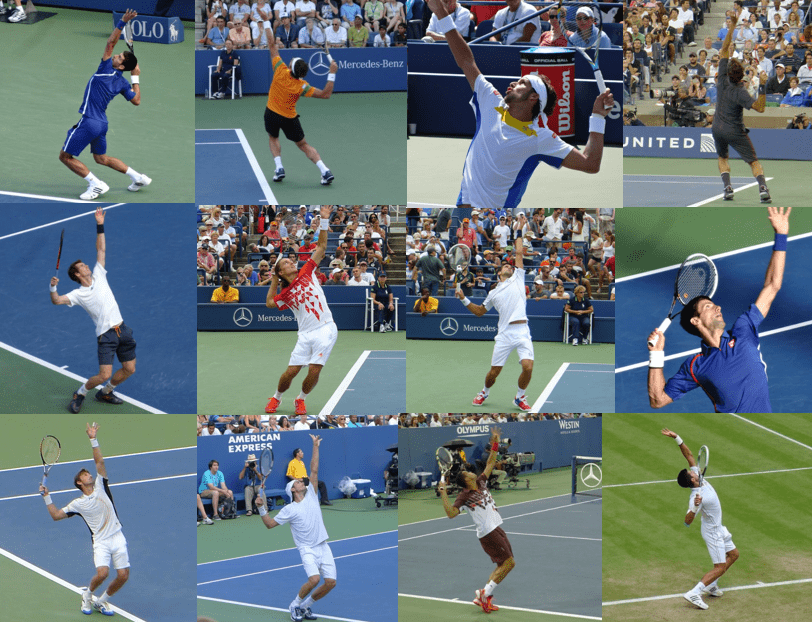
Mastering sound tennis serve mechanics is the single fastest way to transform a defensive service game into a relentless offensive advantage. Too many competitors view the serve as an arm-driven movement, muscling the racket through the contact zone and wondering why ball velocity remains stubbornly flat while their shoulder aches before the second set finishes. Power is not manufactured in the deltoid or the wrist. In reality, an elite serve functions like an elastic whip, where energy gathered from the court surface ripples upward through sequentially firing body segments before snapping into the felt.
When you observe world-class servers, their motions look calm, almost relaxed, even as the radar gun clocks speeds exceeding one hundred and twenty miles per hour. That visual ease is the direct consequence of seamless energy transfer. Every segment of the human body acts as a multiplier of force, provided each joint fires in its proper chronological window. When that timing breaks down, the kinetic chain fractures, forcing smaller joints to compensate for the lost power of the legs and core.
The Kinetic Chain from Ground Reaction Force to the Racket Face
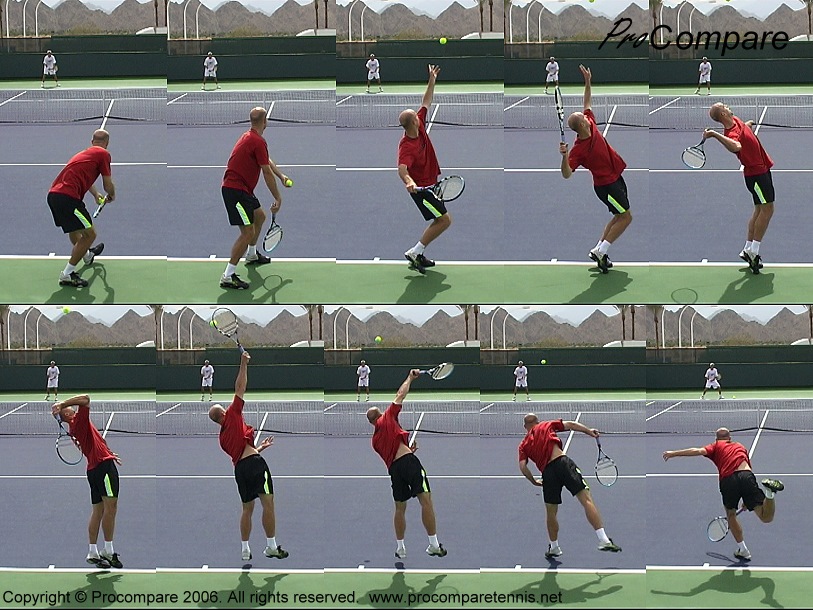
Every dynamic serve begins with an aggressive conversation between your shoes and the hardcourt. Ground reaction force is the bedrock of serve speed. When your knees bend into the loading phase, your lower body stores potential energy across the quadriceps, glutes, and Achilles tendons. As the legs drive upward into extension, that force travels through the pelvis, compelling the hips to rotate toward the net. Because the hips turn before the upper torso uncoils, the abdominal wall and obliques stretch like rubber bands, preparing to release an explosive burst of rotational torque.
A thorough breakdown of seminal sports medicine research on kinetic chain summation shows that over fifty percent of total kinetic energy and force delivered to the tennis ball originates in the leg drive and trunk rotation. The shoulder girdle and arm are not prime movers; they are conduits designed to accelerate and channel energy already created from below. As the chest opens toward the sky, the dominant shoulder trails behind, dropping the racket deep down the server’s back. This deep racket drop stores elastic strain energy in the internal rotators and pectoral muscles, priming the entire arm for whip-like terminal acceleration.
Why Outdated Coaching Cliches Sabotage Pure Kinetic Flow
For decades, traditional tennis instruction relied on well-meaning cues that actually cripple athletic efficiency. Phrases like “reach up as high as you can” often cause athletes to freeze their rotational momentum, transforming dynamic thoracic extension into a rigid, uncoordinated pole-vault. Similarly, urging players to “snap your wrist down” encourages active wrist flexion at impact, which causes erratic spray over the baseline and places brutal, repetitive shearing forces on the carpal tunnel and flexor tendons.
Another common breakdown happens when recreational players attempt to optimize their tennis serve mechanics without diagnosing their foundational toss geometry. Rushing the stroke because the ball was tossed too low or too far behind the skull prevents the kinetic chain from linking properly. If the body must lurch backward or halt its forward drive to rescue an erratic toss, the legs cannot unload their energy into the ball. The shoulder and elbow end up bearing the entire brunt of the hit, draining serve velocity and accelerating joint wear.
Four proven rules that build an explosive and repeatable delivery
Constructing a world-class motion does not require reinventing your natural athletic instincts. By stripping away artificial hitches and focusing on core biomechanical imperatives, you allow your body to store and release elastic energy with repeatable precision.
Master the continental grip to unlock natural forearm pronation
Power begins at the contact points of the palm and bevels. Serving with an eastern forehand grip, colloquially known as the pancake grip, restricts your swing to a two-dimensional pushing motion. To generate heavy spin, explosive pace, and reliable margin over the net, the continental grip is mandatory. Holding the racket with the base knuckle of the index finger resting on the second bevel angles the frame edge-on toward the ball as it climbs. This orientation forces the forearm and hand to pronate rapidly immediately prior to and through contact. Pronation is not an active, forced wrist flick; it is the natural, involuntary uncoiling of the radius over the ulna as the arm extends upward into the strike zone.
Load the rear hip to harvest explosive vertical ground reaction force
Whether you deploy a platform stance with stationary feet or slide your back foot forward into a pinpoint stance, energy collection hinges on hip loading. As the ball leaves your tossing hand, your weight must sink into the dominant rear hip and glute, creating dynamic coiling across your lower quadrant. Many struggling players merely bend their knees forward over their toes, loading their patellar tendons without engaging the massive posterior chain. Sinking your weight into the back hip sets your pelvis at an angle that allows you to drive diagonally upward and forward into the court, turning raw leg drive into rotational velocity.
Anchor the tossing arm vertically to create shoulder tilt
The tossing arm is far more than a ball-delivery mechanism; it is the rudder of your upper body balance. After releasing the ball, keep your non-dominant arm extended upward toward the sky for an extra beat rather than pulling it immediately down across your stomach. This extended arm creates a steep shoulder tilt where the hitting shoulder drops substantially lower than the non-hitting shoulder. That cartwheel angle allows your trunk to cartwheel vertically as you strike, pulling your racket up through the ball along a steep trajectory. Dropping the tossing arm prematurely levels out your shoulders, robbing you of vertical lift and driving serves directly into the net tape.
Rely on internal shoulder rotation rather than snapping the wrist
True serving speed is dominated by internal rotation of the humerus within the glenohumeral joint socket. As your elbow drives upward and forward, the racket drops behind your back in an exaggerated state of external rotation. The subsequent rapid transition from external to internal rotation happens at angular velocities exceeding two thousand degrees per second in elite servers. Trying to generate power by bending your wrist forward short-circuits this massive internal rotator engine. Treat the wrist as a dynamic, supple hinge that stabilizes the racket face while the upper arm and shoulder drive the strike.
Diagnosing Faults and Protecting the Rotator Cuff from Chronic Strain
Shoulder injuries are epidemic among tennis players who rely on arm speed rather than full-body mechanics. When the kinetic chain operates out of sequence, the delicate supraspinatus and infraspinatus tendons of the rotator cuff are forced to create force rather than fulfill their true biological purpose: stabilizing the humeral head inside the socket. Furthermore, abrupt deceleration without a complete follow-through causes subacromial impingement, grinding the soft tissues of the shoulder against the bony acromion process.
Protecting these structures requires clean tennis serve mechanics that allow the larger muscle groups of the upper back, latissimus dorsi, and core to decelerate the swinging arm smoothly across the body. Even elite professionals have had to tear their service motions down to the studs to preserve their careers and rediscover their competitive ceilings. We saw this structural transformation when Aryna Sabalenka Faces 3 Crucial Battles in Fierce WTA Wuhan Comeback, relying on rebuilt service sequencing and toss stability under intense tactical pressure to turn what was once a liability into one of the most feared deliveries in the modern game.
Practical Drills to Hardwire Dynamic Balance and Serve Velocity
Rebuilding your kinetic delivery requires slow, deliberate drills that separate mechanical sequencing from the urge to hit the ball as hard as possible. Begin away from the court with an ordinary football or weighted plyometric ball. Stand in your serving stance and throw the football high into the air using a full service motion. To throw a tight spiral over a high trajectory, your arm must naturally trace the exact path of internal rotation and forearm pronation required by an elite tennis serve. If you attempt to throw with a flat wrist or a collapsed shoulder, the ball will wobble and drop harmlessly short.
On the court, isolate your kinetic connection by executing paused trophy-pose reps. Toss the ball, lower yourself into your hip load, bring the racket up into the cocked position, and freeze for two full seconds before initiating the upward drive. This deliberate pause eliminates reliance on erratic momentum and forces your legs and core to initiate the launch phase. Integrating these progressions into weekly practice solidifies elite tennis serve mechanics so they hold up under match pressure, delivering unreturnable pace while keeping your arm fresh through every grueling tiebreak.