Order book mechanics and 4 proven rules that prevent devastating trading slippage
Most traders treat quoted market prices as guaranteed transactions, only to suffer severe execution losses when their orders enter the exchange. Mastering the inner architecture of the auction ladder reveals how market depth, matching engines, and hidden liquidity truly dictate trading outcomes.

Mastering order book mechanics separates reactive retail gamblers from disciplined market operators who understand how asset transactions actually clear across modern electronic trading exchanges. Most participants glance at a trading terminal and assume the flashing green and red digits represent objective, immediately accessible value. They press an unconstrained market order button, watch their fill register a quarter or half a percent worse than anticipated, and reflexively blame broker manipulation or system glitches. In reality, they simply collided with the unforgiving mathematical laws of the order queue.
The printed price displayed on a financial ticker is not an open store shelf waiting for your shopping basket. It is a digital tombstone marking the precise valuation where the last transaction cleared and died. What lies in front of you is a dynamic double-sided auction ladder composed of unfulfilled human and algorithmic intentions, divided into bids on the left and asks on the right. Every liquid asset class, whether sovereign debt, foreign currencies, public equities, or digital tokens, relies on this ledger to resolve continuous disagreements between buyers and sellers. When you comprehend how resting limit orders absorb aggressive market flow, you stop functioning as passive exit liquidity for sophisticated trading desks and start navigating price discovery with structural precision.
The Invisible Machinery Behind Bid Ask Ladders
At the core of order book mechanics lies the continuous double auction, a deterministic mathematical framework designed to process opposing capital commitments without centralized human discretion. The central limit order book organizes passive commitments into two opposing columns. Bids represent market participants offering to purchase an asset at or below a specified price, arranged from highest price down. Asks represent sellers offering to liquidate an asset at or above a specified price, arranged from lowest price up. The empty gap between the highest willing buyer and the lowest willing seller forms the bid-ask spread.
Orders do not accumulate in an undifferentiated pool. They are governed by strict matching engine protocols, the most ubiquitous being price-time priority, commonly referred to as first-in, first-out allocation. Under price-time priority, the exchange matching engine always rewards price aggression first. A trader willing to bid a higher dollar figure than competing market participants immediately jumps ahead of the line. When multiple orders share identical price levels, the engine resolves priority strictly by timestamp. A limit order logged at millisecond forty-two receives full execution before an identical order entered at millisecond forty-three receives a single share.
Select derivatives venues and institutional bond markets utilize pro-rata matching models instead, allocating executions proportionally based on each participant’s order size relative to total depth at that tick level. In both models, resting limit orders provide structural liquidity, acting as shock absorbers. Aggressive market orders consume that inventory instantly. When a massive market order lands on an exchange, it chews through every available contract at the best quote before climbing into progressively worse price tiers. That mechanical sweep through successive rungs of the ladder constitutes the exact physical reality of execution slippage.
The Illusion of Surface Depth and Ghost Liquidity
Unseasoned traders frequently examine Level 2 depth displays, observe large blocks of shares resting at a designated price tier, and conclude that an impregnable support barrier has formed. A comprehensive grasp of order book mechanics requires recognizing that the visible queue represents only a fraction of deployable capital. Modern electronic trading venues feature sophisticated order types, most notably native iceberg configurations and pegged reserve orders. An iceberg order displays a tiny tip to the public book while keeping thousands of contracts concealed within the matching engine memory. As incoming trades consume the visible fraction, the engine quietly refreshes the display from the hidden reserve while holding its original price rank.
The inverse condition poses an even greater risk to capital. Apparent depth can evaporate in mere fractions of a millisecond because automated market-making algorithms cancel quotes thousands of times faster than human perception operates. In modern electronic equity and derivatives venues, cancellation-to-execution ratios routinely exceed twenty to one. Thousands of bids appear to support the market, yet the second an authentic institutional liquidation order reaches the matching engine, algorithmic liquidity providers retract their resting quotes across multiple price increments simultaneously.
This sudden structural withdrawal is what practitioners describe as ghost liquidity. Those quotes were never meant to absorb substantial toxic order flow. They were speculative algorithmic placeholders harvesting exchange rebates or pinging counterparty queues. Assuming that visible volume equates to genuine transactional commitment is among the costliest miscalculations in modern market participation. Without monitoring quote replenishment speed and cancellation frequency, treating raw book depth as a defensive cushion is an expensive exercise in wishful thinking.
Four Essential Rules That Protect Capital in Volatile Markets
Translating order book mechanics into defensive execution demands four concrete rules that counter human cognitive bias and algorithmic exploitation.
Never Confuse Quoted Spread With Executable Depth
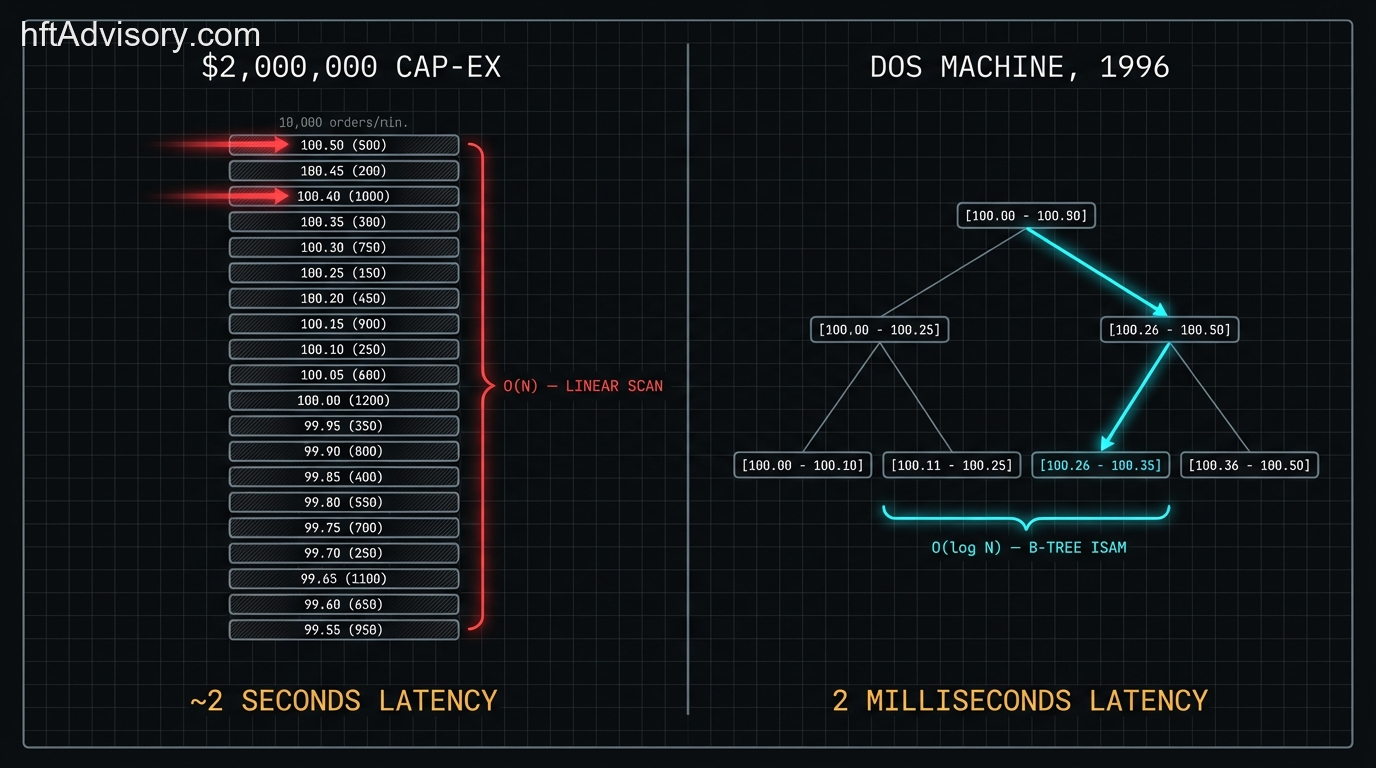
A financial market displaying a tight one-cent spread can be substantially less liquid than a market operating with a five-cent spread if the underlying quantity behind the quote is negligible. If an equity displays a best bid of one hundred dollars and a best ask of one hundred dollars and one cent, but only ten shares rest at that ask, an order for five hundred shares will instantly blow through that surface price and fill across higher, less favorable tiers. Always calculate your planned transaction size against the cumulative volume resting across the top three to five price tiers. If your planned entry or exit represents more than ten percent of the visible volume within your acceptable tolerance band, deploying an unconstrained market order constitutes immediate balance sheet damage.
Harness Passive Limit Placement to Capture Market Spread
Aggressive orders pay for immediacy by crossing the spread and surrendering exchange fees. By shifting execution strategy toward passive limit placement directly inside the queue, you transition from a fee-paying liquidity taker into a disciplined liquidity provider. This is where order book mechanics rewards patience over urgency. Placing a limit order at the bid forces impatient counterparties to cross the spread to meet your terms. In volatile consolidations, resting bids frequently fill against panicked market sells that spike downward for fractions of a second before snapping back into equilibrium. Capturing the spread rather than paying it compounds into massive operational savings across a portfolio over time.
Identify Spoofing Signatures and Vanishing Order Walls
Predatory market participants construct artificial walls of limit orders to fabricate the impression of massive institutional demand or supply. A spoofing algorithm might post ten thousand contracts five ticks below the current market price to encourage retail participants to buy in front of it. The moment the market inches upward toward the spoofer’s true sell targets, those ten thousand bids vanish without executing a single trade. Watch the behavior of large block orders as the market approaches them. If a massive block repeatedly cancels and re-establishes itself further down the ladder whenever price action draws near, you are observing an artificial mirage designed to herd retail liquidity.
Scale Large Position Orders Across Volume Microstructures
Executing a meaningful position in a single transaction broadcasts your intentions to automated market makers who immediately widen spreads and front-run price movements. To mitigate market impact, institutional traders slice their parent orders into dozens of child orders distributed across time and volume intervals. Developing this level of technical composure mirrors high-stakes sports performance. When the Lamine Yamal Champions League Record Rewritten with 4 Major Milestones in Stunning Barcelona Triumph gripped international analysts, commentators marveled at how an adolescent winger navigated crowded penalty boxes without panicking. In electronic trading, your ability to remain unbothered while predatory algorithms probe your resting bids represents the exact same mastery over panic. Deploying volume-weighted average price or time-weighted strategies ensures your orders slip into natural transactional current without disrupting queue balance.
The Strategic Shift From Price Action to Liquidity Distribution
When you analyze market behavior through the lens of order book mechanics, conventional support and resistance lines transform into volumetric realities. Technical indicators painted across closing prices show where the market has walked, but the order queue shows where the terrain is soft, rocky, or nonexistent. Institutional desks spend millions constructing proprietary order flow tools because they recognize that price is merely an outcome variable. Liquidity is the driving cause.
As documented in a foundational Bank for International Settlements study on electronic trading microstructure and market liquidity, fragmented order matching across disparate execution venues has permanently altered how market depth forms and disperses under structural stress. Modern electronic markets do not operate as unified monolithic entities. They exist as fragmented clusters of liquidity pools connected by sub-millisecond fiber optic lines and matching engines.
To succeed across volatile asset classes, trade participants must stop asking where an asset ought to go based on historical trendlines. Ask instead where trapped liquidity sits, which side of the book holds the most vulnerable stops, and how much aggressive volume is required to clear each consecutive price tier. Ultimately, respecting order book mechanics turns chaotic price charts into transparent maps of institutional intent, saving you from the invisible traps that systematically deplete undisciplined accounts.