Rheinmetall Secures 3 Major Defence Milestones Across Europe
Europe’s industrial rearmament reached a historic inflection point as Britain reopened large-calibre gun production in Telford after two decades, while a 3.7-billion-euro Italian army contract reshaped continental land warfare.
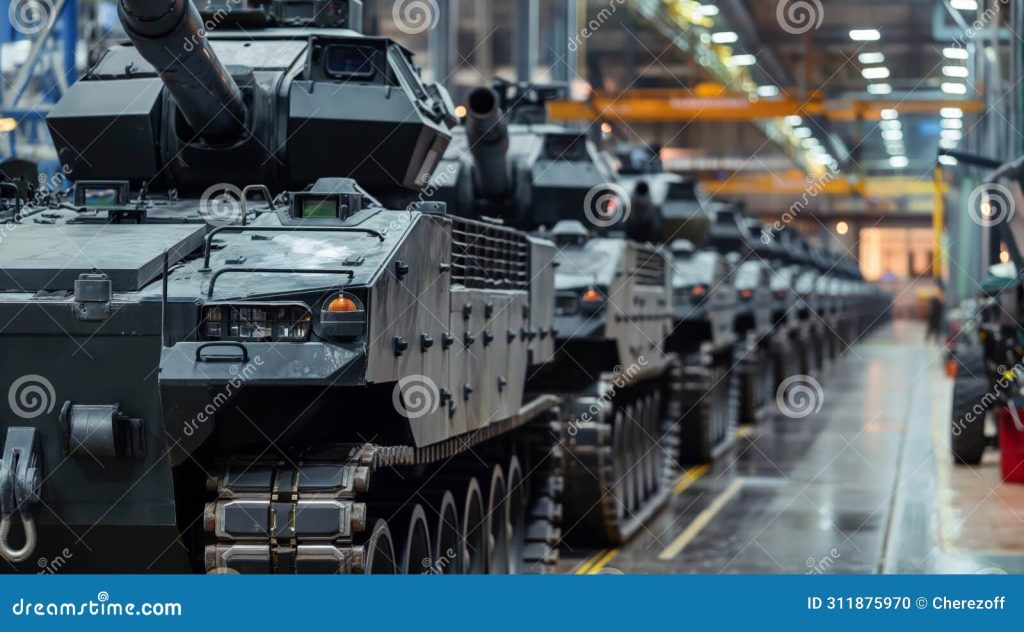
German defence contractor Rheinmetall has dramatically accelerated European rearmament this week through unprecedented industrial expansions across Britain and Italy. For the first time in two decades, the United Kingdom is restoring domestic production of large-calibre tank and artillery systems, while Rome cements a colossal multi-billion-euro armored vehicle framework. This twin development marks an extraordinary strategic pivot, ending decades of post-Cold War de-industrialization across Western Europe’s sovereign military supply networks.
A Historic Return to Heavy Ordnance in Britain
The British Ministry of Defence confirmed on Thursday that the nation has officially restarted manufacturing large-calibre weapons, ending a critical 20-year operational hiatus that had left the British Army reliant on foreign suppliers for heavy barrels. Central to this sovereign restoration is a newly opened production facility located in Telford, Shropshire, where Rheinmetall has established direct manufacturing lines dedicated to advanced tank and artillery gun tubes. As reported by Reuters and confirmed by Defence Industry Europe, the operational opening of the Telford facility directly addresses severe supply chain vulnerabilities exposed across NATO allies during recent high-intensity conflicts.
For more than two decades, the United Kingdom had completely ceased domestic barrel manufacturing for heavy armored platforms. The closure of historic ordnance plants at the turn of the century effectively dismantled Britain’s indigenous capacity to forge, machine, and rifled large-calibre artillery, forcing military planners to depend on overseas foundries for replacement barrels across Challenger tank fleets and self-propelled artillery systems. The activation of the Telford site reverses this decades-long reliance, re-establishing an indigenous metallurgical and engineering capability that guarantees sovereign control over critical land-warfare armaments.
British defence officials emphasize that the revival of sovereign large-calibre production represents a foundational cornerstone of London’s refreshed industrial strategy. Working in direct coordination with armed forces procurement programs, the Shropshire facility is engineered to process specialized high-tensile steel alloys capable of enduring extreme thermal, mechanical, and kinetic pressures generated by modern high-velocity munitions. The move guarantees that the British Army can sustain heavy artillery operations without waiting on overbooked international production queues.
The Multi Billion Euro Italian Army Joint Venture
Simultaneously, southern Europe witnessed an equally transformative consolidation of land-warfare manufacturing. As reported by Italian financial daily Milano Finanza and verified by Reuters, aerospace and defence giant Leonardo joined forces with Rheinmetall through a dedicated joint venture to secure two landmark contracts with the Italian army. The total valuation of the procurement awards reaches €3.7 billion, equivalent to roughly $4.16 billion, establishing an expansive footprint across continental armored warfare architecture.
The procurement package, confirmed in financial updates by Investing.com and MarketScreener, positions the newly formed joint venture at the operational center of the Italian army’s heavy vehicle modernization program. The awards cover the development and delivery of next-generation infantry fighting vehicles and main battle tanks designed to replace aging legacy platforms that have reached the end of their operational lifespans. The contract represents the executable phase of Italy’s broader multi-year rearmament program, formalizing an industrial bridge between Italian aerospace engineering and German heavy armor manufacturing.
Three Strategic Shifts Driving the European Rearmament Surge
The convergence of British industrial revival in Shropshire and the multi-billion-euro vehicle procurement in Rome reveals a deep structural transformation in European defence posture. Military planners point to three distinct shifts driving this continental rearmament wave.
Revitalizing Domestic Sovereign Manufacturing Capacity
The decision to resurrect British heavy gun manufacturing after a 20-year lapse demonstrates a definitive departure from past expeditionary doctrines. For two decades, Western defence reviews prioritized rapid-reaction expeditionary units and counterinsurgency equipment over heavy industrial capacity, operating on the flawed assumption that high-intensity artillery warfare had permanently vanished from Europe. By establishing the Telford factory, defence planners have recognized that technological sophistication is useless without sovereign production mass. Domestic manufacturing eliminates cross-border logistics bottlenecks, protects sovereign stockpiles during international crises, and ensures that worn artillery barrels can be rapidly replaced directly within national borders.
Cross Border Industrial Alliances Solidifying NATO Capabilities
The Italian army procurement contract highlights the necessity of international corporate integration to shoulder prohibitive research and development expenditures. Rather than attempting to develop proprietary armored combat platforms from scratch, Rome leveraged the combined engineering capacity of both Leonardo and Rheinmetall to create an integrated heavy armor alliance. This collaborative model prevents redundant testing pipelines, streamlines component sourcing across borders, and accelerates delivery timelines for complex tracked combat vehicles. The partnership also ensures that Italian ground forces achieve direct equipment interoperability with German and central European armored brigades deployed along NATO’s eastern perimeter.
Bridging the Severe Ammunition and Firepower Deficit
Sustained combat operations in Eastern Europe have proven that artillery barrels suffer rapid bore erosion, rifling degradation, and metallurgical fatigue under sustained firing rates. Heavy artillery tubes are consumable battlefield components rather than permanent capital assets. Without domestic rifling and autofrettage capacity, armed forces risk burning through their entire active inventory within months of prolonged combat. Expanding large-calibre barrel manufacturing directly addresses this critical deficiency, providing NATO-standard armies with the continuous industrial throughput required to sustain prolonged deterrence postures.
Industrial Mechanics and the Logistics of Heavy Engineering
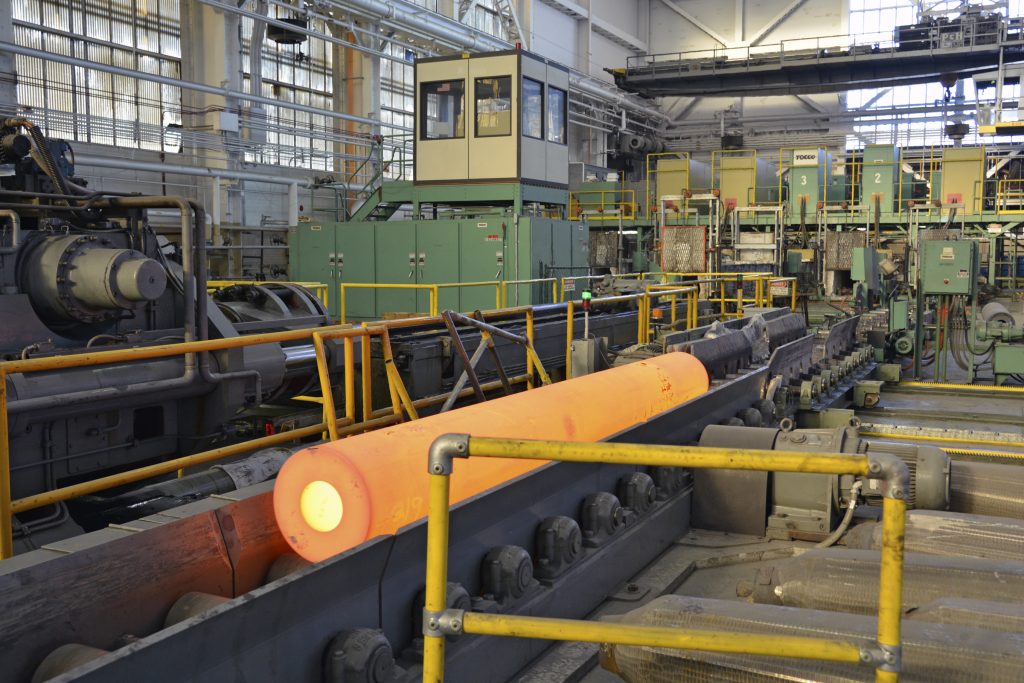
The manufacturing processes being established at the Telford site involve some of the most rigorous precision metallurgy in modern industry. Machining large-calibre weapon barrels requires specialized high-tensile steel ingots, deep-hole drilling, heat treatment, and specialized autofrettage hardening. During autofrettage, the inner bore of the barrel is subjected to enormous hydraulic pressures that deliberately yield the inner layers of steel, inducing permanent compressive stresses that prevent catastrophic fracture when high-pressure propellants detonate during combat firing.
Achieving this level of material integrity leaves zero margin for technical error. While heavy metal metallurgy operates under distinct physical laws compared to culinary physics—such as understanding Emulsion Sauce Mechanics and 4 Proven Secrets to Create Flawless Silky Textures where phase stability and thermodynamic balance dictate the physical structure—the overarching rule remains identical in both arenas: fundamental mechanical failure occurs when precise elemental controls are compromised. In military manufacturing, even microscopic chemical impurities or uneven thermal tempering during the forging cycle can result in barrel ruptures under field conditions.
The newly operational Telford facility under the operational supervision of Rheinmetall integrates automated robotic profiling with traditional heavy-ordnance rifling methods that had vanished from the British industrial landscape following the shuttering of historical royal ordnance factories. By localizing this intricate technical capability, domestic technicians and defense engineers regain hands-on mastery over deep-bore boring, chrome plating, and ballistic calibration.
Strategic Repercussions Across Continental Defence Budgets
The aggressive expansion strategy implemented by Rheinmetall demonstrates that European defence spending is pivoting from theoretical procurement targets into tangible production output. Across the continent, NATO member states have raised baseline defence budgets to fulfill collective alliance commitments, but capital deployment has frequently suffered from protracted bureaucratic bidding cycles. The execution of the €3.7 billion Italian contract signals that major European capitals are now actively distributing capital to secure physical hardware deliveries over the next decade.
Furthermore, the reopening of barrel production in the United Kingdom establishes a viable blueprint for other European nations seeking to recover lapsed defence competencies. Governments that allowed national arsenals to decay over the past three decades are closely studying the Shropshire model, evaluating how public-private partnerships can establish sovereign military factories without placing the full capital burden on state budgets. Through strategic long-term off-take agreements, ministries of defence can anchor private capital to build resilient, sovereign industrial plants capable of rapid crisis surges.
As European security architecture adapts to an era of protracted strategic friction, the competitive edge belongs entirely to states and industrial consortia capable of delivering physical iron, steel, and firepower at scale. The simultaneous launch of British barrel production and the massive Italian armored vehicle procurement confirm that Rheinmetall is occupying the central axis of European conventional rearmament, fundamentally reshaping the continent’s military manufacturing base for decades to come.