Pan searing mechanics and 4 proven rules that create flawless restaurant crusts
Achieving a shattering mahogany crust on a steak or chop requires mastering thermodynamics rather than relying on culinary luck. Unpack the science of thermal mass, surface desiccation, and lipid conduction to transform your high-heat cooking.
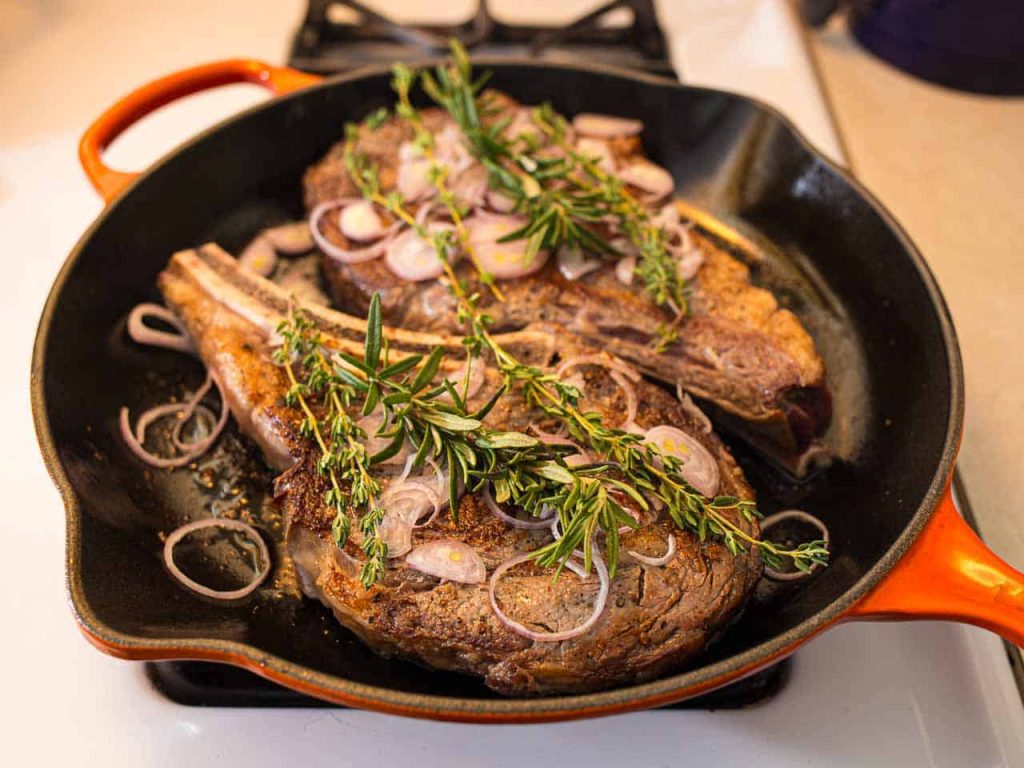
Mastering pan searing mechanics separates frustrated home cooks from seasoned culinary professionals who effortlessly turn out deeply caramelized, mahogany-crusted proteins. We have all endured the disappointment of cutting into an expensive cut of meat only to discover a lackluster, gray band beneath a limp, damp surface. This failure rarely stems from inferior ingredients or insufficient stove power. Instead, it reflects a misunderstanding of how heat, water, and metal interact at the molecular boundary.
Creating a crisp, intensely savory exterior while preserving a tender, succulent core is fundamentally an exercise in physics. When you drop cold protein into hot metal, you trigger a violent energetic confrontation. By dissecting the underlying science, you can replace anxious guesswork with predictable, repeatable culinary precision.
The thermodynamic battle between surface moisture and crust development
At the core of pan searing mechanics lies a ruthless thermodynamic reality governed by the latent heat of vaporization. Liquid water requires an astonishing amount of energy to transform into steam. Specifically, it absorbs roughly 2,260 kilojoules of energy per kilogram simply to complete this phase transition. As long as liquid moisture coats the exterior of your meat, the surface temperature cannot rise significantly above the boiling point of water, which tops out at 100 degrees Celsius.
The prized Maillard reaction demands far higher operating thresholds. This complex cascade of chemical rearrangements between amino acids and reducing sugars only begins accelerating rapidly around 140 to 165 degrees Celsius. If your steak enters the pan wet, every solitary joule of heat transferred from the skillet goes toward boiling away water instead of producing savory crust compounds. The meat steams in its own released moisture, generating that dreaded dull gray hue while the delicate interior creeps toward overcooked oblivion.
Overcoming this energy barrier requires eliminating surface moisture before the protein ever touches hot cookware. Moisture is the eternal enemy of crispness. When heat encounters an arid, hydrophobic surface, the temperature surges instantly into the optimal Maillard activation window, triggering rapid browning in mere seconds rather than sluggish minutes.
Thermal mass and pan recovery rates across culinary metals
Heat capacity and thermal conductivity dictate how cookware behaves during the initial shock of contact. When room-temperature or chilled meat lands in a hot skillet, the pan immediately dumps a massive portion of its stored thermal energy into the cold food. Lightweight, stamped-metal pans experience a catastrophic thermal plunge. Their surface temperature plummets below the threshold of active browning, causing the meat to stew as fluids seep out into a lukewarm vessel.
Heavy cast iron and thick carbon steel behave differently. While cast iron is a relatively sluggish conductor of heat, its dense molecular structure provides an immense thermal reservoir. Once thoroughly saturated with heat, cast iron acts like a heavy flywheel that refuses to stop spinning. It retains sufficient latent energy to absorb the cold shock of a thick chop without dropping below critical browning temperatures. Stainless steel cladded with thick aluminum cores offers an alternative advantage, delivering rapid thermal recovery by pulling fresh energy from the burner swiftly to replenish surface heat.
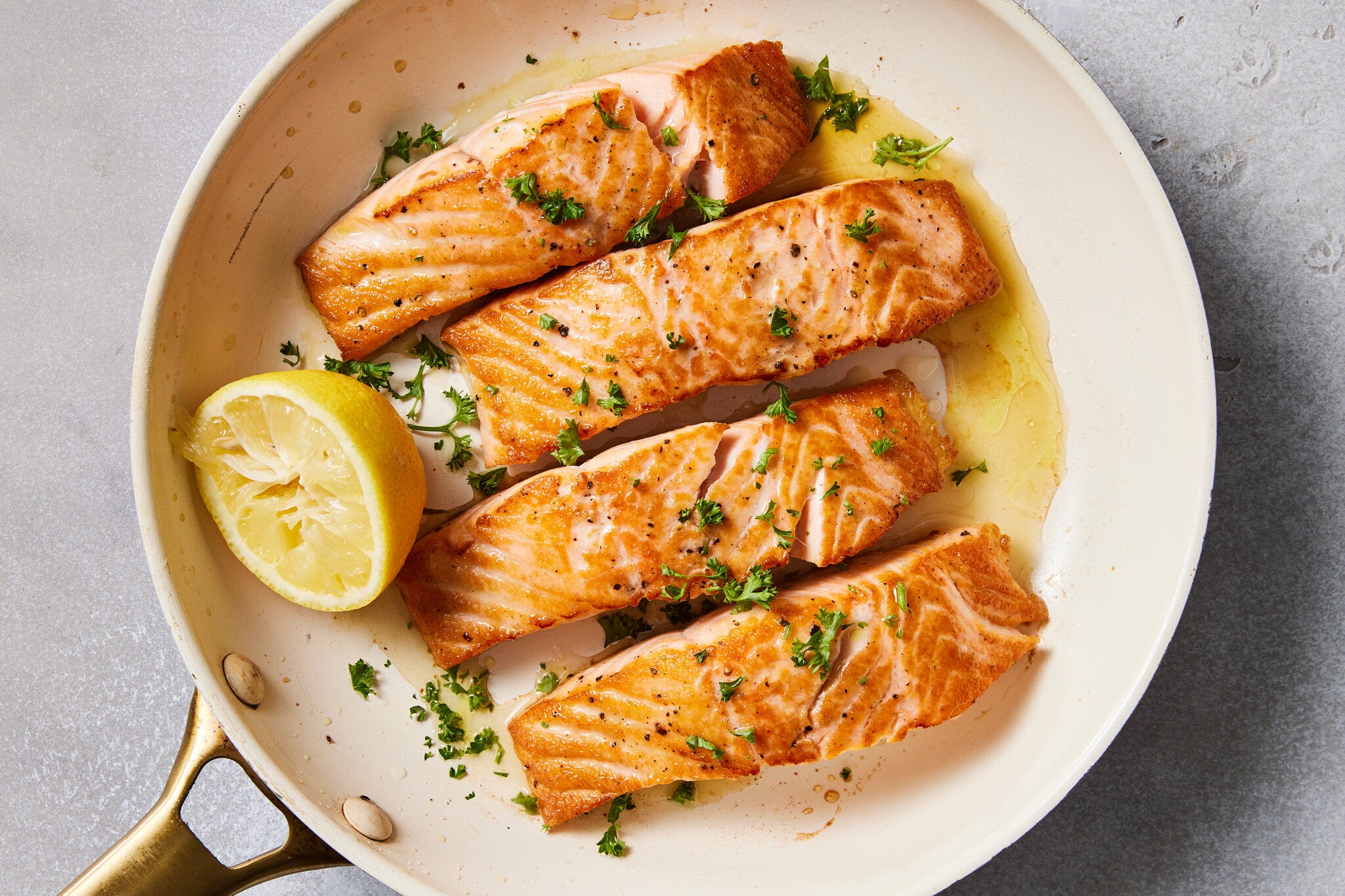
Four essential practices that guarantee exceptional thermal caramelization
Decoding pan searing mechanics requires transforming abstract thermal physics into repeatable muscle memory. These four foundational practices govern surface conditions, lipid behavior, stored energy, and convective heat delivery to guarantee extraordinary results on every cut.
Aggressive surface desiccation through prolonged dry brining
Wiping meat with a paper towel is helpful, but it only addresses superficial water. True surface desiccation happens through biochemical manipulation. Salting raw meat hours ahead of cooking initiates an osmotic cycle. Salt draws interior moisture to the surface, dissolves into a concentrated brine, and gradually breaks down dense muscle proteins. Over several hours, this protein-rich solution reabsorbs into the muscle matrix.
When placed uncovered on an elevated wire rack inside a standard refrigerator, the cool, circulating air acts as an evaporative dehumidifier. The exterior dries into a tight, glossy skin known in charcuterie as a pellicle. This dry exterior ensures that pan heat transfers directly into protein caramelization rather than wasting precious seconds boiling off surface liquids. Research highlighted in the Harvard Science and Cooking culinary lectures consistently proves that managing surface water content is the single most critical factor in controlling phase transitions during high-heat cookery.
Strategic lipid selection to bridge microscopic air gaps
No matter how polished a skillet looks to the naked eye, its surface consists of jagged microscopic peaks and valleys. Raw muscle tissue possesses an equally irregular landscape. If you place dry meat into a dry skillet, the two surfaces make contact only at scattered microscopic points. The remaining space is filled with air, which serves as a notoriously poor thermal conductor.
Cooking fat functions as a liquid thermal bridge. Lipids settle into those microscopic voids, displacing air and creating an unbroken conduit for conductive heat transfer across the entire surface area. Select neutral fats with high smoke points, such as clarified butter, refined avocado oil, or rendered beef tallow. Unclarified butter contains water and delicate milk solids that scorch at low temperatures, turning bitter before your protein develops a meaningful crust.
Skillet preheating discipline that protects latent heat energy
Rushing the preheat stage ruins more sears than improper seasoning ever could. Bringing a heavy skillet to true thermal equilibrium requires patient, progressive heating over medium heat for five to eight minutes. Blasting a cold pan on high heat creates scorching hot spots directly above the burner while leaving the outer perimeter tepid and unresponsive.
Test the skillet using the Leidenfrost phenomenon. Flick a few drops of water onto the bare surface. If the droplets sizzle and evaporate instantly, the pan is too cold. When the pan reaches proper searing temperature, the droplets remain intact, gliding across the metal on a thin cushion of vaporized steam like frictionless spheres. At this junction, add your high-smoke-point oil, wait for the faint shimmer that signals reduced viscosity, and lay down your protein.
Rhythmic butter basting to accelerate top down conduction
Once you establish a foundational crust on the primary side, relying solely on unidirectional heat conduction from below creates an uneven internal temperature gradient. This is where classical French arrosé technique alters the cooking geometry. Lower the burner temperature slightly, drop in cold unsalted butter along with woody aromatics like thyme and crushed garlic, and tilt the skillet toward you.
As the butter foams, spoon the bubbling emulsion continuously over the exposed top surface of the protein. The foaming butter acts as a miniature convective bath. It cooks the upper layers downward, distributes fat-soluble flavor compounds across every crevice, and accelerates internal warmth without subjecting the delicate bottom crust to scorched carbonization.
Sensory indicators that reveal natural protein release
Anticipating pan behavior requires reading shifting indicators before disaster strikes. Much like how unexpected kinetic momentum unfolds when Kamilla Rakhimova Sparks 3 Crucial Surges Across Global Tennis Markets, your thermal environment presents sudden inflection points that demand proactive adjustments rather than frantic reactions. An inexperienced cook panics when meat sticks tightly to the skillet during the opening minute of cooking. They jam a spatula underneath, tearing precious muscle fibers and leaving half their crust glued to the metal pan.
When cold protein makes initial contact with hot metal, chemical bonds form between sulfur-containing amino acids and the metal ions of the skillet. Attempting to force the meat loose at this stage destroys surface integrity. As the searing process proceeds, intense thermal energy dehydrates the cell structures, denatures surface proteins, and drives the Maillard reaction. This transformation alters the chemical architecture of the meat, causing the initial bonds to break down. Understanding these subtle cues is where pan searing mechanics transitions from rigid textbook instruction into intuitive culinary mastery. The food will release cleanly on its own the exact moment the crust achieves structural integrity.
Internal pressure stabilization and capillary juice redistribution
A thorough grasp of pan searing mechanics extends beyond the sizzle of the stovetop and into the crucial resting phase. Intense exterior heat creates a steep thermal and mechanical pressure gradient within the protein. Muscle fibers consist of elongated, tubular cells packed with water-holding proteins. As the exterior reaches scorching temperatures, these fibers contract forcefully, acting like millions of microscopic hydraulic clamps.
This violent contraction wrings internal moisture away from the perimeter, driving fluids toward the cooler, less constricted core of the cut. If you carve a steak immediately upon removing it from the skillet, this built-up hydrostatic pressure escapes through the initial knife cuts. The cellular fluid cascades across your cutting board, leaving the meat dry, flat, and drained of flavor.
Resting the cooked cut on a warm, elevated surface allows the contracted actin and myosin protein filaments to gradually relax as thermal energy equalizes. As the internal temperature stabilizes, the cellular matrix regains its moisture-holding capacity, pulling the concentrated center juices back outward through capillary action. By anchoring your culinary habits in pan searing mechanics, you eliminate kitchen guesswork forever and secure a tender, succulent centerpiece wrapped in a crackling, restaurant-grade crust.