Film noir lighting mechanics and 4 proven rules that forge unforgettable cinematic tension
Cinematic darkness is not an absence of light, but an active physical sculpture. Explore the optical engineering and dramatic principles behind legendary film noir shadow craft.
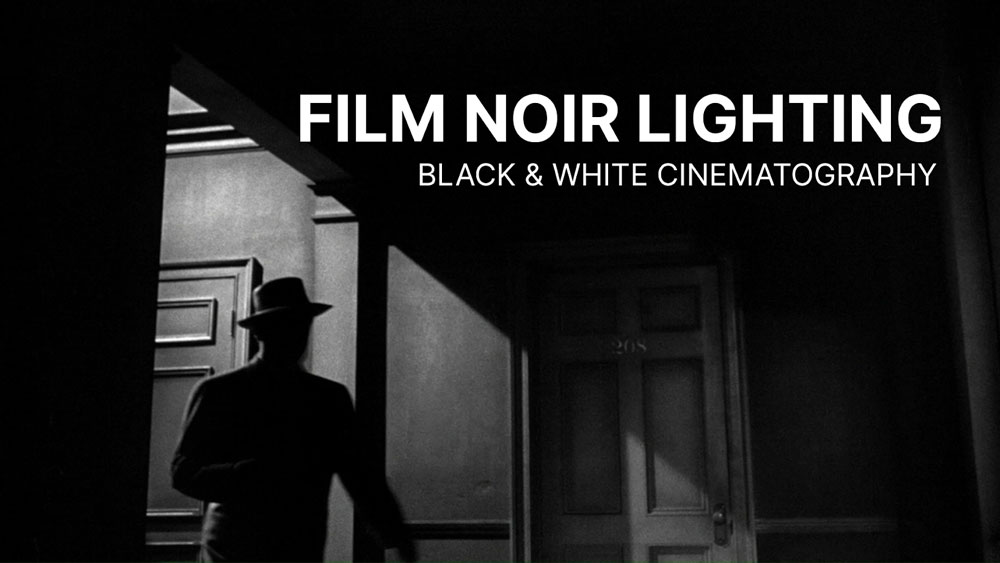
Mastering film noir lighting mechanics requires a filmmaker to treat darkness not as an absence of exposure, but as a razor-sharp sculptural medium. Rather than illuminating a scene to guarantee visual safety and cosmetic clarity, vintage cinematographers like John Alton and Nicholas Musuraca carved out slivers of illumination from an ocean of deep blackness. Every beam of light was an act of aggression against a hostile universe. The viewer does not simply observe a trench-coated detective walking down an alleyway; they feel the crushing psychological weight of an environment where moral certainty has dissolved into predatory silhouettes. Light in classic crime cinema never flatters actors. It interrogates them.
The visual grammar of noir emerged out of economic scarcity, technical limitations, and profound wartime disillusionment. During the mid-twentieth century, Hollywood B-movie crews worked with frantic production schedules and microscopic budgets. Instead of building lavish sets or painting intricate backdrops, lighting directors discovered that a single 2K Fresnel spotlight cutting through heavy theatrical smoke could mask unfinished wooden flats while generating unbearable atmospheric suspense. Shadows became the ultimate production value. They hid the seams of the soundstage and amplified the psychological fractures of the characters navigating within it.
The optical heritage of chiaroscuro and German Expressionism
To understand why high-contrast lighting exerts such a hypnotic grip on the human nervous system, one must trace its lineage back through Italian Renaissance chiaroscuro to the twisted, angular sets of 1920s Weimar cinema. When European directors and cinematographers fled fascism and arrived in Southern California, they brought an artistic obsession with externalizing interior madness. Pioneers like Fritz Lang and Robert Wiene had already demonstrated that extreme light angles could evoke paranoia, guilt, and existential dread. Transferred to American crime cinema, understanding the legacy of German Expressionism helps demystify how film noir lighting mechanics evolved into an enduring visual language rather than a passing stylistic gimmick.
In practical terms, this style reversed classical Hollywood three-point lighting. Studio portraiture traditionally relied on a balanced key light, a generous fill light to erase skin imperfections, and a soft backlight to separate the actor from the background. Noir demolished this flattering equilibrium. The fill light was routinely throttled or extinguished altogether, pushing contrast ratios from a polite 2:1 or 3:1 up to an unforgiving 16:1 or higher. Faces were split in half by impenetrable vertical shadows. Backgrounds were plunged into pitch blackness, leaving only isolated pools of hot rim light to define a character’s trembling shoulder or the glint of a steel revolver, as chronicled extensively in American Society of Cinematographers historical documentation.
The core principles behind dramatic shadow craft
Orchestrating an authentic low-key frame requires far more than turning off half the studio lamps. Darkness that looks cinematic must be precisely shaped, bounded, and motivated. Without deliberate edge control and specular highlights, underexposed footage devolves into a muddy, unreadable grey wash. Across the golden era of hard-boiled cinema, directors of photography deploy distinct film noir lighting mechanics to trap their protagonists inside hostile moral labyrinths.
Hard key separation and steep shadow falloff
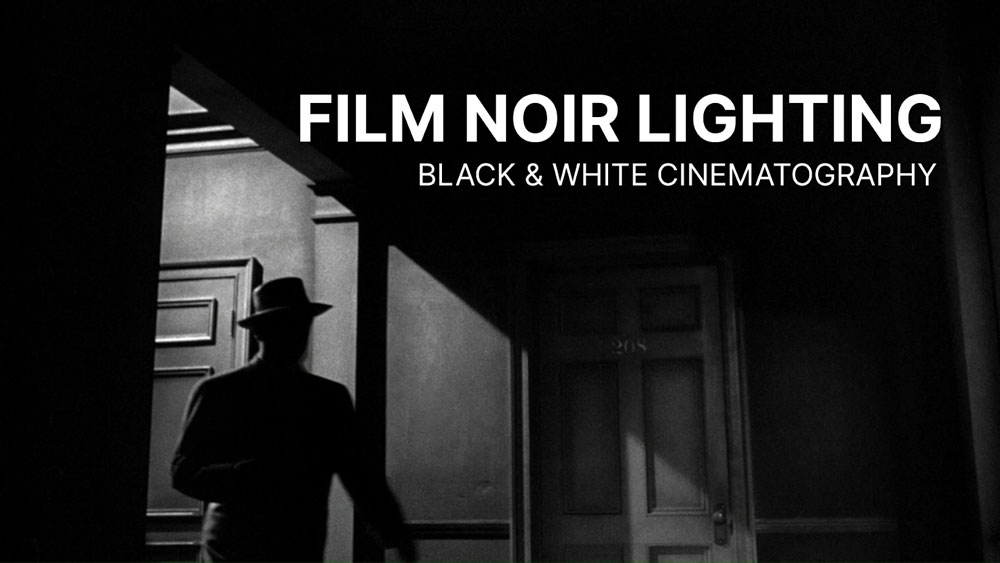
Soft, diffused light wrapping gently around an actor’s cheek is the enemy of tension. Noir demands hard, focused beams generated by open-face arc lamps or heavy optical Fresnels focused to a tight spot. By positioning the key light at an acute side or rear angle—often seventy to ninety degrees off the camera axis—the cinematographer creates a steep falloff where bright luminance terminates violently against deep shadow. This creates the classic half-face illumination known as split lighting, visually dramatizing a character’s divided conscience. Because the beam originates from an unrelenting point source, the shadow edges remain razor-sharp across the nose, cheekbones, and hollows of the eyes, transforming the human face into a living architectural mask.
Slotted cucoloris patterns and oppressive environmental cages
A smooth, uninterrupted wash of shadow rarely communicates peril; patterned darkness does. Cinematographers mastered the use of cucoloris flags, commonly known as cookies, suspended between hard lights and background surfaces to break light into menacing geometric patterns. The most famous iteration is the diagonal pattern of half-closed Venetian blinds projected across an office wall or an actor’s torso. This optical trick does double duty. Technically, it breaks up flat, boring surfaces without requiring expensive practical set dressings. Psychologically, it transforms the beams of light into the bars of a jail cell, reminding the audience that the protagonist is already trapped by their own terrible choices long before the police arrive.
Aggressive negative fill and the destruction of ambient bounce
One of the hardest disciplines for aspiring lighting technicians is learning to absorb light rather than emit it. In standard interiors, stray illumination bounces off light-colored ceilings, pale walls, and floorboards, inadvertently filling in the shadows that a director is trying to protect. Noir masters countered this physics problem by draping soundstages in heavy black duvetyne fabric and positioning solid black flags right against the edge of the frame. By stripping away every stray reflection, this rigorous discipline forms the bedrock of film noir lighting mechanics, turning empty rooms into claustrophobic interrogation cells. When shadows have zero ambient bounce, the blacks on screen register as absolute voids, pulling the viewer’s gaze inexorably toward whatever sparse, terrifying detail remains lit.
Wet surface specular kickers and high-contrast ground reflections
Asphalt, brickwork, and timber absorb tremendous amounts of light, threatening to turn wide night exteriors into flat, murky silhouette cutouts. To combat this absorption, studio crews famously hosed down streets before every night shoot. Water transforms dull, matte pavement into a giant optical mirror. When backlights and streetlamps strike wet asphalt from a low angle, they generate brilliant specular reflections that skip across the ground straight toward the camera lens. This provides a luminous floor plane that traces the silhouettes of trench-coated figures, tires, and puddles without polluting the pitch-black sky above. The world becomes a gleaming chessboard of high-contrast specular kicks, amplifying the feeling of an urban wilderness slick with danger.
Adapting vintage contrast ratios to modern high dynamic range sensors
Contemporary filmmakers attempting to capture noir aesthetics run straight into a technological paradox. Vintage 35mm black-and-white safety films possessed steep characteristic curves with relatively narrow exposure latitude. They crushed low-end shadow detail aggressively while rolling off overexposed highlights with organic grace. Modern digital cinema sensors operate on the exact opposite principle. Built to capture fourteen, sixteen, or more stops of light, digital sensors capture an astonishing amount of information inside the deepest shadows. If a cinematographer simply shoots a high-contrast scene digitally using standard practices, the sensor will reveal texture in the gloom that was never meant to be seen, stripping away the mystery.
Consequently, translating classic film noir lighting mechanics to modern digital sensors demands a radical shift in exposure strategy. Rather than relying on the camera sensor to bury the shadows naturally, the director of photography must manually compress the contrast floor on set. This means lighting to a dedicated display lookup table calibrated with an aggressive toe curve, aggressively cutting stray ambient fill, and stopping down the lens to push shadowy environments into deliberate digital clipping. Precision becomes paramount. If digital noise creeps into the underexposed regions, the blacks become buzzing, chromatic artifacts rather than velvety visual voids. Cinematographers must overlight their key highlights slightly to protect the signal-to-noise ratio, then pull down the midtones in post-production grading to restore genuine chiaroscuro depth.
Atmospheric scatter plays an indispensable role in blending digital precision with vintage filmic texture. In classic cinema, mineral-oil smoke and cigarette haze caught hard light rays, transforming unseen optical cones into physical shafts of light. Modern productions achieve this with water-based hazers, scattering microscopic fluid droplets through the air. The resulting volumetric lighting softens harsh digital edges while providing depth cues that guide the viewer through complex spatial geography. When cinema sets recreate urban ruins or night-time disaster zones, the sheer psychological weight echoes documentary realism, much like the way Terremoto Tremors Expose 4 Critical Realities Behind Deadly Latin American Seismic Disasters analyzes how sudden structural fractures dismantle ordinary life. A beam cutting through smoke turns architecture into emotion, transforming concrete walls into shifting corridors of fear.
The enduring psychological resonance of cinematic darkness
Lighting is never merely an engineering exercise; it is an unfiltered window into the moral universe of a story. Bright, evenly distributed lighting signals safety, institutional order, and emotional transparency. It reassures the viewer that nothing is hidden under the table. Noir lighting inverts that comforting social contract. When a scene is dominated by heavy black values, the viewer’s imagination is forced to work overtime, projecting their own latent dread into the unlit corners of the frame. Shadows harbor the unknown, the illegal, and the repressed subconscious instincts that civilized society strives to ignore.
This visual philosophy explains why the aesthetic refuses to die. From the rainy neon-soaked alleyways of cyber-thrillers to the gritty criminal underworlds of contemporary prestige television, the enduring brilliance of film noir lighting mechanics lies in their profound psychological honesty. By denying the eye effortless clarity, the camera demands active participation. We lean into the screen, hunting for clues in the darkness, only to realize that the danger was never lurking in the shadows outside the protagonist. It was inside them all along, etched into the sharp, unforgiving lines across their face.