Curveball pitch mechanics and 4 proven rules that create unhittable break
Uncover the authentic biomechanics behind baseball’s most devastating pitch. Discard destructive wrist-snapping myths and harness pure kinetic sequencing for unhittable break.
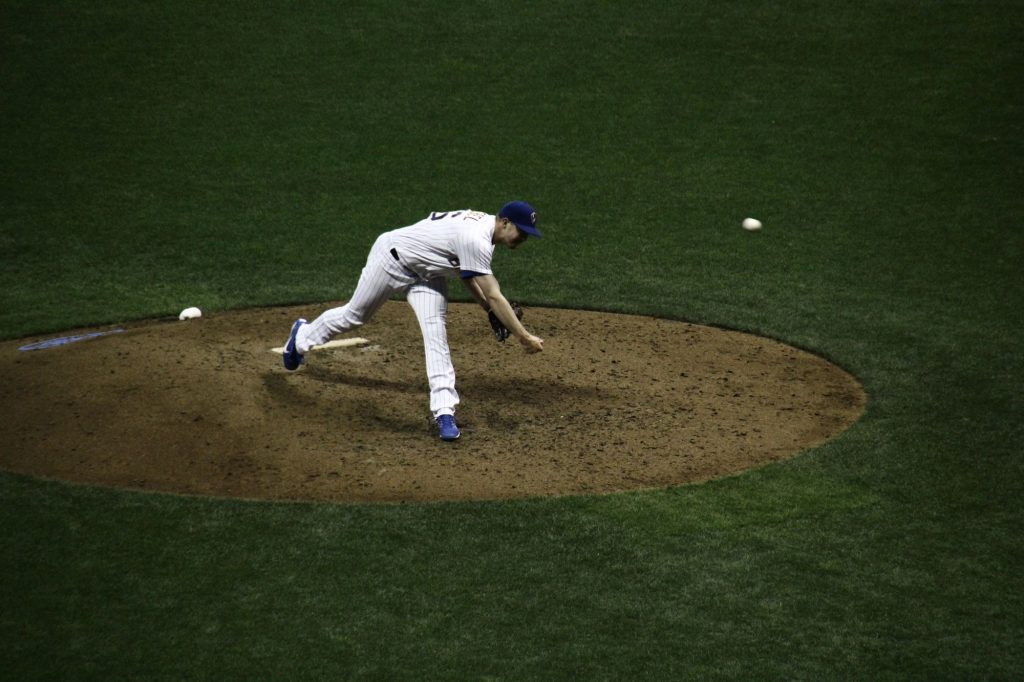
Mastering curveball pitch mechanics requires an athlete to discard decades of destructive dugout folklore and submit to the uncompromising laws of classical aerodynamics. When a spinning baseball leaves a pitcher’s fingers at eighty miles per hour, its trajectory is not shaped by mysticism or raw muscular strain. It is dictated by air pressure differentials, kinetic sequence sequencing, and precise ground reaction forces traveling upward from the rubber.
Hitters experience the sensation of a pitch falling off an invisible table because of a biological illusion known as saccadic suppression paired with severe aerodynamic deflections. For more than a century, young arms have suffered unnecessary damage because well-meaning coaches advised them to twist their wrists like turning a doorknob. True velocity and sharp downward drop do not originate from localized joint wrenching. They are the organic result of structural alignment, release point positioning, and rotational energy transferred without kinetic leakage.
The Physics of Induced Movement and the Illusion of the Drop
A baseball traveling through air is a textured sphere locked in a violent aerodynamic dispute. As the ball rotates forward with topspin, its raised seams displace the fluid atmosphere unevenly. The top surface of the baseball spins forward into the oncoming wind, creating high air resistance and dragging air molecules along with it. Simultaneously, the bottom hemisphere spins backward in harmony with relative wind velocity, allowing air to flow past rapidly with minimal turbulence.
This speed disparity generates a pressure differential governed directly by the Magnus effect. The high pressure mass hovering over the top crown of the ball physically shoves the baseball downward toward the dirt, accelerating its descent far beyond the ordinary pull of gravitational acceleration. While gravity pulls any falling object downward at an invariable rate, the induced downward Magnus force causes the baseball to deviate sharply from the batter’s mental projection.
Human vision cannot process continuous parabolic flight at high velocities with complete fidelity. The batter’s visual apparatus tracks the ball through peripheral optical flow, mapping an expected path based on the initial release angle. When the baseball enters the final fifteen feet of flight, the compounded aerodynamic deflection converges with the natural downward plunge. The pitch does not suddenly break late because the physics changed mid-flight; it appears to plunge suddenly because the linear deviation has finally eclipsed the batter’s visual tracking capacity.
Why Traditional Wrist Snap Coaching Has Ruined Countless Arms
When conventional coaches misinterpret curveball pitch mechanics, they almost invariably tell young players to violently twist their wrists at the instant of release. This outdated cue has ended promising careers before high school graduation. Twisting the wrist creates severe shear stress across the medial collateral ligament while forcing the flexor-pronator muscle mass into an unnatural, compromised position.
Electromyographic evaluations of professional pitchers demonstrate that the wrist does not snap or twist independently during elite execution. Instead, the wrist joint remains locked in a relatively rigid, neutral or slightly supinated position through the acceleration phase. The illusion of a snapping motion is merely the forearm naturally unfurling after the ball has already departed from the fingertips.
When a thrower attempts to create spin through sudden active wrist flexion, they inevitably bleed kinetic energy and alter their arm slot. This leads to an elevated elbow, improper deceleration mechanics, and an unpredictable release window. Pitchers who rely on active joint twisting consistently leave their breaking balls high in the strike zone, floating harmlessly toward waiting bats with minimal spin efficiency.
Four Proven Mechanical Laws That Create Devastating Breaking Balls
Deconstructing world-class curveball pitch mechanics through optical tracking reveals that sharp break is an engineered byproduct of momentum transfer. The body acts as a biological whip, gathering immense energy from the dirt and releasing it through a microscopic surface area on the cowhide.
One Continuous Kinetic Chain From Ground Force to Finger Pad
Power begins in the back hip and the firm anchor of the drive leg against the rubber. As the pitcher strides downhill, the lead foot must plant with absolute firmness into the clay, acting as an unyielding brake. This violent deceleration of the lower half forces the pelvis to rotate open while the torso remains momentarily closed, loading the core musculature like an elastic spring.
Energy surges upward through the rib cage, snaps the shoulder into rapid internal rotation, and travels down the humerus into the forearm. If any joint along this pathway collapses early, rotational power dissipates instantly. Elite breaking balls do not demand muscular effort from the bicep or forearm; they require an athlete to maintain an unyielding conduit that channels ground reaction forces directly into the ball.
The Supination Trap and Clean Forearm Alignment
Many struggling pitchers assume that getting on the side of the ball requires extreme premature forearm supination. Doing so tilts the axis of rotation sideways, converting what should be a sharp vertical plunge into a flat, sweepy, easily readable slider. The pitcher must maintain a neutral forearm position deep into the throwing phase, driving the elbow forward as if delivering a standard four-seam fastball.
At the critical instant prior to release, the forearm remains oriented toward the target, allowing the middle finger to track cleanly over the front crest of the baseball. This geometry ensures that the force vector points directly through the center of gravity while applying peripheral torque along the seams. Athletic sequencing mirrors the deceptive cadence explored in film editing pacing mechanics and 4 proven rules that create irresistible suspense, where the sudden contraction of micro-moments disorients human perception.
Grip Friction and Seam Orientation at Release Point
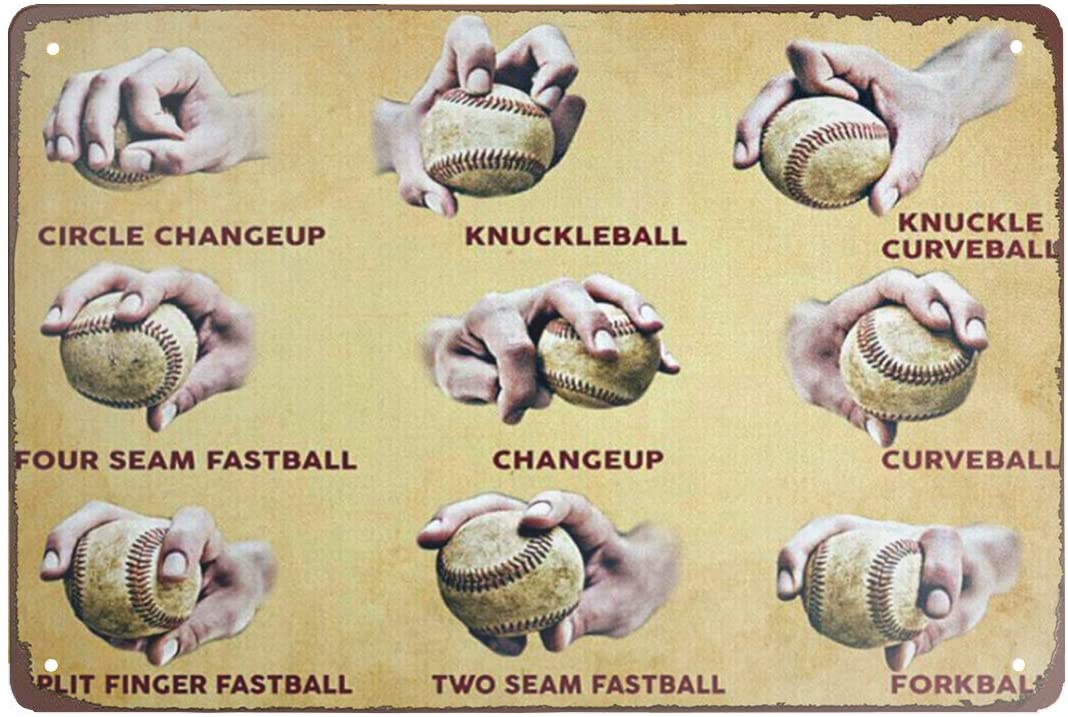
Modern biomechanical lab data shows that elite curveball pitch mechanics depend heavily on the position of the middle finger. The middle finger provides virtually all the frictional torque required to impart high-rpm topspin. It should rest firmly along an authentic horseshoe seam, with the thumb placed directly beneath the ball along an opposing seam to create a stable fulcrum.
The index finger plays an auxiliary stabilizing role, resting lightly against the leather without exerting counter-productive pressure. At release, the pitcher does not claw or pull down aggressively; rather, the pitcher rips the baseball off the middle finger pad as the arm completes its rapid forward sweep. The ball rolls up and over the index finger, transforming linear forward velocity directly into pure rotational momentum.
Trunk Tilt and Hip Shoulder Separation Dynamics
True curveball pitch mechanics rely on maintaining forward trunk tilt rather than upright posture during release. Elite pitchers exhibit significant lateral trunk tilt toward the glove side, which naturally raises the arm slot without placing compensatory strain on the shoulder capsule. This forward flexion allows the pitcher to release the ball slightly further out in front of the body.
Releasing the ball out in front guarantees that the hand is traveling downward along its natural arc at the exact moment the ball escapes the fingers. This downward hand trajectory establishes the initial launch angle necessary to fool the hitter, keeping the pitch on the plane of a fastball before the aerodynamic drop takes command.
The Aerodynamic Secret of Seam Shifted Wake and Boundary Layer Airflow
Beyond standard Magnus force, modern curveball pitch mechanics interact intimately with seam-shifted wake phenomena. For decades, pitching science assumed that spin axis and velocity were the only factors dictating movement. Advanced fluid dynamics testing, supported by continuous American Sports Medicine Institute pitching biomechanics research, has revealed that how the baseball’s raised stitches separate passing airflow alters the pitch path entirely.
When a pitcher positions the seams so that one side of the baseball presents smooth leather while the other presents a raised ridge of stitches, the boundary layer of air separates unevenly. The rough, disrupted airflow on the seam-heavy side remains attached to the sphere longer than the laminar flow on the smooth side. This asymmetric detachment produces an invisible lateral force known as seam-shifted wake.
When Magnus forces and seam-shifted wake forces align synergistically, the ball moves far more violently than pure rotational speed would suggest. A pitcher who grasps how to calibrate seam orientation at launch can generate substantial, late-breaking horizontal and vertical deviation without increasing physical strain or chasing higher revolutions.
How Elite Pitchers Preserve Arm Health While Spinning Lethal Breaking Pitches
Optimizing your curveball pitch mechanics is ultimately an exercise in energy conservation rather than brute force. Pitchers who suffer elbow reconstructions are rarely victims of the curveball itself; they are victims of mechanical flaws such as early elbow drop, premature shoulder opening, and erratic trunk deceleration. When executed with correct posture and pristine timing, a breaking ball actually places comparable or even slightly reduced valgus torque on the elbow compared to a maximal-effort four-seam fastball.
Arm longevity hinges on the deceleration phase. Once the baseball leaves the fingers, the body must absorb massive kinetic forces. The pitching shoulder, rotator cuff, and latissimus dorsi must fire sequentially to slow the arm down smoothly. Pitchers who cut off their follow-through or stop their arm abruptly force their connective tissues to absorb kinetic shocks that should have been harmlessly dispersed across the back, hips, and core.
Mastering these refined curveball pitch mechanics spares the ulnar collateral ligament from the brutal shear stresses that cut promising careers short. By aligning the arm with the body’s natural anatomical paths, honoring the kinetic sequence, and allowing aerodynamic forces to do the heavy lifting, any dedicated pitcher can fashion a pitch that consistently dives below barrels while keeping their arm healthy for thousands of innings.