Asset allocation rebalancing mechanics and 4 essential rules that protect your wealth
Portfolios left unchecked will naturally drift toward excessive risk as winning equities swell. Discover the core mechanics of disciplined rebalancing and the four rules that preserve long-term capital.
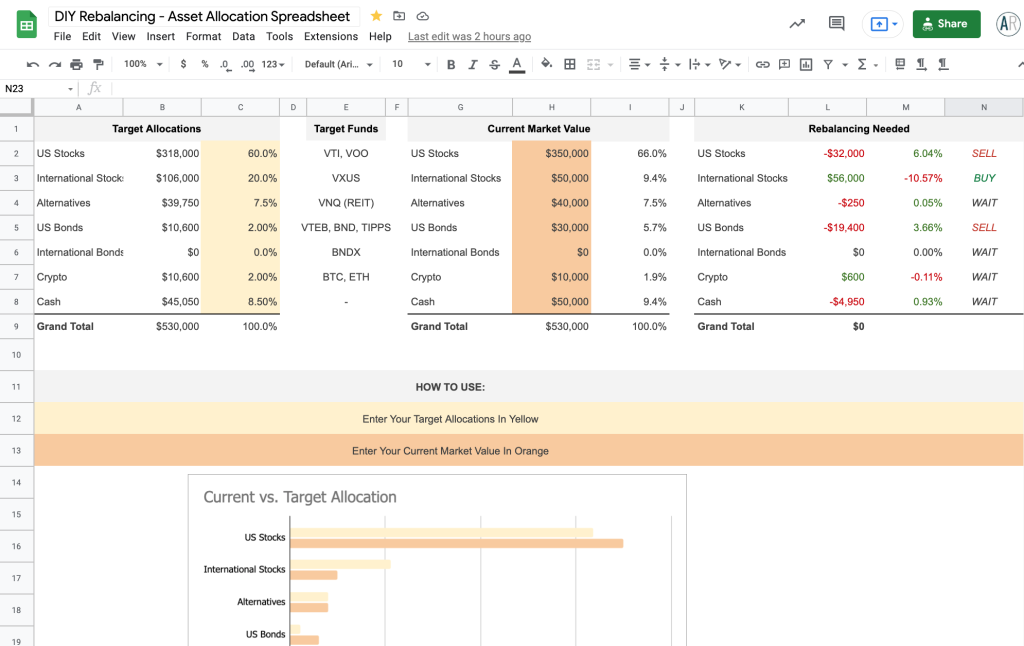
Mastering asset allocation rebalancing mechanics gives everyday investors the rare superpower to systematically buy low and sell high without emotional second-guessing. In an ideal investment journey, an asset portfolio would hum along in perfect equilibrium indefinitely. Equities would generate capital appreciation, bonds would supply stabilizing coupon income, and cash reserves would cushion against unforeseen liquidity shocks. Reality behaves far more aggressively. Asset classes compound at radically divergent rates, tugging a carefully architected portfolio away from its original blueprint.
When left unattended, a balanced portfolio transforms into a speculative vehicle disguised under old paperwork. What began as a moderate risk profile slowly morphs into an equity-concentrated powerhouse that leaves you catastrophically exposed to the next market drawdown. Rebalancing is the corrective rudder that keeps the vessel steady across decades of unpredictable financial weather.
Why portfolio drift quietly sabotages your financial future
Portfolio drift is an invisible, creeping tax on intentional risk management. Consider an investor who carefully construct a portfolio consisting of sixty percent broad-market equities and forty percent intermediate-term government bonds. Over an extended bull run, the equity portion doubles while bonds produce modest single-digit yields. Without intentional intervention, the asset mix shifts toward an eighty-twenty or even ninety-ten ratio.
On paper, the account balance looks magnificent. The investor feels wealthy, astute, and emboldened by paper profits. Yet under the hood, the risk profile of that portfolio has quietly doubled. The buffer meant to absorb economic shocks has shriveled to a negligible fraction of total wealth. When investors ignore asset allocation rebalancing mechanics, their portfolios inevitably drift into dangerous territory dictated entirely by market fluctuations rather than personal risk tolerance.
This structural change becomes disastrous when an inevitable market correction arrives. The investor who believed they held a conservative sixty-forty allocation suddenly watches their net worth plummet with the ferocity of a pure equity index. Panicked by losses they never mentally prepared to endure, they commit the cardinal sin of wealth management: liquidating assets at the exact moment prices reach their cyclical trough. Drift does not just distort percentages; it breaks human composure.
The hidden psychology behind maintaining investment discipline
Rebalancing is mechanically straightforward yet psychologically unnatural. Modern portfolio theory demands that an investor trim positions that have performed brilliantly over recent quarters and redirect that extracted capital into underperforming, deeply unfavored assets. Every evolutionary instinct screams against this behavior. Human biology encourages us to chase what is thriving and flee whatever causes immediate pain.
Behavioral finance labels this cognitive trap recency bias. When tech equities or growth sectors surge, our brains project that trajectory into infinity. Selling off a portion of those shining winners feels like punishing success. Conversely, buying beaten-down foreign equities, emerging debt, or commodities feels like throwing fresh money into a sinking vessel. The financial press reinforces this anxiety with sensational headlines declaring the death of whichever asset class is currently lagging.
Underlying all asset allocation rebalancing mechanics is a stark psychological hurdle: forcing the human brain to trim assets that feel invincible. Successful market participants acknowledge this discomfort and build operational barriers against it. They understand that performance mean-reversion is one of the most reliable forces in global capital markets. The high-flyers of today frequently become the laggards of tomorrow, while forgotten bargains quietly build the base for subsequent outperformance.

Four essential rules that govern successful rebalancing
To insulate your net worth from emotional bias and unchecked drift, you must replace gut instincts with mechanical execution rules. Adhering to structured operating guidelines ensures that your actions remain dispassionate, tax-efficient, and systematically repeatable across decades of portfolio compounding.
Establish clear percentage thresholds rather than arbitrary calendar dates
Many investors schedule portfolio reviews on arbitrary dates such as the first of January or the start of each quarter. While periodic check-ins foster discipline, rebalancing strictly by the calendar introduces significant inefficiencies. If the market has traded sideways for six months, liquidating positions on a fixed date generates unnecessary transaction fees, bid-ask slippage, and potential taxable events without meaningful risk reduction.
A superior methodology utilizes percentage tolerance bands. Under this framework, you define an acceptable corridor around each target allocation, such as an absolute five percent shift or a relative twenty percent movement. If your target allocation for global equities is fifty percent, you trigger a rebalancing event only when that position breaches fifty-five percent on the upside or drops below forty-five percent on the downside. This opportunistic trigger ensures you only rebalance when volatility creates genuine mathematical divergence.
Redirect fresh cash inflows before triggering taxable asset sales
The most elegant way to restore portfolio balance is without selling a single share. Selling appreciated positions in taxable accounts immediately triggers capital gains liabilities, giving up a portion of your compounding capital to revenue authorities. Seasoned allocators neutralize this friction by deploying fresh liquidity straight into underweighted asset classes.
Whenever you deposit new savings from employment income, maturity distributions, or interest payouts, direct the entire cash flow toward whichever asset bucket is lagging behind its allocation threshold. Just as understanding dividend reinvestment mechanics and 4 proven rules that multiply wealth allows compounded earnings to compound silently over decades, smart rebalancing redirects that surplus capital precisely where the portfolio is underweighted. This cash-inflow approach restores portfolio balance smoothly while keeping your tax bill at absolute zero.
Account for asset location across taxable and retirement accounts
Modern investors rarely hold all their assets in a single container. Total wealth is typically distributed across taxable brokerage accounts, traditional tax-deferred accounts like retirement plans, and tax-exempt vehicles like Roth structures. Executing portfolio adjustments requires looking at your entire balance sheet holistically while segregating the transactions intelligently.
Applying sound asset allocation rebalancing mechanics across distinct account types ensures that portfolio health never comes at the expense of an unforced tax penalty. When a major market movement mandates selling an outperforming asset class, execute those sales within tax-sheltered accounts. Because transactions within these structures incur no immediate capital gains consequences, you can adjust percentages freely without sharing your gains with tax authorities.
Maintain emotional detachment from runaway speculative momentum
The hardest test of an allocator arrives during historical market manias. When speculative bubbles inflate, target allocations warp rapidly. Your peers will brag about extraordinary windfalls from concentrated bets, and the temptation to abandon your rebalancing thresholds will peak. The voice in your head will insist that this market cycle is fundamentally different from every era that preceded it.
Yielding to that temptation transforms you from a disciplined allocator into a momentum speculator. Rebalancing is fundamentally an act of insurance. Selling portions of an explosive winner does not signify a lack of confidence in the underlying business; it signifies an unyielding commitment to personal survival. Locking in windfall gains and funneling them into stable yield-producing assets is the only proven method to ensure that paper wealth converts into generational financial freedom.
Mathematical trade-offs between tracking error and execution friction
Every portfolio intervention comes with a distinct set of mathematical trade-offs. If you rebalance too frequently, execution friction eats your edge. Trading commissions, bid-ask spreads, and potential tax bills create a drag on cumulative returns. Conversely, if you rebalance too infrequently, the resulting tracking error and elevated volatility can permanently impair capital during sudden market downturns.
Extensive institutional research, including foundational CFA Institute research on asset allocation strategies, demonstrates that rebalancing does not necessarily maximize absolute returns in a relentless bull market. Instead, it dramatically optimizes risk-adjusted returns, commonly measured by the Sharpe ratio. Rebalancing cuts off the catastrophic left tail of return distributions, ensuring an investor never experiences the unrecoverable losses that derail lifelong plans.
A rigorous mathematical evaluation of asset allocation rebalancing mechanics reveals that over-rebalancing can erode compounding almost as destructively as neglecting the portfolio entirely. Finding the middle ground through dynamic tolerance corridors strikes the optimal balance between operational efficiency and systemic risk management.
Building an automated framework for lifelong financial security
The ultimate goal of portfolio management is to remove personal mood from tactical execution. When your financial future depends on daily willpower, cognitive fatigue will eventually cause a costly slip. Establishing a written Investment Policy Statement formalizes your allocation targets, acceptable tolerance boundaries, and precise execution protocols long before market volatility strikes.
Constructing a personal policy statement cements these asset allocation rebalancing mechanics into a repeatable, unemotional ritual. When the market surges, the document dictates the harvest. When markets crash, the document commands the purchase. You no longer need to predict macroeconomic forecasts, interest rate trajectories, or geopolitical developments.
Wealth accumulation over several decades is rarely about unearthing hidden individual stocks or forecasting economic turning points. It is about honoring fundamental arithmetic and surviving the volatility cycles that wipe out impatient participants. By anchoring your strategy to disciplined asset allocation rebalancing mechanics, you convert the chaotic energy of volatile markets into steady, self-correcting financial progress.