Asset allocation mechanics and 4 proven rules that protect long term wealth
Discover how institutional asset allocation mechanics turn volatile market drawdowns into automated compounding opportunities. Learn four structural rules that safeguard your wealth through any economic storm.
Mastering asset allocation mechanics serves as the bedrock of real financial independence, separating seasoned portfolio architects from amateur stock pickers who constantly gamble on market noise. Wall Street routinely broadcasts an intoxicating narrative built around picking hot momentum equities, predicting quarterly earnings surprises, and anticipating interest rate swings. Yet decades of institutional data show that single-security selection accounts for an astonishingly small slice of overall variance in multi-decade portfolio performance. The true engine of capital survival and sustained purchasing power lives within the mathematical architecture beneath the surface.
When you construct personal capital upon structural balance, market drawdowns cease to be existential crises and become mechanical rebalancing opportunities. Volatility stops feeling like an emotional assault on your nervous system. Instead, it turns into an exploitable physical law of capital distribution. By shifting focus from speculative guessing to structural engineering, investors build an all-weather vessel capable of enduring brutal recessions, sudden inflationary spikes, and prolonged deflationary stalls without surrendering compounding velocity.
Why Modern Portfolios Depend on Asset Allocation Mechanics
Examining the balance sheets of institutional endowments, sovereign wealth funds, and multi-generational family offices reveals a striking commonality. None of them gamble their existential survival on whether a single enterprise beats its next quarterly revenue forecast. Instead, their longevity stems from understanding how asset allocation mechanics dictate how capital behaves under severe macroeconomic stress. Landmark institutional studies, including foundational CFA Institute research on asset allocation frameworks, have demonstrated that broad asset class policy accounts for over ninety percent of long-term return variability across market cycles.
Individual securities within a single sector share systemic vulnerabilities. When debt markets freeze or supply networks fracture, equities inside that sector drop together regardless of their individual management pedigree. A speculative investor holding thirty distinct growth stocks is often holding thirty variations of the exact same vulnerability. When the prevailing interest rate regime shifts upward, that entire portfolio falls in lockstep. Structural asset allocation dismantles this false sense of security. It forces an investor to evaluate the macroeconomic environment through broad asset classes, including equities, sovereign debt, real assets, and liquid reserves. Each class responds differently to macroeconomic tides, ensuring that no solitary storm sinks the entire vessel.
The Hidden Physics of Non-Correlated Asset Behavior
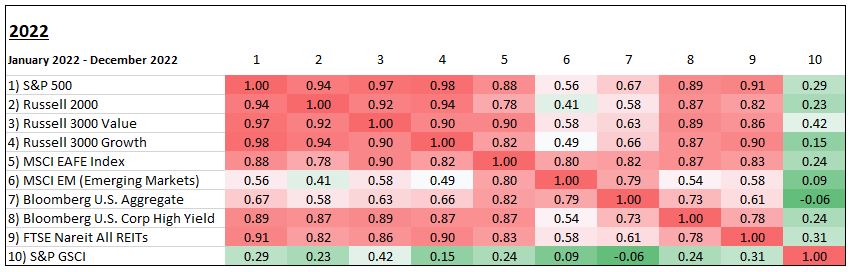
The mathematical genius behind modern portfolio theory lies in non-correlation, where the underlying asset allocation mechanics function much like hydraulic shock absorbers in heavy industrial machinery. When one asset class encounters severe downward pressure, an uncorrelated or negatively correlated asset class remains steady or moves upward. This dynamic dampens overall volatility while preserving the upward trajectory of capital over multi-decade horizons.
Consider the historic relationship between risk-on equities and sovereign government bonds during an acute liquidity contraction. As corporate revenues decline and equity prices drop, institutional capital flees toward the credit safety and immediate liquidity of sovereign debt instruments. The price of high-grade government paper surges as yields plummet. This flight to quality acts as an automated counterweight. If an investor holds only equities, their portfolio suffers the full, unfiltered impact of the market crash. With a mathematically balanced allocation, the bond component absorbs the shock, insulating the aggregate portfolio value from catastrophic destruction.
Much like the rigorous protocols explored in our breakdown of investigative journalism mechanics and 4 proven rules that uncover dangerous hidden truths, successful capital allocation demands forensic verification of underlying balance sheet risks before deploying dry powder. Investors must examine real correlations during crises rather than calm markets, because when liquidity evaporates, superficially diverse assets often converge into a single correlated downward spiral.
Four Proven Asset Allocation Rules That Master Capital Preservation
To transform these theoretical principles into daily operational success, investors must rely on systematic execution rather than emotional impulse. Applying these four foundational asset allocation mechanics transforms theoretical portfolio theory into an unbreakable real world defense against financial ruin.
Rule 1 Separate Growth Engines from Liquidity Anchors
Every resilient portfolio requires an intentional split between capital compounding engines and immediate liquidity buffers. Equities, real estate, and high-yield credit serve as the combustion chamber of your portfolio, generating long-term returns that outpace monetary dilution and consumer inflation. However, combustion engines run hot and volatile. To prevent an emergency withdrawal during a severe bear market, an allocator must maintain distinct liquidity anchors such as short-duration treasury bills and prime money market instruments. This cash buffer protects the investor from being forced to liquidate depressed growth assets to fund daily operational needs, preserving the long-term compounding cycle untouched.
Rule 2 Exploit Negative Covariance Rather Than Chasing Yield
Novice investors often fall into the trap of yield chasing, stacking their portfolios with real estate investment trusts, dividend aristocrats, and high-yield corporate debt under the mistaken belief that cash flow equals safety. In reality, all three assets are heavily tied to the same underlying credit and economic growth cycle. When credit markets freeze, high-yield spreads widen violently, commercial real estate valuations plummet, and corporate dividends get slashed. Genuine diversification requires pursuing negative covariance, where assets deliberately move in opposite directions under macroeconomic shocks. Combining broad global equities with long-term sovereign treasuries, physical precious metals, and commodities creates genuine resilience because these instruments react divergently to inflation surprises and growth contractions.
Rule 3 Enforce Systematic Threshold Rebalancing Over Calendar Schedules
Rebalancing is where mathematical diversification produces its tangible excess return, known throughout financial literature as the rebalancing bonus. While many investors blindly rebalance on fixed dates like the first of January, rigorous asset allocation mechanics require investors to sell winning positions systematically into cash or stabilizing debt when an allocation crosses a defined percentage threshold. For example, if your baseline equity target is sixty percent and a furious bull market pushes it to sixty-eight percent, you mechanically sell the excess eight percent and reallocate those proceeds into underperforming asset classes. This systematic rule completely eliminates human greed and fear. It forces you to sell high and buy low without attempting to forecast market turning points.
Rule 4 Stress Test Real Drawdowns Against Psychological Capacity
A financial plan that looks flawless on an Excel spreadsheet is completely useless if the investor panics and sells everything at the cyclical bottom. Academic backtests often assume investors can serenely watch a portfolio plummet forty percent because historical charts show eventual recoveries. Real humans experience physical nausea, marital stress, and sleepless nights during severe bear markets. Structural asset allocation must calibrate exposure not merely to mathematical efficiency frontiers, but to the investor’s emotional tipping point. If your stomach churns when your net worth drops twenty percent, maintaining an eighty-percent equity position is a catastrophic structural failure waiting to detonate at the bottom of the next cycle.
How Institutional Discipline Prevents Devastating Structural Friction
Managing an institutional-grade portfolio involves managing hidden friction points that quietly erode wealth over time. Transaction costs, capital gains taxes, and currency drag can undermine the benefits of portfolio diversification if not actively governed. When executed sloppily, frequent rebalancing triggers short-term capital gains taxes that outweigh the mathematical benefits of volatility dampening.
Savvy allocators navigate this challenge through smart cash-flow routing and tax-advantaged account hierarchies. Rather than selling appreciated assets inside taxable brokerage accounts to restore balance, smart investors direct fresh operational capital, dividend distributions, and bond interest payments directly into underweighted asset classes. Furthermore, holding income-generating, tax-inefficient assets within tax-deferred or tax-exempt retirement vehicles shields annual yield from aggressive marginal tax rates. Investors who respect sophisticated asset allocation mechanics survive market panics while undisciplined speculators evaporate because they treat tax efficiency and cost containment as integral components of their risk-management framework.
The Lifelong Compounding Payoff of Structural Design
Financial markets represent one of the most complex, reflexive adaptive systems on earth. Narrative trends emerge, captivate the public consciousness, inflate speculative bubbles, and inevitably pop, leaving naive participants holding immense losses. Trying to navigate this chaotic environment by predicting tomorrow’s headlines is an exercise in futility.
True financial mastery does not come from forecasting the unknowable future. It emerges from preparing for every conceivable macroeconomic outcome through intelligent, disciplined structural design. By balancing growth against liquidity, pairing non-correlated assets, executing dispassionate threshold rebalancing, and honoring human psychological limitations, you construct a financial fortress that thrives across inflationary shocks, stagflation, and deep deflationary panics alike. Ultimately, mastering asset allocation mechanics remains the single greatest competitive edge an individual allocator can possess, turning market chaos into an automated catalyst for generational wealth creation.