
Foley Sound Design and 4 Proven Secrets Behind Immersive Movie Audio
Modern cinema microphones capture pristine dialogue while discarding almost every physical sound an actor makes. Here is how master Foley artists recreate footsteps, cloth rustles, and violent bone snaps using unexpected everyday objects.
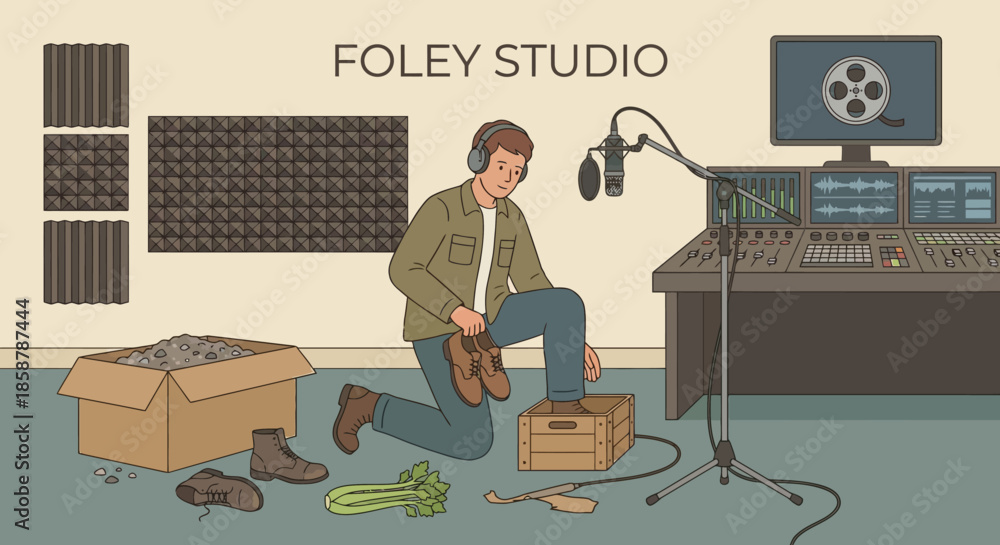
Without authentic foley sound design, even the most expensive visual blockbuster collapses into an eerie, hollow pantomime that leaves audiences completely detached. When watching a detective strike a match in a dimly lit room or a dancer spin across weathered oak, viewers assume cameras captured those intimate sounds on set. In reality, production microphones discard virtually every physical noise except spoken dialogue. Footstep crunches, fabric rustles, and tumbler clinks are entirely absent from raw production audio. Boom microphones are calibrated strictly to isolate vocal frequencies while rejecting room reverberation, air handling hums, and crew movement.
The Acoustic Illusion of Recorded Reality
Cinema has always relied on calculated deception. During principal photography, production sound mixers face brutal acoustic conditions, working with one overriding mandate: deliver clean, intelligible dialogue. Boom operators position directional shotgun microphones directly above actors’ mouths, while wardrobe specialists hide miniature lavaliers inside collars. These directional polar patterns aggressively reject off-axis sound, deliberately muffling the acoustic scrape of a chair or the rustle of a jacket.
Global distribution intensifies this acoustic void. When studios release international dubbed versions, the original dialogue tracks are stripped entirely to accommodate localized foreign language voice casts. If environmental footsteps and prop handling were trapped on that vocal track, foreign releases would sound completely barren. Rebuilding every mechanical noise from scratch converts a technical necessity into a profound narrative art. Pioneered in the late 1920s by Universal Studios radio veteran Jack Foley, this craft elevated basic track replacement into modern foley sound design, bridging the sensory divide between flat visual projection and visceral human presence.
Why Production Microphones Fail to Capture Human Movement
The physical conditions of a film set actively dismantle organic sound. Stages are cavernous, reverberant rooms framed by steel girders and buzzing lighting ballasts. While crews tread quietly, the acoustic footprint of an industrial soundstage rarely mirrors the fictional world on screen. A damp dungeon scene recorded with the boxy reflections of a warehouse instantly betrays cinematic reality.
Digital restoration tools further decimate subtle physical textures. When re-recording mixers apply noise reduction to scrub generator hum, delicate fabric rustles and gentle footsteps vanish alongside the noise. Just as visual cadence requires intentional frame handling—an aesthetic balance explored in our look at Why 24 FPS Looks Cinematic and 4 Hidden Reasons High Frame Rates Fail—sound editors require isolated control over every sonic element. Without bespoke tracks captured in dedicated, reflection-free recording spaces, post-production teams face an impossible choice between vocal clarity and physical atmosphere.
Four Proven Secrets That Bring Physical Cinema to Life
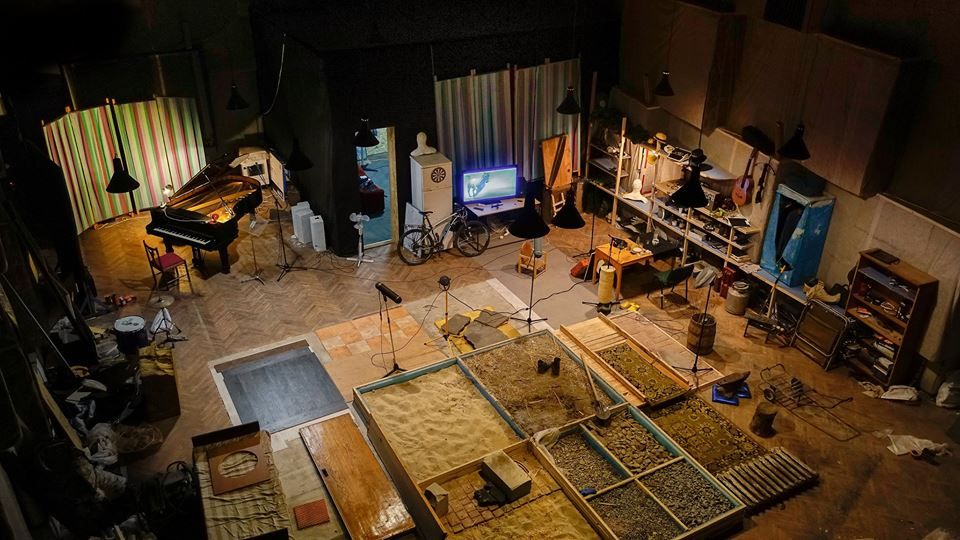
To outsiders, recording physical effects resembles eccentric play. An artist works in a specialized studio surrounded by odd junk, worn shoes, gravel trays, and scrap metal. Yet studying foley sound design reveals an exacting discipline akin to classical performance. Artists fuse physical dexterity, material science, and emotional empathy to construct an acoustic reality far more convincing than unmanipulated nature.
Prop Alchemy and the Art of Acoustic Metaphor
Real objects seldom sound like their onscreen representations. Drawing a genuine sword from a leather scabbard produces a faint, uninspiring rub. To deliver the chilling menace audiences expect, a Foley artist draws an old meat cleaver across the lip of a heavy brass bowl.
This acoustic metaphor defines Foley mastery. Violent bone fractures are rarely simulated using rigid plastic or timber. Instead, artists twist head lettuce, snap celery stalks, or crush walnuts wrapped in wet leather. To mimic arctic snowdrifts, performers knead canvas pouches packed with cornstarch or rock salt inside specialized pits. The microscopic friction of cornstarch polymers perfectly replicates the acoustic compression of crystalline snow under heavy boots. Foley artists scour antique markets for peculiar items—rusted hinges, antique car horns, and split boots—that possess singular expressive timbres.
Micro-Timing and Syncing Beyond the Millisecond
Performing Foley demands formidable motor control and intuitive rhythm. Watching a projection monitor inside a deadened studio, the artist mirrors every onscreen gesture in real time. If an actor stumbles across gravel, the performer cannot merely stomp; they must embody the character’s weight distribution, physical exhaustion, and emotional turmoil.
Syncing requires split-second anticipation because the human brain detects audio-visual lag immediately. If a footstep sounds two frames late, the spell breaks. Seasoned Foley artists watch an actor’s hips, shoulders, and center of gravity rather than their feet. Muscular shifts signal footfalls frames before ground contact. By aligning with the kinetic momentum of the actor, the Foley performer hits the surface right as the visual frame lands, locking the sonic event to the image.
Textural Layering to Build Subconscious Character Depth
Sound shapes narrative subtext before dialogue ever delivers context. Artists divide recording into distinct passes, separating footsteps, prop handling, and cloth movement. Cloth passes—performed with vintage wool, starched denim, or soft silk—feed subtle cues about social standing, internal stress, and environment.
This subtle nuance defines high-caliber foley sound design across complex character arcs. A commanding corporate figure strides in stiff leather soles that crack hardwood with sharp attack, complemented by crisp cotton rustles. A nervous fugitive shuffles in soft crepe soles, swathed in damp flannel that produces dragging, muted friction. Foley artists curate extensive wardrobes of distressed fabrics and shoes, filing down heels or softening leather to sculpt an antagonist’s predatory presence.
Psychoacoustic Space and Managing Reverb Decay
Vivid textures are useless if they clash with the scene’s virtual architecture. Foley studios feature reflectionless acoustics lined with bass traps and decoupled floating floors. This absolute acoustic dryness gives re-recording mixers pristine signals free from unwanted room color.
Foley performers shape spatial dynamics at the microphone long before digital plugins process the signal. By altering physical distance, attack velocity, and microphone angle, they establish acoustic scale. To record a conspiratorial whisper of bedsheets, an artist works inches from a large-diaphragm condenser, harnessing intimate proximity effect. For an echoing cathedral interior, they project sound several feet off-axis toward a hypercardioid capsule, preserving sharp dynamic attacks so mixers can apply convolution reverbs without introducing phase smearing.
Psychoacoustics and the Human Willingness to Believe Acoustic Lies
Why do audiences embrace these fabricated noises so readily? Cross-modal integration in cognitive neuroscience explains that the brain automatically synthesizes visual and auditory signals into a single unified event. When eyes see a wineglass shatter, the auditory cortex expects an immediate, bright transient strike.
The fundamental principle governing foley sound design operates on psychological expectation rather than literal documentary truth. Raw reality sounds flat and underwhelming. Real gunfire in an open field sounds like modest firecrackers, and a bare-knuckle punch lands with a dull, wet thud. Foley artists deliver what the mind intuitively feels events should sound like. By pairing acoustic weight with visual action, they trigger involuntary threat-detection responses. As detailed in the Audio Engineering Society technical standards for spatial acoustics, immersive realism relies on phase coherence, transient punch, and spectral contrast rather than mechanical fidelity to the filming environment.
Preserving Organic Human Performance in an Era of Digital Libraries
With massive digital sound libraries offering millions of pristine recordings, why do studios still hire artists to stomp in dirt trays and crush vegetables? Digital libraries are fast and cost-effective, but practitioners of foley sound design understand that static audio files cannot replicate the chaotic grace of human movement.
A digital sample is an acoustic snapshot. Repeating the same recorded footstep introduces unnatural predictability known as the machine-gun effect. Even when editors randomize pitch, library sounds lack emotional connection to the visual performance. A pre-recorded file cannot sense whether an actor carries a heavy burden, cowers from danger, or hesitates on a threshold. Only a living artist, reacting instinctively to the scene, injects the micro-hesitations, heel drags, and fluctuating pressures that communicate authentic human feeling.
Our ears possess exquisite sensitivity to synthetic repetition. When acoustic movement lacks biological variance, viewers register an uncanny emotional detachment. This psychological truth keeps manual Foley performance indispensable in an increasingly automated post-production landscape.
The Invisible Architecture of Cinematic Emotion
Foley art succeeds precisely when nobody notices it exists. If a moviegoer pauses to admire the fidelity of a footstep or the scrape of a chair, the illusion falters. Foley provides the transparent sonic foundation that grounds imaginative cinema in physical truth.
From the subtle leather squeak of a saddle to the quiet drag of a hospital curtain, tactile sound anchors the viewer’s heart to the image. The enduring mastery of foley sound design remains irreplaceable because cinema is an act of communal empathy. By translating silent human movement into living acoustic pressure, Foley artists transform flat shadows of projected light into rich, breathing worlds.