News Wire Syndication Mechanics Reveal 4 Proven Engines Behind Instant Global Coverage
Beneath every breaking news notification lies a lightning-fast syndication pipeline moving wholesale reporting across global networks. Discover how wire services transform field dispatches into worldwide headlines within milliseconds.

Understanding modern news wire syndication mechanics explains why an earthquake in the Pacific appears across thousands of local news apps within seconds. Most readers assume that when a sudden international event occurs, their preferred hometown newspaper or favorite digital portal immediately dispatches an investigative crew. The reality is far more industrialized. Global news consumption rests on an invisible wholesale supply chain where raw facts are gathered, standardized, and transmitted across digital arteries before individual editorial teams even convene their morning conference calls.
News wires serve as the central nervous system of global communication. They operate on principles forged over nearly two centuries, evolving from mechanical carrier pigeons and copper telegraph lines into high-throughput API endpoints and cloud-based clearinghouses. By pulling back the curtain on this distribution machinery, we uncover how information moves from an isolated eyewitness to millions of handheld screens without collapsing under the weight of human error or mechanical latency.
The Invisible Infrastructure Powering Everyday Information Pipelines
The global news economy functions on a distinct division of labor between wholesale producers and retail distributors. Most publishing brands operate strictly as retailers. They license, curate, contextualize, and brand information that was gathered hundreds of miles away by wholesale wire organizations such as the Associated Press, Reuters, and Agence France-Presse. Maintaining permanent bureaus in every capital city, war zone, and municipal courthouse across the planet represents an impossible financial burden for individual outlets. Instead, collective syndication models pool resources to finance boots on the ground.
According to research conducted by the Reuters Institute for the Study of Journalism, the vast majority of international reporting consumed on digital screens originates from a tiny handful of wholesale wire agencies rather than local newsroom bureaus. To grasp why headlines look strikingly similar across dozens of competing publications, one must deconstruct news wire syndication mechanics at their foundation. These agencies do not write for a single reader. They write for thousands of automated content management systems, regional editors, radio broadcasters, and algorithmic financial trading terminals simultaneously.
This wholesale framework dictates a rigid separation between cold reporting and interpretive commentary. Wire copy deliberately strips away regional idioms, partisan colloquialisms, and stylistic flourishes. The output is a utilitarian data asset designed to slot seamlessly into any publication layout, whether that downstream customer is an independent regional daily or a multi-platform international broadcast conglomerate.
How Raw Field Intelligence Transforms Into Structured Wire Data
A dispatch begins its life long before reaching an ingest server. In an unpredictable field environment, local stringers and staff correspondents must condense chaotic physical realities into a strictly regimented taxonomy. The structural foundation of this process remains the inverted pyramid, a format that was never an aesthetic choice. It was born as an engineering necessity when 19th-century telegraph cables regularly snapped beneath storm-tossed seas, forcing journalists to transmit the essential conclusion first before lines went dead.
Today, every transmission carries structured metadata headers known in newsroom parlance as the slugline. The slug serves as a concise thematic identifier, accompanied by the dateline, which legally establishes the geographic origin of the reporting. Below the dateline lies the lead paragraph, engineered to answer the critical coordinates of who, what, where, and when in thirty words or fewer. Every subsequent paragraph unpacks supporting detail in descending order of operational importance.
Every layer of news wire syndication mechanics was engineered around a ruthless constraint: latency versus accuracy. If a correspondent in Manila files an update regarding a maritime collision, the field draft does not enter an open internet feed. It enters a secure internal workflow system where sub-editors execute real-time cross-checks against verified shipping manifests and government transponders. Once cleared, the text undergoes programmatic transformation, encoding into machine-readable standards that strip formatting ambiguity before global dispatch.
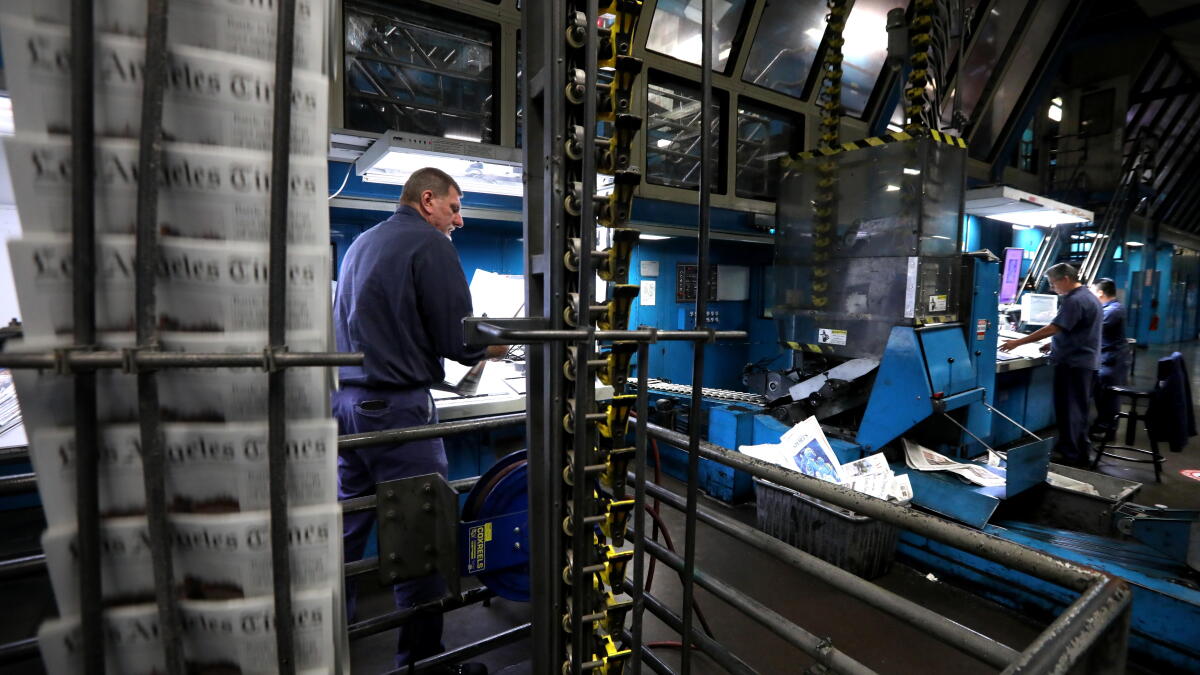
Four Mechanical Pillars Driving Real Time Syndication Across Global Networks
Analyzing news wire syndication mechanics reveals how wholesale reporting scales from an isolated incident into a synchronized global event. Without structured routing engines, the sheer volume of global dispatches would overwhelm downstream newsrooms, burying critical warnings under routine agricultural reports. Four mechanical systems keep this global pipeline flowing continuously.
Automated Urgency Tiers and Flash Alert Routing
Wire systems organize inbound information using strict hierarchical priority codes. Historically signaled by ringing mechanical bells on teleprinters, these tiers now manifest as algorithmic flags within digital routing matrices. At the base lies routine copy, comprising feature stories, market summaries, and cultural profiles that queue without interrupting editorial workflows.
When seismic events occur, the system shifts into higher gear through Urgent and Bulletin alerts, reserved for significant breaking developments that command immediate editor attention. At the apex sits the Flash alert, a transmission limited to a single line of capitalized text indicating catastrophic or historic occurrences. Flash alerts bypass standard queue queues entirely, triggering automated push notifications across financial terminals and mobile apps worldwide within milliseconds of a bureau chief hitting send.
Decentralized Clearing Desks and Regional Ingest Hubs
A wire service cannot rely on a single centralized editorial floor to vet incoming dispatches. Instead, copy flows through a decentralized network of regional clearing desks positioned across strategic time zones. A story originating in West Africa might be verified by a regional desk in Dakar, cleared through a primary editorial hub in Paris or London, and subsequently translated for Asian language circuits in Singapore.
This continuous editorial relay prevents regional logjams while maintaining around-the-clock editorial vigilance. Regional clearing desks apply rigid institutional stylebooks and legal review matrices to every dispatch. By distributing the verification workload geographically, wire operations maintain unbroken editorial oversight even when natural disasters or civil conflicts disrupt local communications infrastructure.
Standardized Syndication Formats and Dynamic Parsing Pipelines
Once a story clears the editorial desk, raw text must instantly translate into thousands of proprietary recipient platforms. Within modern news wire syndication mechanics, markup standards like NewsML-G2 act as the universal adapter, wrapping raw sentences in rich semantic metadata that downstream content management systems parse automatically. Just as radical mechanical overhauls rewrite physical disciplines—an evolution detailed in how Fosbury Flop Biomechanics Reveal 4 Proven Forces Behind Impossible High Jumps—the shift from physical teleprinters to algorithmic data parsing reinvented news distribution velocity.
Because the wire payload carries structured tags for geographic coordinates, public company stock tickers, and subject classifications, automated subscriber systems ingest the content without human intervention. A regional newspaper website can configure its system to automatically publish any AP wire item tagged with local county names directly to its homepage, while an equity trading platform ingests the exact same feed to update corporate sentiment monitors in real time.
Downstream Content Repackaging and Syndication Rights Logic
The transmission process concludes with complex rights management protocols embedded in the distribution stream. Wholesale wire subscriptions operate under diverse tiering agreements. Some clients purchase raw dispatches for verbatim publication, while others license access purely as raw source material for their own rewrite desks.
Algorithmic licensing filters enforce regional distribution boundaries, embargo timings, and commercial usage rights dynamically. If an investigative dispatch carries an embargo condition requested by a scientific journal, the syndication engine schedules transmission down to the exact second of release. Similarly, client platforms receive copy formatted specifically for their licensed channel, ensuring digital web operations, print pagination systems, and automated broadcast teleprompters receive tailored layouts simultaneously.
The Compounding Vulnerabilities of Algorithmic Syndication Velocity
The astonishing speed of contemporary wire distribution comes at a recognized cost. When an initial dispatch contains a factual error or misattributed statement, syndication networks propagate the mistake across thousands of digital platforms before human fact-checkers can react. In an ecosystem where downstream websites scrape and republish wire copy automatically, a single flawed sentence can saturate search engine results pages and social feeds worldwide in under two minutes.
This unprecedented speed highlights the darker friction point within news wire syndication mechanics when errors slip through initial clearance. While wire agencies maintain rigorous protocols for issuing urgent corrections and writethrus that overwrite flawed copy, downstream scrapers and social media aggregators do not always ingest corrective metadata. The original error often remains cached in secondary databases, creating enduring misinformation ripples long after the primary wire desk issued its official retraction.
Furthermore, automated financial trading algorithms now scrape wire syndication feeds to execute split-second market orders based on headline keywords. A single misplaced word regarding central bank interest rates or corporate acquisitions can trigger sudden swings in foreign exchange markets or equity valuations. Wire editors operate under extraordinary pressure, knowing that their keystrokes directly impact not only global public perception but the immediate movements of global capital.
The Enduring Value of Wholesale Journalism in an Atomized World
In an era dominated by hyper-niche publications, algorithmic echo chambers, and user-generated commentary, the raw mechanics of wire reporting represent an indispensable public utility. Wire services rarely receive the cultural prestige bestowed upon boutique investigative magazines or charismatic broadcast anchors, yet without their continuous baseline gathering of unvarnished facts, the wider media ecosystem would starve for raw material.
Wholesale syndication democratizes information access. It ensures that a small community weekly newspaper in rural Iowa or a digital startup in Nairobi can offer its audience verified global coverage on equal footing with multi-billion-dollar media institutions. The standardized protocols, priority queues, and verification architectures engineered over generations continue to deliver clarity during moments of global upheaval. Ultimately, mastering an understanding of news wire syndication mechanics illuminates the true supply chain of human knowledge, reminding us that behind every push notification lies a sophisticated, battle-tested engine dedicated to capturing history as it happens.