Sequence of returns risk mechanics reveal 4 costly realities behind sudden retirement portfolio failure
Retirement success depends far more on the order of your investment returns than their long-term average. Discover how market timing in early distribution years can quietly unravel decades of disciplined savings.

Understanding sequence of returns risk mechanics is the single most critical factor separating a resilient, lifelong retirement portfolio from an unexpected financial disaster. During the accumulation phase of building wealth, time functions as an unconditional ally. When markets tumble, young investors celebrate discounted share prices, knowing that regular payroll contributions purchase larger quantities of productive assets that have decades to compound. The entire mathematical machinery running your financial life operates under an assumption of patient accumulation. You shovel capital into index funds, ignore short-term volatility, and let the historical trend of human productivity elevate your net worth.
The exact day an individual stops contributing and starts withdrawing cash to pay for groceries, healthcare, and property taxes, the mathematical laws governing the portfolio flip upside down. Volatility ceases to be a harmless statistical blip that smoothes out over forty-year horizons. Instead, negative volatility early in retirement transforms into an aggressive wealth solvent. Two investors can enter retirement with identical account balances, withdraw the exact same inflation-adjusted dollar amount every year, and experience the exact same average annual rate of return over thirty years. Yet one investor ends up with generational wealth, while the other goes completely broke before reaching their seventy-fifth birthday. The discrepancy lies in the chronological order of annual gains and losses.
The Dangerous Arithmetic of Wealth Decumulation
Accumulation math is commutative, meaning the order of multiplication does not change the final product. If an investor starts with one hundred thousand dollars and achieves annual returns of positive twenty percent, positive ten percent, and negative fifteen percent, the portfolio reaches the exact same ending value as an account that experiences negative fifteen percent first, followed by ten and twenty percent. In simple arithmetic where no money enters or leaves the system, chronological sequence is utterly irrelevant to the destination.
The moment recurring distributions enter the equation, commutativity vanishes entirely. Cash withdrawals introduce non-negotiable cash outflows that do not scale down simply because the equity market suffered a correction. When you withdraw forty thousand dollars from a one-million-dollar portfolio during a flat market, you sell four percent of your asset base. If that same portfolio experiences a thirty percent market contraction right after you retire, that identical forty-thousand-dollar withdrawal requires selling an enormously larger percentage of your remaining equities. Those liquidated assets can never participate in the subsequent market recovery, permanently impairing the portfolio’s forward earning engine.
Why Long Term Average Returns Create a Deceptive Illusion
Most traditional retirement calculators lull savers into a catastrophic sense of false security by utilizing static average returns. A financial planner might run a projection assuming a dependable seven percent annualized return from a balanced index portfolio. Over a thirty-year retirement, the historical performance of global equities might indeed match that seven percent figure over the aggregate multi-decade span. However, real-world financial markets do not deliver consistent seven percent gains on an annualized schedule. Instead, they deliver wild swings consisting of positive thirty percent, flat years, sudden drops of twenty-five percent, and unpredictable multi-year stagnation.
If a severe downturn strikes during the initial three to five years of decumulation, an investor suffers irreparable capital destruction even if the market roars back with historic gains in years ten through thirty. When your share count is forcibly pruned through routine living expenses at market bottoms, high future percentage gains apply to an irreparably shrunken pool of units. This mathematical blindness obscures how sequence of returns risk mechanics silently determine whether an identical sum of wealth lasts sixty years or evaporates in twelve.
Four Structural Fault Lines That Trigger Premature Portfolio Depletion
When deconstructing sequence of returns risk mechanics, wealth preservation failure rarely stems from choosing inferior index funds or bad companies. Rather, it happens through four distinct mechanical traps that execute silently within conventional retirement architectures.
Reverse Dollar Cost Averaging Selling Assets at Cyclical Lows
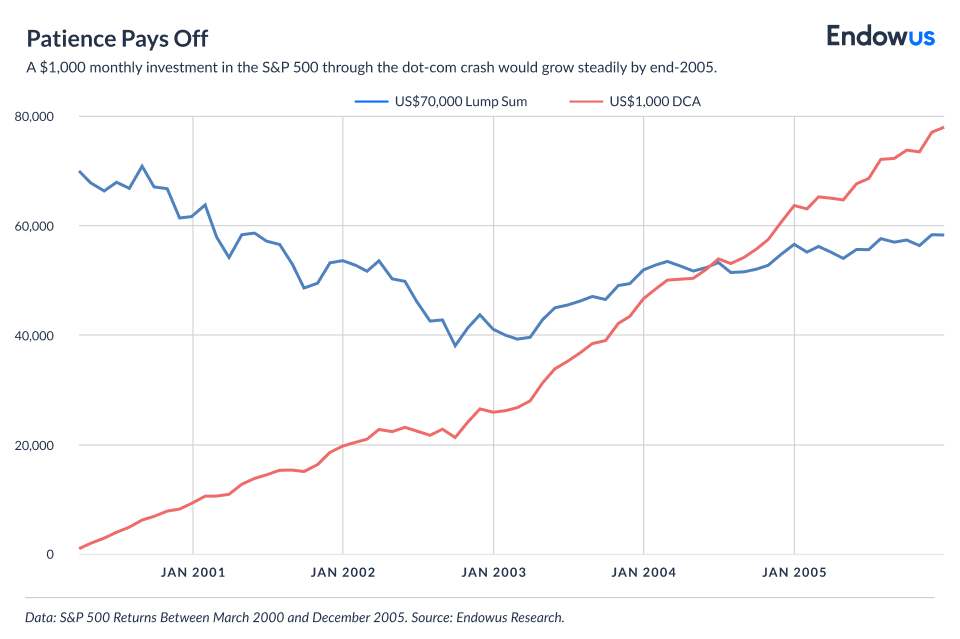
Dollar cost averaging is rightfully hailed as the retail investor’s ultimate superpower during the wealth accumulation stage. By investing a fixed dollar sum every month, you automatically acquire fewer shares when equities trade at record highs and substantially more shares when prices plummet. This process systematically drags down your average purchase price across decades of working life. Decumulation inverts this dynamic into an active wealth destroyer known as reverse dollar cost averaging.
When an investor requires three thousand dollars every month to pay ordinary living costs, they must sell securities to generate that cash unless fixed income dividends cover the entirety of the liability. During an aggressive bear market, equity share prices drop, which forces the brokerage custodian to liquidate an increasingly higher volume of shares to satisfy that identical three-thousand-dollar cash demand. You are mechanically selling the maximum possible quantity of shares precisely when valuations are depressed. When the macroeconomic cycle eventually pivots upward, those forfeited shares are gone, depriving the portfolio of the compounding mass required to lift total value back toward baseline health.
The Exponential Recovery Deficit of Vanishing Unit Counts
Most savers assess investment health through dollar values rather than share counts. This represents an enormous cognitive error in post-career financial stewardship. Portfolios do not compound dollars; they compound units of productive enterprise. Every share of an index fund produces earnings, yields dividends, and claims a fractional piece of future corporate cash flow. If your share count remains intact, a temporary drop in market valuation is merely unrealized paper volatility. Unit counts represent the engine; market valuation is merely the weather.
When early retirement years force the continuous surrender of physical share counts to fund current consumption, the portfolio suffers a permanent structural amputation. If a portfolio drops thirty percent in price and simultaneously sells ten percent of its underlying share count to maintain living expenses, the remaining assets must generate astronomical percentage returns just to claw back to the starting waterline. Because the underlying production engine has been amputated, an index that rebounds fifty percent may leave the depleted investor languishing far below their original purchasing power. The exponential recovery deficit creates a permanent downward divergence between general market performance and individual portfolio survival.
Compounding Volatility Drag Under Inflexible Spending Pressures
Volatility drag is the mathematical penalty created by the variance of investment returns over time. The geometric mean of any volatile sequence of numbers is always lower than the arithmetic mean, and the gap between them expands as volatility increases. In pure accumulation, an investor absorbs volatility drag by letting time dilute its impact. In the distribution phase, spending inflexibility turbocharges this structural penalty into a dangerous downward spiral.
Most households carry deeply inelastic baseline expenditures consisting of mortgages, municipal real estate taxes, property insurance, utilities, and dietary necessities. When inflation accelerates during an equity bear market, cash requirements surge at the exact instant market liquidity contracts. Withdrawing escalating sums from a rapidly fluctuating asset base prevents the mathematics of compound interest from healing earlier losses. This hidden compounding friction demonstrates where sequence of returns risk mechanics inflict their most punitive damage on an unhedged account, transforming minor economic recessions into terminal balance sheet crises.
Premature Fixed Income Exhaustion During Extended Bear Markets
A classic defense mechanism taught by financial institutions involves holding an allocation of fixed-income bonds to cushion equity downturns. The conventional theory assumes that when stocks drop, an investor can temporarily pull living expenses from bonds while leaving equity shares untouched. While conceptually appealing, this approach breaks down catastrophically when a bear market extends over several consecutive years or is accompanied by rising bond yields.
Standard bond allocations rarely hold sufficient capital to sustain five to seven years of uninterrupted living expenses without cannibalizing principal. If fixed-income reserves become exhausted before equities stage a definitive cyclical recovery, the retiree is suddenly exposed to forced equity sales at the tail end of a downturn. Even worse, during macroeconomic periods where interest rates surge rapidly, bond prices plunge concurrently with equities, obliterating the theoretical negative correlation that balanced portfolios rely on for safety. The fixed income cushion deflates precisely when the decumulation engine needs it most.
Practical Buffers That Shield Fragile Portfolios From Timing Shocks
To neutralize the sequence of returns risk mechanics, experienced asset managers dismantle the myth of static, unyielding withdrawal schedules. Rigidity is the primary cause of decumulation failure. The seminal research on withdrawal safety pioneered by William Bengen’s foundational retirement distribution research in the Journal of Financial Planning proved that early sequence timing dictates long-term survival far more than terminal asset allocation.
Much like how mastering culinary chemistry shows that emulsion sauce mechanics reveal 4 proven secrets to conquer silky sauces without heartbreaking failures by stabilizing microscopic droplets before heat tears the mixture apart, safeguarding a nest egg requires stabilizing cash buffers before early market shocks dissolve principal capital. The most reliable structural defense is establishing an insulated cash buffer consisting of two to three years of baseline living expenses stored entirely outside the equity market. Holding dedicated reserves in short-term treasury bills, high-yield municipal accounts, or physical cash guarantees that an investor never has to sell a single share of stock during an economic recession.
Another sophisticated countermeasure involves deploying dynamic guardrail withdrawal strategies. Rather than blindly increasing annual distributions by the rate of inflation regardless of portfolio performance, dynamic guardrails systematically reduce discretionary distributions during drawdown periods. Shaving five to ten percent off non-essential lifestyle spending during market downturns dramatically decreases reverse dollar cost averaging. A deep grasp of sequence of returns risk mechanics ensures that market cycles work for your capital rather than against it during vulnerable decumulation windows.
Preserving Generational Wealth Through Dynamic Asset Governance
Retirement security is not a finish line defined by hitting a magic net-worth number. It is an evolving engineering discipline that requires continuous navigation of capital preservation principles. Treating a post-career nest egg like a passive, set-and-forget spreadsheet formula invites catastrophic vulnerability during the critical initial decade of financial independence. The chronological timing of market cycles is entirely outside human control, but your balance sheet’s structural response to that timing remains completely manageable.
Mastering sequence of returns risk mechanics transforms the retirement transition from an unpredictable gamble into an engineered exercise in longevity management. By insulating daily cash-flow demands behind durable cash reserves, embracing dynamic spending adjustments when market valuations compress, and protecting unit share counts at all costs, savers construct an indestructible financial fortress. When market disruptions inevitably emerge, disciplined decumulation mechanics ensure your lifelong wealth endures undisturbed, powering sustainable independence across every season of life.