Order Book Liquidity Mechanics Reveal 4 Costly Forces Behind Sudden Market Slippage
Discover how order book liquidity mechanics dictate the real execution cost of every trade beneath the deceptive top quote. Uncover the four structural forces that turn ordinary orders into punishing portfolio leaks.
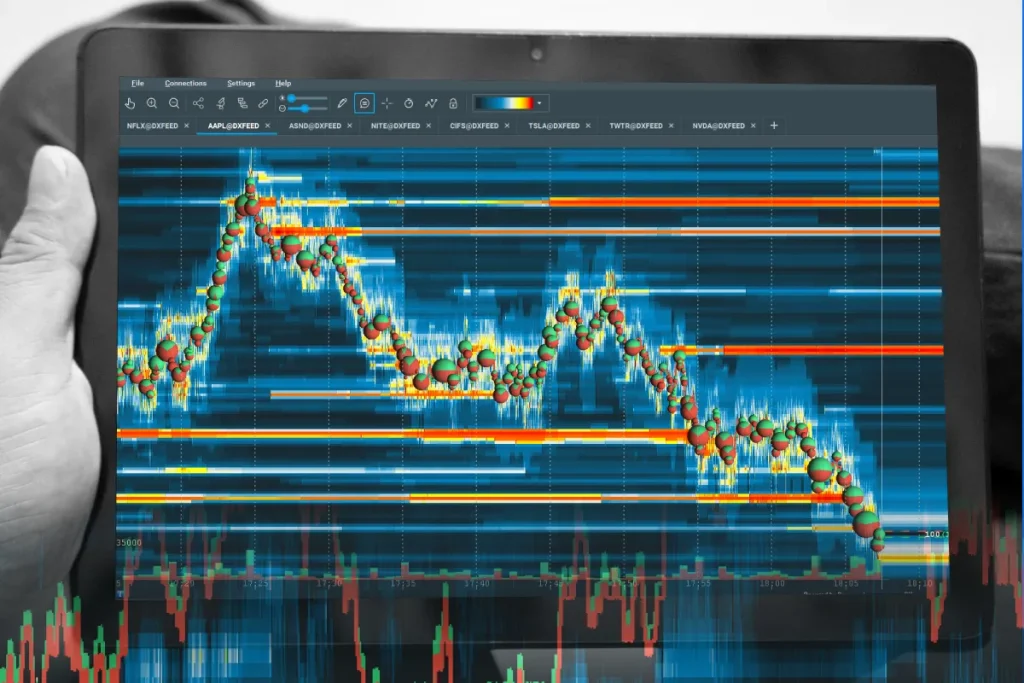
Understanding order book liquidity mechanics separates casual investors who constantly suffer costly slippage from disciplined market operators who execute with institutional precision. When you look at an asset price flashing across an exchange interface, you are not observing an immutable valuation. You are merely viewing the historical echo of the single most recent transaction that cleared the central matching engine. Beneath that deceptive number lies a dynamic, highly pressurized vertical continuum known as the order book. Every purchase or sale beyond a tiny retail parcel does not execute at that singular quoted tick. Instead, it must consume real commitments of capital stationed across ascending ask levels or descending bid shelves. Failing to respect this mechanical reality turns every portfolio transition into an expensive collision with invisible friction.
The Mirage Behind the Flashing Ticker Price
Most participants interact with markets through an aggregated screen that presents Level 1 data. This interface displays only the best bid and the best ask, framing the spread as a tiny, harmless gap between willing buyers and sellers. This presentation creates a dangerous psychological illusion of infinite liquidity. An investor assumes that because a stock or currency is quoted at fifty dollars, fifty thousand dollars worth of that asset can be acquired immediately at that exact figure.
In reality, the order book is a ladder constructed of finite, resting limit orders. Each rung on that ladder holds a specific, limited quantity of contracts or shares committed by market participants at an explicit price. The moment an incoming market order exceeds the volume resting at the best quote, the matching engine instantly sweeps upward or downward through the ladder to fulfill the balance. High traded volume throughout a session does not guarantee thick liquidity at the moment your order hits the exchange wire. A market can register millions of shares traded over six hours while remaining hollowed out and fragile on a second-by-second basis.
The Latency Arms Race and Phantom Wall Orders
Traders who upgrade to Level 2 data often feel a surge of confidence when they observe massive clusters of resting limit orders, commonly called bid or ask walls. They assume these walls represent immovable support or insurmountable resistance. Yet when an aggressive market order approaches these price thresholds, those towering walls frequently vanish into thin air before a single share changes hands.
This vanishing act is not magic. It is the calculated byproduct of ultra-low-latency algorithmic quoting. High-frequency trading firms deploy non-binding limit orders to harvest exchange maker rebates and scout incoming flow. Because these algorithms calculate risk thousands of times faster than human perception, they detect institutional accumulation or momentum shifts before physical execution occurs. When you analyze order book liquidity mechanics through microsecond tick recordings, you quickly discover that over ninety percent of visible depth is transitory. Orders are continually posted, modified, and canceled within fractions of a millisecond. Relying on displayed depth without understanding algorithmic persistence is like leaning against a brick wall that turns to vapor the instant you place weight upon it.
Four Hidden Forces Governing Every Limit Order Ladder
At their fundamental core, order book liquidity mechanics operate under four structural pressures that market participants rarely calculate before submitting live executions. These mechanical forces dictate why slippage accelerates non-linearly and why large market orders routinely generate self-inflicted losses.
Depth Decay Across Shallow Liquidity Profiles
The quoted spread represents only the surface layer of market access. The real metric governing large transactions is the effective spread, which measures how severely an order penetrates the depth of market. In shallow liquidity environments, resting orders thin out rapidly beyond the first two or three ticks. When a substantial buy order arrives, it instantly exhausts the top of the book and begins climbing the ask ladder. The purchase price of each subsequent lot rises exponentially as resting liquidity thins out. A transaction intended to execute at fifty dollars might see its terminal tranches filled at fifty-one or fifty-two dollars. This depth decay transforms a routine capital allocation into an immediate drawdown before the position even settles.
Adverse Selection and Flow Toxicity Dynamics
Market makers profit by capturing the spread while minimizing inventory exposure. To survive, they constantly categorize incoming orders as either uninformed flow or toxic flow. Uninformed flow consists of retail participants trading small sizes with random timing, creating balanced two-way volume that market makers can easily monetize. Toxic flow, by contrast, comes from informed institutional desks or systematic quantitative funds trading with directional urgency.
When an aggressive order stream is detected, market makers face extreme adverse selection risk. If they fill those orders, they will hold rapidly depreciating inventory against an informed tsunami. In response, quoting engines instantly widen the spread, pull resting bids, or shift liquidity rungs deeper into the ladder. As documented in a landmark Bank for International Settlements study on electronic order book dynamics, automated market makers defend themselves by withdrawing depth precisely when demand for liquidity peaks, amplifying the exact volatility that participants seek to avoid.
Algorithmic Icebergs and Off-Exchange Diversion
Institutional desks trading millions of dollars in a single asset never dump their full volume onto the public order book. Doing so would tip off predatory momentum algorithms and cause the market to run away from them. Instead, institutions deploy algorithmic iceberg orders that slice massive blocks into hundreds of small child orders, exposing only twenty or fifty shares to the visible book at any given microsecond. As each visible portion fills, the execution engine reloads another identical slice at the same price tick.
Simultaneously, substantial trading volume is deliberately diverted away from public lit exchanges into dark pools and internal crossing networks. In these venues, orders execute against midpoint prices without displaying quotes to the public tape. This off-exchange fragmentation means the public order book does not reflect the total capital interest in an asset. This structural bifurcation between visible books and dark liquidity is an inevitable byproduct of advanced order book liquidity mechanics in fragmented modern trading venues, leaving public order books thinner and more fragile than historical averages suggest.
Matching Engine Queue Priority and Microsecond Physics
When multiple market participants place limit orders at the exact same price level, the central exchange engine must determine who gets filled first. Most electronic financial markets operate under a strict Price-Time Priority framework, often referred to as First In, First Out. Under this architecture, arriving orders at a specific tick are placed in an orderly chronological queue behind all previously resting orders at that exact price.
For retail participants, this creates a profound structural disadvantage. Colocated algorithmic desks whose servers sit feet away from the exchange engine secure the front of the queue by microseconds. If the price moves favorably, their front-row orders fill immediately. But if the market reverses violently and pushes through that price tick, those same low-latency algorithms instantly cancel their resting orders, leaving slower market participants stranded at the front of the queue to absorb the full impact of an adverse price move.
How Sudden Liquidity Voids Trigger Violent Cascade Crashes
A liquidity void occurs when resting bids vanish entirely across multiple consecutive price ticks. Under normal market conditions, there is always someone willing to buy an asset if the price drops a modest fraction of a percent. But during periods of rapid systemic stress, order book liquidity mechanics break down as algorithmic market makers withdraw bids to insulate themselves from runaway toxicity.
When market makers turn off their engines, the depth ladder completely disintegrates. At that exact moment, protective stop-loss orders placed by trend followers and leveraged accounts begin triggering. A stop-loss is fundamentally an unconditional instruction that converts into a market order the instant its trigger price is touched. When hundreds of stop orders fire simultaneously into an order book with no resting bids, the matching engine drops vertically through empty space, hunting desperately for anyone willing to buy.
Market stability requires an unbroken operational cadence. Much like how the Nigel Durham tragic passing at 61 reveals 3 crucial truths behind the heavy metal legend regarding how an uncompromising drummer anchors chaotic soundscapes, liquidity providers serve as the unsung rhythmic timekeepers of a trading book. When the drummer stops, the song dissolves into unstructured noise. When market makers shut off their quoting algorithms, orderly price discovery collapses into a terrifying vacuum, producing the flash cascades that leave participants stunned by severe, unexplainable execution fills.
Practical Execution Tactics to Outsmart Predatory Algorithms
Recognizing the brutal reality of order book dynamics allows disciplined investors to construct defensive execution habits. The single most important rule is the complete abandonment of unconditional market orders in volatile or illiquid markets. A market order is an open contract that signals complete indifference to price, giving the matching engine permission to sweep through whatever hollow liquidity profile currently exists.
Mastering practical order book liquidity mechanics requires shifting from reactive market orders toward deliberate execution architecture. For mid-sized positions, utilizing limit orders with marketable boundaries ensures that your fill occurs within an acceptable tolerance without paying excessive slippage tolls. When dealing with larger allocations, institutional techniques like Time-Weighted Average Price or Volume-Weighted Average Price algorithms break positions into calculated tranches, feeding small parcels into the market over hours rather than seconds.
Furthermore, evaluating an asset must extend beyond its chart pattern or fundamental earnings ratio. Smart operators analyze historical order depth, average bid-ask spreads during varying market hours, and the volume-to-depth ratio across multiple exchanges. By respecting order book liquidity mechanics instead of treating electronic quotes as infinite reservoirs, you insulate your portfolio from the invisible attrition that drains careless capital.