Portfolio Rebalancing Mechanics Reveal 4 Proven Rules to Protect Long Term Wealth
Asset drift quietly transforms balanced portfolios into concentrated wagers without an investor ever noticing. Unpack the mechanical principles that systematically harvest volatility and protect compounding capital.

Mastering portfolio rebalancing mechanics is the single most effective way to enforce systemic discipline across an unpredictable financial landscape. Left alone, an investment portfolio does not settle into serene equilibrium. It drifts. Bullish equity runs inflate high-beta holdings until a conservative growth strategy quietly transforms into an aggressive speculative wager. When the cycle abruptly turns, investors find themselves exposed to devastating drawdowns they never consciously consented to endure.
Rebalancing is frequently misunderstood as a return-enhancement tool, but its primary purpose is risk management. It functions as an automated circuit breaker against the psychological euphoria of market peaks and the paralyzing despair of cyclical bottoms. By forcing an investor to routinely trim assets that have outgrown their target weights and buy assets that are currently unloved, the process converts mathematical variance into structural resilience.
The Hidden Danger of Portfolio Drift and Mathematical Entropy
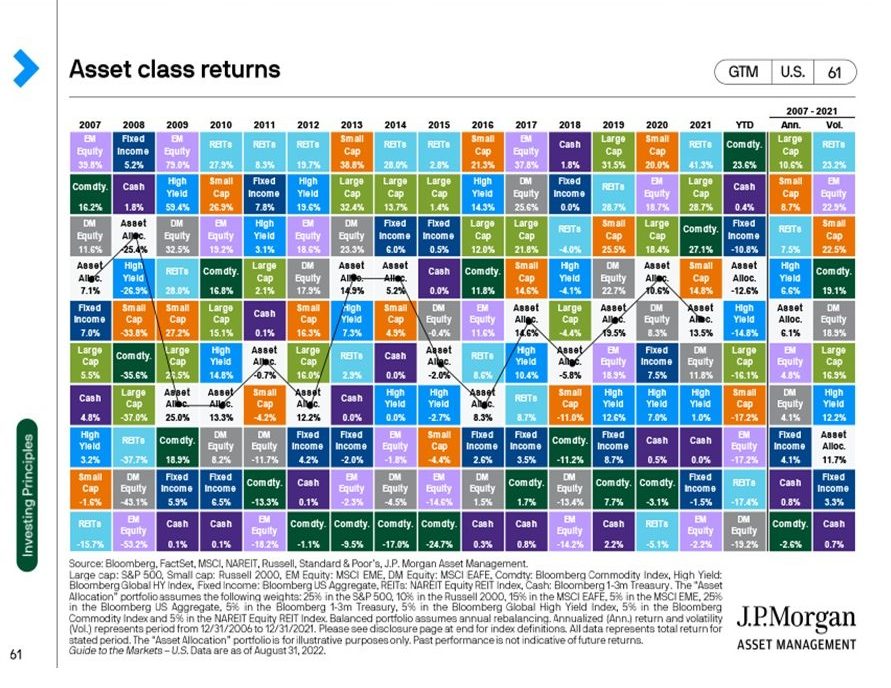
Every asset class carries its own expected return and volatility footprint. When you construct an asset allocation, you establish an equilibrium tailored to your specific liquidity needs, time horizon, and loss threshold. Yet the moment capital is deployed, thermodynamic entropy takes over. Winners expand their footprint, while lagging or stabilizing assets contract. Over a multi-year expansion, a conventional allocation of sixty percent equities and forty percent fixed income regularly mutates into an eighty-twenty mix.
This mutation occurs imperceptibly. Because the overall account balance is rising, the investor experiences an illusory sense of safety. They believe their wealth is surging due to astute choices, unaware that their portfolio beta has escalated dramatically. When a severe market contraction inevitably strikes, that unmonitored eighty percent equity component generates drawdowns calibrated for an aggressive hedge fund rather than a prudent long-term account. At that juncture, understanding core portfolio rebalancing mechanics allows investors to recognize that drift is not a sign of winning, but an unintended accumulation of risk.
Compounding the problem is the mathematical asymmetry of financial losses. A portfolio that falls fifty percent must subsequently gain one hundred percent merely to claw its way back to break-even. By allowing equity allocations to expand unchecked during extended bull markets, an investor compounds downside vulnerability at the precise moment valuations are most stretched. Drift shifts the portfolio from a deliberate balance into an accidental bet on indefinite expansion.
The Volatility Pumping Phenomenon and Shannon’s Demon
Beyond defensive risk control lies an intriguing mathematical anomaly known as volatility pumping. Pioneered in theoretical physics and information theory by Claude Shannon, the concept demonstrates that rebalancing between two assets—even when one asset has an expected drift of zero, such as cash—can generate positive geometric returns simply through periodic resets. This phenomenon, often referred to as Shannon’s Demon, exploits the variance of an asset rather than its unilateral upward trajectory.
Consider an asset that swings violently between twenty dollars and forty dollars over alternating cycles without experiencing any permanent secular growth. A passive buy-and-hold participant finishes where they started, capturing zero net progress. However, an investor who continually resets the allocation between this fluctuating asset and a stable reserve mechanically sells near forty and aggressively buys near twenty. In this controlled environment, the underlying portfolio rebalancing mechanics extract value directly from price oscillation itself.
While real-world capital markets are far messier than academic simulations, empirical evidence supports this dynamic across uncorrelated asset classes. According to CFA Institute research on asset allocation and rebalancing strategies, systematic realignments across divergent risk assets harvest a measurable diversification return while significantly curbing terminal wealth volatility. The benefit stems not from outsmarting market sentiment, but from enforcing arithmetic order upon random price action.
Four Proven Disciplines to Systematize Asset Allocation
Deploying systematic portfolio rebalancing mechanics requires clear execution rules that bypass emotional impulses and mitigate unnecessary frictions such as capital gains taxes and bid-ask spreads. Implementing an institutional framework ensures that an investor acts only when the mathematical advantage outweighs the transaction friction.
1. Threshold Based Bands Over Rigid Calendar Intervals
Many traditional practitioners advocate for calendar rebalancing, resetting an asset mix on a fixed date such as the final trading session of the quarter or year. While simple, calendar rebalancing is fundamentally arbitrary. Markets do not coordinate their cyclical tops and bottoms with human calendar conventions. A calendar-based approach risks triggering costly adjustments when prices have barely moved, while ignoring severe intra-period market swings that cry out for realignments.
A far superior methodology utilizes tolerance bands, often called rebalancing corridors. Under this system, each asset class is assigned an absolute or relative drift limit. For instance, an asset targeted at thirty percent of the portfolio might carry an absolute corridor of five percent. No action is taken until that asset breaches either twenty-five percent or thirty-five percent. If market volatility remains muted, the portfolio stays quiet, eliminating unnecessary turnover. If a violent dislocation strikes in mid-July, the threshold triggers immediately, enabling the investor to buy assets at fire-sale discounts or harvest outsized profits precisely when the opportunity is largest.
2. Strategic Cash Flow Routing to Mitigate Tax Drag
Executing adjustments in a taxable account through wholesale liquidations introduces tax drag that can swiftly erase the benefits of mathematical rebalancing. Every realization of short-term or long-term capital gains forces a payout to tax authorities, permanently shrinking the compounding base. Sophisticated investors minimize this friction through intentional cash flow routing.
Instead of automatically reinvesting dividends, interest payments, and fresh deposits into the securities that generated them, direct these distributions into a central liquidity clearing pool. When the overall allocation requires realignment, deploy this unallocated cash strictly toward the most underweight assets. Athletic discipline shares this exact mechanical precision; examining how Jacob Misiorowski Unleashes 3 Major Factors Powering The Brewers Into World Series Glory shows how systematically channeling fresh energy into specific mechanics yields superior control rather than overworking tired assets. Routing new capital directly into lagging positions realigns portfolio weights smoothly without generating a single taxable sale.
3. Asset Location Optimization Across Diverse Account Types
Modern personal finance is rarely consolidated into a single ledger. Most capital structures span standard taxable brokerage accounts, tax-deferred accounts like Traditional IRAs, and tax-exempt vehicles like Roth accounts. Managing these silos in isolation introduces gross systemic inefficiency.
Refining these portfolio rebalancing mechanics across multi-tier accounts creates a friction-free ecosystem where allocations reset quietly. When an equity position surges beyond its upper tolerance corridor, the investor does not liquidate shares in their taxable account where substantial embedded capital gains reside. Instead, they execute the offsetting reduction entirely inside a tax-sheltered vehicle by trading out of equities and into fixed income or liquid reserves. The aggregate household asset mix is brought back into balance instantaneously, while the taxable portfolio remains untouched, letting unrealized gains compound unhindered.
4. Dynamic Band Scaling for High Volatility Assets
Applying uniform five percent corridors across every holding ignores the fundamental statistical variance between asset classes. A five percent absolute move in short-term sovereign debt is a massive structural anomaly indicating a systemic liquidity crunch. Conversely, a five percent move in emerging market equities or micro-cap funds is ordinary weekly noise. Treating these holdings identically leads to premature over-trading in volatile assets and paralyzed stagnation in stable ones.
Dynamic corridor scaling sets tolerance bands relative to each component asset’s annualized volatility and cost of execution. Highly volatile, high-friction holdings are granted wider operational bands, allowing them sufficient room to ride momentum trends without triggering constant, self-defeating transactions. Ultra-stable holdings carry tight, narrow corridors, ensuring that defensive anchors remain structurally capable of funding opportunistic buys whenever a broader market rupture occurs.
Psychological Friction and the Counterintuitive Art of Trimming Winners
The greatest barrier to executing disciplined rebalancing is not mathematical complexity; it is human psychology. Behavioral finance consistently demonstrates that humans are deeply afflicted by recency bias and the endowment effect. When a technology stock or index fund doubles over twenty-four months, every instinct screams that it will continue doubling forever. Trimming that asset feels like punishing success.
Conversely, taking those harvested gains and allocating them toward an asset class that has experienced three consecutive years of anemic performance feels like throwing good money into a furnace. Rebalancing demands that an investor continually sell what has been working and purchase what has been failing. It is an intensely unnatural act that directly contradicts herd behavior and social proof.
When behavioral hesitation strikes, returning to standardized portfolio rebalancing mechanics removes the agony of second-guessing the market. The portfolio manager does not need to forecast interest rates, predict corporate earnings, or divine geopolitical outcomes. The rules execute dispassionately. The decision to trim an asset is not a negative judgment on its long-term viability; it is a structural mandate to prevent that asset from monopolizing the portfolio’s collective fate.
Consider the practice of tending an apple orchard. A master arborist routinely prunes away productive, vigorous branches not out of hostility toward the tree, but to ensure sunlight reaches the internal canopy and to prevent top-heavy limbs from snapping under their own weight during autumn storms. Portfolio maintenance operates on identical principles. Pruning preserves the structural integrity of the balance sheet so it survives to fruit across decades of varied financial weather.
Building an Enduring Framework for Mechanical Execution
To successfully integrate these strategies over an investment lifetime, write them into a formal Investment Policy Statement (IPS). This document should articulate the baseline target allocation, the chosen tolerance band methodologies, the hierarchy of asset location, and the specific cash-flow routing procedures to be utilized. When rules are codified during periods of market calm, they act as an intellectual anchor when volatility inevitably roils the financial sector.
Review the portfolio against these rules on a set rhythm, but only pull the trigger when specified thresholds are violated. By decoupling observation from execution, you insulate your wealth from impulsive tactical adjustments that masquerade as cleverness. In the final analysis, establishing automated portfolio rebalancing mechanics ensures that long-term survival takes precedence over transient market excitement, turning compounding into an inevitable mathematical reality.