News wire service mechanics reveal 4 proven rules that power global information networks
Behind every morning headline lies an invisible global engine transmitting raw events into verified dispatches within seconds. Discover the timeless operational mechanics that keep international news wire services accurate, neutral, and resilient.
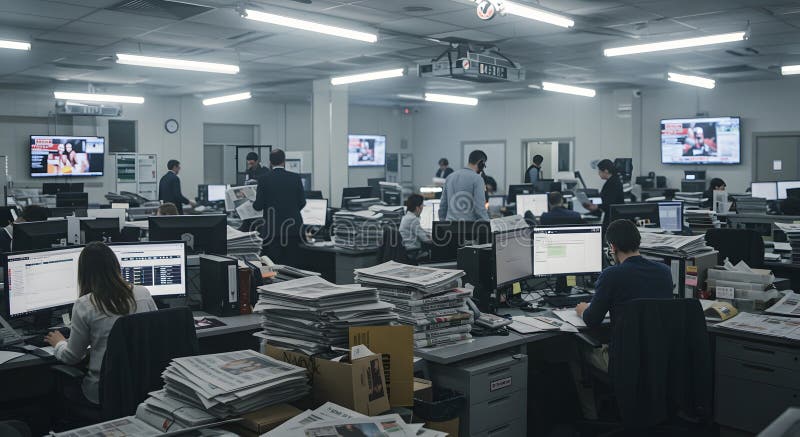
Every seasoned editor knows that understanding news wire service mechanics provides the ultimate blueprint for how global truth is gathered, filtered, and broadcast under intense deadline pressure. Long before a notification chimes on a smartphone or a television anchor adjusts their earpiece, an unseen machinery has already digested a chaotic real-world event, stripped it of hyperbole, verified its primary facts, and distributed it to thousands of competing editorial desks simultaneously. It is an extraordinary exercise in logistics and cognitive engineering that has quietly anchored civilized society for generations.
The concept of wholesale journalism represents one of the most vital yet least understood pillars of the modern media landscape. While retail news outlets focus on packaging, local commentary, and distinct narrative voices for their specific subscriber demographics, wire agencies produce the raw, foundational building blocks of international awareness. When an undersea earthquake strikes, a sovereign treasury shifts interest rates, or an international summit drafts an accord, independent correspondents stationed on the ground funnel unvarnished observations through centralized desks that never sleep. The speed and integrity of this transmission chain dictate what billions of people understand to be reality.
The Hidden Infrastructure Powering International News Desks
To grasp the true scale of this operation, one must look beneath the surface of consumer-facing media brands. Most regional daily newspapers, independent digital portals, and municipal radio stations cannot afford to maintain full-time foreign bureaus in Tokyo, Geneva, Nairobi, and Buenos Aires. Maintaining a single international reporting post requires immense logistical overhead, secure communication corridors, local legal representation, insurance protocols, and fluent translation specialists. Without a collaborative clearinghouse for primary observation, international reporting would shrink into regional guesswork.
Examining news wire service mechanics demonstrates that without these shared arterial conduits, regional reporting would wither into parochial speculation. The wire service serves as a shared utility, funded collectively through subscription licenses paid by publishers, broadcasters, institutional trading firms, and diplomatic missions. In exchange for recurring membership or access fees, these subscribers receive a steady stream of low-latency dispatches formatted according to universal standards. The copy arrives stripped of unnecessary adjectives, organized for modular editing, and verified against uncompromising institutional benchmarks.
This infrastructural interdependence means that when a major geopolitical development unfolds, dozens of ostensibly competing front pages will feature identical phrases and datelines. The original dispatch was not composed in London, New York, or Sydney by the staff columnist whose name appears atop the weekend analysis. It was filed by an anonymous or bylined wire correspondent operating out of a regional desk, validated by an intake editor, transmitted across private networks, and subsequently repurposed by downstream newsrooms. The wire agency functions as the central nervous system of global communication, absorbing raw shocks and firing coherent neural signals across continents.
Why Structural Neutrality Dictates Wire Agency Reporting
In an era characterized by hyper-partisan commentary and fragmented cultural echo chambers, people frequently wonder why traditional wire dispatches maintain such a remarkably dry, measured tone. The answer lies not merely in romantic notions of journalistic virtue, but in the ironclad economic logic of news distribution. A commercial wire agency cannot afford ideological tilt because its survival depends upon selling the exact same copy to ideologically opposed clients.
The financial realities embedded within news wire service mechanics enforce a strict standard of unvarnished reporting. A single dispatch must be equally valuable and factually unassailable to a conservative broadsheet, a social-democratic evening paper, an algorithmic financial fund, and a public broadcaster. If a wire agency allows subjective bias, emotive language, or uncorroborated commentary to creep into its basic reporting, it instantly alienates half its client roster. True neutrality is therefore an essential operational parameter and a hard-nosed commercial asset.
Achieving this level of detachment requires reporters to separate direct observation from interpretation. Adjectives are subjected to ruthless interrogation on the wire desk. A crowd is not described as angry or boisterous; the reporter records the physical count, the presence of banners, the specific slogans chanted, and the physical responses of security personnel. By restricting copy strictly to observable phenomena and attributed quotations, the wire service presents an airtight factual container that downstream editors can recontextualize however they see fit without undermining the foundational truth of the event.
Four Foundational Principles That Guide Wire Service Operations
The remarkable durability of wire reporting rests on four time-tested operational pillars. Developed across decades of technological transitions from telegraph keys and pneumatic tubes to satellite uplinks and encrypted cloud servers, these rules form an unyielding framework designed to withstand chaotic conditions.
The Strict Discipline of the Inverted Pyramid Structure
The architectural foundation of wire journalism is the classic inverted pyramid, a structural innovation forged in the era of telegraphy when cut lines and unstable connections regularly truncated transmissions. In this format, the single most critical information cluster, traditionally known as the lead, sits at the absolute summit of the story. The opening sentence must answer who, what, where, when, and how with crystalline economy, ensuring that if a reader or an automated publisher receives only the first thirty words, the essential truth remains intact.
Subsequent paragraphs unfurl in descending order of urgency. The second paragraph provides immediate context and crucial primary attribution; the third introduces critical secondary figures and background data; subsequent sections provide historical depth, tangential reactions, and peripheral details. This architecture allows client editors working under frantic layout deadlines to slice away the bottom half of a wire piece from the bottom up without ever severing its narrative spine or introducing factual ambiguity.
Rigorous Multi-Tiered Verification Before Any Bulletins Drop
Speed is meaningless if the dispatch is flawed. Within news wire service mechanics, speed without absolute certainty is viewed as catastrophic negligence. To navigate this paradox, international agencies employ a layered triage system for breaking alerts, categorizing incoming data into flashes, bulletins, and full leads. A flash consists of a single line of urgent development, issued only when verified by an eyewitness staff correspondent or two fully vetted, independent official sources.
Editors at the intake desk work with parallel tracking documents, checking company filings, official gazettes, and verified radio traffic before clearing copy for transmission. If a conflicting claim emerges, the wire agency does not rush forward with speculation; it issues a factual holding statement confirming that an event is under investigation. This institutional patience preserves credibility. The financial markets and sovereign institutions that subscribe to wire feeds make billion-dollar decisions based on these alerts, making the cost of an unforced error immeasurable.
Neutral Linguistic Standardization Across Heterogeneous Markets
Wire operations rely heavily on comprehensive, continuously updated stylebooks that enforce rigid lexical discipline across thousands of contributors worldwide. Words that imply moral judgment, intent, or unverified guilt are excised. Correspondents use neutral verbs like said or stated rather than emotive alternatives such as admitted, claimed, or retorted, which subtly inject psychological interpretation into the record.
Just as studying how Bicycle drafting mechanics reveal 4 proven secrets to shatter exhausting aerodynamic drag illustrates the power of moving within a streamlined current, syndicated news outlets rely on wire services to cut through the exhausting noise of breaking crises. By eliminating linguistic resistance and narrative drag, standardized wire copy glides effortlessly into diverse production systems around the world without generating friction or controversy.
Relentless Real-Time Speed Without Compromising Factual Accuracy
The final pillar centers on operational velocity. The temporal precision of news wire service mechanics relies on parallel workflows where human judgment and automated feeds intersect. While one correspondent handles the rolling bulletin updates from a press room, another monitors regulatory document databases, and an intake editor shapes incoming paragraphs into publishable formats in real time.
This distributed workflow enables wire services to publish confirmed developments within seconds of their occurrence. Modern distribution pipelines rely on direct API integrations that push text straight into subscriber content management systems and broadcast prompters. This synchronization guarantees that regardless of geography, every subscribing newsroom receives the baseline reality at the exact same fraction of a second.
The Downstream Effect of Wire Feeds on Modern Media Consumers
Although millions of people read wire dispatches every day, relatively few recognize the dateline conventions that signify wholesale reporting. A dispatch opening with a bold geographic marker followed by an agency acronym indicates that the words that follow were generated by this rigorous global apparatus. When local news organizations face shrinking investigative budgets, their reliance on these syndicated streams expands substantially.
Analyzing news wire service mechanics reveals how a single dateline can establish the global consensus on an unfolding disaster before morning editions print. When an agency correspondent files from an active crisis zone, that single observer’s perspective becomes the foundational primary source for hundreds of television commentators, podcast hosts, and digital aggregators. According to authoritative Reuters Institute for the Study of Journalism research, the upstream accuracy of international wire reporting remains one of the few stabilizing factors preserving shared factual reality in an increasingly fragmented digital ecosystem.
This downstream ripple effect carries profound democratic significance. When wire services function at their peak, they create an immutable public ledger of events that resists partisan revision. Even as opinion columnists and digital commentators spin contrasting interpretations of a controversial hearing or economic treaty, the wire service’s contemporaneous transcript and factual timeline remain open to anyone who seeks unadulterated reality.
Mastering Media Literacy by Deciphering Upstream Dispatches
Becoming an enlightened consumer of modern media requires tracing narratives back to their original point of origin. When confronted with sensational headlines, inflammatory social media threads, or heated broadcast panels, the most effective analytical maneuver is to locate the original wire alert that sparked the reaction. Stripping away the emotional packaging often reveals a remarkably calm, strictly bounded factual report that paints a far more nuanced picture than subsequent commentators claim.
When readers learn to recognize news wire service mechanics at play, they gain the ability to dismantle clickbait and locate original source reporting with surgical precision. They notice the careful use of attribution, the absence of sensational adjectives, and the deliberate structure of the inverted pyramid. By reading upstream at the wire source rather than downstream in the commentary pool, citizens insulate themselves against manipulated outrage and develop a grounded, realistic perspective on global events.
The invisible machinery of international wire agencies continues to hum in the background of human civilization, operating twenty-four hours a day across every time zone. Its quiet discipline, strict linguistic boundaries, and dedication to rapid verification demonstrate that factual truth is not an accidental byproduct of modern life. It is the hard-won output of an engineered system designed to preserve clarity in an unpredictable world.