Index fund rebalancing mechanics expose 4 costly traps that erode investor wealth
Passive investing is widely celebrated as hands-off and frictionless, yet the hidden machinery beneath benchmark shifts tells a very different financial story. Understanding how passive funds synchronize their holdings reveals unseen execution friction that quietly shaves performance over decades.
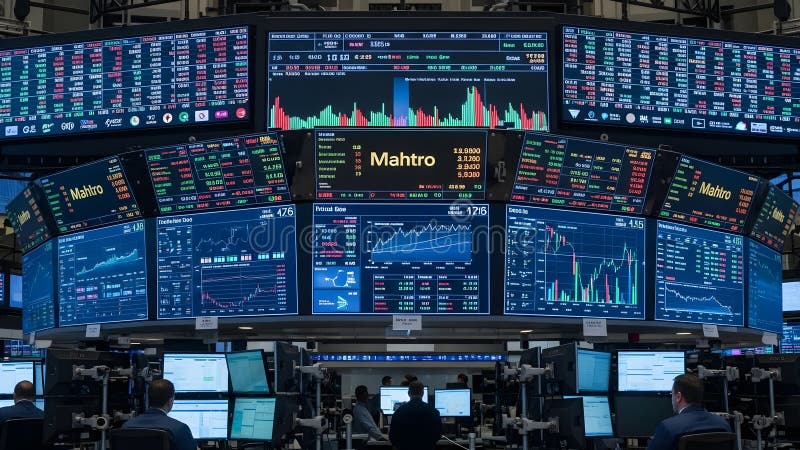
Mastering modern market structure requires unmasking how index fund rebalancing mechanics quietly extract value from billions of dollars in supposedly automated portfolios. Retail investors routinely view passive exchange-traded funds and mutual funds as inert mirrors of the broader economy. Money flows in, capital spreads across five hundred or two thousand corporate equities, and the management company collects a microscopic expense ratio of three basis points. It feels like the closest thing to a free lunch finance has ever manufactured.
Yet beneath that tranquil user interface lies an industrial churning machine. Indexes are not immutable stone tablets; they are mathematical formulas maintained by commercial committee decisions. Companies go bankrupt, spin off subsidiaries, issue secondary stock offerings, and cross market-cap thresholds. When a benchmark index reconstitutes or realigns its constituent weights, trillions of institutional dollars must simultaneously execute transactions in the open market. This programmatic urgency transforms passive capital into predictable prey.
The Illusion of Frictionless Passive Portfolios
Every popular equity benchmark enforces strict admission and weighting guidelines. Whether tracking large-cap growth, value, or comprehensive total market indices, the fundamental architecture requires regular updates. If a tech titan surges to unprecedented valuations, a market-cap weighted fund must continually expand its exposure or reweight its basket according to established methodology. Conversely, when an industrial stalwart slides below qualification cutoffs, index fund rebalancing mechanics dictate immediate divestment regardless of intrinsic valuation or prevailing market liquidity.
Most retail savers assume that zero-commission brokerage accounts and negligible fund management fees mean execution itself carries zero drag. That assumption collapses under structural scrutiny. The true price of financial management is rarely the headline expense ratio printed on the prospectus. The true price includes market impact costs, timing anomalies, and predatory price concessions created whenever enormous funds telegraph their trades to the entire planet weeks in advance. What appears to be an effortless automated tide is actually an operational gauntlet where institutional capital pays an unspoken tax on every collective adjustment.
How Benchmark Migration Drives Forced Buying and Selling
Benchmark shifts operate on rigid calendars. Index committees announce additions and deletions days or weeks before the actual reconstitution event takes place. This delay between declaration and execution serves an administrative purpose for custodian banks, but it creates a gaping tactical vulnerability in open financial markets.
Because index tracking funds must minimize tracking error—the variance between the fund performance and the underlying index—fund managers are compelled to execute the majority of their rebalancing trades during the closing cross auction on the exact day changes take effect. They do not possess the discretion to wait for calmer waters, negotiate off-market private blocks, or stagger orders over months. They must buy and sell billions in targeted securities at precisely 4:00 PM, creating enormous liquidity spikes that distort local price formation.
Four Costly Traps Embedded in Index Fund Rebalancing Mechanics
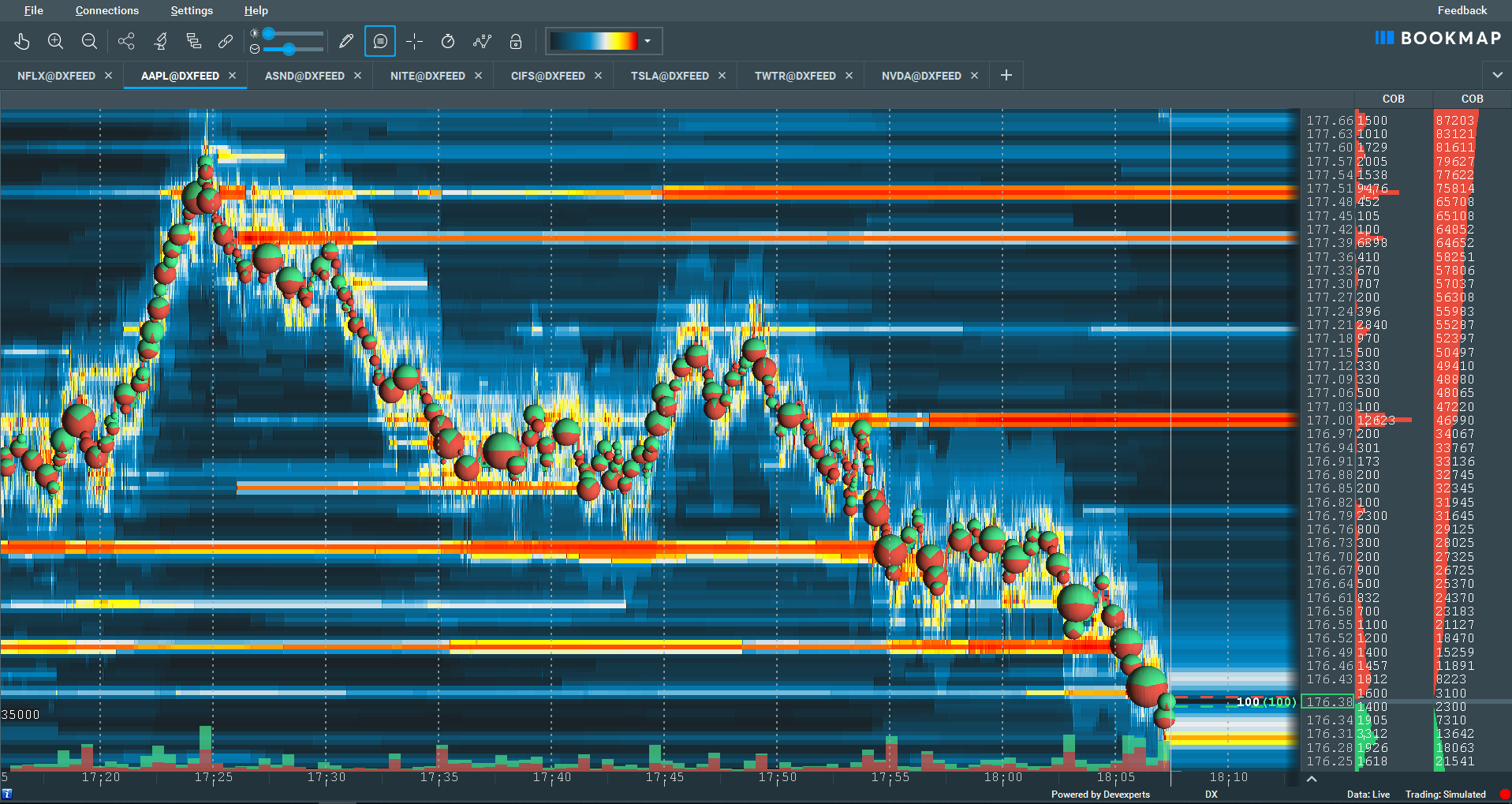
When billions of dollars must trade specific tickers on a fixed schedule, the structural inefficiencies compound rapidly. Analyzing index fund rebalancing mechanics reveals distinct operational leaks where investor capital bleeds away through mechanical rigidities rather than company performance.
Predatory Front Running by High Frequency Arbitrageurs
Index providers operate with complete transparency, publishing announcement dates and effective dates for upcoming reconstitutions. While transparency is intended to preserve market integrity, it functions as an open playbook for proprietary trading desks and quantitative hedge funds. Quantitative firms deploy sophisticated algorithms to anticipate which stocks will enter or exit prominent indices months before the committee releases its official slate.
Once the inclusion announcements drop, quantitative speculators aggressively buy the incoming equities, driving their market prices higher. By the time index tracking funds arrive on the effective date to execute their mandatory purchases at the market close, they purchase these securities at artificially inflated price spikes. Days or weeks later, as arbitrageurs unwind their long positions, the newly added equities frequently experience mean-reversion pullbacks. The passive fund absorbs the permanent capital hit, locking in an unforced structural loss before the new constituent has contributed a single dollar of organic business earnings.
Turnover Drag and Hidden Bid Ask Spread Wastes
Turnover is routinely dismissed as an active fund problem, yet benchmark reconstitutions generate astonishing transaction volume. The operational friction inside index fund rebalancing mechanics extends far beyond explicit brokerage commissions. Executing multi-billion-dollar block trades pushes the market against the fund itself, widening the effective bid-ask spread and incurring severe market impact costs.
Consider the physical friction inherent in moving immense mass. Just as subtle ratios determine structural integrity in baking—where Bread hydration mechanics reveal 4 proven secrets to bake magnificent artisan loaves through precise molecular balances—portfolio rebalancing relies on strict numerical ratios that trigger massive physical displacement across financial exchange order books. When an index demands that twenty million shares of a mid-cap stock be acquired within the final closing auction of a single trading session, market makers widen their quotes to protect against inventory risk. The passive vehicle willingly accepts unfavorable fills because tracking accuracy overrides cost optimization.
Capital Misallocation at Cyclical Valuations
Market-cap weighted indices suffer from a built-in momentum bias. When enthusiasm drives an individual industry sector into extreme speculative territory, market-cap weighting commands funds to allocate ever-larger fractions of inbound cash into the most expensive assets. The rebalancing cycle reinforces this distortion. As a stock inflates, its index weighting swells, requiring ongoing periodic purchases to maintain proportional alignment.
The inverse occurs when resilient, cash-generating enterprises suffer temporary cyclical downturns. If their share prices stumble, the rebalancing mechanism forces the fund to trim its exposure or discard them entirely at the cyclical nadir. Instead of applying disciplined value investing principles by buying low and selling high, the passive mechanism programmatically buys high and sells low at constituent extremes. By mechanizing portfolio turnover without regard to fundamental balance sheet health, long-term compound growth suffers an invisible tax born of systematic trend-chasing.
The Paradox of Forced Liquidity During Market Stress
Market liquidity is never constant; it evaporates precisely when market participants need it most. When macroeconomic panics trigger broad market sell-offs, index fund rebalancing mechanics generate acute liquidity imbalances. As leveraged participants and retail investors redeem units simultaneously, fund managers must sell underlying components into a vacuum of buyers.
In fixed-income and small-cap equity indices, this problem becomes catastrophic. Less liquid corporate bonds or small-cap stocks cannot absorb wholesale liquidations without disastrous price slippage. Floor specialists and algorithmic market makers step away from their screens, leaving the index fund to cross spreads at distressed fire-sale levels. The resulting tracking error does not reflect bad fundamental assets, but rather the failure of programmatic liquidation rules colliding with illiquid exchange pipes.
Structural Market Distortion and Price Discovery Erosion
The sheer scale of modern indexing has fundamentally transformed exchange microstructure. Decades ago, individual security selection dictated price movements, and active investors competed ferociously to discover the true discounted cash flow value of every firm. Today, massive tranches of capital move non-discriminatorily across corporate rosters simply because those tickers share membership in a collective financial product.
This blanket allocation detaches equity pricing from underlying operational realities. Academic research, including work synthesized in a National Bureau of Economic Research working paper on passive market impact, demonstrates that systematic flows distort cross-sectional stock returns and impair traditional price discovery. When stocks trade as homogeneous baskets rather than individual businesses, systemic co-movement surges. Good companies sink simply because their peer group is trimmed from a benchmark, while mediocre enterprises float upward on relentless passive inflows. The broader economy suffers as capital allocation efficiency degrades, misdirecting investment dollars into speculative corporate giants at the expense of lean, innovative challengers.
Smarter Strategies to Protect Long Term Investment Capital
Understanding the hidden costs of mechanical rebalancing does not require abandoning diversified index investing altogether. Instead, it demands that thoughtful capital allocators recognize the architectural limitations of pure market-cap strategies and adjust their asset location and execution tactics accordingly.
Investors can explore alternative weighting frameworks. Equal-weighted indices, fundamentally weighted portfolios, and direct indexing strategies sidestep the structural pitfalls of traditional mega-cap tracking. Equal-weighted funds systematically take profits from outperforming winners and reallocate those proceeds into lagging constituents, reversing the trend-chasing flaw of market-cap methodologies. While equal-weighting carries its own turnover considerations, it avoids the hyper-concentrated valuation bubbles that plague major capitalization benchmarks.
Paying attention to fund structure and tracking methodology yields substantial dividend savings over extended horizons. Modern direct indexing technology empowers individual investors to own the underlying shares directly rather than through commingled exchange-traded wrappers. By executing systematic tax-loss harvesting and custom reconstitution intervals, an account can bypass the frantic, telegraphed crowd trades that occur on quarterly benchmark reconstitution dates. When you control the execution tempo, you strip high-frequency arbitrageurs of their predictable payday.
Rethinking the True Cost of Passive Index Discipline
Simplicity has always been the greatest selling proposition in modern personal finance. Handing your savings to an automated index vehicle eliminates the emotional turmoil of day trading, the hubris of market timing, and the extortionate fees historically extracted by Wall Street sales desks. That discipline remains undeniably valuable for millions of ordinary households striving for financial independence.
However, passive investing is neither magical nor costless. The hidden friction embedded within index fund rebalancing mechanics proves that no financial system operates without friction. Every time a spreadsheet formula triggers automated trades across thousands of accounts, genuine market participants stand on the opposite side of the transaction, extracting fractions of a percent from predictable institutional inertia. Recognizing that these structural leaks exist is the first step toward genuine financial sophistication. By looking past the marketing brochures of frictionless investing, investors can structure portfolios that preserve the brilliant simplicity of diversification while shielding their hard-earned wealth from the invisible machinery of the crowd.