Bond duration mechanics and 4 proven rules to conquer costly interest rate shocks
Discover how bond duration mechanics dictate debt portfolio sensitivity and how to shield your capital from catastrophic interest rate fluctuations.
Mastering bond duration mechanics gives investors an unfair defensive edge whenever central banks trigger violent tremors across global debt markets. Most people assume holding government or corporate debt is an inherently safe endeavor. They look at the stated maturity date on the prospectus, check the annual coupon rate, and convince themselves their principal remains insulated from harm. That false sense of security disintegrates the moment market yields jump higher. A thirty-year bond paying three percent does not merely drift down when prevailing rates climb; it craters like a speculative equity. The culprit behind this gut-wrenching volatility is not market malice, but mathematical certainty.
Debt instruments do not move in lockstep with calendar years. A ten-year bond does not carry twice the market risk of a five-year note, nor does a high-coupon security behave like a zero-coupon strip with identical maturity. Portfolio resilience hinges on measuring when capital actually returns to your hands. Once you see the internal physics governing debt pricing, you stop fearing rate cycles and start using them to extract predictable, compounding returns.
The Hidden Anchor of Fixed Income Portfolios
Every bond is an exchange of present capital for a scheduled sequence of future promises. The borrower takes your cash today and pledges periodic coupon payments before returning par value at maturity. But money promised ten years from now does not carry the same economic weight as money collected tomorrow morning. Inflation erodes it, opportunity cost discounts it, and interest rate shifts violently reprice it.
At its fundamental core, understanding bond duration mechanics transforms how an allocator gauges vulnerability. Duration is not a measure of time in the chronological sense; it is an index of economic delay. Think of a bond as a balance beam resting on a fulcrum. On one side sits your initial capital outlay; on the other sits an uneven distribution of cash flows, starting with coupon drips and ending with a final repayment block. The balance point where the weight of those cash flows achieves equilibrium is duration.
When cash flows cluster near the front edge of the instrument through generous coupons, the fulcrum shifts toward the present. If all payments remain locked away until the terminal date, as with zero-coupon debt, the fulcrum rests at the far end of the plank. This mechanical fulcrum determines how brutally the seesaw swings when macroeconomic forces push down on yields. The farther the fulcrum sits from the present day, the wider the arc of price fluctuation.
How Cash Flow Timing Dictates Price Sensitivity
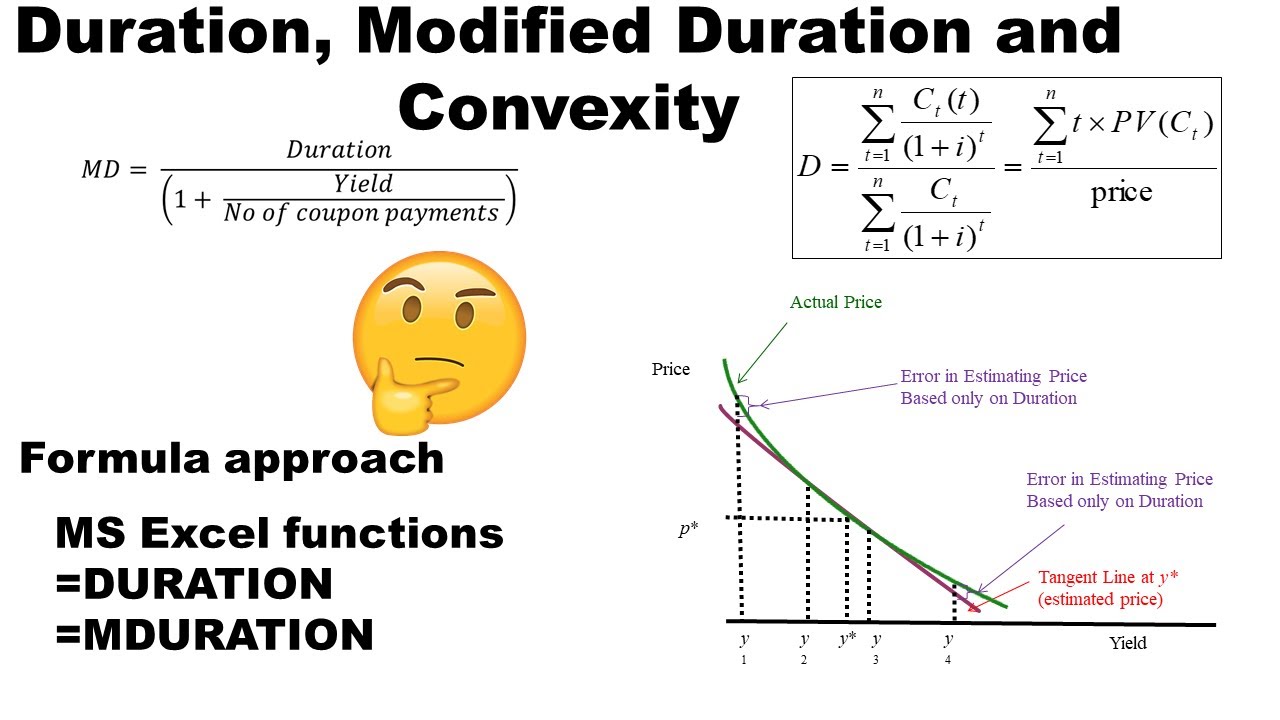
To master debt dynamics, an investor must separate two related concepts: Macaulay duration and modified duration. Frederick Macaulay first formulated the mathematical balance point in the 1930s, calculating the weighted average time until an investor receives all cash flows. It expresses duration in units of years. While academically elegant, knowing a bond has a cash flow balance point of seven years does not immediately tell a trader how much money is at risk if interest rates leap overnight.
Modified duration translates that chronological anchor into direct price elasticity. It takes Macaulay duration and divides it by one plus the yield per compounding period. The resulting figure functions as an operational multiplier: for every single percentage point change in benchmark yield, the price of the bond changes in the opposite direction by roughly that percentage. A bond with a modified duration of eight years surrenders roughly eight percent of its market value if yields rise by one hundred basis points.
This is why grasping bond duration mechanics requires separating chronological maturity from cash flow timing. A fifteen-year bond sporting an eight percent coupon carries far less interest rate risk than a fifteen-year bond paying one percent. The high-coupon note continuously returns capital to the owner, allowing reinvestment at prevailing market rates. The low-coupon paper keeps capital held hostage in a meager promise, leaving the holder utterly exposed to purchasing power destruction.
Four Proven Rules to Manage Volatility with Precision
Translating bond duration mechanics into actionable portfolio construction requires moving beyond theoretical formulas into rigorous execution. Academic models assume smooth, orderly markets, but real-world portfolios face sudden liquidity droughts, regime changes, and sharp shifts in central bank guidance. Navigating these headwinds demands practical disciplines tested across multi-decade interest rate regimes.
Rule 1 Calculate Your True Cash Flow Center of Gravity
Never evaluate fixed income holdings purely through maturity brackets. Fund managers frequently disguise interest rate risk by packaging long-dated bonds alongside intermediate paper, presenting an aggregate portfolio labeled moderate maturity. In reality, what governs your capital preservation is effective duration, which accounts for embedded options such as mortgage prepayments or corporate call provisions.
When mortgage rates fall, homeowners refinance en masse, returning principal early and dramatically shortening the duration of mortgage-backed securities just when investors want to lock in yields. When rates rise, prepayments dry up, causing duration to extend dramatically—a dangerous trap known as extension risk. By constantly recalculating the true cash flow center of gravity under dynamic yield environments, you avoid waking up to an asset whose sensitivity doubled while you slept. A rigorous analysis aligns with the CFA Institute analysis of fixed income risk and return, emphasizing that true market exposure rarely mirrors contractual dates.
Rule 2 Harness Convexity to Cushion Violent Yield Spikes
Modified duration is a linear approximation of a curved reality. If you chart bond prices against yields, the relationship does not form a straight line; it curves gently upward like a shallow bowl. That structural curvature is known as positive convexity. For standard option-free bonds, price increases accelerate as yields plunge, while price drops decelerate as yields climb.
This is where foundational bond duration mechanics yield to higher-order mathematical curvature. A portfolio engineered with high positive convexity acts like an asymmetric shock absorber. If yields rise by two hundred basis points, the actual price decline is smaller than simple duration would predict. If yields fall by two hundred basis points, the price gain is significantly larger. Owning securities with strong positive convexity protects downside capital during turbulent rate hikes while preserving upside during flight-to-safety rallies.
Rule 3 Match Liability Horizons to Eliminate Capital Risk
Price volatility is only catastrophic if you are forced to liquidate assets at market troughs. If your investment horizon matches the duration of your bond holdings exactly, interest rate risk and reinvestment risk cancel each other out in near-perfect symmetry. This mathematical principle, known as classical immunization, is the cornerstone of institutional pension management.
Consider an investor who needs five hundred thousand dollars in exactly seven years to fund a business expansion or major capital outlay. If they buy a bond portfolio with a duration of seven years, a rise in yields initially causes paper losses. However, the higher interest earned on reinvested coupons over the remaining years compounds rapidly enough to offset the capital decline. If yields fall, the capital gain on the bond compensates for the lower interest earned on reinvested income. By matching your operational time horizon to portfolio duration, you eliminate macro guessing games entirely.
Rule 4 Rebalance Systematically Across Shifting Yield Curves
The relationship between short-term borrowing costs and long-term yields is never static. Yield curves twist, steepen, flatten, and invert. When central banks tighten credit, short rates often surge while long rates remain anchored by expectations of future economic deceleration. Passive investors get whip-sawed by these curve shifts because their duration profile remains static.
Active allocators deploy barbell or bullet structures to exploit yield curve movements. A barbell strategy pairs short-duration cash equivalents with long-duration Treasuries, capturing immediate reinvestment liquidity on one end while securing duration gains on the other. A bullet strategy concentrates maturities tightly around a single intermediate point on the curve. When market hysteria dominates the financial press, understanding economic news reporting mechanics and 4 proven rules to decode market panic helps disciplined investors distinguish between sensationalized headlines and structural balance sheet reality. Tactical rebalancing around yield curve shapes turns macro friction into consistent alpha.
The Costly Fallacy of Nominal Yields and Maturity Traps
Individual investors who dismiss bond duration mechanics often confuse nominal yield with total return safety. They look at a headline coupon of seven percent and celebrate, ignoring the brutal reality that a ten-year duration means a two percent uptick in interest rates wipes out twenty percent of their principal value on paper. It takes three years of coupon payments just to recover the principal surrendered to rate volatility.
Yield traps also manifest when allocators buy long-maturity debt solely to capture a fractional yield advantage. If a thirty-year bond offers five percent and a ten-year bond offers four point seven percent, reaching for that extra thirty basis points triples your duration risk. You take on three hundred percent more interest rate vulnerability to capture six percent more annual income. That trade represents one of the most asymmetric negative bets in public finance.
Maturity also creates a dangerous psychological illusion of safety. Investors tell themselves that paper losses do not matter because they intend to hold the instrument until maturity. But holding an underwater low-coupon bond during an era of high inflation represents an enormous destruction of real purchasing power. You get your nominal principal back, but the dollars returned buy a fraction of what they purchased when you entered the contract. Duration is the cold mirror reflecting that economic reality long before maturity arrives.
Building an Indestructible Fixed Income Engine for Every Cycle
Fixed income is not a sleepy backwater of the financial system; it is the master plumbing of global capitalism. Equity markets dance to the tune played by sovereign debt yields, and credit spreads dictate corporate survival. Treating bond holdings as an unmanaged, passive afterthought leaves your wealth at the mercy of monetary tides.
By calculating modified duration, auditing embedded optionality, harnessing positive convexity, and matching duration to your actual spending timeline, you strip fixed income of its mystique. You cease being a victim of sudden interest rate fluctuations and become an intentional architect of your returns. Ultimately, respecting bond duration mechanics allows disciplined portfolios to survive unpredictable economic cycles without surrendering purchasing power.