Basketball shooting mechanics and 4 proven rules to build an effortless deadly release
Discover the true biomechanics of the modern jump shot and learn the 4 proven mechanical adjustments that unlock consistent range and effortless accuracy.
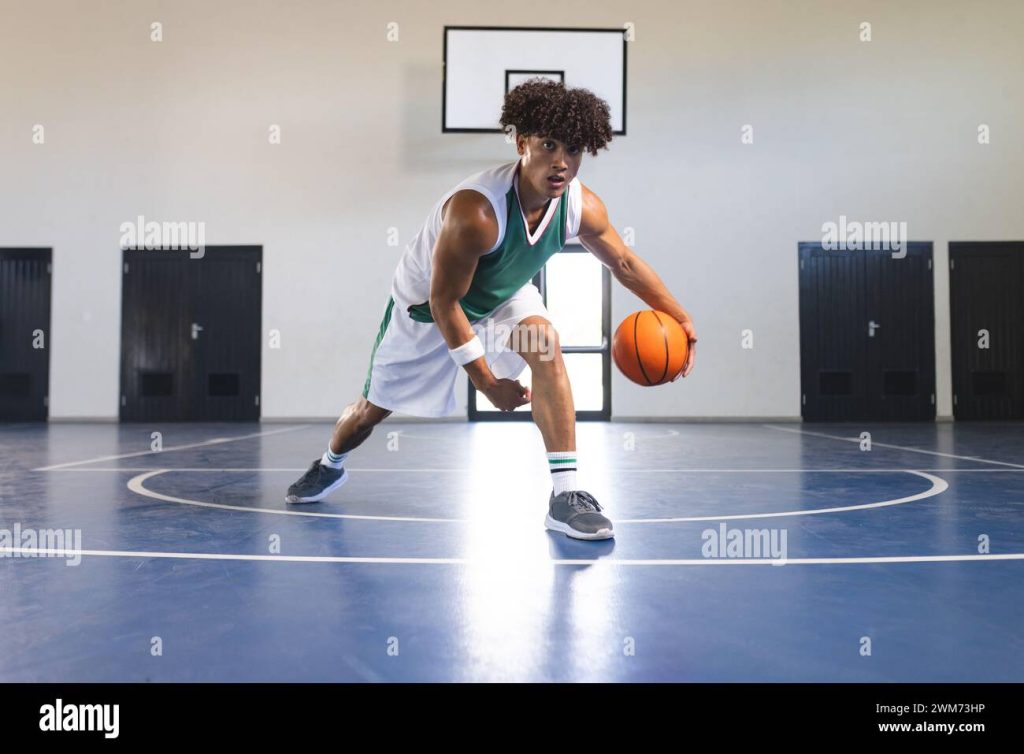
Mastering basketball shooting mechanics is the single greatest equalizer on the hardwood, turning erratic shot attempts into automatic, repeatable muscle memory. Whether pulling up off a rapid crossover or spotting up along the perimeter, the difference between a streaky shooter and an elite marksman comes down to biomechanical efficiency. When your body works in total alignment with natural kinetic forces, distance ceases to feel like a strain. The rim widens, the arc softens, and the release becomes virtually unguardable under intense defensive pressure.
The Kinetic Chain Behind the Modern Jump Shot
A pure jump shot is not an upper-body throwing motion. It is an upward wave of kinetic energy that originates from the hardwood, courses through the lower extremities, charges through the core, and snaps off the fingertips at the peak of extension. When you dissect elite basketball shooting mechanics through high-speed motion capture, you realize that the arms and wrist contribute very little raw propulsion. Their primary job is trajectory calibration and guidance.
Ground reaction force serves as the engine of the entire movement. When your feet contact the floor, the triple flexion of your ankles, knees, and hips stores elastic energy within the Achilles tendons and quadriceps. As you push upward, this energy travels sequentially through the anterior chain. If there is a hitch in your motion, or if your arm begins elevating before the lower body has initiated its upward thrust, that kinetic wave breaks instantly. The shooter is then forced to compensate by pushing from the chest or over-extending the shoulder, introducing unnecessary strain that destroys shot variance over a forty-minute contest.
Modern sports science, supported by extensive American Society of Biomechanics research, proves that sequential joint acceleration produces the highest release velocity with the least cardiovascular effort. Every millisecond of delay between the uncoiling of the knees and the unhinging of the shooting elbow diminishes energy transfer. An effortless release is simply the art of letting natural momentum travel undisturbed through an open structural pipeline.
Why Traditional Form Shooting Dogma Breaks Down Under Real Game Pressure
Decades of dogmatic coaching severely damaged basketball shooting mechanics by prioritizing static geometry over dynamic human movement. Generations of young players were instructed to square their ten toes perfectly flush to the rim, lock their elbows into rigid right angles, and jump straight up while landing in the exact same footprint. In real-world basketball, attempting to enforce these unnatural postures creates severe joint binding across the kinetic chain.
Squaring the feet dead-center forces the shooting shoulder and hip out of direct alignment with the target. Because human shoulders and hips are linked structurally, forcing the pelvis forward twists the lumbar spine and causes the shooting elbow to flare outward. To combat this flare, shooters overcompensate by tucking the elbow aggressively inward, creating intense muscular tension throughout the deltoid and rotator cuff. Tension is the mortal enemy of fine motor control.
Similarly, the archaic demand to catch the ball high and never bring it down strips the shot of vital rhythm. In dynamic competition, defenders close out aggressively, requiring quick decision-making and rapid release speeds. Expecting an athlete to generate forty feet of range from a static high set point without a fluid dipping motion defies fundamental muscle elasticity. The modern game favors functional bio-mechanics that celebrate natural body tilt, fluid energy loading, and smooth momentum transfer.
Four Proven Rules That Anchor Pure Shooting Biomechanics
Rebuilding your basketball shooting mechanics requires syncing your neuromuscular system to principles that reduce physical resistance and amplify repeatable motor patterns. These four foundational principles transform erratic mechanics into a fluid, deadly scoring weapon.
The Natural Sweep and Sway That Relieves Shoulder Tension
Elite shooters do not land in the exact footprint from which they jumped. Instead, they utilize a natural sweep and sway, where their feet drift slightly forward on the landing while their shoulders relax subtly backward. This gentle tilt is not an undisciplined fade; it is an essential structural realignment. Allowing the shoulders to sway back shifts the center of gravity, which naturally tilts the shooting elbow upward without straining the anterior deltoid.
By permitting the lower body to sweep forward ten to fifteen inches, the shooter naturally softens their trajectory, establishing a higher release angle. This posture eliminates lumbar compression and relieves tension across the pectoral muscles. The ball leaves the hand on an upward escalator rather than an aggressive forward catapult, dramatically increasing the entry angle into the basket.
The Rhythmic Ball Dip That Harnesses Ground Force Elasticity
Catching the basketball and immediately dipping it to the waist or thigh area before initiating the upward stroke is not a bad habit. It is an indispensable rhythm mechanism. The dip synchronizes the descent of the ball with the flexion of the knees, ensuring that both the upper and lower halves of the body reach their lowest loading point at the exact same fraction of a second.
When the ball dips toward the hip pocket, the wrist naturally hinges backward into an early loaded position. As the legs explode upward, the ball catches that rising elevator of momentum. Attempting to catch and shoot from an elevated chest position turns the shot into a two-piece segmented lever push. Dipping transforms the jumper into a singular, fluid stroke that generates explosive range from effortless kinetic energy.
The Set Point Window That Aligns Dominant Eye Vision
Every shooter possesses a unique set point window dictated by limb length, shoulder flexibility, and ocular dominance. Forcing every player to place the ball directly above the middle of their forehead or directly over their right eye ruins natural tracking. The optimal set point positions the ball slightly forward of the forehead, allowing the shooter to look underneath the leather with an unobstructed line of sight toward the target.
The set point must act as an uninterrupted pathway rather than a hard pause. If the ball stops moving at the top of the jump, kinetic energy vanishes, forcing the forearm to fling the ball forward independently. The ball should pass smoothly through the set point window while rising continuously. When aligned correctly with the dominant eye, the forearm rests at an angle between fifty and fifty-five degrees, offering the most stable launching pad possible.
Finger Roll Dispersion That Produces Optimum Ballistic Backspin
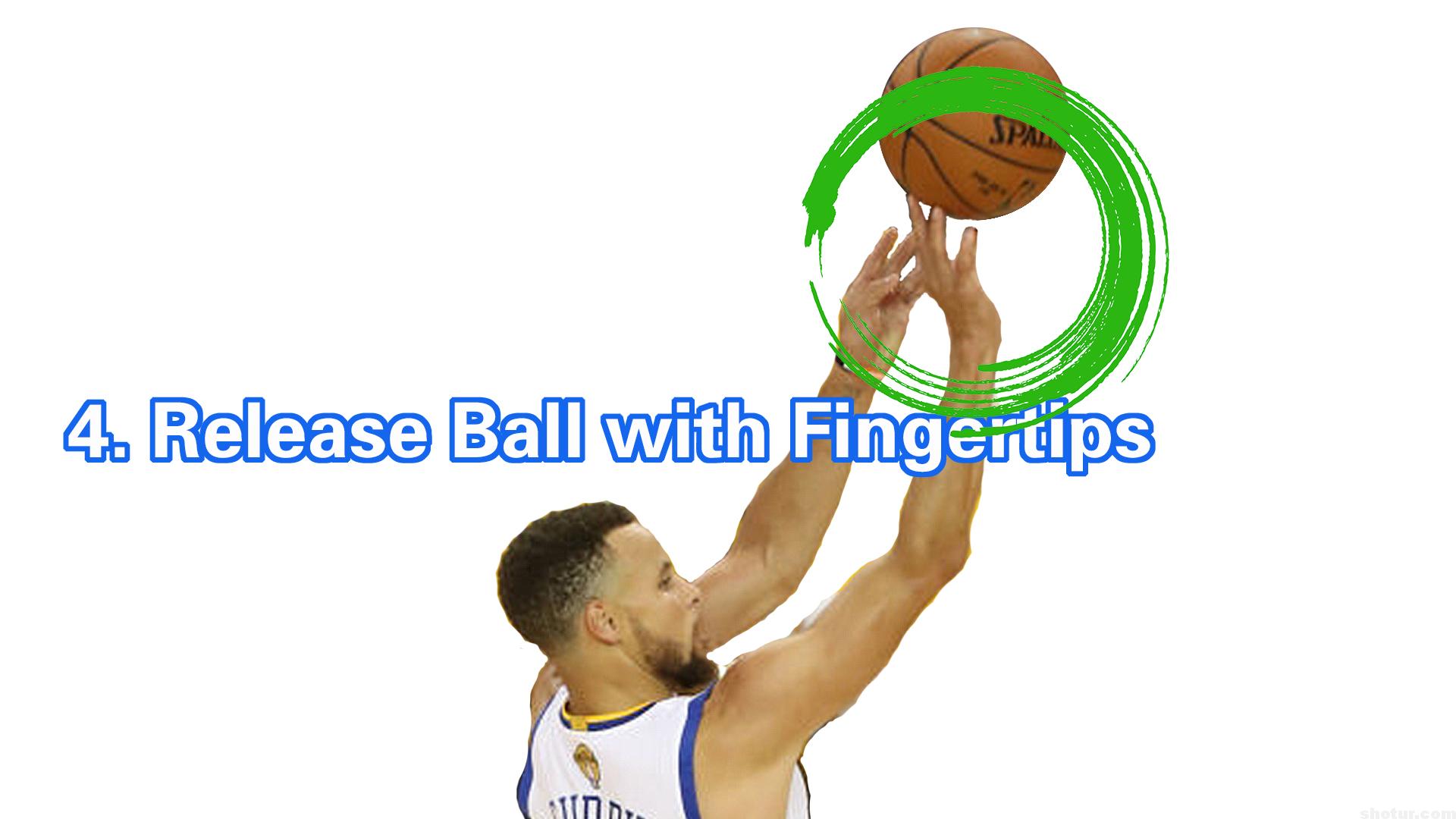
The final contact point of the shot determines its aerodynamic flight and soft bounce behavior on the rim. The ball must leave the hand cleanly off the index and middle fingers, often referred to as the split-finger release. When force disperses evenly through the center pads of these digits, it produces true vertical backspin at approximately two to three revolutions per second.
Much like how athletes manipulate rotational velocity in racket sports—as explored in our breakdown of tennis topspin mechanics and 4 proven rules to master devastating baseline control—the basketball shooter uses the fingertips to impart consistent backward spin that stabilizes the ball against ambient air currents. Backspin also creates the soft touch phenomenon. When a ball spinning backward strikes the rim or backboard, friction cancels its forward velocity, causing it to drop softly into the cylinder rather than caroming wildly away.
Diagnosing and Eliminating Costly Mechanical Energy Leaks
Diagnosing persistent flaws in your basketball shooting mechanics requires identifying where energy escapes the kinetic chain before reaching the rim. The most frequent mechanical culprit is the active guide hand. The non-shooting hand exists solely to balance the ball on the shooting platform until the forward unhinging begins. If the guide hand thumb pushes forward or the guide hand fingers peel away late, it alters the rotational axis of the ball, producing unpredictable sideways drift.
Another catastrophic energy leak is the flared shooting elbow. When the elbow points outward away from the body, the triceps muscle cannot fire in a clean sagittal plane. The arm is forced into an unnatural internal rotation during the release, causing the hand to sweep across the face like a windshield wiper. Keeping the shooting wrist, elbow, and hip stacked vertically ensures that every ounce of energy travels directly toward the target cylinder.
Timing the release relative to the peak of the jump is equally critical. For decades, athletes were advised to release the ball at the absolute apex of their leap. In truth, shooting at the apex is effective only for contested mid-range pull-ups. From perimeter distances, shooting on the way up—just before reaching the peak—preserves maximum kinetic momentum. If you wait until you hit the peak, the upward momentum of your legs has fully dissipated, forcing the shoulder and wrist to bear the entire load.
Deliberate Micro Drills That Harden Game Speed Muscle Memory
Solidifying sustainable basketball shooting mechanics requires targeted, deliberate practice rather than mindless rep volume. Tossing up hundreds of contested, fatigue-laden shots with degraded form merely ingrains bad habits into your central nervous system. Mastery begins with micro-calibration drills performed right under the rim.
Initiate each training session with one-handed form shooting from three to five feet away. By eliminating the guide hand entirely, you force your shooting arm, wrist, and fingers to manage structural balance independently. Focus entirely on feeling the ball roll off the index and middle pads, tracking the rotation, and holding a relaxed, relaxed wrist follow-through until the ball swishes cleanly through the net.
Once balance and vertical backspin are calibrated, introduce the dynamic drop drill from beyond the arc. Start standing tall, bounce the ball out in front of you, drop into your loaded base with a natural ten-degree foot turn, catch the ball on the dip, and explode into a single fluid stroke. This mimics real game catches, training your lower body to absorb ground force and transfer it instantaneously without pauses or mechanical hitches. With deliberate micro-adjustments and relentless adherence to kinetic principles, pure shooting mechanics become your permanent physical default.