Orionids Meteor Shower Offers 5 Crucial Viewing Secrets for a Breathtaking Night
Halley’s Comet debris is igniting autumn skies with blistering speed and brilliant fireballs. Here is your definitive, science-grounded guide to catching every shooting star tonight.
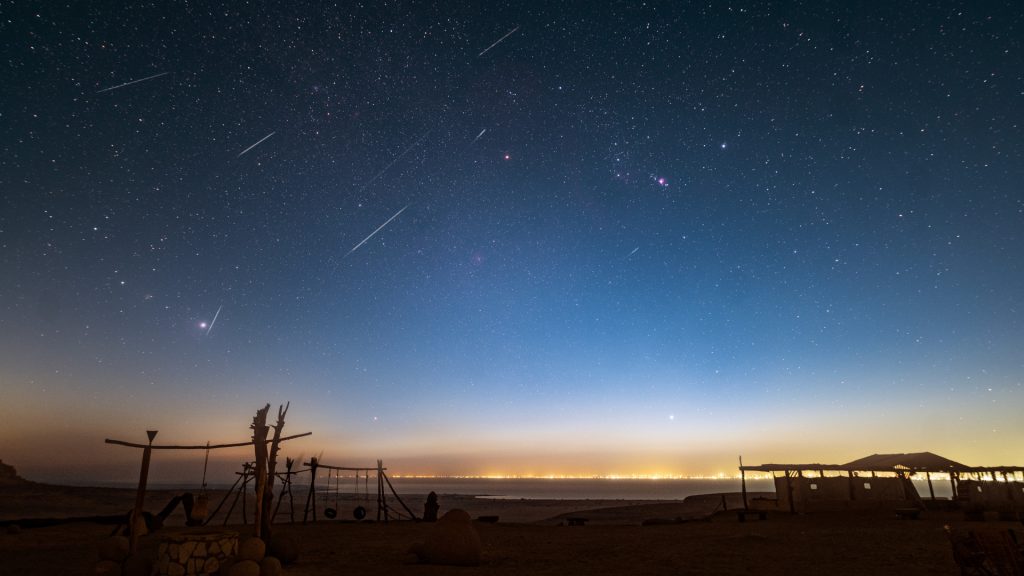
Stargazers worldwide are turning their gaze upward tonight as the orionids meteor shower delivers one of the autumn sky’s most anticipated astronomical spectacles. Originating from ancient debris left in the wake of Halley’s Comet, this celestial showcase transforms late October nights into a brilliant theater of cosmic physics. As confirmed by recent observational reports from AP News and Forbes, Earth is currently traversing the dense core of this cometary dust stream, treating observers across both hemispheres to rapid streaks of light and dazzling, incandescent fireballs. For both casual backyard skywatchers and seasoned astrophotographers, the annual event provides a direct, visceral bridge between quiet earthly evenings and the mechanics of the deep solar system.
Unlike sporadic solitary meteors that drift unpredictably across the darkness, this display offers predictable geometry, blistering entry speeds, and persistent luminous trains that can hang suspended in the upper atmosphere long after the initial flash has vanished. Yet turning a chilly autumn night into an unforgettable viewing session requires an understanding of orbital mechanics, atmospheric chemistry, and regional weather patterns. Navigating the peak of this shower demands strategic preparation, patience, and a working knowledge of how our planet collides with the remnants of the universe’s most legendary periodic comet.
The Celestial Origins of October Shooting Stars
The cosmic architect behind this annual display is none other than Comet 1P/Halley, an icy wanderer that takes roughly 76 years to complete a single elliptical circuit around our sun. While Halley itself remains deep in the outer solar system and will not return to the inner neighborhood until mid-2061, the trail of grit and gravel it sheds endures indefinitely. Every time the comet sweeps close to the sun during perihelion, solar radiation vaporizes pockets of surface ice through sublimation. This violent outgassing flings millions of tons of primordial rock, dust, and metallic granules into space, distributing them along the comet’s expansive orbital path.
Earth intersects this debris field twice every calendar year. In the spring, our planet crosses the ascending node of Halley’s orbital track, producing the Eta Aquariid shower in May. In late October, Earth cuts through the descending node, giving birth to this autumn display. FOX Weather highlights that the particles colliding with our upper atmosphere are surprisingly diminutive, often measuring no larger than a grain of coarse sand or an apple seed. What makes the orionids meteor shower particularly captivating to both amateur backyard observers and professional astronomers is the direct physical lineage connecting every brief streak of light to the most famous comet in human civilization.
Velocity and Fireballs in the Upper Atmosphere
Speed is the defining calling card of this shower. Orionid meteoroids slam head-on into Earth’s upper atmosphere at an astonishing velocity of approximately 41 miles per second, which translates to roughly 66 kilometers per second or nearly 148,000 miles per hour. According to NASA and reporting from AP News, this blisteringly high kinetic energy places them among the fastest moving shooting stars in the entire astronomical calendar, trailing only behind the mid-November Leonids.
The physics governing these celestial sprinters mirrors terrestrial biomechanics in remarkable ways. Just as explosive sprinters rely on rapid force transmission and ground reaction efficiency—principles thoroughly explored in our breakdown of Sprint acceleration mechanics and 4 proven principles to build explosive speed—cosmic debris relies on raw relative momentum to overpower atmospheric resistance and spark a blaze. As these particles plunge into the mesosphere between 50 and 60 miles above the Earth’s surface, they intensely compress the atmospheric gases ahead of them. This compression generates severe thermal friction, heating the air molecules to white-hot plasma and stripping electrons from surrounding atmospheric atoms.
This ionization process leaves behind what astronomers call persistent trains, which are glowing ribbons of incandescent gas that can drift on upper-atmospheric winds for several seconds or even whole minutes. Furthermore, occasional marble-sized pebbles produce spectacular fireballs, momentarily illuminating surrounding landscapes and casting distinct shadows on the ground. This intense kinetic velocity is what fundamentally distinguishes the orionids meteor shower from slower displays like the Geminids or Taurids, giving every sighting an electric, blink-and-you-miss-it quality.
Five Crucial Rules for Maximizing Your Viewing Experience
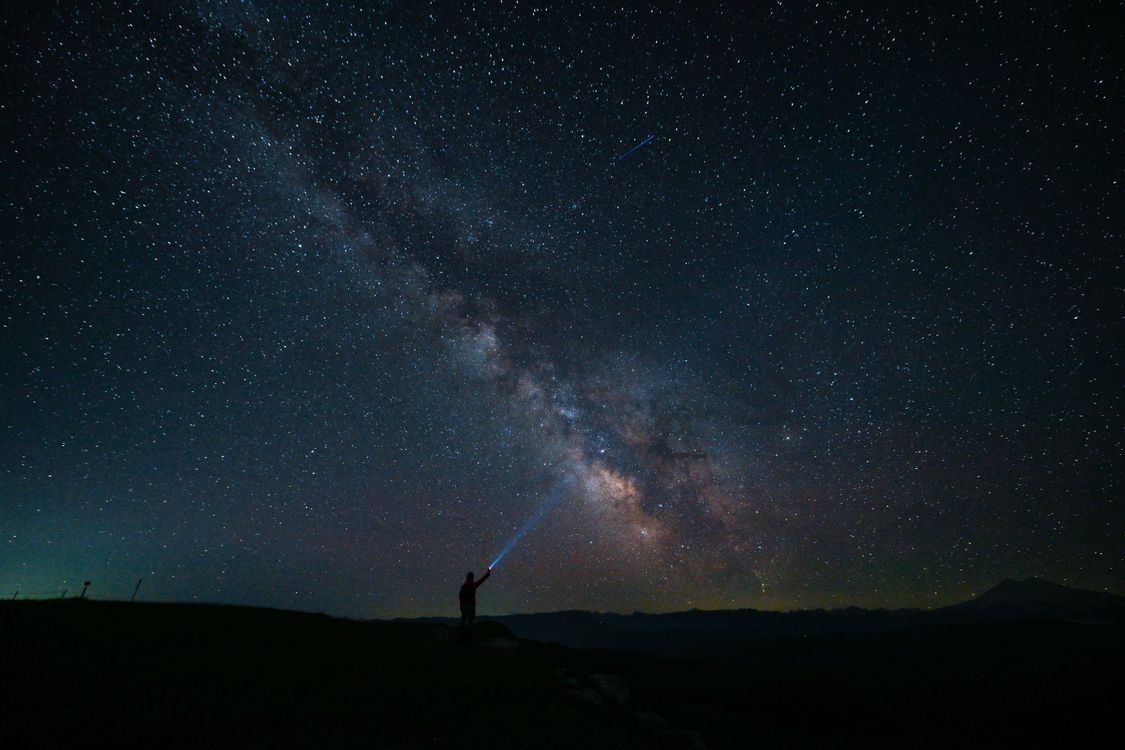
Preparation separates those who catch dozens of shooting stars from those who stare fruitlessly into the dark. Setting expectations and organizing your watch session around established astronomical realities will maximize your chances of witnessing the display at its absolute peak. To catch the peak of the orionids meteor shower requires more than merely glancing up at the stars from your driveway; it demands an intentional strategy built on timing, darkness, and sky geometry.
Perfecting Your Timing Between Midnight and Pre-Dawn
The timing of your observing session dictates everything. While the radiant point begins creeping above the eastern horizon by mid-to-late evening, observing before midnight generally yields modest returns. Forbes and AP News note that the prime viewing window opens after midnight and crests between 2:00 a.m. and the onset of morning twilight. During these early morning hours, your specific location on Earth rotates directly into the oncoming stream of cometary debris. Think of it like a vehicle driving through a swarm of insects: far more bugs hit the front windshield than the rear window. Under optimal conditions during this pre-dawn window, skywatchers can expect between 15 and 20 visible meteors per hour.
Navigating Regional Cloud Cover and Weather Hurdles
No astronomical display can pierce a solid ceiling of overcast weather. Meteorologists at The Weather Channel emphasize that autumn weather fronts across North America and Europe can rapidly derail observing plans with sudden stratus blankets and low-level marine layers. Evaluating local atmospheric transparency before heading out to track the orionids meteor shower can save hours of frustration. Tracking real-time satellite imagery, seeking out dry high-pressure ridges, or driving an hour inland away from coastal fog often marks the difference between a blank gray sky and an unforgettable starry panorama.
Managing Moonlight and Lunar Interference
The moon is the perennial rival of meteor watchers. When a bright moon hangs in the night sky, its ambient glow washes out fainter meteors, erasing all but the most explosive fireballs from human vision. To mitigate moonlight, plan your viewing window around moonset, or position yourself so that a natural barrier, such as a tall line of evergreen trees, a steep hill, or a residential building, casts a deep shadow across your viewing field. Keeping the moon out of your direct line of sight helps preserve your retinal sensitivity to low-magnitude streaks.
Locating Orion Without Fixating on the Radiant
The shower derives its name from the radiant point located in the constellation Orion the Hunter, situated just north of the brilliant red supergiant star Betelgeuse. While tracing the paths of these meteors backward will point directly to Orion, BBC astronomy experts strongly advise against staring directly at the radiant. Meteors appearing near the radiant point undergo severe foreshortening, resulting in stubby, short-lived flashes. Instead, look approximately 45 to 90 degrees away from Orion, toward constellations like Gemini, Taurus, or Ursa Major. From this perspective, the meteors travel across your line of sight, creating substantially longer and more dramatic streaks across the night sky.
Ditching Telescopes in Favor of Wide Dark Skies
A common mistake among novice stargazers is bringing high-powered optical gear like binoculars or telescopes into the field. Optical magnification drastically narrows your field of view to a microscopic fraction of the celestial dome, guaranteeing that you will miss meteors flashing across the wider sky. The most effective tool for meteor observing is the naked human eye. Allow at least 20 to 30 minutes for your eyes to fully adapt to total darkness, which allows the chemical rhodopsin to build up in your retinal rods. Avoid looking at bright smartphone screens, opting instead for a dim red flashlight to navigate, and recline on a comfortable lawn chair or sleeping bag to view as much of the open sky as possible.
Cloud Forecasts and Regional Atmospheric Challenges
Atmospheric stability plays an undeniable role in whether stargazers can catch the action. Detailed reporting from The Weather Channel and BBC emphasize that viewing conditions for the orionids meteor shower depend heavily on broad synoptic patterns sweeping across major continental landmasses. In the United States, late October frequently features dynamic transition weather, where cold polar air masses dive south to collide with lingering subtropical moisture.
For skywatchers stationed across the Desert Southwest, the Great Basin, and portions of the interior Southeast, broad high-pressure systems frequently deliver the dry, crystal-clear skies necessary for ideal stargazing. Conversely, the Pacific Northwest and the Great Lakes regions often face aggressive frontal boundaries carrying widespread stratocumulus clouds and localized precipitation. If cloud cover in your immediate town sits above 50%, utilizing high-resolution weather models like the HRRR or checking hourly infrared satellite loops will help you locate breaks in the cloud cover. Being mobile and willing to travel away from light-polluted urban basins into rural dark-sky parks dramatically amplifies the number of visible meteors.
The Timeless Allure of Ancient Cometary Dust
There is an enduring romance to watching the night sky in late autumn. Long before modern astrophysics calculated the precise orbital parameters of periodic comets, ancient civilizations across Mesopotamia, Greece, and Mesoamerica watched Orion rise into the crisp autumn air, weaving vibrant mythologies around the celestial hunter. Today, science enriches rather than diminishes that sense of wonder, illuminating the precise mechanics that allow icy debris from millions of miles away to light up our backyards.
Stepping outside in the quiet hours before dawn offers a rare pause from modern digital noise. Wrapped in heavy blankets beneath an expanse of stars, waiting patiently for the next incandescent slash of light fosters a profound connection to the wider solar system. Knowing that every single flash during the orionids meteor shower is a rendezvous with astronomical history reminds us that our home world is constantly hurtling through an ancient, dynamic cosmos, carrying us through the glittering debris of comets that have wandered the heavens since the dawn of time.