Google DeepMind Minecraft AI Agents Claim Major Win In 27 Costly Hours
A squad of four autonomous Gemini 4 Argon agents just conquered Minecraft from scratch without human intervention. Here is how 2,783 custom programs and 605 deaths unlocked a milestone in agentic artificial intelligence.
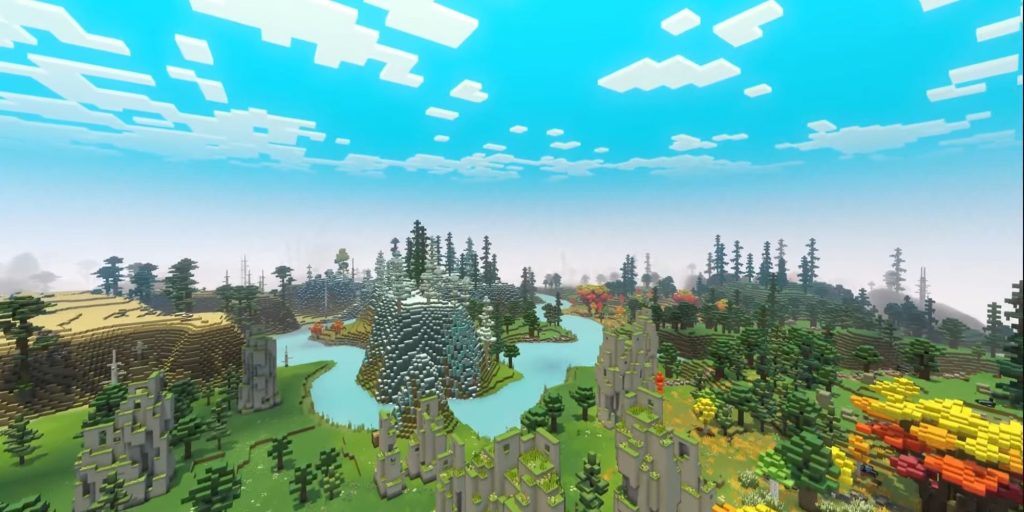
When four google deepmind minecraft ai agents entered an unscripted procedural world without human assistance, their mission sounded nearly impossible. Their singular objective was to conquer Minecraft by slaying the Ender Dragon, a feat requiring hundreds of prerequisite steps, spatial navigation, resource harvesting, tool crafting, and dynamic combat. According to disclosures verified by Tom’s Hardware and AI Insider, the autonomous squad finished the job in exactly 27 hours and 14 minutes. They did not achieve this through pre-recorded human gameplay or simple button-mashing reflexes. Instead, the autonomous agents wrote 2,783 distinct programs on the fly, repeatedly debugging their own tactical logic across an arduous campaign.
The achievement marks a fundamental transition in how synthetic intelligences tackle open-ended challenges. A decade ago, DeepMind captured global attention when AlphaGo mastered the ancient board game of Go. However, Go exists on a static grid governed by absolute, immutable rules. Minecraft offers no such neat boundaries. As Engadget highlighted in its coverage of the trial, an open-world sandbox presents infinite procedural permutations, hidden information, hostile environments, and real-time physical threats. By relying on Google’s experimental Gemini 4 Argon foundation model, the debut of google deepmind minecraft ai agents marks an enormous leap beyond rigid board games and points toward general-purpose autonomy capable of operating in chaotic virtual worlds.
A Historic Milestone In Open World Autonomous Reasoning
To appreciate why beating the Ender Dragon matters to computer scientists, one must examine the staggering complexity of Minecraft’s progression tree. Surviving the first night demands punching wood, fashioning tools, establishing shelter, and securing food. Advancing further requires excavating subterranean caverns, locating rare iron and diamond deposits, crafting an obsidian portal, braving the treacherous Nether dimension to harvest blaze rods, tracking down a Stronghold using eyes of ender, and finally executing a multi-stage boss fight atop obsidian pillars. Human speedrunners spend thousands of hours refining the muscle memory and routing required to streamline this sequence.
For autonomous software, this multi-tiered progression creates what researchers call a long-horizon reasoning crisis. In most reinforcement learning setups, models suffer from catastrophic forgetting or wander aimlessly when rewards are sparse and delayed by several hours. In this trial, reported extensively by Storyboard18, the four google deepmind minecraft ai agents operated on Google’s newly deployed Gemini 4 Argon framework. Rather than controlling mouse and keyboard inputs at the millisecond twitch level, the agents operated as high-level planners and software developers. They surveyed their 3D surroundings, decomposed massive overarching goals into manageable sub-routines, and wrote custom executable code to direct their in-game avatars through every stage of development.
The Brutal Mathematics Behind 605 Deaths And 2783 Programs
The triumph was anything but effortless. Detailed logs published by Tom’s Hardware reveal that the AI squad suffered 605 in-game deaths before landing the finishing strike on the Ender Dragon. The simulation took place on Easy difficulty, yet the procedural environment repeatedly overwhelmed the synthetic team. Skeletons caught them off guard in pitch-black ravines, creepers detonated their storage outposts, and perilous lava pockets in the Nether incinerated precious inventories.
Yet each death provided actionable telemetry back into the planning loop. Rather than abandoning their progress, the agents continually adjusted their codebase. Across the 27-hour run, the quartet authored 2,783 bespoke programs to address specific operational bottlenecks. When an avatar needed to navigate vertical terrain, the agents generated programmatic pathfinding scripts. When crafting recipes required precise inventory combinations, they wrote automated item-sorting algorithms. By treating gameplay as iterative software engineering, the system steadily closed the gap between raw algorithmic reasoning and practical execution.
Four Critical Breakthroughs Powering The Minecraft Slaying
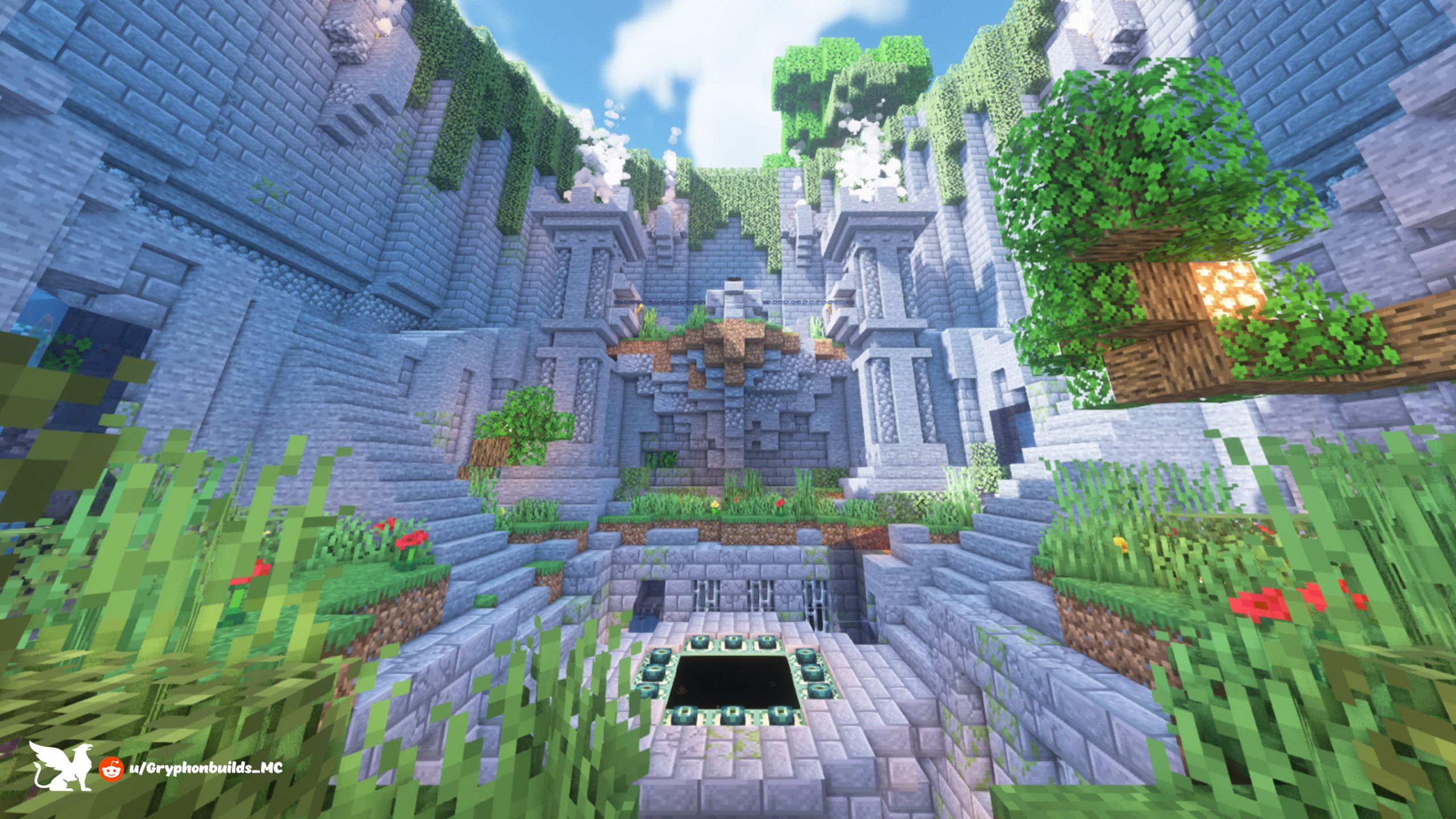
The DeepMind trial succeeded because the underlying architecture departed drastically from conventional reinforcement learning systems. Examining the technical details reported by Inven Global and AI Insider reveals four distinct pillars that allowed the synthetic team to prevail.
Autonomous Program Synthesis Over Direct Motor Control
Previous gaming benchmarks relied heavily on deep reinforcement learning where neural networks mapped visual pixel feeds directly to controller keystrokes. While this method produced superhuman reflexes in titles like StarCraft II, it proved notoriously brittle when environments changed unpredictably. DeepMind shifted the paradigm by having Gemini 4 Argon write modular Python code. When the agents encountered a sheer cliff, they did not guess joystick angles. They wrote and executed an environmental inspection script that evaluated terrain heights and systematically placed cobblestone stairs.
Collaborative Multi Agent Delegation Under Gemini 4 Argon
A single AI entity attempting to complete Minecraft sequentially would succumb to crushing computational bottlenecks. DeepMind mitigated this by deploying four distinct agents operating concurrently within the same shared server. The agents divvied up essential survival tasks. While one gathered raw timber and agricultural crops at the surface, another conducted deep-level strip mining to collect obsidian and diamonds. This parallel delegation meant the collective party could recover rapidly from setbacks, pooling their resources into central chests to advance the global objective.
Relentless Error Recovery Across 605 Virtual Failures
Resilience in autonomous systems is notoriously fragile. Typically, an unhandled exception or unforeseen fatal error causes an AI agent to enter an infinite logic loop or crash entirely. Analyzing how these google deepmind minecraft ai agents navigated catastrophe when things fell apart highlights the strength of their self-debugging architecture. If an agent perished in Nether lava alongside vital blaze rods, the supervisory planner detected the missing inventory, flagged the failure mode, rewrote the defensive sub-routine to keep a safer distance from magma blocks, and assigned a teammate to re-harvest the lost materials.
Quantifiable API Economics In Autonomous Gameplay
Autonomous intelligence carries a real-world financial cost that tech enterprises must measure. Independent analysis highlighted by Tom’s Hardware estimated that the compute bill for the google deepmind minecraft ai agents totaled roughly $520 in API tokens across their 27-hour run. Generating 2,783 functional code scripts, processing continuous multimodal visual queries, and maintaining long-context memory across four synchronized instances consumed significant compute. While half a thousand dollars represents a steep price tag to slay a virtual dragon, it demonstrates that complex, day-long agentic workflows are becoming economically viable for industrial and research applications.
How DeepMind Solved The Long Horizon Horizon Problem
The central hurdle of modern artificial intelligence research has long been the challenge of long-horizon planning. Standard large language models excel at answering self-contained queries or generating short essays because the context window only needs to hold a localized conversation. However, requiring an autonomous system to sustain focus across hundreds of contingent dependencies over an entire day routinely triggers hallucination and goal drift.
In this Minecraft run, observing the google deepmind minecraft ai agents navigate multi-step tech trees reveals that code synthesis acts as an external memory scaffold. Instead of attempting to hold every intermediate coordinate and crafting recipe inside the model’s transient neural activations, the agents offloaded memory into disk-stored code libraries. When an agent synthesized an efficient smelting script during hour four, that routine remained accessible to the entire team at hour twenty-six. This software-driven memory layer shielded the collective intelligence from cognitive decay, ensuring that the final march into the End dimension remained grounded in robust tactical logic.
Synthetic Trial Versus Biological Limits
The contrast between machine learning perseverance and biological reality offers a fascinating philosophical perspective on the trial. The four virtual agents survived 605 deaths without fatigue, psychological burnout, or cognitive degradation. They absorbed every catastrophic failure as a sterile data update, seamlessly respawning at their beds to re-engage the objective with newly compiled code.
Human performers operate under vastly harsher realities where physical limits cannot be simply rebooted or patched with code. While human athletes and racing drivers face irreversible biological tolls during intense physical competition—as seen in how the Fred Lorenzen Brain Study Results Reveal 4 Heartbreaking Lessons for Motorsport—autonomous artificial intelligences operate under completely different physical paradigms. Synthetic agents possess the luxury of consequence-free attrition. They can afford hundreds of lethal miscalculations because their operating medium is purely digital, allowing them to convert absolute destruction into actionable algorithmic refinement.
The Horizon Of General Purpose AI Beyond The Nether
DeepMind did not orchestrate this elaborate Minecraft experiment merely to entertain video game enthusiasts. The sandbox serves as a proxy proving ground for complex, real-world robotic and software automation. If an artificial intelligence model can parse an unmapped 3D world, collaborate with peers, debug its own faulty programs, and accomplish an intricate objective across a 27-hour operational window, the identical architectural logic can be applied far beyond entertainment.
Future iterations of this agentic framework will likely find deployment across autonomous scientific research, industrial supply chain coordination, automated software development, and planetary exploration rovers. Operating in unpredictable environments where no predetermined manual exists demands the exact traits displayed in this trial: spatial awareness, continuous tool creation, collective coordination, and programmatic resilience. As researchers analyze the 2,783 scripts generated during the run, the long-term legacy of these google deepmind minecraft ai agents will be measured by their ability to handle messy, unstructured real-world tasks where failure is common, adaptability is mandatory, and human supervision is impossible.