California Great White Shark Breach Sparks 4 Shocking Realities Behind Monterey Bay Waters
A massive apex predator stunned beachgoers after launching feet into the air behind an unsuspecting woman posing along Marina State Beach. Here is the investigative breakdown of how Monterey Bay’s autumn migration created an unforgettable viral moment.
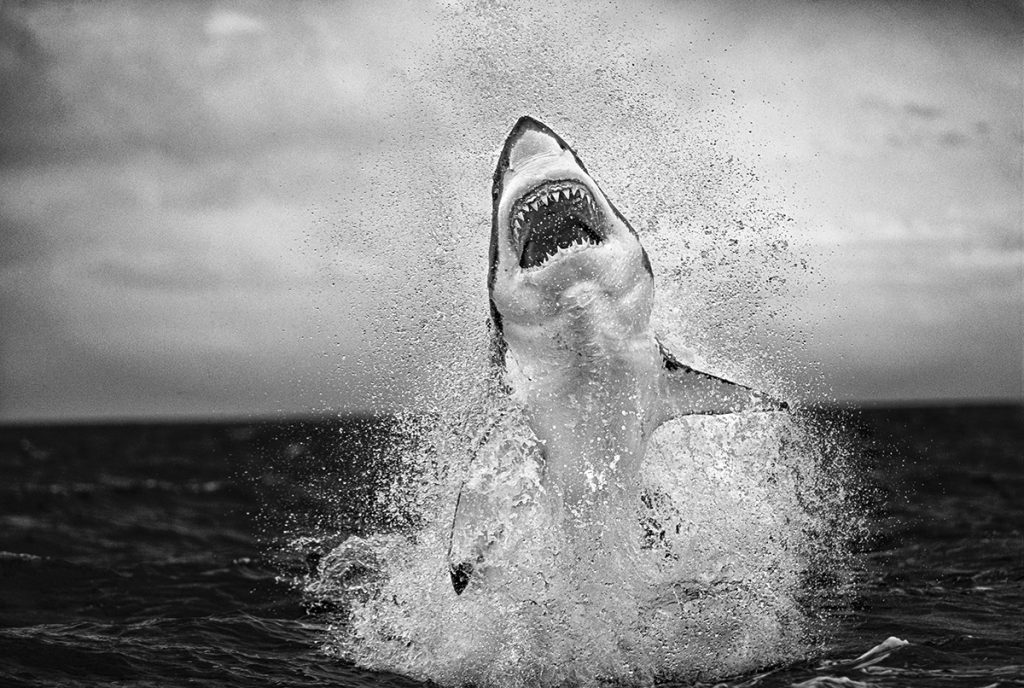
Witnessing a sudden california great white shark breach just yards behind an unsuspecting beachgoer is an astonishing sight that feels scripted for Hollywood cinema. Yet for visitors standing along the shoreline at Marina State Beach in Monterey County over the weekend, the jaw-dropping airborne leap was entirely real. As an unsuspecting woman smiled toward a friend’s camera lens against the tranquil backdrop of rolling Pacific surf, a massive white shark suddenly detonated from beneath the ocean swells, propelling its entire upper body straight into the sky before crashing back down into a roaring plume of white spray.
The surreal visual swept across social networks within hours, capturing the imagination of millions around the globe. Eyewitness accounts gathered by local broadcaster KSBW emphasized just how quickly the event unfolded, leaving onlookers momentarily paralyzed in sheer disbelief. What seemed like a freak optical illusion turned out to be an authentic apex predator encounter verified across multiple vantage points, offering a dramatic glimpse into the ecological theater currently playing out along the Central California coast.
The Stunning Split Second at Marina State Beach
Marina State Beach, renowned for its sweeping sand dunes, turbulent shorebreak, and cold ocean currents, sits squarely on the edge of the Monterey Bay National Marine Sanctuary. On this particular afternoon, beachgoers had assembled along the shoreline to snap casual weekend photographs against the atmospheric maritime landscape. As reported by The Guardian, a group of companions had lined up framing a woman posing beside the waves when the ocean surface abruptly ruptured directly behind her profile.
Those standing on the sand scarcely had time to process the silhouette before gravity pulled the animal back beneath the froth. As witnesses recounted to KSBW, the encounter was over in a heartbeat, leaving everyone on the sand wondering whether their eyes had deceived them. Mobile phone footage confirmed the spectacle without hesitation, showcasing the sheer mass and muscular power of an animal executing an explosive vertical maneuver in relatively shallow coastal water.
Independent confirmation surfaced shortly thereafter via coastal surf cameras. As detailed by SURFER Magazine, an automated Surfline camera monitoring wave conditions off Marina State Beach captured the exact same animal launching into the air. The synchronized footage eliminated any suspicion of artificial digital manipulation, establishing beyond question that a massive ocean predator had completed a full breach right behind beach visitors.
Viral Optics and the Anatomy of an Unplanned Photobomb
The viral impact of the encounter stems from the uncanny juxtaposition within the frame. As culture outlet BroBible observed, the woman in the foreground remains completely serene, posing comfortably for a scenic snapshot while an apex predator launches several feet out of the water behind her shoulder. The sheer timing required for a camera shutter to synchronize with a predatory breach occurring over a fraction of a second is astronomical.
Media coverage across the nation quickly seized on the staggering optics. The New York Post described the animal as a giant white shark that stunned seaside visitors by launching with terrifying grace into the coastal sky. The visual dynamic highlights how narrow the barrier truly is between land-based human recreation and the untamed aquatic wilderness residing just beyond the breaker line.
Beyond the instant social media fanfare, the viral california great white shark breach video captured the creature executing a behavior rarely witnessed so close to the sand. While airborne leaps are routinely documented around South Africa’s Seal Island or Australia’s Neptune Islands, seeing an adult white shark completely clear the water’s surface in the shorebreak of a Northern California public park represents an exceptional visual document.

Understanding Sharktober Across Monterey Bay Coastal Waters
To biologists and seasoned ocean observers, the dramatic event was far less baffling than it was timely. The autumn calendar along the Central California coastline belongs to a well-documented ecological phenomenon popularly recognized as Sharktober. As SURFER Magazine highlighted in their analysis, October marks the annual peak when mature white sharks converge on the coastal shelf of the Greater Farallones and Monterey Bay.
Adult white sharks spend significant portions of their adult lives roaming thousands of miles across the open Pacific, frequently congregating in an offshore region colloquially called the White Shark Café. By late summer and early autumn, mature individuals navigate back toward coastal California to feed on dense concentrations of calorie-rich pinnipeds. The geographic timing explains why the california great white shark breach at Marina State Beach fits neatly into broader regional patterns rather than standing as an isolated anomaly.
Monterey Bay serves as an exceptional geographic funnel for these migratory predators. The bay houses the Monterey Submarine Canyon, a colossal underwater abyss rivaling the Grand Canyon in scale. This geological formation brings deep oceanic trenches within touching distance of the shoreline, allowing cold, nutrient-rich water to push marine life, including sea lions, harbor seals, and elephant seals, right up to coastal sandbars.
4 Crucial Factors Behind Why Apex Predators Launch Into the Air
Understanding why a multi-ton marine predator expends the vast metabolic resources required to propel itself out of the water reveals intricate truths about marine biology. When observers analyze the kinetic dynamics witnessed during a california great white shark breach, several distinct evolutionary and behavioral explanations emerge.
High Velocity Ambush Hunting From the Depths
The primary driver behind white shark breaches is predatory acceleration. Great whites hunt agile, warm-blooded mammals such as seals and sea lions by establishing positions beneath their targets. Against the dimly lit seafloor, the shark’s dark dorsal countershading renders it practically invisible to animals paddling on the sunlit surface.
When the shark identifies a suitable target, it engages its powerful caudal fin, sprinting vertically upward at speeds exceeding twenty-five miles per hour. If the strike occurs in water shallower than the deceleration distance required to stop, momentum carries the animal completely through the ocean surface. The sheer force of this ambush is designed to incapacitate prey on primary impact, minimizing the risk of counter-injury from defensive bites.
Energy Expended in Breaching Maneuvers
Launching several thousand pounds of flesh, cartilage, and dense muscle into thin air requires an immense expenditure of stored calories. Predators do not perform full aerial leaps recreationally. Every vertical sprint represents a calculated metabolic investment that the shark expects to offset with high-fat pinniped blubber.
When analyzing this california great white shark breach, researchers note that the presence of breaking waves can compress the hunting zone. A shark pursuing an evasive marine mammal through the surf zone must commit absolute velocity to prevent prey from darting into safe shallows, resulting in the spectacular breaches documented on camera.
Surfer and Swimmer Proximity to White Shark Habitats
The Monterey Bay shoreline attracts surfers, bodyboarders, and distance swimmers year-round. Recent drone monitoring initiatives led by university researchers throughout California have repeatedly shown that white sharks, especially juveniles, frequently navigate within dozens of feet of human ocean users without exhibiting any predatory curiosity toward people.
While beachgoers may find the proximity unsettling, white sharks rely on specific visual search images and chemical signatures. Humans do not match the thick layer of blubber or scent profile of natural marine prey. Breaching events near popular shores serve as a potent reminder that humans are simply visitors passing through an active, healthy marine hunting ground.
Parasite Removal and Aerial Visual Orientation
While predatory hunting strikes account for the vast majority of surface ruptures, marine biologists also theorize that breaching can serve secondary physiological functions. Large ocean fish frequently accumulate copepods, remoras, and external dermal parasites that cling stubbornly to their gill slits and skin denticles.
Hitting the ocean surface at maximum velocity produces a percussive slap capable of dislodging stubborn hitchhikers. Furthermore, some researchers suggest that full leaps allow sharks to scan the ocean surface from above the water or generate acoustic signaling via water displacement that asserts dominance over nearby competitors competing for hunting territory.
Coastal Safety and Navigating Ocean Reality Without Panic
Viral footage of large ocean predators invariably sparks sensationalism, but the public reaction to the california great white shark breach provides an opportunity for rational education rather than ungrounded fear. Decades of coastal observation demonstrate that shark attacks on humans remain exceptionally rare events despite rising numbers of ocean recreators.
California State Parks and regional lifeguard agencies monitor shorelines closely, relying on real-time observations, drone aerial patrols, and reports from recreational boaters to issue temporary advisories whenever sharks exhibit agitated behavior or surface repeatedly in active swim zones. Respecting posted warnings, swimming in groups, avoiding murky estuaries, and staying out of the water at dawn and dusk represent standard, proven precautions that keep beachgoers safe.
While untangling complex online viral phenomena can sometimes feel like piecing together enigmatic logic challenges—much like how our breakdown of NYT Connections Hints Deliver 4 Proven Strategies to Master Puzzling Daily Grids decodes intricate patterns—analyzing marine predator behavior requires looking strictly at ecological data. A thriving shark population off California is a celebrated conservation milestone, proving that marine protections, seal populations, and water quality standards have successfully recovered from past collapses.
The Lasting Ripple of California Marine Encounters
The breathtaking photographs and video frames captured at Marina State Beach will circulate across the web for years to come as a testament to serendipitous timing. Yet beyond the internet acclaim, the encounter highlights the remarkable vitality of the California coastal wilderness.
Standing on the sand dunes of Monterey Bay means standing on the edge of a vast, untamed frontier where ancient predators still execute their evolutionary mandates. The awe surrounding the california great white shark breach underscores our enduring human fascination with the natural world, reminding us that even during a casual afternoon photo shoot, the deep blue ocean retains the power to leave humanity entirely spellbound.