Emulsion mechanics and 4 proven rules to prevent disastrous broken sauces
Broken sauces are not culinary bad luck but preventable colloidal failures. Learn how thermodynamic forces, surfactants, and shear energy lock fat and water into velvety perfection.
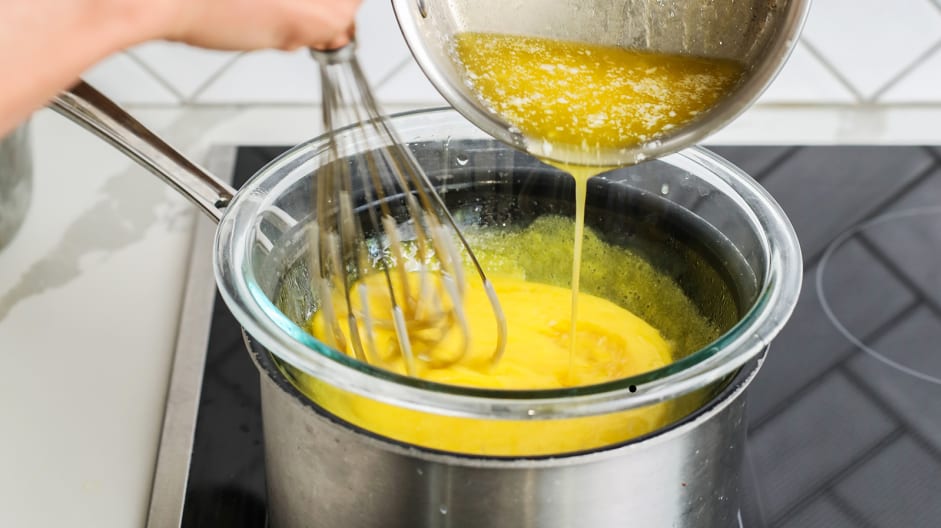
Mastering emulsion mechanics transforms chaotic kitchen improvisation into predictable, repeatable science every time you step toward the stove. Few moments in cooking deliver sharper heartbreak than watching a glossy, silky pan sauce suddenly curdle into a greasy, curd-strewn puddle. You poured your heart into pan-roasting a duck breast or searing a sea bass, only to have the crowning sauce fracture into an oily slick and grainy sediment. This disaster rarely stems from poor culinary instincts or inferior ingredients. Instead, it occurs because culinary liquids operate under uncompromising physical laws that punish the slightest lapse in technique.
Why oil and water fight to the death in your pan
To command culinary stability, you must first respect the stubborn physics of separation. Water molecules are intensely polar, clinging to one another through tight hydrogen bonds that act like microscopic magnetic networks. Nonpolar fat molecules, composed of long hydrocarbon chains, cannot participate in this attractive dance. When forced into the same vessel, water molecules squeeze together so tightly that they literally shove the fat molecules out of the way, driving lipids upward because they possess a lower specific density.
Understanding emulsion mechanics begins with thermodynamics and the stubborn refusal of hydrophobic lipid chains to mingle with polar water molecules. Left entirely to their own devices, these two liquids will always seek their lowest thermodynamic energy state, which means coalescing into two completely distinct, uninterrupted layers. A cohesive sauce represents an unnatural state of suspended animation. You are forcing trillions of tiny oil droplets into a dense aquatic matrix, demanding that they remain separate rather than uniting into a greasy pool. Every silky mayonnaise, rich hollandaise, velvety pan reduction, and snappy vinaigrette is an active defiance of thermodynamic equilibrium, sustained purely by mechanical energy, chemical barriers, and careful temperature management.
The microscopic architecture of interfacial tension
The battleground of every sauce exists at the microscopic boundary where water meets oil, known in colloidal physics as the interface. At the frontier of emulsion mechanics, interfacial tension represents the energetic barrier standing between separate pools of liquid and a unified sauce. Imagine oil droplets as tiny, tense balloons floating in a crowded pool. Because fat and water repel one another, the boundary between them carries substantial physical tension. The system instinctively works to minimize this surface area by fusing adjacent droplets together. The moment two fat droplets brush against one another without protection, they merge in an instant, triggering a catastrophic chain reaction that unzips the entire emulsion.
To keep these microscopic globules from slamming together and reuniting, cooks deploy amphiphilic molecules—substances equipped with both water-loving heads and fat-loving tails. These molecules seat themselves squarely along the droplet perimeter, anchoring their hydrophobic tails into the lipid core while extending their hydrophilic heads out into the surrounding water. This creates an electrostatic and steric barrier, effectively wrapping every fat globule in a microscopic cushion that bounces off neighboring droplets. Researchers at the Harvard Science and Cooking program have repeatedly demonstrated that culinary stability relies entirely on maintaining this delicate equilibrium between physical shear and molecular coating.
Four proven rules to engineer impenetrable culinary bonds
When cooks translate emulsion mechanics into muscle memory at the stove, sauce preparation ceases to feel like high-stakes gambling. By adhering to four core physical principles, you eliminate random chance and construct sauces that hold their structural integrity from pan to plate.
Calibrate your continuous phase before adding a single drop of fat
Every successful culinary suspension requires an ample aquatic foundation, known in colloidal chemistry as the continuous phase. The dispersed phase—the butter, oil, or rendered drippings—must have enough liquid surrounding it to drift freely without bumping into neighboring fat droplets. A common mistake cooks make during sauce assembly is attempting to whisk butter into a pan that has been reduced to a dry scorched glaze, or drizzling olive oil into egg yolks that lack sufficient base hydration.
Before introducing fat, ensure your continuous phase has enough volume and fluidity. A splash of stock, a spoonful of acidic wine, a dash of lemon juice, or even a few droplets of water provides the essential breathing room your sauce requires. If the continuous phase dries out, the ratio collapses, fat droplets crowd together, and the emulsion shatters instantly. Maintaining roughly one part water-based liquid for every three to four parts fat keeps the dispersed globules safely isolated from one another.
Apply mechanical shear force to pulverize stubborn lipid globules
Pouring oil into vinegar produces nothing more than floating yellow bubbles until mechanical energy tears those giant lipid reservoirs into billions of sub-microscopic droplets. Every seasoned saucier instinctively respects how emulsion mechanics govern droplet size and spatial distribution. Whisks, immersion blenders, and rapid wrist movements generate shear force, cutting through the oil stream and scattering it throughout the water base before the fat can regroup.
Droplet size directly dictates stability. Large droplets float quickly to the surface and collide easily, while tiny droplets remain suspended indefinitely due to Brownian motion—the erratic kinetic bombardment of surrounding water molecules. To maximize shear efficiency, introduce fat in a hairline stream during the initial phase while whisking vigorously in rapid elliptical strokes rather than gentle circles. Once the primary matrix establishes its network, you can gradually increase the pouring rate, but that initial mechanical breakdown decides whether your sauce holds for an hour or breaks in ninety seconds.
Harness natural amphiphilic surfactants to cushion colliding particles
Mechanical whisking creates droplets, but surfactants keep them alive. Without an emulsifier present in the continuous phase, even the most violent blending will separate within minutes. Egg yolks contain lecithin, an extraordinary phospholipid that anchors oil into water with stubborn tenacity. Mustard contains mucilage, a complex polysaccharide network that thickens the water phase and creates a physical cage around fat droplets. Cold cultured butter carries milk solids and caseins, which act as built-in stabilizing proteins.
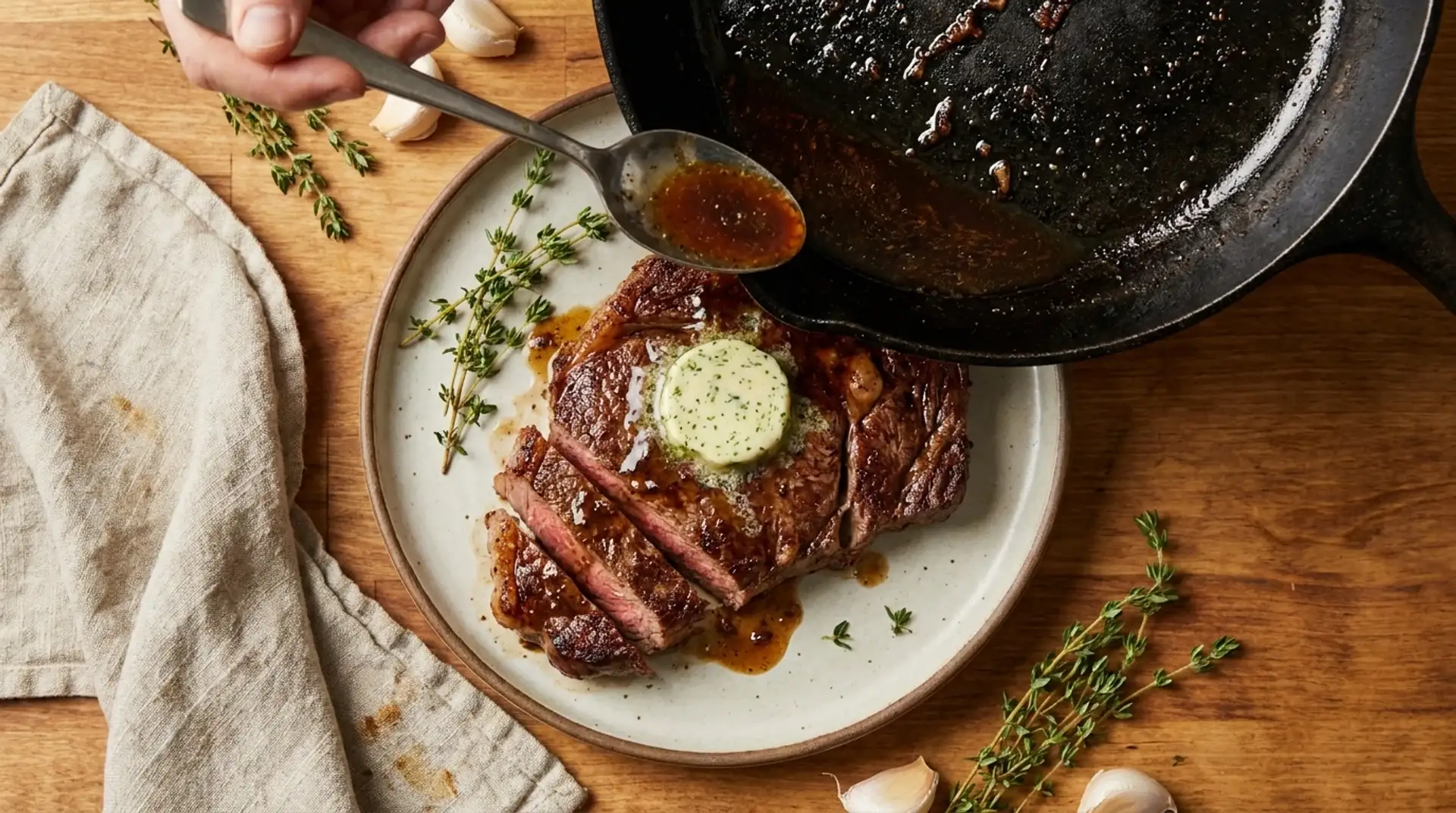
Deploying these natural surfactants strategically gives your sauce lasting durability. When constructing a vinaigrette, whisking a half-teaspoon of Dijon mustard into the vinegar before introducing oil provides immediate molecular scaffolding. When building a pan sauce, mounting with cold cubes of butter rather than warm liquid butter introduces intact milk proteins and fat that melts gradually, giving the natural dairy emulsifiers ample time to coat each freshly dispersed lipid pocket.
Control thermal kinetic energy to protect delicate protein bridges
Heat is both an essential catalyst and a lethal enemy of emulsion stability. Gentle warmth lowers the viscosity of fats, allowing them to disperse smoothly into microscopic droplets. Excessive heat, however, accelerates molecular movement to violent speeds, causing lipid globules to collide with enough kinetic energy to rupture their surfactant barriers. Even worse, runaway heat denatures egg yolk and dairy proteins, causing them to clump together into firm curds rather than forming flexible molecular cushions.
Just as aerospace engineers must calculate precise thermodynamic margins to prevent orbital degradation—a principle vividly clear when examining how NASA space missions face 5 critical turning points and historic milestones under extreme physical stress—cooks must strictly monitor thermal margins at the stovetop. Keep egg-based emulsions like hollandaise and béarnaise between 120 and 145 degrees Fahrenheit (49 to 63 degrees Celsius). When mounting pan sauces with butter, pull the skillet off direct heat entirely, allowing residual warmth to melt the butter while vigorous swirling integrates the emulsion without scorching delicate proteins.
The science of salvaging a fractured emulsion when chaos strikes
Even meticulous cooks occasionally push a sauce past its limits, watching in despair as shimmering satin collapses into greasy, separated curd. When an emulsion splits, your deep grasp of emulsion mechanics provides the exact thermodynamic blueprint required for recovery. You do not need to throw the broken liquid down the drain or start entirely from scratch. You simply need to re-establish the continuous phase and reintroduce mechanical shear.
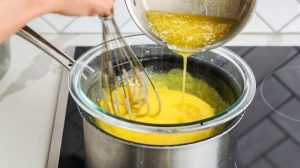
To rescue a fractured sauce, pull the pan off heat immediately. Take a clean bowl and add a single tablespoon of warm water, fresh stock, or a fresh egg yolk, depending on the sauce profile. This establishes a pristine, uncrowded continuous phase equipped with fresh surfactants. Now, treat your broken, greasy mixture exactly as you would raw oil. Begin whisking your fresh liquid base vigorously while slowly drizzling in the broken sauce drop by drop. As the shear force captures the separated fat and redistributes it across the fresh aquatic matrix, the glossy ribbon will magically reappear. Within two minutes of calm, calculated mechanical work, a supposedly ruined sauce returns to picture-perfect consistency.
Mastering kitchen physics to command complete culinary control
Cooking often gets romanticized as pure artistic intuition, but the most transcendent plates emerge when artistry harmonizes with unyielding physical laws. A flawless sauce is not an accident of good fortune or kitchen superstition. It is an engineered colloidal marvel where thermodynamics, fluid dynamics, and molecular chemistry work in quiet unison. When you understand the forces governing interfacial tension, phase volume ratios, and surfactant barriers, the stove transforms from an unpredictable hazard into a space of absolute creative authority.
By treating everyday ingredients as precision physical systems governed by emulsion mechanics, your culinary intuition evolves from hopeful guesswork into true mastery. You stop worrying whether your beurre blanc will survive until dinner or whether your aioli will split beneath the whisk. You understand the levers of control, the signals of structural stress, and the exact physical remedies to deploy at a moment’s notice. Armed with microscopic awareness and disciplined technique, every pan you deglaze and every sauce you whisk becomes an enduring showcase of culinary perfection.