Margin call mechanics and 4 proven rules to survive devastating portfolio liquidation
Borrowed capital accelerates gains on the way up, but systemic contractions can trigger an unforgiving liquidation spiral. Discover how margin mechanics operate behind the scenes and the essential rules required to preserve your wealth.
Understanding margin call mechanics can mean the difference between weathering a ferocious market correction and watching your entire trading portfolio vaporize in minutes. Leverage feels intoxicating during steady rallies. It amplifies modest gains into extraordinary windfalls, creating the dangerous illusion that borrowed capital is simply free financial thrust. Yet leverage is an indifferent partner. It does not negotiate, it does not wait for a rebound, and it operates under a rigid mathematical contract enforced by automated brokerage software designed to save the lender first and you never.
When an asset purchased with borrowed funds drops in value, the borrower absorbs every cent of that loss before the lending institution experiences a single tick of risk. The moment your equity drops below a broker-mandated security threshold, the trapdoor springs open. What follows is not an intellectual discussion about underlying company fundamentals or long-term intrinsic value. It is an algorithmic execution of contracts designed to protect the clearing firm by any means necessary.
How leverage quietly distorts the mathematics of loss
To grasp margin call mechanics, one must look past the optimistic returns of bull markets and inspect the underlying accounting engine. When you open a margin account, you establish a revolving credit line secured against the marketable securities inside your portfolio. Regulatory frameworks, such as FINRA regulatory guidance on margin account requirements and maintenance thresholds, dictate that investors must deposit an initial margin—typically 50 percent of the purchase price—while maintaining a continuous maintenance margin, often set at a baseline of 25 percent.
However, clearinghouses and retail brokerages routinely demand internal “house requirements” that range anywhere from 30 to 75 percent, depending on asset volatility. The structural danger arises from how portfolio equity is calculated in real time. Your equity is not an independent reserve; it is the fluctuating market value of your collateral minus the static dollar balance of your borrowed debt.
Consider an investor who deposits $50,000 in cash and borrows $50,000 on margin to purchase $100,000 worth of equities. If the underlying basket of stocks drops by a modest 25 percent, the portfolio value drops to $75,000. The debt balance remains fixed at $50,000 plus compounding interest. In an instant, the investor equity collapses from $50,000 down to $25,000—a devastating 50 percent loss on initial capital from an ordinary market dip. Because equity now represents precisely 33.3 percent of total portfolio assets, the position teeters on the knife edge of a maintenance deficit.
If the equity value drops a fraction further, the broker issues the formal margin demand. The trader must wire pristine, cleared cash immediately or surrender full control of the account to an automated liquidation script that dumps securities into falling bids.
The cascade of forced selling that fractures orderly markets
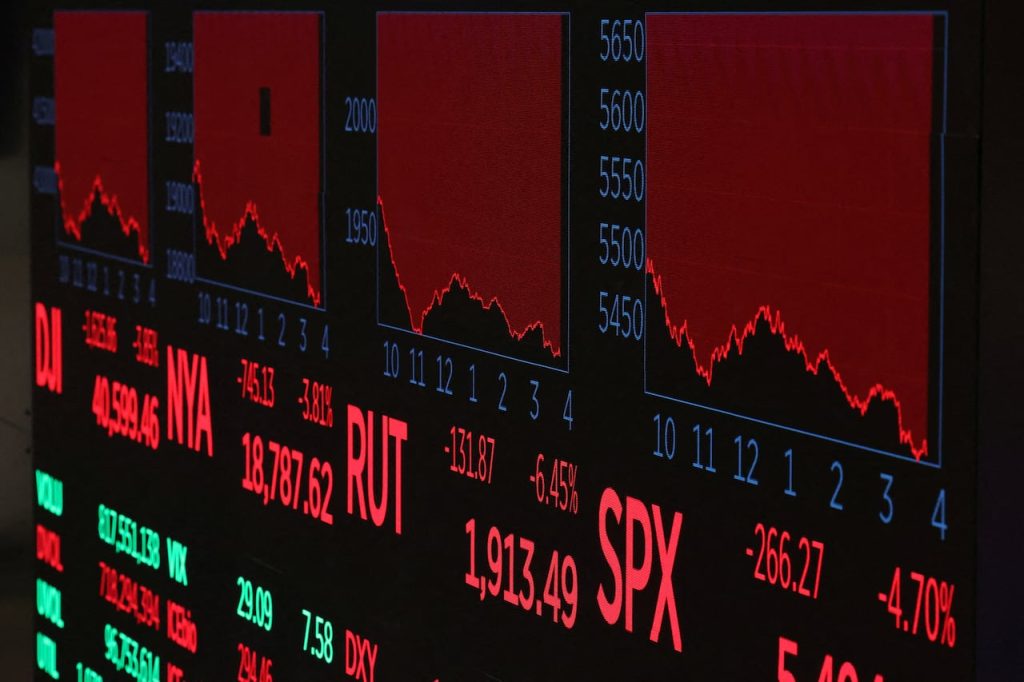
At an institutional scale, margin call mechanics drive systemic liquidity crises that can tear through broader indices. Market drops do not occur in neat, gentle waves. When volatility spikes across high-beta equities or leveraged fixed-income instruments, risk algorithms at global prime brokers automatically raise maintenance margin requirements across the board. An asset that required 30 percent collateral on Monday might require 50 percent collateral by Wednesday afternoon.
This sudden repricing of risk sparks a simultaneous, multi-tier margin scramble. Institutions facing unexpected collateral deficits cannot always sell their worst-performing assets, particularly if those assets have become frozen in illiquid order books. Instead, asset managers are forced to sell their most liquid, high-quality holdings—blue-chip stocks, index futures, and sovereign debt—to generate immediate liquidity to cover margin shortfalls.

The consequence is a mechanical contagion. The forced liquidation of prime assets depresses their prices, which promptly breaches maintenance margin thresholds for an entirely separate group of investors. As automated liquidation engines fire without regard for price impact, bid-ask spreads widen into chasms. Market orders bypass traditional depth, filling at catastrophic discounts. The liquidation does not care about your tax liability, your cost basis, or whether the company reported record quarterly earnings that morning. The clearinghouse requires cash to restore its solvency buffer, and it takes that cash by pulverizing your position into whatever bid exists on the floor.
4 proven rules to protect capital from catastrophic margin liquidation
Mastering margin call mechanics requires establishing rigorous defensive protocols before taking on a single dollar of leverage. Surviving in volatile environments demands that you treat borrowed money with the same respect an engineer gives high-voltage electrical currents. The following four operational rules provide an unyielding structural defense against forced liquidation.
Maintain an unshakeable cash buffer well above broker minimums
Relying on your broker statutory maintenance threshold is a direct path to ruin. If your broker sets a 30 percent maintenance requirement, operating at 35 percent leaves your portfolio vulnerable to an intraday flash crash. Professional risk managers operate with dynamic equity cushions that exceed broker floors by a factor of two or three.
Maintaining a dedicated unencumbered cash balance outside the margin facility ensures that unexpected margin deficits can be settled immediately without selling long-term holdings at market bottoms. If you borrow against securities, your borrowing should never exceed an amount that could be instantly extinguished by your liquid reserve. Treating the margin limit as an available spending allowance confuses borrowing capacity with financial resilience.
Treat volatility as an expanding debt collector rather than temporary noise
Market volatility is not an abstract statistical metric; it directly alters the cost and availability of leverage. When historical volatility surges, clearing firms protect their balance sheets by widening margin bands. Highly volatile equities, speculative technology stocks, and leveraged exchange-traded products frequently experience sudden shifts where brokers increase margin requirements from 40 percent to 100 percent overnight, which is why studying margin call mechanics reveals that broker risk desks will increase maintenance requirements without warning.
When a broker shifts an asset to a 100 percent requirement, that stock can no longer be held on margin at all. You must supply the entire value in cash instantly or watch the position close. Calculating your safety buffer based on quiet, low-volatility conditions guarantees catastrophe when market regimes change. Always size positions under the operational assumption that collateral requirements can double during an emergency.
Pre-define non-negotiable exit thresholds before leverage activates
The cardinal sin of leveraged trading is relying on a margin call as your final stop-loss. A margin call is not an orderly risk management tool; it is an emergency seizure of collateral. By the time a broker intervenes, the financial damage to your equity base is largely irreversible.
Every leveraged trade must feature predetermined, price-based exit points executed well above any regulatory or house maintenance line. These stop thresholds must be mechanical and immune to emotional renegotiation. If a trade violates its technical thesis, the position must be systematically trimmed. Liquidating a small fraction of a holding voluntarily frees up equity and resets maintenance calculations long before a broker algorithmic trigger takes control of your terminal.
Stress test your collateral against severe systemic contractions
Portfolios rarely collapse because of single-day anomalies; they disintegrate under systemic, correlated downturns where historical hedges fail. Many market participants assume that holding diverse equities provides sufficient collateral safety. Yet during severe market dislocations, correlations between seemingly unrelated equities spike toward 1.0, pulling the entire asset base down simultaneously.
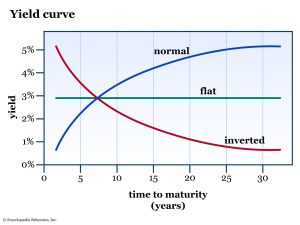
Stress-testing requires modeling how your portfolio behaves during aggressive credit tightening or sudden rate shocks, similar to how macro analysts study bond yield curve mechanics and 4 proven rules to navigate devastating market inversions to anticipate macro credit shocks before liquidity dries up. If a 30 percent drawdown across your primary collateral triggers an automated liquidation event, your position sizing is mathematically defective. Your structural leverage must be calibrated to withstand multi-standard-deviation shocks without breaching maintenance lines.
The psychological trap of funding a sinking position
When traders misunderstand margin call mechanics, they frequently treat the dreaded notification as an invitation to gamble more capital. When the email or automated phone call arrives demanding additional cash, behavioral biases cloud objective judgment. The sunk cost fallacy whispers that the asset is historically cheap, tempting the investor to wire supplementary capital to keep the trade alive.
Feeding a deteriorating margin position is one of the most reliable ways to turn a recoverable loss into total financial wipeout. Unless the broader macro thesis remains completely intact and the collateral drawdown is undeniably anomalous, sending fresh cash into a broken trade simply feeds fuel into a mechanical woodchipper. If the underlying security drops another 10 percent, the newly deposited capital vanishes alongside the original equity, leaving the investor facing an even larger margin call.
Disciplined traders distinguish sharply between funding an opportunity and subsidizing a failed calculation. If a leveraged position demands an emergency cash injection to remain solvent, the position size was fatally flawed from its inception. The rational action is often the most painful one: accepting the loss, selling the asset voluntarily, and liberating cash to fight another day on clean, unencumbered terms.
Building a durable framework for sustainable leveraged investing
Leverage is neither inherently evil nor inherently magical. It is an amplifier of financial outcomes that accelerates both managerial skill and mathematical incompetence. In a pristine bull market, borrowed funds flatter the ego by turning ordinary market returns into extraordinary statements of performance. But markets are cyclical beasts that periodically shake out unhedged, over-leveraged participants with surgical cruelty.
Those who endure over decades approach debt capital with relentless paranoia. They understand that prime brokers and retail platforms are not fiduciary partners; they are secured creditors with ironclad contractual rights to liquidate your wealth to balance their ledgers. By building broad collateral buffers, respecting changing volatility parameters, and executing strict stop-losses, you insulate your capital from systemic chain reactions. Ultimately, respecting margin call mechanics is what separates seasoned market operators from bankrupt speculators who mistook borrowed runway for permanent flight.