Cycling drafting mechanics and 4 proven rules that unlock effortless breakaway speed
Drafting on a bicycle is far more than tucking behind a rear wheel; it is a complex hydrodynamic dance of pressure zones and shared kinetic flow. Discover how manipulating turbulent wakes can save up to forty percent of your energy while making the lead rider faster too.
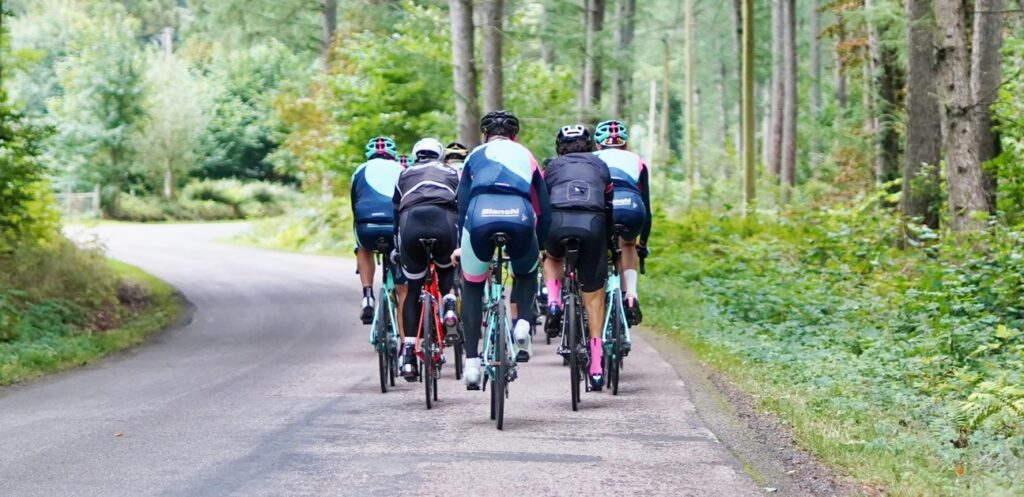
Mastering cycling drafting mechanics fundamentally alters how an athlete encounters the invisible ocean of atmospheric drag pushing against every forward pedal stroke. At speeds above thirty kilometers per hour, aerodynamic resistance accounts for roughly ninety percent of the total resistive force acting against a cyclist. The rolling friction between rubber and asphalt shrinks into relative insignificance compared to the sheer energy required to displace heavy parcels of ambient air. When a solitary rider tears through open space, they operate as an unrefined blunt body, ramming through dense gas molecules and generating a chaotic wake that violently robs them of kinetic energy.
Slipping into the aerodynamic pocket behind another wheel is cycling’s supreme equalizer. To an untrained observer, tucking in looks like simple shelter, like standing behind an umbrella in a squall. The underlying mechanics, however, represent a continuous fluid-dynamic interaction between two or more moving bodies. Energy expenditure drops precipitously the moment you penetrate that slipstream, lowering your heart rate and sparing scarce glycogen reserves that would otherwise vanish within minutes of blunt-force pedaling into a stiff headwind.
Understanding this fluid interaction allows amateur riders and seasoned racers alike to maintain speeds they could never sustain alone. By treating the atmosphere not as an empty void but as a viscous fluid requiring strategic manipulation, you turn wind from a punishing adversary into a predictable mechanical lever.
The invisible fluid physics behind turbulent slipstreams
Modern wind tunnel analysis focused on cycling drafting mechanics demonstrates that air does not simply part and vanish around a rider. As the lead cyclist punches forward, high-pressure air stacks against their chest, helmet, and handlebars. This zone of high stagnation pressure demands immense mechanical work to overcome. As the air shears across the lead rider’s shoulders, hips, and spinning legs, the flow separates, leaving behind a widening cavity of low pressure filled with tumbling, turbulent air known as the wake.
This low-pressure void behaves essentially like a vacuum. Atmospheric pressure inside the wake is substantially lower than ambient atmospheric pressure. When a trailing cyclist enters this depression zone, the pressure differential across their body changes drastically. Instead of confronting a wall of high-pressure stagnation air at their front wheel, the trailing rider experiences dramatically reduced frontal drag. In aerodynamic testing documented in the Journal of Wind Engineering and Industrial Aerodynamics, following closely behind a single rider can reduce net aerodynamic drag by thirty to forty percent, a staggering physiological dividend that fundamentally dictates road racing tactics.
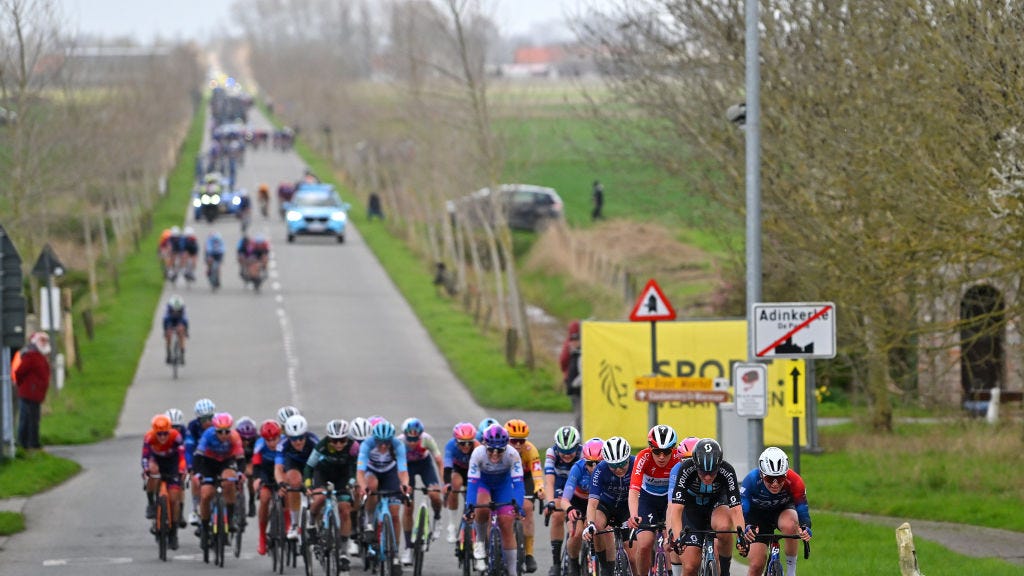
The wake is not static; it pulses, narrows, and expands based on velocity and surrounding air currents. The greatest drag reduction occurs directly behind the lead rider’s seatpost, where the low-pressure pocket is tightest. As distance between the bikes increases, turbulent eddies churn into the void, gradually restoring atmospheric pressure and stripping away the drafting advantage. The entire paceline functions as a single, elongated aerodynamic body, redistributing air displacement across multiple riders to cheat friction.
Four proven rules to master slipstream dynamics on open roads
Eliminate the dead air gap through razor thin wheel spacing
Proximity dictates aerodynamic payoff. The physics of wake dissipation dictate that every inch of separation between your front tire and the leader’s rear tire allows atmospheric air to spill into the wake, eroding your energy savings. At a distance of one to two meters, drag reduction hovers around twenty percent; collapse that separation down to fifteen centimeters, and that savings spikes near forty percent. Cyclists who truly grasp cycling drafting mechanics know that maintaining this margin requires soft eyes and calm nerves.
Instead of fixating nervously on the rubber tread directly ahead, lock your visual focus on the lower back or hips of the rider in front of you. The human torso signals shifts in pace or line long before the rear wheel decelerates. Keeping your eyes elevated allows your peripheral vision to track wheel overlap while your primary vision anticipates upcoming road obstacles, pavement seams, and gradual speed adjustments without triggering abrupt panic reactions.
Offset your front wheel to conquer shifting crosswinds
Headwinds rarely arrive in pure, straight vectors. Atmospheric winds strike diagonally, creating what aerodynamicists call a yaw angle. When wind blows across your trajectory at an angle, the protective low-pressure wake does not trail straight behind the leader’s rear wheel; it gets blown diagonally downwind. Tucking straight behind the leader during a crosswind leaves you exposed to clean, full-force air, squandering your mechanical advantage.
To capture the slipstream during angled wind, offset your machine downwind to form an echelon. Your front wheel must overlap slightly with the lead rider’s rear cassette, positioned downwind in the sweet spot where the deflected air pocket pools. This tactical repositioning requires exceptional environmental awareness. Much like how meteorologists struggle to anticipate turbulent atmospheric shifts when tracking Weather Forecast Turmoil as 4 Major Storm Threats Collide With Critical Satellite Reductions, road cyclists must read micro-shifts in atmospheric pressure and sudden crosswinds to survive out on open tarmac. If you misjudge the wind vector by even ten degrees, your front wheel punches dead into an unyielding wall of resistance.
Exploit the surprising aerodynamic push that propels the lead rider
One of the most fascinating aspects of cycling drafting mechanics involves what happens to the rider setting the pace. Traditional cycling folklore assumes that the leader does all the work while the follower merely rests. Rigorous fluid dynamic simulations reveal that a trailing rider actually reduces the drag of the lead rider by up to three percent. This phenomenon occurs because the trailing cyclist acts as a physical plug inside the leader’s turbulent detachment zone.
Without a drafter, the low-pressure cavity behind the leader pulls backward on their body, creating a destructive suction effect called base drag. When a second cyclist slots into that space, their own high-pressure bow wave pushes forward into the leader’s low-pressure wake, partially equalizing the pressure differential. This pressure boost reduces the leader’s base drag, allowing both riders to travel faster together than either could travel individually at the same mechanical wattage. Recognizing that drafting is a mutually beneficial aerodynamic union transforms how riders cooperate during long, grueling breakaways.
Feather pedal cadence to preserve kinetic momentum without touching the brakes
The primary enemy of an efficient slipstream is erratic deceleration. Grabbing a handful of brake inside a tight paceline instantly breaks your momentum and disrupts the laminar flow around the group. Worse, it produces a violent concertina effect, forcing every rider behind you to slam on their brakes and burn valuable anaerobic matches to regain lost speed. Smooth execution of cycling drafting mechanics depends far more on subtle pedal cadences than on hand brakes.
When you feel yourself creeping dangerously close to the leading rear wheel, widen your knees slightly into the wind stream or raise your torso by a fraction of an inch. Exposing a small amount of your chest turns your own body into an aerodynamic airbrake, scrubbing one or two kilometers per hour of speed without breaking cadence or grabbing the brake levers. Pair this subtle air resistance adjustment with light soft-pedaling to maintain chain tension, ensuring instantaneous power delivery the moment the rider ahead accelerates.
Costly tactical blunders that destroy paceline momentum
The most hazardous error inside a working paceline is half-wheeling, an erratic habit where a trailing rider pushes their front wheel alongside the lead rider’s rear tire without making a deliberate, announced pass. If the lead cyclist swerves to dodge an asphalt crater, the two tires lock instantly. In competitive mechanics, a front wheel always loses against a rear wheel; the leading wheel levers the trailing fork sideways, sending the drafting cyclist straight into the ground. Ignoring the core tenets of cycling drafting mechanics leads to catastrophic crashes that wipe out entire pelotons within fractions of a second.
Another common mistake is surging upon taking the front. Riders often feel fresh after resting inside the wake, and when their turn comes to rotate through and pull, they inadvertently hammer down on the pedals, raising the pace by three or four kilometers per hour. This spike fractures the group, isolates weaker riders, and needlessly drains the attacker’s stamina. A flawless pull requires matching the exact rolling speed of the paceline, smoothly absorbing the atmospheric burden, and holding a metronomic cadence until rotating off.
The massive physiological dividend of riding inside the aerodynamic envelope
Ultimately, the strategic brilliance of cycling drafting mechanics reveals itself on the physiological balance sheet. Human muscle fibers depend primarily on glycogen and aerobic oxidation to sustain long-duration mechanical output. When a cyclist pushes their limits into raw wind, blood lactate rises exponentially, depleting finite glycogen stores within sixty to ninety minutes of threshold intensity.
Inside the protective envelope of a well-drilled paceline, that same ground speed requires an output well below your functional threshold power. Heart rates drop by fifteen to twenty-five beats per minute, ventilation rates stabilize, and the body burns fat substrates rather than tapping into precious muscle sugar. You effectively preserve critical reserves while the competitor on the front burns through their metabolic fuel tank.
When the decisive gradient looms or the finish line sprint opens, the athlete who triumphed is rarely the one with the highest absolute cardiovascular ceiling. Victory belongs to the rider who respected the fluid nature of air, hugged the aerodynamic sweet spot, and let the invisible physics of the slipstream carry them safely through the wind.