NASA Space Missions Face 5 Critical Turning Points and Historic Milestones
A surge of breakthrough discoveries and mounting operational risks has put American space exploration at a major strategic crossroads. From record-setting Mars traverses to dying orbital relays, here is what is transforming planetary science today.
Global attention is surging as NASA space missions encounter unprecedented milestones, aging hardware crises, and groundbreaking deep-space discoveries across the solar system. Within days, disparate developments spanning planetary surface rovers, infrared space telescopes, and orbital comms hubs converged into a defining narrative about the vulnerability and triumph of robotic exploration.
Robotic space travel is rarely a steady march of calm scientific updates. Instead, it operates on razor-thin engineering tolerances, multi-decade lifespans, and the harsh realities of interplanetary physics. While rovers on Mars continue shattering surface records, the communications architecture supporting them is quietly breaking down under the strain of time. Simultaneously, long-running sample-return efforts are closing their operational books while newer orbital observers reveal strange, long-overlooked celestial bodies lurking in deep space.
A synchronized wave of headlines has thrust NASA space missions back into the center of public discourse, revealing both the extraordinary durability of humankind’s machines and the fragile infrastructure underpinning modern planetary science. Understanding this moment requires untangling five major developments that illuminate where space exploration stands and where it faces critical systemic pressure.
Five Crucial Developments Defining Modern Planetary Science
The latest operational updates from NASA span hundreds of millions of miles, ranging from the dusty plains of Jezero Crater to distant brown dwarfs adrift between planetary and stellar classifications. Each story highlights an essential dimension of modern spaceflight, exposing the trade-offs between legacy durability and the physical limits of aerospace hardware.
The Critical Loss of MAVEN and an Aging Mars Relay Fleet
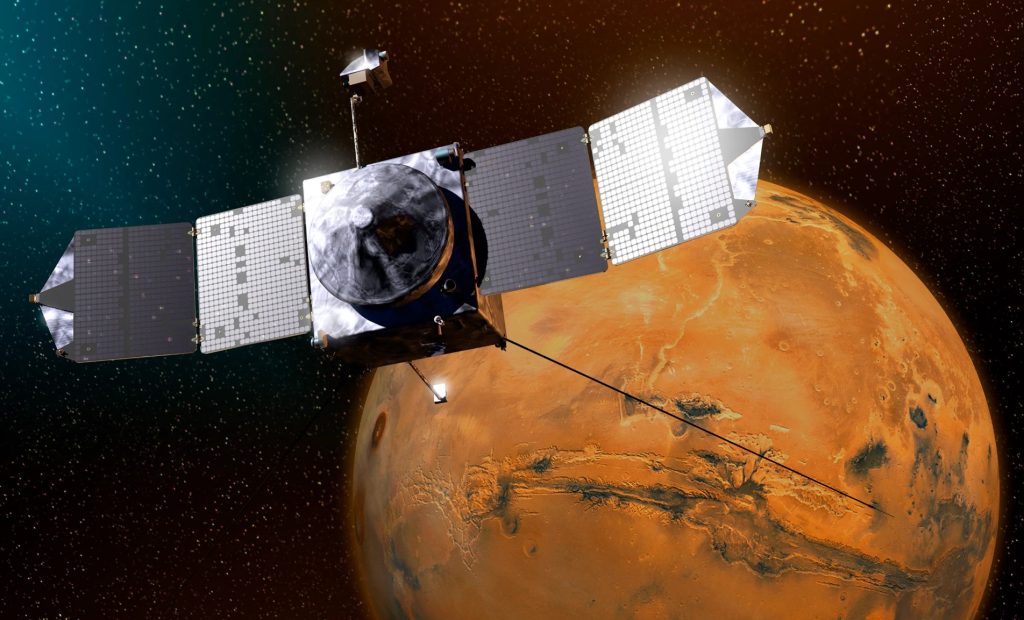
Deep space missions live and die by their communication networks, and nowhere is that vulnerability more acute than at Mars. As reported by The Conversation, NASA lost contact with its MAVEN spacecraft at the end of 2025. The loss of MAVEN—the Mars Atmosphere and Volatile EvolutioN orbiter—marks a severe operational blow because it was actually the youngest member of NASA’s Mars orbiter fleet.
With MAVEN offline, the remaining orbiters circling the Red Planet are well past their original design lifespans. Spacecraft like 2001 Mars Odyssey and the Mars Reconnaissance Orbiter have spent over two decades braving radiation belts, extreme thermal cycling, and degraded solar array output. While they continue delivering critical observations, their primary role as data relays for surface rovers is increasingly precarious. Surface assets cannot beam immense datasets directly to Earth at high bandwidth; they rely on overhead orbiters to act as transmission conduits. The loss of MAVEN exposes the fragile pipeline underpinning future surface exploration, highlighting a quiet vulnerability that threatens both robotic science and future crewed endeavors that rely on NASA space missions for deep-space data relays.
Perseverance Shatters the Extraterrestrial Driving Record
While orbital comms face rising uncertainty, surface mobility has achieved an astonishing technical triumph. Coverage from FOX Weather confirmed that NASA’s Perseverance Mars rover has officially set a world record for the farthest distance driven by any vehicle on the surface of another world. Operating on the floor and rim of Jezero Crater, the car-sized robotic laboratory surpassed the historic distance records previously established by long-lived predecessors.
The achievement reflects an unprecedented leap in automated navigation capabilities. Perseverance leverages advanced AutoNav software, allowing on-board compute clusters to generate real-time 3D hazard maps and plot optimal paths across boulder-strewn terrain without waiting for human commands from mission control in Pasadena. By minimizing the latency penalty inherent in Earth-to-Mars communications, Perseverance has driven sustained, multi-kilometer treks, collecting diverse core samples that could preserve ancient signs of microbial life.
Curiosity Exposes the Raw Blue Reality of the Martian Surface
A few thousand kilometers away, NASA’s older active rover offered a stark reminder that perception on other worlds is often shaped by scientific filtering. A report from Mashable detailed how the Curiosity rover beamed back a rare, uncorrected image of the Martian landscape bathed in distinct blue tones, prompting intense curiosity over what color the Red Planet actually exhibits.
Most public images released by planetary scientists undergo precise radiometric calibration to simulate how the landscape would appear under midday Earth lighting. When Curiosity transmits raw, unprocessed sensor captures, the atmospheric dust scattering and sensor-level color balances paint a radically different visual reality. The unvarnished image stripped away standard color corrections, revealing the cool, desaturated slate and bluish minerals beneath the superficial coating of rusted iron oxide that gives the planet its iconic nickname. The image offered a vivid demonstration of how raw scientific data must be translated before it matches human visual perception.
OSIRIS-REx Concludes an Epic Decade of Asteroid Sampling
The trajectory of NASA space missions dedicated to sample retrieval took a formal bow as OSIRIS-REx officially concluded its operational lifecycle on September 30, 2026. As reported by Space.com, mission leaders and aerospace engineers celebrated the formal end of the primary mission, with project leadership declaring, “I am immensely proud of what we did.”
Launched in 2016, OSIRIS-REx traveled to near-Earth asteroid Bennu, navigated hazardous loose-rubble dynamics, successfully collected surface regolith via a touch-and-go maneuver, and returned a sample capsule safely to Earth in the Utah desert. While the physical spacecraft has transitioned into an extended mission designated OSIRIS-APEX to intercept asteroid Apophis, the OSIRIS-REx program itself has reached its bureaucratic and operational close. The returned carbonaceous dust and pristine pebbles are already rewriting models of planetary formation and prebiotic chemical precursors, proving that targeted robotic sample return remains feasible despite extraordinary orbital mechanics hurdles.
SPHEREx Peeks into the Shadows of Goth Brown Dwarfs
Looking far beyond planetary bodies, modern NASA space missions are also re-examining stellar evolution through novel instruments. Space.com reported that astronomers using NASA’s SPHEREx spacecraft have completed a close-up analysis of a mysterious cluster of brown dwarfs—enigmatic substellar objects characterized colloquially as “kind of goth” due to their cold, dark, and brooding nature.
Brown dwarfs occupy an elusive intermediate zone between massive gas giant planets and nuclear-burning stars. Too small to ignite sustained hydrogen fusion in their cores yet far larger than Jupiter, these astronomical loners wander the galaxy shedding faint infrared signatures. SPHEREx, designed to perform a whole-sky spectroscopic survey, provides the sensitivity required to analyze their atmospheric compositions, molecular clouds, and internal thermal cooling rates. The initial findings peel back the veil on objects that defy clean astronomical taxonomy, offering clues about how low-mass fragments condense during interstellar cloud collapse.
Engineering Resilience Against Hostile Planetary Environments
The simultaneous challenges and triumphs across these programs demonstrate the physics-bound nature of deep-space hardware. Spacecraft do not fail because of software bugs alone; they succumb to cosmic radiation degrading silicon gates, micrometeoroid impacts scouring thermal blankets, and mechanical reaction wheels seizing up after hundreds of millions of revolutions.
Navigating these extreme environments demands rigorous mechanical precision. Mission planners must choreograph orbital insertions and planetary gravity assists with mathematical perfection. Just as terrestrial athletes analyze how Curveball pitch mechanics and 4 proven rules that create unhittable break harness rotational torque and aerodynamic forces, space mission designers must calculate orbital trajectories, angular momentum, and propellant expenditures against uncompromising gravitational vectors. In the vacuum of interplanetary space, there is no atmospheric cushioning or second chances; a fractional deviation in deceleration can send an orbiter skipping off an atmosphere or hurtling past its target forever.
Surface exploration remains a core pillar of NASA space missions, demonstrated by the historic milestone achieved inside Jezero Crater. Yet mobility on the surface depends entirely on maintaining steady links through space. When orbiters degrade, the flow of driving telemetry, safety checks, and high-volume sample data slows to a crawl, creating an engineering bottleneck that ground teams cannot bypass without new hardware in orbit.
Strategic Crossroads for Robotic Exploration
The overarching lesson across these simultaneous milestones is that NASA space missions are transitioning into an era where legacy hardware must be replaced or planetary science risks losing its ground-truth access. The retirement of landmark programs like OSIRIS-REx highlights the immense payoff of targeted return architecture, but the sudden silence of MAVEN serves as an urgent wake-up call regarding infrastructure neglect.
For more than two decades, the global scientific community has taken for granted that an orbiter would always be overhead to relay images from Spirit, Opportunity, Curiosity, or Perseverance. With the Martian orbiter constellation thinning, NASA faces tough budgetary and architectural choices. Future architectures must weigh whether to finance flagship deep-space telescopes like SPHEREx, embark on high-risk sample returns from Mars and icy moons, or construct dedicated communications networks around target worlds.
Planetary science has advanced to a stage where robotic machines can drive farther, capture raw physical spectra, and return extraterrestrial material across interplanetary space. Maintaining that momentum requires continuous reinvestment in the silent, invisible orbital backbone that keeps those distant machines tethered to home.