Film editing pacing mechanics and 4 proven rules that create irresistible suspense
Discover how master editors manipulate human neurology and temporal perception to build unbearable tension. Learn the core principles that separate timeless cinematic pacing from chaotic modern over-cutting.
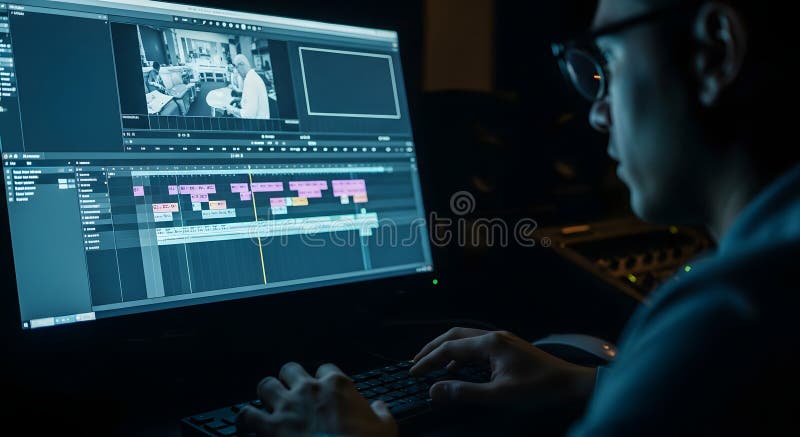
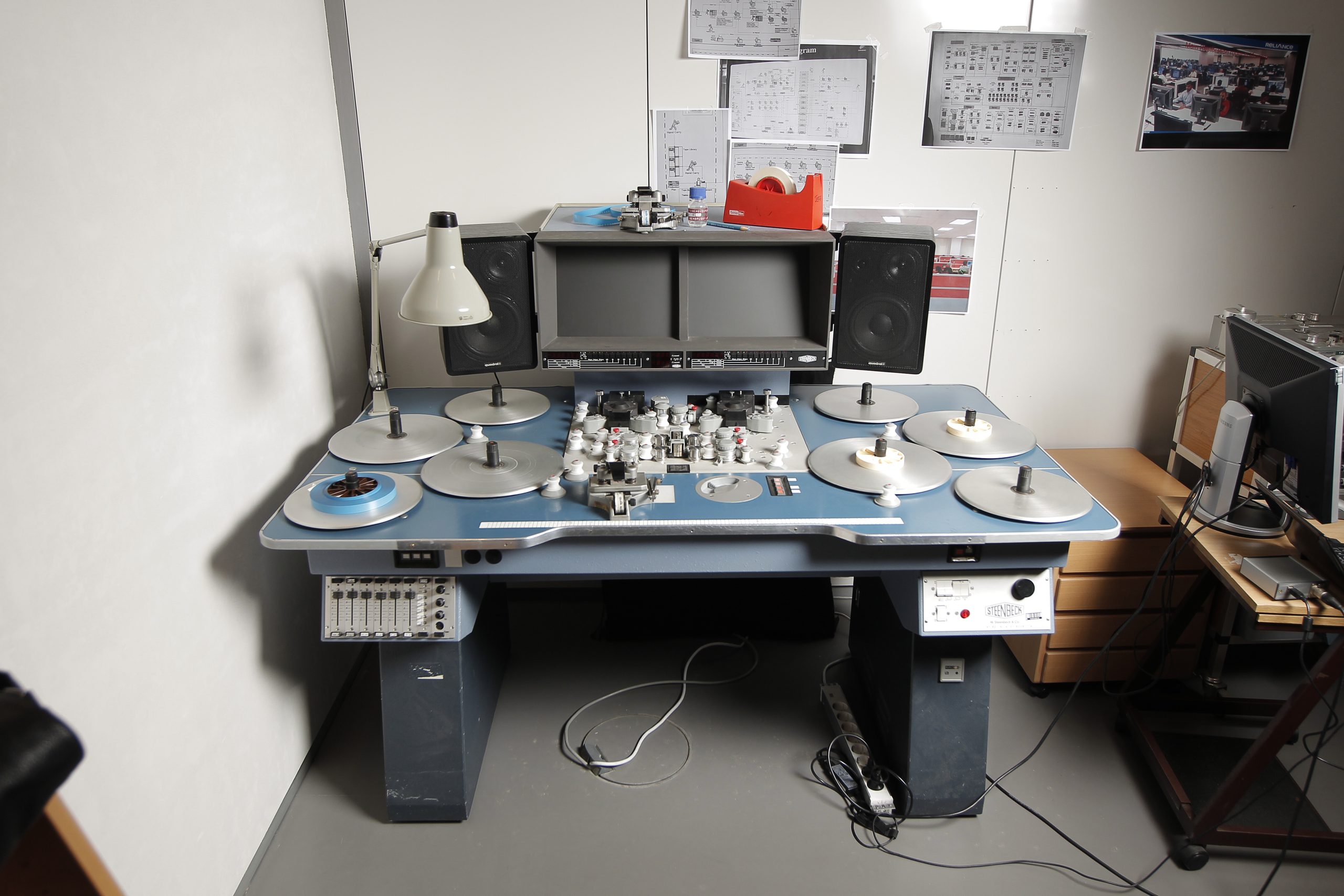
Mastering film editing pacing mechanics allows a storyteller to manipulate human heart rates, transforming raw footage into an intoxicating dance of tension and emotional release. Long before an audience registers a plot twist or marvels at a performance, their central nervous system is already responding to the invisible cadence constructed inside the cutting suite. Editing is not merely the mechanical process of joining strips of celluloid or digital clips; it is the deliberate architecture of human perception.
When a cut occurs at the precise millisecond of heightened curiosity, the viewer leans forward in involuntary anticipation. Conversely, if a cut arrives half a beat too early, the emotional momentum evaporates into technical sterility. The difference between an unforgettable sequence and a forgettable scene rarely comes down to production budget. Instead, it hinges on an editor’s intuitive and technical mastery over time, spatial orientation, and narrative momentum.
The Neurobiology of the Invisible Cut
Cinema works because human biology contains a peculiar cognitive quirk known as persistence of vision, combined with the brain’s innate drive to synthesize disparate visual data into coherent narrative meaning. When examining classical film editing pacing mechanics, cognitive neuroscientists observe that every splice triggers an involuntary micro-saccade. The human eye must rapidly locate a new point of focus, decode the spatial geometry of the environment, and assess the emotional state of the subject within fractions of a second.
If the transition respects natural ocular behavior, the spectator’s conscious mind ignores the seam entirely. Walter Murch, the legendary editor behind masterpieces like Apocalypse Now, famously linked the natural rhythm of cutting to the biological frequency of the human blink. We blink not solely to lubricate our corneas, but to compartmentalize and punctuate distinct thoughts. When an editor cuts precisely where an attentive observer would naturally blink, the transition feels completely organic. The editorial rhythm synchronizes with the physiological rhythms of the audience, pulling them into a shared somatic trance.
Metric Pacing Versus Somatic Pacing Across Cinematic Genres
Editors broadly divide their temporal strategies into metric pacing and somatic pacing. Metric pacing relies on mathematical consistency. A sequence might maintain an unrelenting tempo where every shot lasts precisely forty-eight frames, establishing a machine-like drive ideal for factory assembly montages, mechanized pursuits, or military marches. Metric cutting creates a hypnotic cadence through predictable duration, conditioning the viewer’s brain to anticipate the next beat with metronomic accuracy.
Somatic pacing, by contrast, breathes with the physiological state of the characters and the emotional demands of the narrative. Rather than adhering to an external stopwatch, somatic pacing elongates or compresses time based on visceral markers such as breathing, eye movement, and muscular tension. In a tense dialogue sequence, an editor might hold on a character’s trembling lip long after they finish speaking, allowing the silence to ferment into unbearable psychological weight. This friction between pure mathematics and human physiology forms the core dilemma of modern film editing pacing mechanics.
Four Fundamental Rules of Temporal Architecture in the Cutting Room
To construct a narrative tapestry that holds an audience spellbound, practitioners rely on four foundational pillars of film editing pacing mechanics. These principles govern how information is rationed, how momentum is conserved, and how visual energy transfers across cuts without shattering audience engagement.
Prioritizing Emotional Resonance Over Mechanical Continuity
Amateur editors frequently obsess over mechanical continuity, sacrificing dramatic momentum to ensure that a prop glass sits in the exact same hand or that an actor’s foot hits the floor at the identical angle across two angles. Master practitioners recognize that emotional authenticity always supersedes spatial perfection. As noted in historical British Film Institute archival analysis on editorial grammar, spectators effortlessly forgive minor mismatches in physical geography if the cut preserves the raw truth of an actor’s emotional realization.
When cutting a climactic performance, the cut must serve the psychological transformation occurring within the scene. If an actor delivers an unscripted, breathtaking expression of grief in a medium shot, forcing an artificial cut to a reverse angle just to show who they are speaking to ruins the dramatic alchemy. The editor must protect that emotional wave until it naturally crests and recedes, regardless of whether the physical continuity strictly aligns.
Calibrating Eye Trace to Minimize Unconscious Visual Fatigue
Eye trace refers to the deliberate choreography of where the viewer’s pupil rests on the screen at the tail end of an outgoing shot versus the head of an incoming shot. A sophisticated grasp of film editing pacing mechanics treats the frame as a dynamic map rather than a static canvas. When visual interest abruptly jumps from the extreme lower-left quadrant to the upper-right corner across consecutive frames, the viewer’s eye must search the screen, wasting cognitive bandwidth on basic orientation.
While chaotic eye trace can be deployed intentionally to induce disorientation during sudden explosions or panic sequences, sustained suspense demands effortless visual continuity. By matching the focal point across the transition, the editor allows the spectator to instantly absorb critical narrative information. This fluidity creates an effortless reading experience, making rapid sequences feel extraordinarily clear rather than visually concussive.
Modulating Shot Length Decay to Regulate Psychological Velocity
Pacing is never static; it is an evolving curve of acceleration and deceleration. Shot length decay describes the systematic reduction of average shot duration as a scene advances toward its climax. In a classic suspense set piece, an opening establishing sequence might feature shots lasting six to ten seconds, providing environmental context and emotional baselines. As the imminent threat closes in, the editor progressively trims durations: four seconds, then two, then thirty frames, then twelve.
When an editor abruptly truncates the expected visual decay, the brain registers a micro-crisis of comprehension. Much like how a sudden macro-event such as the Diesel Fuel Shock Sparks 4 Major Economic Clashes That Threaten Energy Markets forces rapid recalibration across supply networks, an unexpected cut forces the spectator’s optical circuitry to rapidly renegotiate meaning under sensory duress. Conversely, following an intense burst of micro-cuts with a sustained, motionless wide shot produces a sudden vacuum of kinetic energy that amplifies dramatic impact, leaving the viewer breathless in the sudden stillness.
Weaponizing Acoustic Overlaps to Subvert Subconscious Anticipation
Visual cuts made simultaneously with audio cuts create an abrasive, unnatural texture often referred to as a blunt cut. The human ear and eye rarely process environmental shifts simultaneously; sound almost always announces an event before vision confirms it, or sound lingers long after a visual stimulus has vanished. Editors leverage J-cuts, where audio precedes video, and L-cuts, where picture changes while the previous sound carries over, to stitch scenes together into a continuous perceptual stream.
By leading with sound, the editor stimulates the audience’s auditory cortex, planting an subconscious question that the subsequent visual cut immediately satisfies. In suspense sequences, weaponizing acoustic overlap involves severing this synchrony deliberately. Delaying the visual reveal of an approaching menace while allowing its acoustic signature to swell within the stereo field compels the viewer’s imagination to construct terrors far more potent than anything a camera could record.
Why Hyperactive Cutting Destroys Spatial Intelligence
Contemporary action cinema frequently falls prey to the misconception that faster cutting automatically equates to heightened excitement. When directors neglect foundational film editing pacing mechanics, the narrative dissolves into a kinetic blur that paradoxically bores the spectator. If an editor splices footage every twelve frames without establishing clear spatial relationships, the viewer loses cognitive anchoring. They no longer comprehend who is punching whom, where the exits lie, or what stakes exist in the physical space.
True visceral tension requires anticipation, and anticipation requires spatial clarity. Alfred Hitchcock’s celebrated distinction between surprise and suspense illustrates this perfectly. An unexpected bomb detonation under a table delivers fifteen seconds of fleeting shock. But showing the audience the bomb under the table, establishing its ticking timer, and then cutting between mundane dinner conversation and the dwindling fuse generates fifteen minutes of unbearable suspense. Pacing cannot manufacture suspense from a visual void; it requires distinct narrative anchors and temporal space to breathe.
The Enduring Mastery of Editorial Restraint
The finest editors approach their craft with the delicate discipline of an orchestral conductor. They recognize that constant loud volume ceases to be impactful, just as unrelenting cutting speed ceases to feel exciting. The power of a dramatic climax derives entirely from the valleys of quiet contemplation that precede it. Every frantic chase sequence earns its kinetic authority through the measured, patient storytelling that established its stakes.
Ultimately, profound proficiency in film editing pacing mechanics reveals that editing is an act of omission as much as assembly. By choosing precisely what to withhold, where to let silence hang, and when to sever an emotional exchange, the editor molds the temporal flow of raw reality into sublime art. In the sacred darkness of the cinema, the audience gives up control of their internal clocks, willingly surrendering their heartbeats to the rhythmic hands guiding the invisible cuts.