Boxing punch power mechanics and 4 proven laws that generate devastating knockout force
True knockout power is neither born of arm size nor brute muscular effort. Discover the exact biomechanical sequence that channels ground reaction force into bone-shattering punching impact.
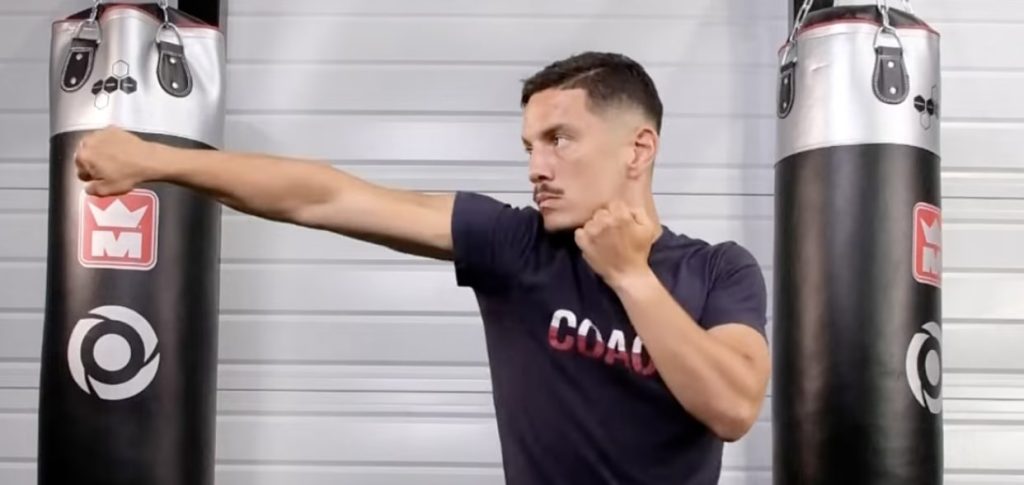
Mastering boxing punch power mechanics requires stripping away the romantic illusion that concussive strikes originate in swollen biceps or broad shoulders. The human arm is not an engine. It is a conduit. When an elite puncher detonates a cross that drops an opponent in an instant, the viewer witnesses an unbroken cascade of kinetic energy initiated hundreds of milliseconds before the glove lands. That energy starts where the leather of the boxing boot grips the canvas, surging upward through bone and tendon before delivering its payload with lethal finality.
Spectators routinely confuse muscular bulk with devastating impact. In combat sports, velocity, structural rigidity, and momentum transfer reign supreme. A heavyweight with mammoth arms who relies on raw muscular tension pushes his punches, dissipating energy within his own soft tissues. Meanwhile, a lean middleweight who coordinates every link of his physical anatomy can generate peak forces exceeding four thousand newtons. Stripping down this physical reality exposes the exact architecture behind world-class striking.
The kinetic chain illusion and why the floor generates your strike
Every concussive blow thrown inside the squared circle is fundamentally a localized earthquake. Truly understanding boxing punch power mechanics begins at the friction point between the ring canvas and the balls of the feet. Newton’s third law dictates that for every action, there is an equal and opposite reaction. You cannot throw a sledgehammer from a canoe, and you cannot deliver a skull-snapping punch without anchoring yourself to the earth. When a fighter drives their rear foot down and backward, the earth pushes back with an equivalent vector of ground reaction force.
This upward force enters the ankle joint, travels through the calf musculature, and recruits the powerful knee extensors and gluteal complexes. The lower body does not merely support your stance during an exchange. It manufactures the raw energetic capital that will ultimately shatter an opponent’s guard. If the stance is too wide, vertical drive dissipates. If the stance is too narrow, rotational balance collapses under the violent shearing forces generated by the hips. The sweet spot demands an athletic, spring-loaded platform where the ankle remains stiff and the hips remain free to pivot dynamically.
The transmission of this energy depends entirely on structural continuity. Just as subterranean energy travel behaves unpredictably when seismic waves pass through fractured subsoil, as explored when Terremoto tremors expose 4 critical realities behind deadly Latin American seismic disasters, human kinetic energy suffers catastrophic leakage if an athlete fails to maintain structural alignment across their skeletal joints. A loose knee or an unstable hip joint acts as a mechanical dampener, absorbing the very kinetic energy meant for the opponent’s chin.
The disastrous fallacy of arm punching and muscle tension
The most common failure in striking stems from premature muscular contraction. When fighters fail to grasp boxing punch power mechanics, they default to muscling their shots by flexing their pectoral muscles, deltoids, and forearms before the punch even leaves their defensive guard. This chronic tension creates an internal brake system. The antagonist muscles actively fight the agonist muscles, cutting hand speed in half and announcing the strike like a billboard.
Muscular tension produces stiffness, and continuous stiffness is the sworn enemy of acceleration. In physical terms, force equals mass multiplied by acceleration. If your musculature remains locked throughout the delivery arc, your hand moves at a pedestrian velocity. The strike becomes an exhausting push that merely shoves the opponent off balance instead of transmitting high-frequency shockwaves into their brainstem. True punching power demands loose, almost fluid whip-like relaxation throughout ninety-five percent of the punch trajectory.
Relaxed muscles glide across fascial planes with minimal internal resistance. Elite practitioners carry their hands loose, their shoulders dropped, and their breathing rhythmic. The arm functions not as an active motor, but as a flexible steel tow cable tethered to a spinning planetary gear system. Only at the absolute fractional millisecond before impact does that loose cable petrify into an unyielding battering ram.

Four proven biomechanical laws that turn kinetic energy into lethal impact
Generating concussive punching output is not an esoteric art reserved for genetic outliers. It is the predictable consequence of adhering to four inviolable mechanical principles governing rotational physics and human anatomy.
Ground reaction force and the unyielding rear foot anchor
Power begins with plantar friction. To initiate a devastating straight right or rear hand cross, the ball of the rear foot must dig into the canvas with violent intent. This initial plant creates triple extension across the ankle, knee, and hip joints. High-speed force plates consistently demonstrate that elite power punchers generate significantly higher vertical and horizontal ground reaction forces than amateur competitors. Without this aggressive initial bite against the floor, any subsequent hip rotation lacks an axis of leverage, leaving the strike starved of foundational energy.
Torque amplification through sequential pelvic and thoracic rotation
Once the ground reaction force clears the lower limbs, the pelvis snaps forward along the transverse plane. However, the shoulders do not move simultaneously. Peak power relies on dynamic stretch-reflex mechanics. By delaying thoracic rotation until the pelvis has reached its rotational midpoint, an athlete stretches the core musculature, particularly the external obliques and deep spinal rotators, like an industrial rubber band. In the study of boxing punch power mechanics, this sequential rotational lag sits at the heart of ballistic torque, amplifying angular velocity before flinging the shoulder girdle through the target line.
Linear momentum translation and the forward displacement of mass
Rotational torque alone can cause a fighter to spin on an axis without driving force into an adversary. To crack through an unyielding defense, rotational energy must meld seamlessly with linear mass displacement. The fighter’s center of mass must subtly shift from the rear foot toward the lead foot without drifting past the front knee. This controlled forward trajectory translates angular velocity into direct forward momentum. The entire mass of the athlete’s torso now rides directly behind the advancing fist, multiplying the total tonnage carried into the target zone.
Terminal impact stiffness and the physics of effective mass
Speed delivers the fist to the target, but effective mass dictates what happens upon collision. At the absolute terminus of boxing punch power mechanics, the arm transforms from a pliable whip into a reinforced steel girder. This transition occurs within mere hundredths of a second. The fist closes from a soft grip into a calcified rock, the wrist locks in slight flexion, the latissimus dorsi clamps downward to glue the arm to the ribcage, and the lead foot stamps into the floor. This instantaneous whole-body isometric brace turns the fighter’s entire body weight into a single, cohesive projectile, transferring maximum impulse directly into the recipient’s skull.
The double activation reflex and neuromuscular rate of force development
What separates the punch of an ordinary gym warrior from that of a championship-caliber knockout artist is not muscular circumference, but the rate of force development governed by the central nervous system. Detailed peer-reviewed research on combat sports strike mechanics reveals that punch impact relies heavily on rapid neuromuscular switching rather than prolonged muscular exertion. This neurological mechanism is known as the double muscle activation pattern.
When an elite striker initiates a straight right hand, their brain fires an explosive motor unit discharge to kickstart movement out of stance. This initial burst lasts a fraction of a second. Immediately following this launch phase, the nervous system completely cuts neural drive to the working muscles. The arm sails through open air in total relaxation, driven exclusively by the momentum generated by the hips and feet. The muscles remain silent, loose, and aerodynamically clean.
Then, less than thirty milliseconds before the glove connects with bone, the motor cortex unleashes a second, violent neural burst. Every muscle spanning from the plantar fascia of the feet through the abdominal core to the extensor muscles of the forearm contracts simultaneously. This secondary pulse is an isometric clamp. Elite execution of boxing punch power mechanics depends on a neurological paradox known as the double muscle activation, creating immense collision stiffness without sacrificing the spatial velocity required to catch an elusive opponent clean.
Training kinetic efficiency over raw strength for enduring striking power
Traditional bodybuilding routines built on slow, grinding movements like the flat barbell bench press or isolated bicep curls actively degrade punching mechanics. These exercises condition the human nervous system to fire muscles slowly throughout an entire range of motion, cultivating the exact continuous tension that destroys hand velocity. Building real power demands exercises that respect the ballistic nature of the human body.
Coaches who develop true boxing punch power mechanics discard mindless bench pressing in favor of ballistic rotational drills. Rotational medicine ball throws from an athletic stance teach the hip rotators to decelerate and accelerate with violent snap. Heavy kettlebell swings reinforce rapid hip hinge mechanics and posterior chain rate of force development. Landmine punches train the kinetic chain to transmit forces diagonally from the rear leg straight through the lead shoulder without buckling the spinal column.
Shadowboxing with an emphasis on terminal whip rather than frantic pace allows the athlete to groove the neuromuscular pathway of relaxation followed by instant bracing. Striking the heavy bag should not sound like a dull, thudding shove that sends the leather swinging across the gym. A biomechanically pure strike produces an ear-splitting crack, echoing through the room while the heavy bag folds sharply in place, absorbing raw impulse energy that never had the chance to push it backward. That sound is physics in its purest combative expression.