Orionids Meteor Shower Brings 5 Crucial Viewing Windows for Spectacular Fireballs
Earth is sweeping through the ancient dust stream of Halley’s Comet, igniting the night sky with high-velocity fireballs. Discover the exact timing, atmospheric science, and observational strategies needed to witness this breathtaking celestial event.
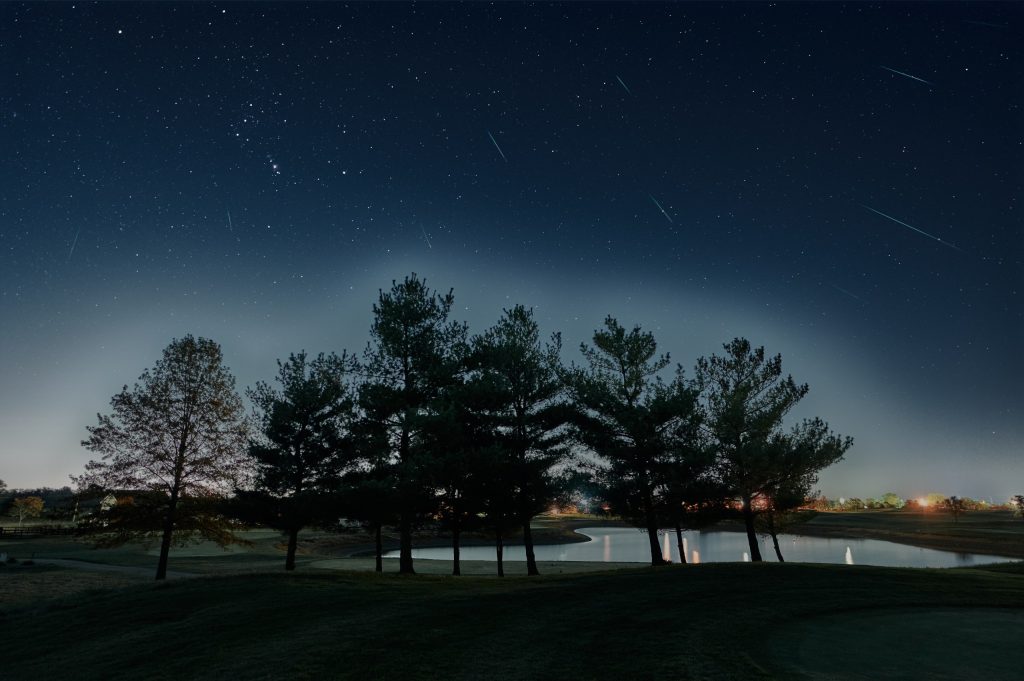
The celebrated Orionids meteor shower is currently illuminating autumn skies worldwide as Earth sweeps directly through ancient debris cast off by Halley’s Comet. Observers across both hemispheres are turning their eyes upward this week to catch high-speed fireballs slicing across crisp October nights. Publications including Space.com, Forbes, and WeatherBug have reported a substantial surge in global interest as optimal pre-dawn viewing windows open up, giving backyard observers and veteran astronomers alike a prime opportunity to witness cosmic history burning through the upper atmosphere.
Meteor showers often capture the collective imagination, yet few carry the historic resonance of this particular annual display. The meteors slicing through our sky are direct fragments shed from Comet 1P/Halley, an icy visitor that last swung past Earth in 1986 and will not return until 2061. Even while the parent comet resides billions of miles away near the frozen edges of our solar system, its scattered dusty trail continues its clockwork choreography with Earth’s orbit, transforming ordinary autumn mornings into extraordinary celestial observatories.
The Cosmic Origin and Mechanics of Halley Comet Debris
Astronomers track the Orionids meteor shower not merely for its aesthetic thrills, but because it offers tangible physical proof of how cometary material disperses along solar orbits over millennia. Halley’s Comet travels an elongated elliptical path around the sun that dips within the orbital plane of the inner planets before looping past the orbit of Neptune. As the comet approaches perihelion, solar radiation warms its volatile surface, liberating gas, pebbles, and microscopic dust grains into a vast ribbon of cosmic flotsam that drifts along its orbital path.
As reported by Forbes senior contributor Jamie Carter, Earth crosses this expansive debris river twice every calendar year. In May, our planet traverses the inbound leg of the comet’s track, producing the Eta Aquariid shower. In mid-to-late October, Earth plows head-on into the outbound orbital stream, igniting the radiant display in Orion. Because the comet moves in a retrograde orbit—traveling in the opposite direction of Earth’s revolution around the sun—the collision between our planet’s atmosphere and the dust particles occurs at a ferocious relative velocity of roughly 41 miles per second, or nearly 148,000 miles per hour.
According to long-time astronomical writer Astro Bob in the Duluth News Tribune, the particles colliding with our upper atmosphere are astonishingly diminutive. The vast majority of these streaks are generated by specks no larger than grains of sand or small coffee grounds. Yet, because kinetic energy scales exponentially with speed, these microscopic grains generate sufficient friction and thermal shock to ionize surrounding atmospheric molecules, turning tiny specks of comet dust into blinding streaks of incandescent light visible across hundreds of square miles.
Atmospheric Fireballs and Optimal Skywatching Geography
Public anticipation surrounding the Orionids meteor shower reaches its crescendo in late October as the density of the cometary stream peaks. Local reporting from St. George News in Southern Utah underscores the dramatic spectacle these hyper-velocity particles present against desert plateaus, where exceptionally dark skies provide ideal conditions for tracking rapid fireballs. These brighter meteors occasionally leave persistent glowing trains—luminous filaments of ionized gas that can hang suspended in the stratosphere for several seconds after the initial flash dissipates.
Geography plays a central role in the quality of the observation. The radiant point for the shower lies in the northern portion of the constellation Orion, just north of the brilliant red supergiant star Betelgeuse. Because Orion straddles the celestial equator, the shower is accessible to almost every inhabited region on the globe, from the rural glens of the United Kingdom to the canyonlands of North America and across the Southern Hemisphere. However, clear atmospheric sightlines, minimal cloud cover, and low ambient humidity remain vital components for maximizing visibility.
Five Crucial Techniques for Catching the Peak Celestial Display
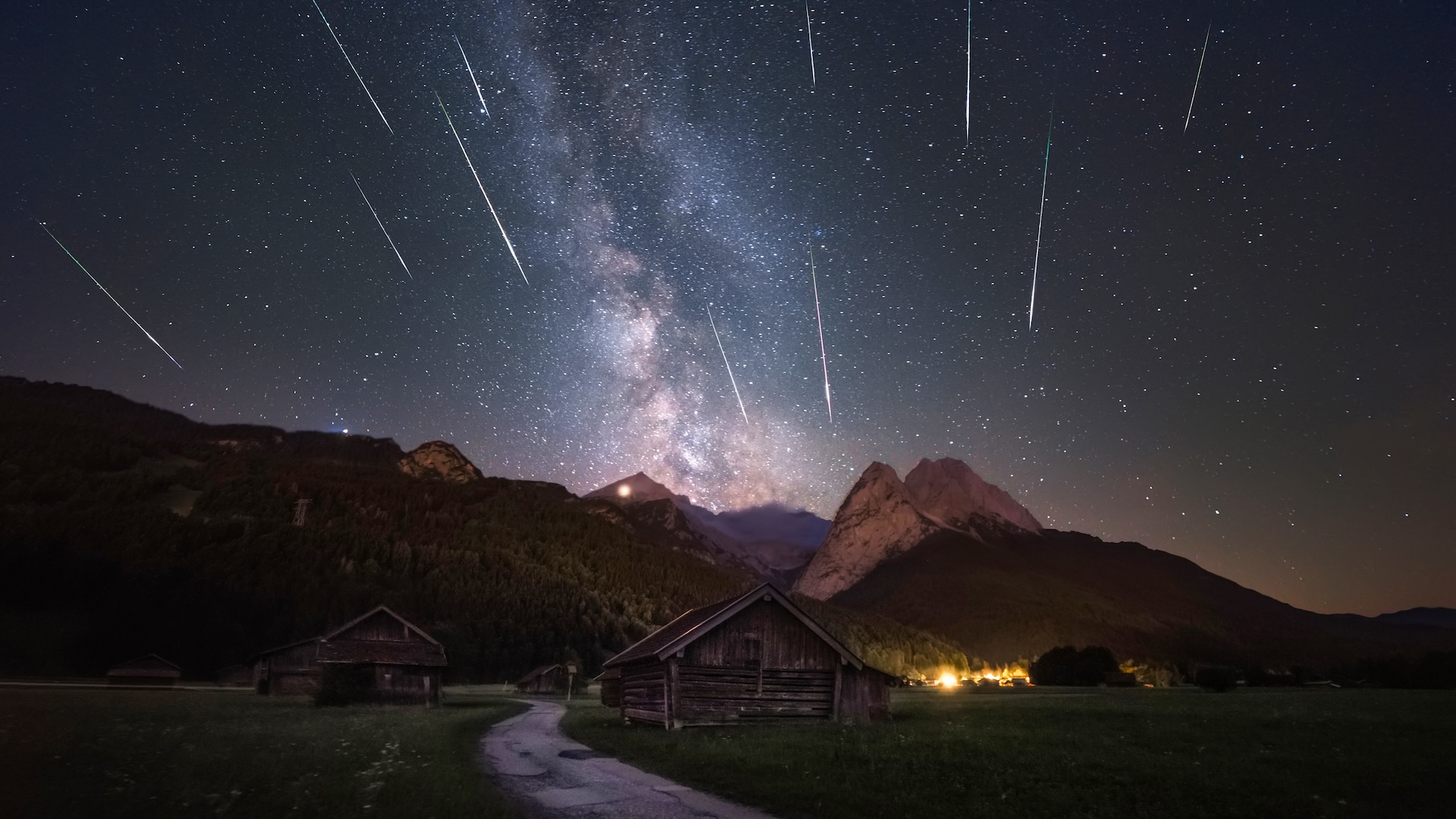
To optimize an expedition dedicated to the Orionids meteor shower, preparation matters far more than high-powered optics. Telescopes and binoculars are entirely counterproductive for meteor watching because their narrow fields of view blind observers to the wide swaths of sky where shooting stars suddenly ignite and disappear. Success requires deliberate tactical choices regarding timing, dark adaptation, and spatial awareness.
Target the Quiet Window Between Midnight and Twilight
Meteor rates surge dramatically during the early morning hours because of Earth’s rotational geometry. Before local midnight, an observer stands on the trailing hemisphere of the planet, requiring meteors to catch up from behind. After midnight, and particularly between 2:00 a.m. and nautical twilight, your location rotates onto the forward-facing windshield of Earth as it hurtles through the cometary cloud. WeatherBug meteorologists emphasize that these pre-dawn hours consistently deliver the highest hourly rates, yielding anywhere from 15 to 20 meteors per hour under pristine conditions.
Escape Artificial Light in Rural Sanctuaries
Light pollution from urban sprawl and commercial centers is the single greatest enemy of meteor observation. Streetlights and ambient suburban skyglow wash out fainter meteors, reducing an observer’s tally to only the absolute brightest fireballs. Escaping to designated dark sky parks, elevated rural highlands, or open agricultural valleys can instantly triple the number of visible meteors. Even modest reductions in ambient light dramatically improve the human eye’s ability to register brief, faint ionization streaks.
Allow Full Dark Adaptation Without Digital Distraction
Human eyes require roughly 20 to 30 continuous minutes in complete darkness to generate maximum concentrations of rhodopsin, the biological pigment that enables low-light scotopic vision. Glancing at a smartphone screen, car headlight, or bright flashlight instantly bleaches this visual pigment, resetting the adaptation clock to zero. Stargazers should stow mobile devices in pockets or utilize red-filtered LED flashlights, which preserve peripheral night vision while illuminating ground-level hazards and gear.
Watch the Peripheral Sky Instead of the Radiant Point
While the meteors appear to originate from the constellation Orion, staring directly at the radiant point is a common novice mistake. Meteors emerging close to Orion’s club will exhibit foreshortened, stubby paths because they are traveling almost directly toward the observer’s line of sight. The longest, most spectacular streaks occur roughly 45 to 90 degrees away from the radiant, where the particles slice tangentially through the upper atmosphere across constellations such as Taurus, Gemini, Ursa Major, or Pegasus.
Distinguish Genuine Astronomy from Viral Web Fabrications
With social media platforms flooded by dramatic AI-generated composite photography and misleading headlines, astronomical enthusiasts tracking the Orionids meteor shower must critically evaluate unverified online images against empirical observational facts. Just as newsrooms deploy Anonymous source verification mechanics and 4 proven rules that prevent disastrous newsroom errors, backyard stargazers should rely strictly on verified astronomical ephemerides, reputable scientific outlets like Space.com, and real-time radar data rather than sensationalized claims promising continuous meteor storms.
The Physics of High Velocity Ion Trails in the Upper Atmosphere
The kinetic signature defining the Orionids meteor shower owes its ferocity to an orbital geometry that sends cometary fragments screaming into Earth’s mesosphere at 66 kilometers per second. When an incoming particle collides with atmospheric air molecules between 50 and 65 miles above sea level, it compresses the air ahead of it, generating an intense shockwave of heat. This extreme kinetic friction instantly vaporizes the particle while simultaneously stripping electrons from atmospheric nitrogen, oxygen, and metallic atoms within the meteoroid itself.
As these excited atoms recombine and return to lower energy states, they release energy in the form of photons. The resulting color of the flash provides a distinct chemical fingerprint of both the vaporizing particle and the atmospheric medium. Iron, magnesium, and sodium within the meteoroid emit yellow and orange hues, while atmospheric nitrogen and oxygen glow distinct emerald green. It is this chemical choreography that produces the dazzling, multi-colored fireballs frequently observed in pristine mountain and desert environments.
Halley Comet Heritage and the Broader Solar Rhythm
Centuries before modern instrumentation decoded the Orionids meteor shower, civilizations marveled at these recurrent October streaks without fully understanding their ancient parentage. English astronomer Edmond Halley calculated the periodicity of his namesake comet in 1705, but it was not until the 19th and early 20th centuries that astronomers definitively correlated meteor showers with the crumbling orbital debris of decaying comets. Today, observing the Orionids serves as an unbroken physical tether to one of the most celebrated celestial wanderers in human history.
As the peak window concludes this week, the debris field will gradually thin, returning the night sky to its customary autumnal quietude. Yet the enduring magic of the Orionids meteor shower lies in its profound celestial rhythm. For a brief span of clear October mornings, skywatchers wrapping up against the pre-dawn chill stand witness to an encounter that began thousands of years ago in the deep, frozen reaches of the solar system, reminding us that the cosmos is constantly alive with movement, collision, and fleeting, incandescent wonder.