Kamilla Rakhimova Sparks 3 Crucial Surges Across Global Tennis Markets
A sudden breakout trend surrounding tennis professional Kamilla Rakhimova exposes the cross-section of elite WTA qualifying battles and the explosion of real-time event trading. Here is an inside look at the technical, athletic, and market forces driving global attention.
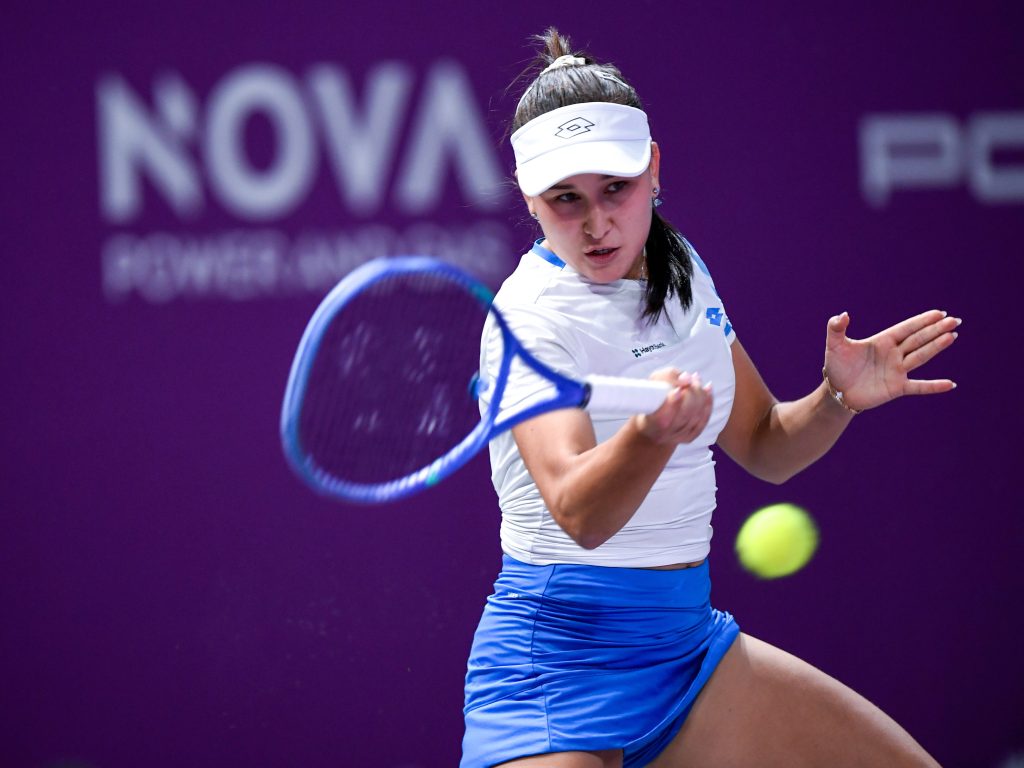
The sudden surge around Kamilla Rakhimova highlights a fascinating convergence between professional tennis performance and digital financial speculation. When search engines across the United States registered an abrupt spike in queries for the 23-year-old athlete, traditional sports observers scrambled to locate the origin. The explanation did not lie in a sudden off-court controversy or a viral press conference. Instead, the spike pointed directly toward a tense battle in the qualifying rounds of the AUX Ningbo Open, paired with an accelerating financial phenomenon that is transforming how international fans watch individual tennis matches.
As global sports tracking continues to fragment across streaming platforms, mobile apps, and derivative trading environments, even standard qualifying fixtures can erupt into major online trends. Rakhimova found herself at the center of this exact intersection. Between high-stakes baseline duels in mainland China and the aggressive rollout of live-set wagering contracts on modern retail platforms, her weekend matches unlocked a wave of curiosity from veteran tennis analysts and casual market speculators alike.
Behind the Sudden Wave of Tennis Search Volume
Real-time tournament tracking platforms recorded a dramatic uptick in traffic as the qualifying draw for the WTA Ningbo Open got underway. As reported by Tennis.com, live scoring coverage, bracket analytics, and broadcast schedules centered heavily on the Qualifying Round 2 matchup between Tatiana Prozorova and Kamilla Rakhimova. At first glance, a preliminary round at a late-season tournament in China might seem unlikely to generate hundreds of thousands of domestic search queries across North America. Yet modern sports consumption no longer obeys conventional geographic boundaries.
The competitive stakes in Ningbo were undeniably high. A spot in the main draw of an elite WTA event yields critical ranking points and substantial prize money, both of which are desperately needed as players position themselves for automatic Grand Slam entry ahead of the new calendar year. Archival data aggregated by Tennis Majors revealed that Rakhimova entered this qualification phase navigating an intense schedule, having drawn formidable opposition including Ukrainian standout Dayana Yastremska in initial projections before squaring off against Prozorova in the qualifying-final. The density of matches and rapid turnaround times created a pressure cooker on the court, drawing the gaze of dedicated tennis aficionados who monitor the Asian swing with forensic intensity.
Underneath the purely athletic narrative, however, ran a separate, highly reactive engine. As qualifying rounds unfolded in eastern China, international digital markets began tracking individual points, service games, and set progressions with microsecond fidelity. The digital footprints generated by these real-time platforms fed directly into mainstream search indexes, converting high-speed trading movements into a bona fide global trend.
From Beijing Highlights to Ningbo Qualifying Battles
Rakhimova did not arrive in Ningbo without prior momentum. Just two weeks earlier, her high-wire athleticism made headlines during the China Open in Beijing. In an official video showcase published by WTA Tennis, league editors singled out an astonishing point from Rakhimova’s third-round clash against rising American prospect Iva Jovic. The sequence, cataloged as an official tour hot shot, captured the athlete absorbing heavy baseline blows and erratic, awkward spins before sprinting across the court to strike a curling winner while at full stretch.
That sequence in Beijing offered an unvarnished look at the tactical tenacity that defines her game. Operating primarily from the baseline, she relies on rapid lateral recovery, defensive grit, and an ability to turn counter-punching opportunities into decisive passing shots. Her performance against Jovic demonstrated that she could hang with the sport’s most promising young ball-strikers on the biggest stages. That impressive run in the Chinese capital set an elevated expectation among international followers, ensuring that when she stepped onto the courts in Ningbo, eyes were already fixed on her progress.
Transitioning from the cavernous stadiums of Beijing to the grueling environment of qualifying courts demands exceptional mental discipline. Qualifying draws offer little fanfare, minimal rest between rounds, and zero margin for error. A single lapse in concentration during a qualification tiebreak can erase weeks of physical preparation. Observers watching Kamilla Rakhimova navigate the qualifying draw witnessed an athlete fighting through the physical fatigue that inevitably accumulates at the tail end of an exhausting autumn calendar.
Three Vital Dynamics Reshaping Player Visibility Today
The convergence of events surrounding this recent spike points to deeper systemic changes in how modern athletes capture widespread public interest. It is no longer just major Grand Slam finals that trigger massive spikes in consumer attention. A collection of emerging economic, calendar, and technical factors now elevate specific mid-tier matches into the cultural spotlight.
The Rapid Expansion of Real Time Prediction Markets
Perhaps the most potent catalyst behind this specific surge is the explosive growth of event-based financial derivatives. Commercial retail brokerages have moved far beyond traditional equity and options trading. Platforms like Robinhood recently launched specialized tennis prediction markets, allowing domestic users to purchase contracts on individual match moments, such as the Set 2 winner in the showdown between Tatiana Prozorova and Rakhimova.
Under this market architecture, contracts pay out precisely $1 if a predicted outcome materializes and $0 if it fails. Because these binary outcome markets operate around the clock, users actively seek out live sporting events taking place across alternate time zones. When daytime retail traders in the United States log onto financial applications during evening hours, Asian-based tennis fixtures become prime targets for active speculative volume. Wagers placed on whether Kamilla Rakhimova would secure the second set converted ordinary qualifying tennis into a high-octane liquidity vehicle, motivating thousands of non-traditional sports fans to scour the web for injury reports, real-time match statistics, and live stream feeds.
The Strategic Rigor of WTA Asian Swing Competition
Beyond financial mechanics, the structural reality of the professional tennis calendar plays an immense role in driving late-season drama. The post-US Open stretch across Asia presents an unforgiving schedule. Tournaments in Beijing, Wuhan, Ningbo, and Tokyo require athletes to adapt rapidly to distinct court speeds, heavy humidity, and relentless travel across several time zones.
Competitors like Kamilla Rakhimova face an intense schedule where every single main-draw appearance can dramatically reshape their professional trajectory. A successful qualification campaign can elevate a player into the top 60 or top 50, which provides direct entry into the Australian Open without needing to endure the qualifying meat-grinder in Melbourne. Conversely, an early round exit stalls momentum and leaves athletes vulnerable to sliding down the computer rankings. This high-wire dynamic produces matches filled with raw emotion, drawn-out baseline wars, and wild momentum swings that naturally pull in curious sports audiences.
Information Integrity and Digital Sports Data Feeds
The speed at which search trends propagate can also create bizarre data anomalies that bewilder the public. In the rush to index live sports scores, programmatic platforms occasionally malfunction under the pressure of real-time publishing. For instance, match previews hosted on Tennis Majors during the Ningbo tournament briefly displayed automated artifact dates, listing matches as occurring at the AUX Ningbo Open on “01 January 1970.”
This peculiar date is famous among software engineers as the Unix epoch, the universal timestamp zero from which computer systems calculate modern time. When automated content management systems ingest incomplete tournament metadata from external sports data APIs, fallback code frequently defaults to this baseline 1970 date. When human readers encounter such bizarre technical glitches on prominent sports portals, it inevitably sparks secondary waves of search queries as fans attempt to verify whether a match was cancelled, postponed, or misreported.
In an era where algorithmic feeds publish thousands of game recaps without human intervention, identifying data flaws has become a crucial skill for digital consumers. Modern investigative reporting relies heavily on strict editorial verification protocols. Media organizations maintain precise editorial standards, similar to Anonymous source vetting mechanics and 4 proven rules that prevent catastrophic media scandals, precisely to avoid circulating corrupted metrics, hallucinated records, or broken database parameters to an unsuspecting global audience.
What Lies Ahead for the Tour Circuit and Digital Spectators
The intense spotlight cast upon these qualifying encounters signals a permanent shift in sports culture. Elite athletes are no longer observed solely through the lens of pure athleticism or tournament trophies. In a hyper-connected media environment, every baseline exchange is quantified, fed into algorithmic models, traded on prediction exchanges, and parsed by global audiences in real time.
For the athletes themselves, the core objective remains entirely unchanged. Regardless of what prediction markets price or how search algorithms spike, survival on the professional tennis tour comes down to execution on the court. Finding the sharp crosscourt angle, chasing down an impossible slice along the doubles alley, and maintaining mental clarity under blistering heat are physical realities that no digital derivative can simulate.
The trajectory of Kamilla Rakhimova mirrors the changing landscape of 21st-century sport. As predictive financial contracts expand into everyday consumer apps and real-time streaming allows fans to watch qualifying courts from anywhere in the world, the boundary between minor fixtures and viral global events has dissolved. The next generation of tennis stardom will not only be defined by who lifts Grand Slam silverware on Sunday afternoons, but by who can successfully navigate the relentless scrutiny of a completely digitized, 24-hour global sports arena.