Breaking news verification mechanics and 4 proven rules that prevent costly editorial disasters
When crisis breaks, speed without friction destroys journalistic credibility in seconds. Discover the forensic triage protocols and verification rules that keep high-stakes newsrooms accurate under extreme fire.
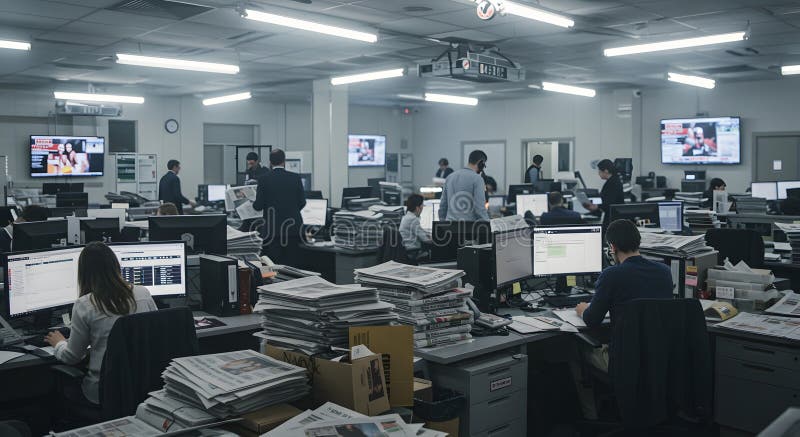
Understanding breaking news verification mechanics separates seasoned journalists from sensationalist amplifiers when an unfolding crisis detonates across digital feeds. The newsroom at odd hours does not operate with calm academic reflection; it vibrates with sudden electrical spikes. Scanner frequencies crackle with chaotic officer banter, eyewitness smartphone clips swamp monitoring dashboards, and competitive trackers sound sirens alerting the desk to rival publications going live. The primal instinct of modern media is unchecked velocity. Every editorial impulse urges reporters to stake an immediate flag on the narrative before competitor desks claim the traffic. Yet speed uncoupled from evidentiary friction is an accelerant for reputational catastrophe.
A single retracted bulletin can decimate decades of hard-won institutional trust within minutes. Once an inaccurate headline enters algorithmic distribution networks, it mutates across social aggregators, generating phantom narratives that live indefinitely in public memory. The craft of high-pressure journalism is not defined by who hits the publish button first, but by who possesses the structural stamina to interrogate breaking events without surrendering to panic. Transforming raw, fragmented eyewitness chaos into airtight truth requires systematic triage rather than frantic guesswork.
The Hidden Anatomy of High Stakes Information Triage
Every breaking event arrives as a cloud of toxic ambiguity. Emergency phone calls contain honest distortions from terrified witnesses. Social feeds fill with repurposed footage from historical incidents hundreds of miles away. Bad-faith operators immediately deploy synthetic or deceptive media to hijack algorithmic outrage cycles. Navigating this swamp demands that editors construct an immediate firewall between raw telemetry and published copy.
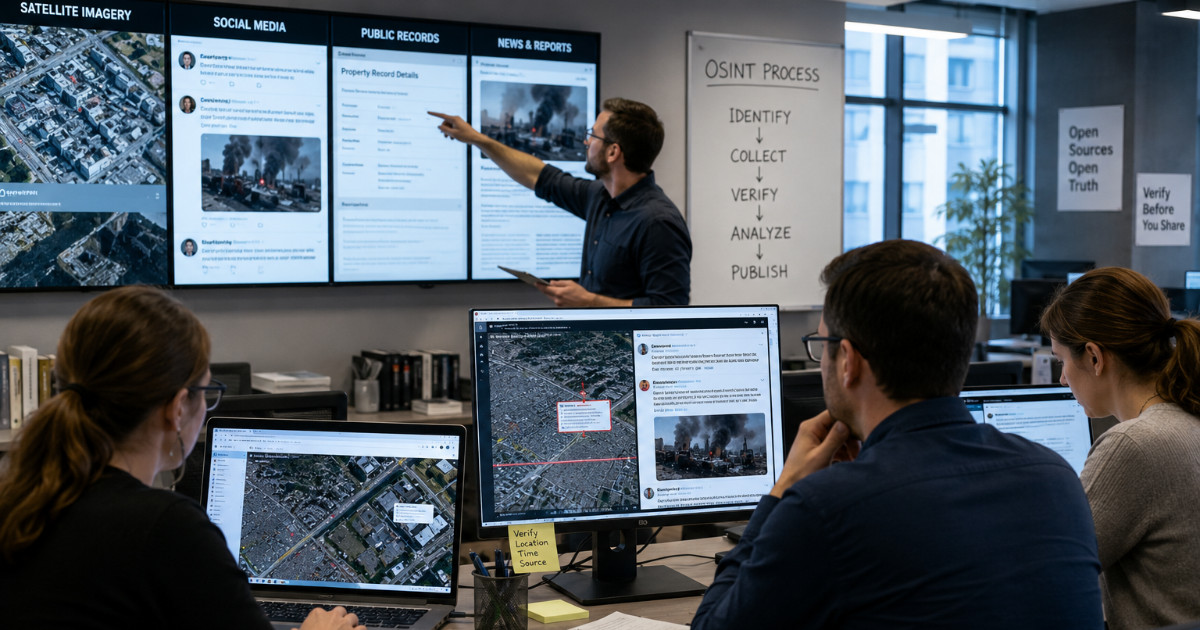
When raw inputs bombard the desk, rigorous breaking news verification mechanics serve as a hydraulic damper against reckless haste. Triage begins with incoming classification. Seasoned desk editors divide incoming leads into three distinct bins: direct primary telemetry, second-tier institutional advisories, and unverified ambient noise. Primary telemetry includes raw satellite imagery, emergency agency dispatch feeds, uncompressed digital video files, and eyewitnesses who can prove their exact geographic coordinates. Ambient noise includes aggregate forum posts, trending tags, and breathless commentary from unvetted accounts claiming proximity to the event.
The greatest danger during this triage phase is cognitive cascading. When three rival outlets aggregate the same unconfirmed social media rumor, inexperienced reporters assume the volume of repetition equals validation. It does not. Ten outlets quoting a single anonymous post still represent only one unverified claim. A resilient desk treats repetition as noise until the primary point of origin can be forensically isolated and cross-examined.
Master the 4 Proven Rules That Shield Newsrooms from Fatal Errors
Surviving the chaotic vacuum of a fluid news cycle requires non-negotiable protocols. Newsrooms that weather catastrophic news cycles rely on disciplined operational architecture rather than individual heroics. These four operational principles form the foundational barrier against lethal reporting errors.
Cross-Examine the Primary Digital Breadcrumbs at the Source
At the bedrock level, breaking news verification mechanics treat every incoming video file, screenshot, and mobile upload as compromised until forensic metadata proves otherwise. When dramatic footage surfaces claiming to show an active disaster, the first imperative is extracting Exchangeable Image File format (EXIF) metadata. This technical footprint reveals camera sensor profiles, original timestamp arrays, aperture settings, and embedded geographic coordinates.
Because social media platforms strip metadata upon upload, forensic investigators pivot instantly to open-source intelligence tactics. Shadows on asphalt can be calculated against historical solar angles for that precise date and minute using ephemeris calculators. Architectural landmarks, utility pole configurations, storefront signage, and even passing commercial vehicles are checked against street-level satellite mapping. If an alleged flood video claims to happen under clearing skies while meteorological radar shows unbroken overcast downpours, the desk must kill the lead instantly. Authenticity is not an intuitive hunch; it is an unbroken mathematical equation of time, topography, and ambient conditions.
Enforce the Two-Point Corroboration Barrier Under Live Fire
True breaking news verification mechanics mandate that two sources are only valid if their information streams do not share an upstream tributary. In the heat of an active emergency, local officials often repeat details they heard from local citizens, while those same citizens are reading rumors amplified by external reporters. This creates an echo chamber where multiple distinct voices merely reflect a single erroneous data point.
A bulletproof corroboration protocol requires two independent primary sources with direct lines of observation. An on-record confirmation from an emergency service supervisor combined with corroborated physical evidence—such as a hospital admission manifest or verified dispatch log—satisfies the threshold. Conversely, three distinct bystanders repeating the same rumor on a street corner do not satisfy it. If a secondary point of contact cannot independently establish how they arrived at their knowledge, the desk holds the line, regardless of how aggressively rival channels run with the sensational angle.
Map the Chain of Custody for Anonymous Digital Leaks
Digital leaks, audio recordings, and confidential document dumps arrive with built-in agendas. The first question an investigative desk asks is not what the document contains, but why it was delivered to this desk at this exact hour. Mapping the chain of custody means understanding every transit hop the material took before reaching editorial hands. Editors must establish whether documents have been selectively culled, physically manipulated, or spliced with misleading marginalia.
Risk mitigation in investigative reporting shares striking conceptual foundations with financial balance: just as prudent investors diversify informational risk through structural frameworks akin to asset allocation mechanics and 4 proven rules that protect long term wealth, news editors must diversify their evidentiary base so that a single compromised source cannot bankrupt their institutional credibility. Relying on an unvetted document drop without independent forensic authentication is the journalistic equivalent of staking an entire publication on an unhedged speculative gamble. Documents must be cross-checked against public corporate registers, corroborated with non-aligned witnesses, and screened for typographical anomalies that betray digital alterations.
Publish the Horizon of Certainty Rather Than Speculative Clatter
Disciplined breaking news verification mechanics require editors to transparently state the boundaries of verified truth rather than filling vacuums with speculative assumptions. The audience does not expect journalists to be omniscient demigods who comprehend every facet of a crisis within seconds of impact. What readers demand is unflinching clarity regarding what is proven versus what remains unknown.
Editorial copy must explicitly delineate the horizon of certainty. If authorities confirm that a transport disruption occurred, but casualty figures remain conflicting, the published update states that an incident took place while directly informing readers that injury counts are unconfirmed. Refusing to speculate on motives, names, or ideological vectors until official identification emerges is not timid reporting; it is the ultimate expression of journalistic control. Credibility compound-grows through restraint. Readers return to news organizations that refuse to lie to them in the fog of war.
Cognitive Pressure and the Psychology of the Retraction Trap
Examining historical editorial collapses shows that failures rarely stem from technological incapacity; they happen when panic bypasses established breaking news verification mechanics. The human brain under acute adrenaline spikes experiences tunnel vision. Editors become terrified of being the last desk to publish. This competitive dread triggers confirmation bias, predisposing tired professionals to accept any piece of flimsy corroboration that supports an urgent narrative.
The retraction trap snaps shut when a publication values velocity over truth. The initial thrill of winning a push-notification race fades within an hour. The subsequent retraction lives on corporate Wikipedia pages, journalism school ethics seminars, and public cynicism forever. According to foundational ethics guides such as the Society of Professional Journalists Code of Ethics, journalists carry an enduring obligation to test accuracy rigorously, minimize harm, and maintain institutional accountability before releasing claims into the wild. Sacrificing those ethical imperatives for a brief traffic spike is an inexcusable operational failure.
Resilient newsrooms dismantle this psychological trap by decoupling publication incentives from raw speed. Newsroom leadership must actively celebrate reporters who kill bad leads or hold sensational stories that lack empirical verification. When an editor shields an accurate reporter from management panic during an unfolding crisis, they protect the institution from legal liability and ethical bankruptcy.
Building Resilient Editorial Guardrails for the Modern Information Flood
Maintaining high standards during breaking coverage cannot depend on informal good intentions. Editorial integrity requires mechanical systems that function under maximum stress. Newsrooms must implement systematic pre-mortems before publishing volatile developments. A designated devil’s advocate on the desk should explicitly ask: If this headline turns out to be completely fabricated, where was our blind spot? Who misled us, and how did they bypass our scrutiny?
By formalizing these breaking news verification mechanics into daily newsroom drills, organizations insulate their legacy from catastrophic errors while preserving the urgency of modern journalism. The future of credible reporting does not belong to the fastest automated scraper or the most sensational aggregation account. It belongs to the editors who possess the calm discipline to demand real evidence, interrogate every crumb of data, and refuse to print a single syllable until the facts are established beyond dispute.