Curveball pitching mechanics and 4 proven rules that generate unhittable break
Unravel the aerodynamic forces and biomechanical levers that turn a spinning leather sphere into an unhittable diving projectile. Discover the exact physical principles required to master late vertical movement while protecting your throwing arm.
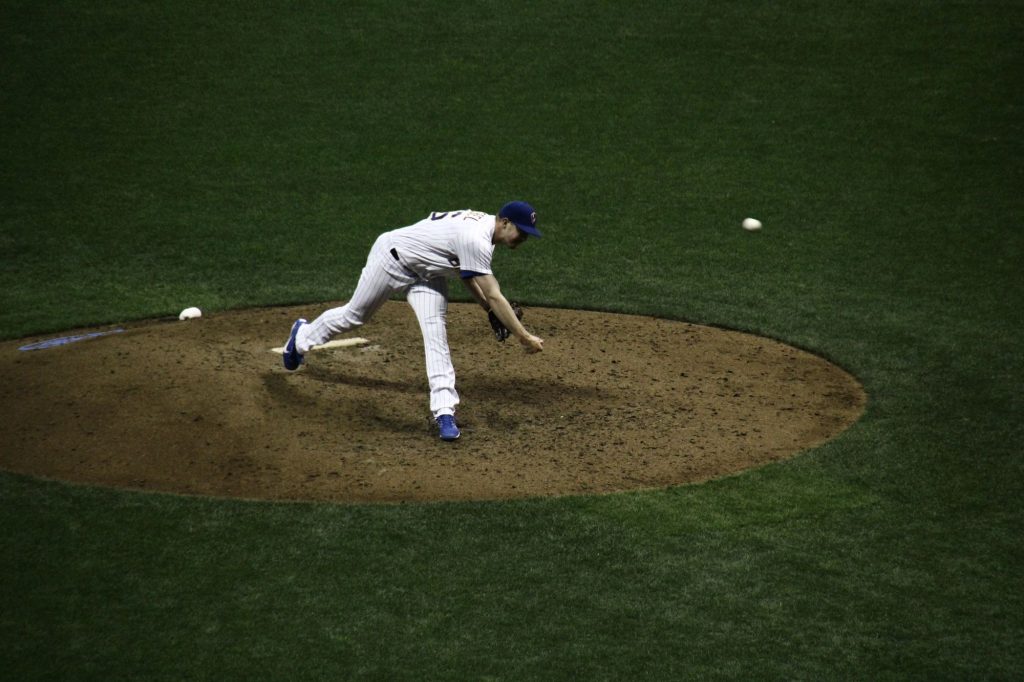
Mastering curveball pitching mechanics transforms a standard sixty-foot throw into a disorienting optical illusion that seems to actively defy gravity. When a pitcher unleashes an elite breaking ball, the sphere does not merely drop because of natural gravitational acceleration. Instead, it dives sharply out of the strike zone because of violent aerodynamic friction and tightly coordinated rotational forces. Watching a hitter buckle at the knees over a pitch that drops off an invisible table is one of the most thrilling sights in competitive athletics. Yet beneath that magical deception lies an exacting discipline of joint torque, seam orientation, and kinetic transfer that leaves no room for improvisation.
Generations of players grew up under the flawed instruction to snap their wrists like turning a doorknob, an antiquated coaching cue that produced flat, hanging spinners and flooded orthopedic clinics with torn ligaments. Modern sports science has thoroughly dismantled those myths. High-speed cameras and pitch-tracking monitors have revealed that an unhittable breaking ball is not born from reckless forearm twisting, but from clean structural alignments that optimize the Magnus effect while minimizing joint stress. Understanding how these mechanical variables converge separates wild pitchers from masters of rotational movement.
The Aerodynamic Paradox of Defying Gravity on the Mound
At its core, a baseball curveball is a study in fluid dynamics. Once the leather sphere leaves the fingertips, only three external forces dictate its flight path: gravity, aerodynamic drag, and the Magnus force. While gravity pulls downward at a constant acceleration and drag bleeds forward velocity, the Magnus force creates directional deflection perpendicular to the ball’s axis of rotation. When a pitcher imparts true forward tumbling topspin, air moving over the top of the ball travels faster than the air passing underneath. This velocity differential generates high air pressure above the sphere and low air pressure below it, effectively forcing the ball downward at an accelerated rate that far exceeds free-fall conditions.
Pitchers often chase raw spin rate, yet total revolutions per minute tell only half the story. The true separator of elite movement is spin efficiency, often described as useful spin. If a ball spins at 2,700 revolutions per minute but features substantial gyroscopic spin like a spiral football, that rotational energy does not interact with the airstream to create directional break. For the Magnus force to generate maximum downward dive, the spin axis must tilt perpendicular to the trajectory. Groundbreaking aerodynamic research on baseball trajectories and the Magnus force demonstrates how seam orientation can alter wake turbulence, creating non-Magnus lateral deflections that deceive even high-speed optical tracking systems.
The Kinetic Chain from Cleat Plant to Finger Roll
Power and spin do not originate in the forearm or wrist. They begin hundreds of milliseconds prior, when the pitcher drives off the rubber and plants their lead foot firmly into the dirt. High-level curveball pitching mechanics require an unyielding front side that acts as an immovable fulcrum. When the lead heel strikes the clay, the pelvis rotates into a sudden halt, transferring stored energy upward through the abdominal wall, into the thoracic spine, across the shoulder girdle, and down through the humerus. Any energy leakage along this sequence diminishes the ultimate rotational force transferred into the baseball seams.
Visual contrast plays a monumental psychological role in how an opponent perceives this kinetic delivery. Human sensory processing operates on contrast and expectation; much like how cultural commentary exploded when the Sydney Sweeney Brunette Transformation Sparks 4 Major Style Debates highlighted how subtle chromatic alterations completely reframe an observer’s cognitive evaluation, a batter’s visual cortex reconstructs trajectory based entirely on initial visual cues. If a pitcher alters their arm slot or slows down their kinetic delivery while throwing a breaking pitch, the batter’s cognitive processing registers the anomaly instantly. The delivery must remain visually indistinguishable from a high-velocity fastball until the final milliseconds of ball release.
Four Essential Principles That Maximize Rotational Break
Constructing a dependable, wipeout breaking ball demands deliberate mechanical cues that align the body’s natural levers. By standardizing these four foundational pillars, athletes achieve repeatable command without placing destructive shears on vulnerable connective tissues.
Precision Seam Alignment and Thumb Counterbalance
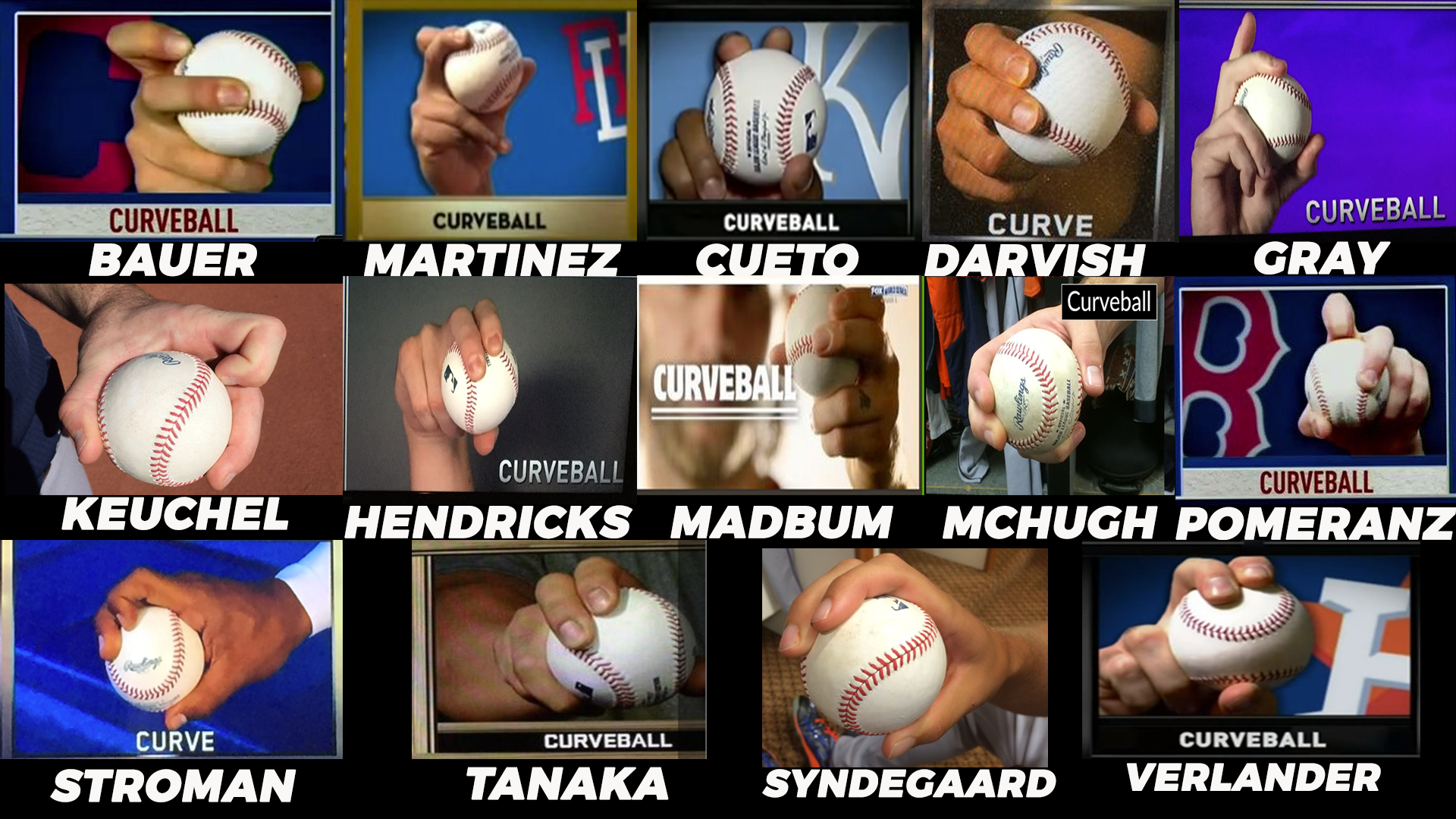
A dominant curveball begins long before the stride starts, rooted in how the fingers interact with the raised cowhide seams. The middle finger provides the primary driving engine of the pitch, resting firmly along or inside the horseshoe seam to leverage the leather edge as an anchor point. Meanwhile, the index finger serves as a stabilizing guide, resting lightly alongside the middle finger without applying counterproductive downward drag. Crucially, the thumb must be positioned directly underneath the ball, offset slightly toward the outside seam to provide a sturdy platform. If the thumb is placed too high along the side, the ball slips out early, bleeding critical revolutions and drifting high into the danger zone.
Elbow Elevation and Forearm Angle at Foot Strike
At the instant of front foot strike, the throwing elbow must sit level with or slightly above the acromion line of the shoulders. Dropping the elbow creates an inefficient arm slot that forces the forearm to drag behind the torso, leaving the pitcher prone to casting the ball wide. Proper curveball pitching mechanics demand that the forearm remains slightly supinated as the arm accelerates through the driveline. Maintaining an elevated, compact elbow position allows the arm to act as a tight whip, concentrating centrifugal energy directly into the hand rather than scattering force across an extended, vulnerable lever arm.
The Downward Ax Pull Instead of Wrist Snapping
Perhaps the most destructive myth in baseball instruction is the idea of violently twisting the wrist at the point of release. Anatomically, the human wrist is poorly designed to withstand high-velocity rotational snapping while under full extension. Elite throwers do not twist their wrists sideways; they set their wrist in a firm, slightly supinated position early in the arm swing and pull downward through the baseball like swinging a miniature ax. The middle finger pulls vigorously through the front face of the ball, ripping the seams downward while the thumb pushes upward from the bottom. This clean, linear shearing action generates massive topspin while keeping the ulnar collateral ligament shielded from dangerous medial torque.
Late Extension and Release Point Consistency
Amateur breaking balls fail primarily because the pitcher releases the ball too early, creating an obvious upward hump out of the hand that screams curveball to any observant hitter. High-level curveball pitching mechanics require extending the release point as far out in front of the landing foot as humanly possible. By driving the chest over the front knee and finishing deep into deceleration, the release point mirrors the precise trajectory of a four-seam fastball for the initial twenty feet of ball flight. When the ball finally breaks, it drops late and violently, leaving the hitter with zero reaction time to adjust their swing plane.
Biomechanical Errors That Destroy Pitch Life and Stress the Arm
Flawed curveball pitching mechanics do not simply cause pitches to hang over the middle of the plate; they actively destroy pitching longevity. The most pervasive technical flaw is casting, an error that occurs when a pitcher prematurely extends the elbow joint and loops the ball around their head before release. Casting widens the rotational radius, radically reducing angular velocity and flattening out the pitch’s movement profile. More dangerously, casting places immense distraction forces on the medial elbow, straining the flexor-pronator mass and stretching the ulnar collateral ligament to its absolute threshold.
Another common breakdown is thoracic collapse during front-foot impact. If a pitcher drops their chest or yanks their head laterally toward the glove side in an attempt to pull the ball down, their arm slot drops along with their upper spine. The resulting pitch invariably misses high and arm-side, losing its sharp vertical depth. Consistency on the mound demands an upright, stable spine that acts as a true rotational axis. Every degree of lateral torso tilt directly alters the tilt of the spin axis, morphing an aggressive twelve-to-six downer into a sloppy, slurve-like offering that major-league hitters punish with authority.
Pitch Tunneling and the Visual Deception of the Drop
A devastating breaking pitch does not exist in isolation; it thrives because of its environmental context within a pitcher’s overall arsenal. The science of pitch tunneling explains why two distinct pitches can share an identical visual footprint for the first third of their journey toward home plate. If an athlete pairs a high-spin fastball at the top of the zone with an identical release point on their curveball, the hitter’s brain reads both trajectories as identical during the critical decision-making window, which lasts less than two hundred milliseconds.
Integrating curveball pitching mechanics into a complete pitch repertoire depends entirely on visual deception before the break point occurs. If the ball pops upward out of the hand, the hitter easily eliminates the lower half of the strike zone and resets their timing for an off-speed delivery. However, when the ball shoots out of the exact same arm tunnel as a high-velocity heater before succumbing to the downward force of aerodynamic top spin, the hitter commits to a swing plane that passes harmlessly through empty air. Mastering this marriage between biomechanical efficiency and optical misdirection represents the pinnacle of pitching artistry, transforming raw physical effort into pure athletic supremacy.
The Long-Term Path to Command and Velocity Synchronization
Developing a dependable breaking ball requires patience, meticulous video review, and structured throwing programs that avoid overloading juvenile joints. Athletes must resist the urge to throw breaking balls when fatigued, as late-inning mechanical degradation immediately exposes the forearm to dangerous deceleration stresses. Incorporating plyometric ball training, weighted seam holds, and high-frame-rate feedback helps athletes calibrate their finger pressure without sacrificing throwing intent.
Ultimately, perfecting curveball pitching mechanics is an iterative study of human anatomy meeting fluid mechanics. When kinetic sequencing, grip stability, forearm alignment, and late extension operate in harmonious balance, the pitcher achieves the ultimate prize in sports biomechanics: a projectile that travels on a string, only to plummet off a cliff precisely when the batter commits their swing.