Cinematic suspense mechanics and 4 proven rules that create unbearable narrative tension
True narrative dread is never an accident of lighting or sudden loud noises. Master the psychological architecture and temporal control that transform ordinary scenes into agonizing cinematic suspense.
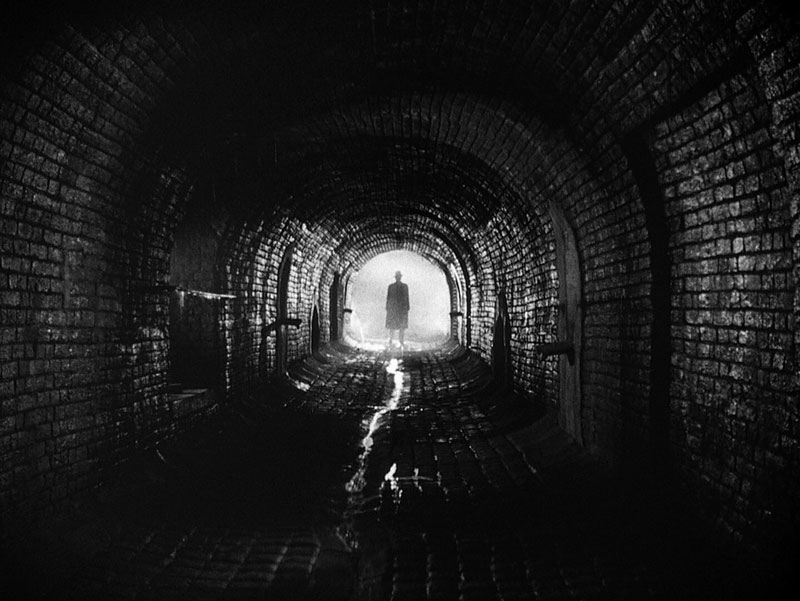
Mastering cinematic suspense mechanics allows visionary directors to seize total psychological control over an audience without relying on momentary, cheap tricks. The craft does not originate in the darkness of an auditorium or the volume of an audio cue. It lives within the delicate, agonizing interval between anticipation and consequence. When Alfred Hitchcock famously contrasted a sudden explosion with a bomb hidden under a table, he was not simply offering a craft tip; he was outlining a fundamental law of human cognition. Suspense is the art of withholding relief, transforming the passage of screen time into an elastic, visceral torment that audiences willingly endure.
Great films do not trap viewers through surprise. Surprise is an instantaneous burst of adrenaline that dissipates within seconds, leaving the nervous system reset and detached. Suspense, by contrast, creates an inescapable mental gravity. The audience becomes an unwilling accomplice to the unfolding tragedy, desperate to intervene yet rendered entirely powerless by the frame. Deconstructing this phenomenon requires looking past aesthetic surface choices into the psychological architecture that makes dramatic delay so endlessly compelling.
The Crucial Distinction Between Sudden Shock and Enduring Dread
When we deconstruct cinematic suspense mechanics, the primary dividing line emerges between sensory surprise and cognitive torment. Surprise relies on the unknown, detonating an unforeseen event in front of an unsuspecting observer. A creature leaping from an unseen corner or a sudden gunshot off-camera produces an involuntary acoustic reflex. The heart spikes, the body flinches, and the narrative instantly returns to a baseline equilibrium. It is a biological trick, effective once but virtually powerless on repeated viewings because the revelation has already exhausted its singular currency.
Dread operates on the exact opposite axis. Rather than withholding knowledge, the filmmaker gifts the viewer a devastating piece of intelligence while denying it to the characters on screen. This asymmetry creates an intense emotional investment. Every ordinary action becomes laden with catastrophic potential. A character reaching for a glass of water is unremarkable under normal dramatic conditions. If the audience watched an antagonist lace that water with cyanide two minutes prior, the simple act of lifting the glass turns into an agonizing sequence where every millimeter of motion carries unbearable weight.
This dynamic shifts the viewer from a passive spectator into an active participant. The mind races ahead of the projection, calculating probabilities, mapping escape vectors, and projecting worst-case outcomes. The filmmaker does not need to accelerate the cutting rate or unleash sweeping orchestral crescendos. The tension is generated entirely inside the spectator’s consciousness, fueled by the gap between what is known and what cannot yet be prevented.
How the Human Brain Processes Anticipatory Horror
The human brain is fundamentally a predictive organ, constantly modeling immediate futures to preserve physical safety. When confronted with unresolved narrative threats, the prefrontal cortex works overtime trying to complete an incomplete pattern. In real life, uncertainty is deeply uncomfortable, prompting immediate fight-or-flight behaviors. Inside the safe confines of cinema, however, this neurological loop becomes a potent source of fascination, which lies at the evolutionary core of cinematic suspense mechanics.
During sustained sequences of tension, the brain releases dopamine not upon the delivery of a reward, but in anticipation of an outcome. The prolonged state of unresolved friction keeps neurochemical levels elevated. Heart rates rise, respiration becomes shallow, and peripheral vision narrows. The viewer’s attention becomes hyper-focused on minute visual details within the frame, scanning for environmental cues, subtle shifts in posture, or telltale reflections.
Filmmakers exploit this hyper-vigilance by deliberately slowing down narrative progression. When real danger threatens, instinct demands swift resolution. By denying that resolution, the director stretches cognitive discomfort to its breaking point. Every lingering second that the threat remains unresolved amplifies the viewer’s vulnerability, grounding the cinematic illusion in genuine physiological distress.

Four Proven Principles That Elevate Cinematic Suspense Mechanics
Studying genuine cinematic suspense mechanics reveals that high-wire tension is an architectural achievement rather than an accidental mood. Master storytellers across decades have refined specific principles that reliably transform script pages into white-knuckle visual sequences. These four foundational methods bypass superficial tropes to engage the deepest layers of narrative dread.
The Asymmetry of Information Between Screen and Spectator
Information management is the foundational pillar of narrative dread. When the viewer knows more than the protagonist, dramatic irony becomes an engine of pure anxiety. Classic cinema history, documented extensively in historical film analyses published by the British Film Institute, demonstrates that withholding information from characters while revealing it to the audience creates an irresistible emotional bond. The viewer silently screams at the screen, desperate to warn the protagonist of the impending trap.
Conversely, suspense can also thrive when information is symmetrically restricted, locking the viewer strictly within the protagonist’s narrow, flawed perspective. When both character and audience know that a lethal threat exists in the immediate vicinity but cannot locate its exact coordinates, every shadow becomes an existential hazard. The crucial discipline here is consistency. Breaking the established rules of information distribution destroys narrative credibility, while maintaining them transforms the frame into an inescapable cage.
The Elastic Manipulation of Temporal Rhythm
Within the broader framework of cinematic suspense mechanics, time is never a neutral constant. It is completely malleable, capable of stretching or contracting at the editor’s command. To construct unbearable pressure, temporal rhythm must be decoupled from real-world physics. An event that takes five seconds in reality can be dilated across five agonizing minutes of screen time through parallel action, micro-cutting, and deliberate spatial geography.
Consider a ticking clock. If a character must defuse a device before a timer reaches zero, cutting to irrelevant perspectives diffuses the dread. True temporal elasticity intensifies focus on the mechanical obstacles that impede progress: a trembling hand failing to grasp a wire, a dropped tool sliding beneath heavy machinery, a lock cylinder refusing to turn smoothly. By decomposing an urgent action into miniature, agonizing hurdles, the filmmaker makes seconds feel like centuries.
Negative Space and Acoustic Deprivation
Sensory overload is the enemy of authentic suspense. When an audio mix is saturated with bombastic scoring and constant noise, the audience’s sensory receptors quickly fatigue. Mastery over atmosphere requires an uncompromising appreciation for negative space. Darkness that conceals crucial corners of a room forces the viewer’s eyes to strain against the margins of the composition, turning empty void into an active antagonist.
Sound design plays an equally decisive role through acoustic deprivation. Stripping away musical accompaniment leaves only raw, clinical foley: the rhythmic creak of floorboards under unseen weight, the wet inhalation of nervous breath, or the distant, metallic drip of water. Sudden, dead silence is vastly more terrifying than an orchestral blast. It deprives the viewer of auditory comfort, signaling that the environment itself has gone still in anticipation of violence.
The Inevitability of Escalating Micro Obstacles
A macro threat provides the ultimate stakes, but micro obstacles generate the granular agony. A protagonist attempting to escape an assassin inside an office building faces death as the overarching stakes. Yet the true tension thrives in the immediate, physical impediments that arise along the pathway. A keycard that fails to register on an electronic reader, a wet floor that causes a slip, or an elevator chime announcing an arrival all serve as micro friction points.
These micro obstacles must follow rigorous internal logic. They cannot feel like contrivances inserted by a desperate screenwriter; they must emerge naturally from the environment. When small, mundane failures compound sequentially, the audience feels a suffocating sense of entrapment. Each minor failure chips away at the protagonist’s margin for survival, steadily pushing the narrative toward an explosive reckoning.
Why Cheap Jump Scares Degrade Narrative Value
Unlike the rigorous craft of cinematic suspense mechanics, the modern jump scare often acts as a cognitive shortcut. It requires minimal narrative investment, relying almost entirely on an acoustic spike paired with a rapid visual cut. It operates on pure biology rather than dramatic psychology. Anyone can startle an unsuspecting human by shattering a dish behind their head; very few can maintain an atmosphere where the gentle placement of a teacup induces cold sweats.
Over-reliance on startle effects breeds rapid cynicism. Once an audience recognizes that the director relies on sudden audio stingers to generate reactions, their emotional defenses solidify. They disengage from the characters and begin anticipating the technical cadence of the scare. The spell of immersion breaks entirely, reducing the cinematic experience to an interactive carnival funhouse rather than a profound exploration of tension.
True narrative power emerges when stakes are transparent, consequences are permanent, and the outcome hangs on a knife’s edge. Unscripted drama operates under identical rules. In high-level athletic competition, the electric thrill does not come from arbitrary disruptions, but from escalating pressure where every tactical adjustment changes the entire board. When analyzing how the Wieczysta – Raków Częstochowa Clash Unlocks 4 Major High Stakes Turning Points, the underlying fascination is identical: defined parameters, unforgiving momentum, and the excruciating anticipation of a breakthrough. Cinema demands that same structural integrity to keep viewers truly enthralled.
Crafting Lasting Tension Across Contemporary Screenwriting
Building genuine suspense in modern storytelling requires resisting the urge to show everything. In an era dominated by hyperactive pacing, rapid edits, and constant visual stimulation, deliberate restraint has become a radical storytelling superpower. The modern filmmaker who dares to hold a static two-shot while characters listen to an approaching threat commands far more authority than one who cycles through dozens of frantic camera angles.
Writers and directors must respect the audience’s intelligence and imagination. What the viewer projects into the shadowy corners of the frame will always be more terrifying, poignant, or devastating than anything a computer-generated visual effect can render on screen. Suspense thrives in the gap between what is suggested and what is witnessed, turning the viewer’s own subconscious into the ultimate collaborator.
When executed with uncompromising discipline, the orchestration of delay, spatial awareness, and informational asymmetry produces moments that echo long after the auditorium lights return. The enduring influence of classic thrillers proves that refining cinematic suspense mechanics remains the definitive hallmark of unforgettable storytelling.