Foley sound mechanics and 4 proven techniques that bring cinematic worlds alive
Explore the physical wizardry and psychoacoustic principles that allow foley artists to engineer believable worlds. Learn how everyday items generate spine-tingling cinematic authenticity.

Mastering foley sound mechanics reveals why the bone-chilling crunch of arctic snow in cinema is almost always a pouch of cornstarch squeezed inside worn leather. When you watch an actor sprint across a windswept rooftop or slide a heavy iron dagger into a scabbard, virtually none of the noise hitting your ears was recorded on set. What you hear is a meticulous, post-production acoustic recreation performed live on an isolated soundstage.
The craft traces back to the dawn of synchronized film audio when radio pioneer Jack Foley realized that silent takes could be enlivened by performing real-time movements alongside projected film. Over nearly a century, what started as a quick fix evolved into a rigorous discipline of acoustic physics, psychoacoustics, and visceral stage performance. Foley artists spend their lives collecting broken clocks, antique footwear, animal hides, and rusted car parts, treating mundane junk like Stradivarius violins.
The Acoustic Disconnect and Why Microphones Lie on Production Sets
Film sets are loud, chaotic industrial zones. Between humming generator trucks, cooling fans on high-powered cinema lights, camera dollies rolling on tracks, and crew whispers, the acoustic environment on a live set is hostile to nuanced sound capture. Boom microphones and body-worn lavaliers are engineered to perform a single non-negotiable duty: isolate human dialogue with crystalline clarity while rejecting ambient room reflections.
In achieving dialogue clarity, production microphones strip away tactile reality. Footsteps recorded through a directional shotgun mic positioned eight feet above an actor sound hollow, boxy, and distant. Fabric rustle is obliterated by noise-suppression algorithms or overwhelmed by actor line delivery. If a scene requires a character to shatter a ceramic coffee mug on a hardwood floor, the genuine crash will either blow out the microphone preamps with harsh digital clipping or disappear beneath the vocal track.
This acoustic paradox forms the operational core of foley sound mechanics, where artists discard literal recording in favor of hyper-real sonic recreation. Rather than capturing what an action sounds like in a noisy warehouse studio, the practitioner constructs how human memory and imagination believe that action ought to sound. The microphone on a foley stage is not a documentary observer; it is an interpretive musical instrument placed inches away from curated textures.
The Cognitive Psychology of Cross-Modal Auditory Illusions
Human perception is surprisingly malleable when senses interact. When analyzed through neuroscience, foley sound mechanics exploit cross-modal sensory capture, colloquially known as the ventriloquist effect. When the visual cortex registers an event—such as a fist colliding with a villain’s jaw—the brain actively anticipates a synchronous acoustic shockwave. If the auditory signal arrives within a temporal window of roughly 30 to 45 milliseconds, the brain automatically binds the audio and visual feeds into a single perceived reality.
Foley artists manipulate this biological vulnerability by exaggerating acoustic transients. In physical reality, a punch to human tissue sounds like a damp, dull thud with virtually no high-frequency resonance. If movie sound editors presented an unvarnished recording of a real fist hitting flesh, viewers would perceive the fight scene as weak, flat, and unconvincing. The cinematic brain demands texture, low-frequency chest impact, and visceral snapping frequencies.
By layering wet leather, snapped celery stalks, and raw steak drops, the sound artist produces an acoustic fingerprint that over-delivers on the psychological expectation of physical trauma. The brain never questions whether a celery stick just snapped; it simply registers the agonizing fracture of cartilage because the visual input demands that interpretation.
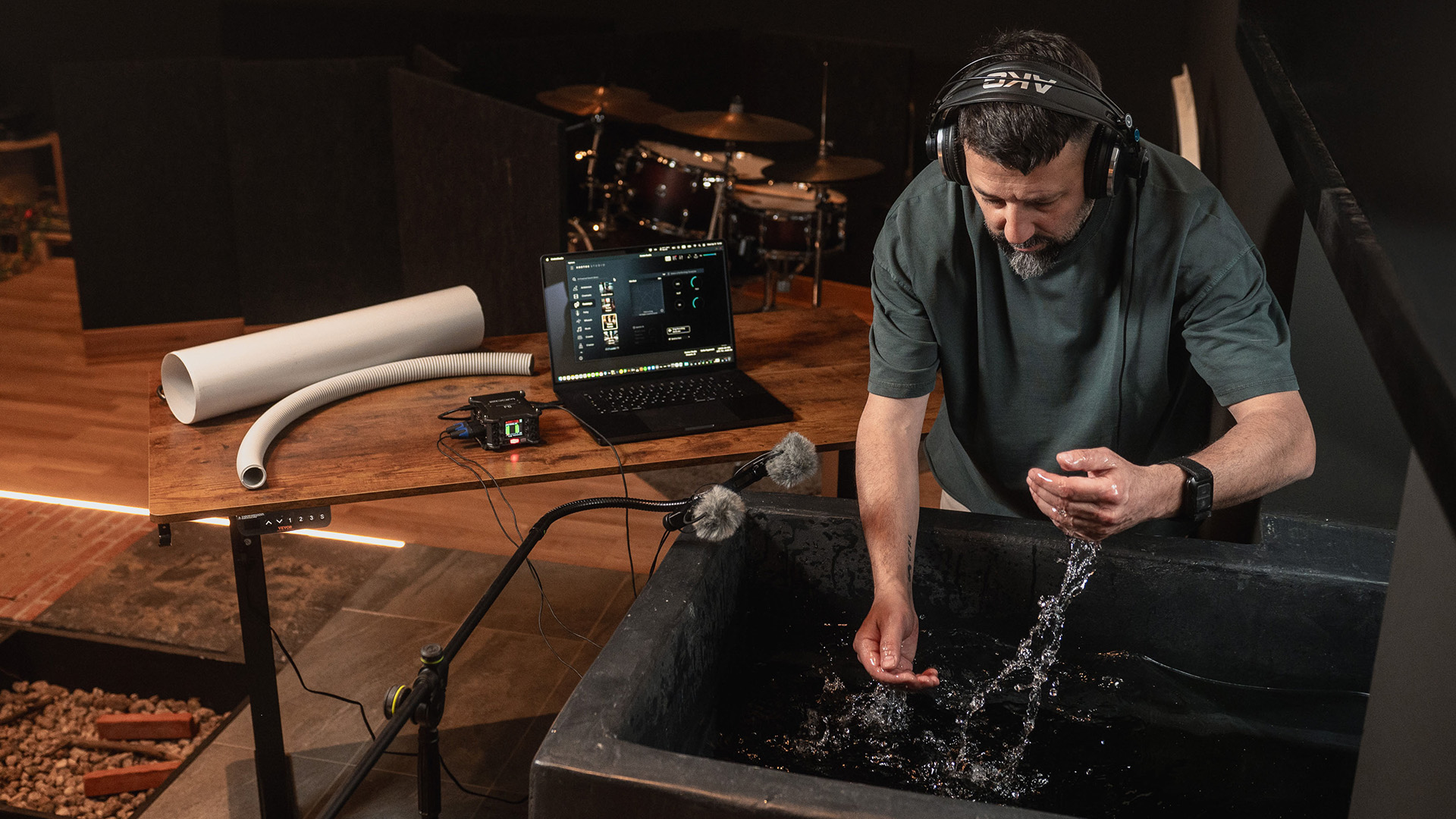
Four Proven Principles That Define Masterful Sonic Fabrication
Behind the curtain of every premier post-production stage, sophisticated foley sound mechanics hinge on physical manipulation and acute timing rather than digital trickery. These four foundational disciplines transform everyday materials into undeniable cinematic immersion.
Material Transmutation Over Literal Substitution
Amateurs search for the exact physical object depicted on screen, while master foley artists search for the acoustic soul of the object. A real metal sword sliding from a leather sheath creates a limp, scrape-heavy scrape that vanishes in an audio mix. To deliver the lethal, singing blade beloved by cinematic audiences, the artist slides a high-carbon kitchen knife across the edge of an old iron fire shovel or a disassembled drum cymbal.
Pineapples become dismembered alien anatomy when gouged with blunt screwdrivers. Cassette tape ribbon unraveling over dry pine needles generates the eerie rustle of venomous snakes through desert grass. Wet chamois cloths whipped against marble slabs mimic blood splatters with astonishing fidelity. This transmutation requires deep understanding of density, surface friction, and acoustic damping. The seasoned artisan evaluates every flea-market trinket not for what it is, but for the deceptive frequency profile it can unleash under variable hand pressure.
Dynamic Weight Calibration and Human Inertia
Footsteps represent roughly seventy percent of a foley artist’s daily labor, yet they remain the most difficult element to master. Human walking is not a sequence of identical impacts; it is a continuous, controlled fall that transfers kinetic energy across the heel, outer arch, ball of the foot, and toes. Every emotional state alters this kinetic trajectory.
An angry detective walks with heavy heel strikes and abrupt deceleration. A terrified protagonist fleeing a threat transfers weight rapidly across the toes with almost no heel contact, producing erratic drag intervals. Foley stages are engineered with dedicated walk-pits filled with materials like gravel, cracked concrete, hardwood over hollow risers, decomposed granite, and muddy swamp turf. The artist wears specialized footwear—often one shoe broken down at the heel and another stiffened with metal shanks—to perform the precise emotional inertia and anatomical mass of the actor on screen.
Acoustic Boundary Proximity and Room Reflection Matching
One of the fastest ways to shatter cinematic belief is an acoustic mismatch between space and sound. If an actor walks through an abandoned stone cathedral, dry footsteps recorded in a carpeted booth will immediately register as artificial to the viewer’s subconscious.
Foley rooms feature variable acoustic treatments, including movable wooden baffles, hard plaster boundaries, and absorbent velvet drapery. Artists adjust their physical distance from the microphone diaphragm while modulating their orientation relative to hard surfaces. Capturing the natural early reflections off a limestone slab places the footstep inside the cathedral’s physical dimensions before the signal ever reaches the digital workstation. As documented in Audio Engineering Society research publications, capturing accurate early reflection timing directly at the microphone stage preserves spatial authenticity far more effectively than applying artificial digital reverberation after the fact.
Frequency Layering and Psychoacoustic Space Carving
A pristine audio mix in modern entertainment is a crowded sonic battlefield. Heavy explosions, dense orchestral motifs, and delicate spoken dialogue compete across the twenty-hertz to twenty-kilohertz spectrum. Here, advanced foley sound mechanics require the artist to sculpt transient attacks that punch through the sonic wall without masking essential voice tracks.
Human speech operates predominantly in the range between 500 hertz and 3 kilohertz. To keep footsteps and clothing movement from swallowing consonants, foley tracks are carved into distinct frequency zones. The low-frequency thud of a heavy boot sits below 120 hertz to stimulate subwoofers, while the crisp scrape of sand under the sole occupies the airy spectrum above 6 kilohertz. This leaves the middle frequency pocket completely unobstructed for the actors’ vocal performances, delivering tactile sonic realism without sacrificing narrative intelligibility.
Digital Sample Libraries Versus Physical Human Performance
The rise of massive multi-gigabyte digital sample libraries led some studio executives to predict the extinction of the foley stage. Why pay two artists and a recording engineer to stomp around in gravel when an editor can trigger pristine sound samples from a MIDI keyboard? The answer lies in the non-linear chaos of human motion.
A human being turning a doorknob produces hundreds of microscopic, spontaneous sound micro-events: the slight scrape of fingernails on brass, the mechanical friction of the internal latch spring, the shifting tension of shoulder fabric, and the subtle foot adjustment on floorboards as body weight shifts. Attempting to program these layered, micro-timed variables using static audio samples produces a repetitive, robotic cadence that triggers cognitive fatigue in audiences.
Just as professional equity traders study order book mechanics and 4 proven rules that prevent devastating trading slippage to navigate the chaotic liquidity hiding beneath headline price quotes, veteran sound supervisors manage microscopic audio transients to keep dense cinematic scenes from degenerating into acoustic sludge. Understanding these analog foley sound mechanics highlights why sterile digital sound libraries often fail to convince audiences: they lack the fluid, reactive imperfections that living organisms generate when moving through physical space.
The Enduring Magic of Tactile Cinematic Storytelling
In an entertainment landscape increasingly dominated by computer-generated imagery, green-screen voids, and synthetic voices, foley remains one of the few completely tactile bastions of cinema craft. It is a work of pure theatrical empathy. The foley artist must breathe with the character on screen, match their fatigue, mimic their hesitations, and channel their emotional weight through physical props.
Next time a cinematic moment grips you by the throat—the rustle of a heavy winter coat in the silence of an empty apartment, the sharp click of a lock tumbling open in the dark, or the sickening snap of a broken bone—pause and listen to the craftsmanship beneath the image. Ultimately, the enduring brilliance of foley sound mechanics lies in its celebration of flawed, beautiful, corporeal human touch, transforming junk into poetry and turning silence into unforgettable emotional reality.