Maillard reaction mechanics and 4 proven rules that create unforgettable savory flavor
Unlocking non-enzymatic browning transforms everyday cooking into culinary mastery. Discover the thermal biochemistry and practical rules that guarantee crisp, savory perfection every time.
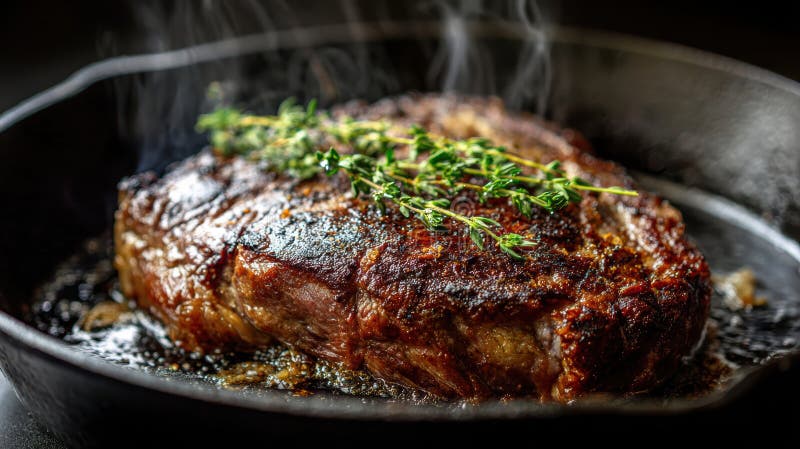
Unlocking Maillard reaction mechanics transforms an everyday cut of beef, a wedge of roasted cabbage, or a rustic loaf of bread into culinary brilliance. When raw food encounters intense dry heat, hundreds of fleeting aromatic compounds explode into existence, generating the savory depth, roasted sweetness, and rich color that define great gastronomy. Yet, countless home cooks and aspiring chefs mistakenly attribute this transformation to simple caramelization or brute-force scorching. The reality is far more intricate, demanding an understanding of non-enzymatic browning operating at the complex intersection of organic chemistry, thermal mass, and moisture control.
When you sear a prime cut of meat or roast root vegetables until they display a burnished mahogany exterior, you are running an organic chemistry lab on a cooktop. The steady sizzle you hear is water flashing off into steam, clearing the stage for delicate molecular rearrangements. Without an intuitive grasp of how temperature, surface hydration, and protein structures interact in the skillet, even the most expensive ingredients end up pale, rubbery, and disappointingly steamed.
The molecular dance behind deep culinary browning
In 1912, French physician and chemist Louis-Camille Maillard attempted to model biological protein synthesis by heating amino acids and reducing sugars in aqueous solutions. Instead of creating synthetic proteins, he observed the clear liquids darkening into rich amber hues while releasing complex aromas reminiscent of toasted grain and roasted meat. What he cataloged was the opening chapter of non-enzymatic browning, a phenomenon that cooks have relied upon instinctively since humans first harnessed fire.
To truly grasp Maillard reaction mechanics, one must look at how reducing sugars condense with amino acids. Food tissue contains free amino groups, primarily residing on the lysine residues of proteins, alongside reducing sugars that feature an open-chain carbonyl group, such as glucose, fructose, ribose, or maltose. When exposed to heat, the nucleophilic amino group attacks the electrophilic carbon of the sugar. This initial condensation yields an unstable N-substituted glycosylamine, which rapidly undergoes an internal chemical isomerization known as the Amadori rearrangement in aldose sugars or the Heyns rearrangement in ketoses.
From this critical Amadori juncture, the reaction cascades into hundreds of branching pathways. Intermediate compounds undergo dehydration, fragmentation, and Strecker degradation, where dicarbonyl compounds strip amino acids of their amine groups to produce highly volatile aldehydes. These fleeting molecules produce the distinct aromas humans crave, including nutty pyrazines, savory furans, meaty thiophenes, and buttery diacetyl. In the final phase, according to detailed American Chemical Society research on non-enzymatic browning kinetics, these reactive intermediates polymerize into complex, high-molecular-weight nitrogenous pigments known as melanoidins. It is these melanoidins that paint the surface of your food in deep umami tones. Crucially, this cascade differs entirely from caramelization, which involves the thermal pyrolysis of pure carbohydrates without any nitrogenous participation.
The evaporative barrier and latent heat of vaporization
The primary reason home cooks fail to harness Maillard reaction mechanics lies in surface water. Water is the relentless enemy of high-temperature browning because of the unforgiving laws of thermodynamics. Under standard atmospheric pressure, liquid water cannot exceed its boiling point of 212 degrees Fahrenheit (100 degrees Celsius). The Maillard cascade, however, requires surface temperatures between 280 and 330 degrees Fahrenheit (140 to 165 degrees Celsius) to proceed at an appreciable velocity.
If your protein or vegetable carries even a microscopic film of surface moisture when it strikes the hot pan, every single calorie of thermal energy transferred from the metal goes directly toward satisfying the latent heat of vaporization. It takes roughly one calorie to raise a single gram of liquid water by one degree Celsius, but it requires a staggering 540 calories to vaporize that same gram into steam. As long as liquid moisture coats the food, its surface temperature remains stubbornly anchored at 212 degrees Fahrenheit. Instead of searing, your food boils in its own liberated fluids.
By the time that surface moisture finally evaporates, heat has conducted deep into the core of the food. The result is the dreaded gray band in a steak, where the exterior muscle fibers turn chalky and dry before any meaningful crust can form. Overcoming this thermal bottleneck requires deliberate preparation strategies designed to eradicate moisture before your ingredients ever cross the threshold of the skillet.
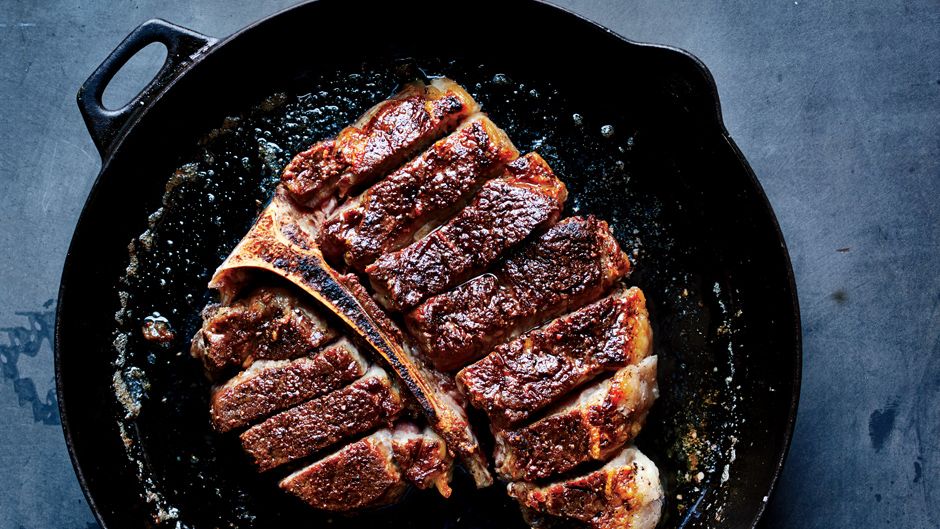
Four proven rules to command thermal browning in any kitchen
Deploying these four foundational rules of Maillard reaction mechanics guarantees consistent, deep browning without scorched bitterness or moisture-sodden disappointment.
Strip surface moisture completely before pan contact
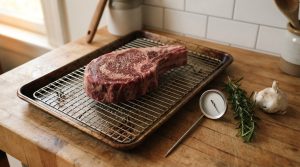
Never allow damp food to touch hot fat. Patting a protein dry with a single paper towel is rarely sufficient because capillary action continuously draws internal juices back to the surface. Professional kitchens rely on evaporative refrigeration, commonly executed as an open-air dry brine. By salting meat generously several hours or a full day prior and resting it uncovered on an elevated wire rack inside the refrigerator, you initiate a powerful two-phase process.
The salt draws water out via osmosis, dissolves into a concentrated surface brine, and is gradually reabsorbed as muscle proteins denature and open their structure. Concurrently, the continuous convective airflow and low relative humidity inside a modern refrigerator evaporate lingering exterior dampness. The food forms a micro-thin, desiccated skin known as a pellicle. When this bone-dry pellicle meets the searing heat of a skillet, surface temperatures surge past 300 degrees Fahrenheit in fractions of a second, triggering instant melanoidin formation while insulating the interior from thermal overexposure.
Optimize thermal mass to defeat temperature drop
When cold food enters a hot vessel, it acts as a massive thermal sponge. Cookware made of lightweight stamped aluminum or thin steel sheds stored energy instantly upon contact with dense ingredients. The pan temperature plummets below the threshold necessary for browning, liquid pools around the base of the food, and simmering ensues.
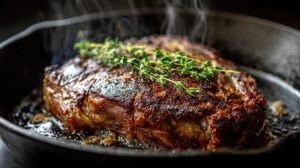
Commanding the sear requires cookware with immense volumetric heat capacity. Heavy cast iron, enameled Dutch ovens, and thick-gauge carbon steel pans store massive reserves of thermal energy within their dense crystalline matrices. When a cold protein lands on well-preheated cast iron, the pan barely registers the cold shock, sustaining its blistering temperature and driving heat relentlessly into the food surface. Furthermore, crowding the pan creates an artificial humidity trap. Maintain at least an inch of open breathing room around every piece of food to ensure steam vents freely into the atmosphere rather than condensing on neighboring ingredients.
Shift surface alkalinity to accelerate condensation
Chemical kinetics dictate that the initial condensation between amino groups and reducing sugars happens dramatically faster when amino groups are uncharged. In acidic environments, amino acids pick up protons, giving their amine groups a positive electrical charge that repels incoming sugars. Alkaline environments drastically accelerate Maillard reaction mechanics by deprotonating amino groups, freeing up their lone pair of electrons to attack electrophilic carbonyls.
Savvy cooks weaponize this biochemical quirk through subtle pH manipulation. Dusting a minute pinch of sodium bicarbonate (baking soda) onto finely sliced onions cuts their softening and browning time by more than half, producing rich French onion soup bases in twenty minutes. Traditional soft pretzels achieve their iconic deep-brown, glossy crust through brief immersion in a bath of food-grade sodium hydroxide (lye) or baked baking soda (sodium carbonate) prior to baking. In meat cookery, a faint dusting of baking soda dissolved in water preserves cellular tenderness while promoting rapid, rich exterior browning under brief, intense heat.
Manage cooking oil as a thermal conductor rather than a flavor agent
A common culinary misconception is that cooking oil primarily serves to prevent sticking. While lubrication is a welcome side effect, the true thermodynamic duty of cooking fat is surface bridging. Food surfaces and pan bottoms are microscopically jagged landscapes filled with peaks and valleys. When you place dry food directly onto dry metal, contact occurs only at the highest microscopic ridges, leaving pockets of insulating air in between. Air is a terrible thermal conductor.
High-smoke-point oil acts as a liquid thermal bridge. It fills microscopic chasms, displacing air and distributing heat uniformly across every square millimeter of the ingredient’s surface. However, excessive oil causes shallow frying, which can pull interior moisture outward and degrade the crust. Use just enough fat to form a shimmering, continuous film, and ensure the oil reaches its shimmering point—just short of smoking—before introducing your ingredients.
Applying browning science beyond the traditional steakhouse
While meat lovers frequently obsess over the sear on a dry-aged ribeye, bakers and pastry chefs rely heavily on Maillard reaction mechanics to build complex crusts and distinct aromas in artisanal breads, roasted vegetables, and stocks. Plant-based browning presents distinct challenges because vegetables possess high natural water content alongside much lower protein concentrations compared to animal muscle tissue.
To elicit rich roasted notes from brassicas like Brussels sprouts or cauliflower, you must roast at high ambient temperatures (425 to 450 degrees Fahrenheit) with generous oil coating to force rapid surface dehydration before cell walls rupture and dump internal sap. For alliums like onions and shallots, slow cooking over moderate heat allows cellular enzymes to convert long-chain fructans into simple fructose and glucose, priming the stage for an explosive combination of true caramelization and amino-driven browning.
In the world of bread baking, crust development depends on steam management during the initial minutes of the bake. While moisture generally inhibits crust formation, ambient steam in an enclosed oven condenses onto the cool dough surface, gelatinizing starches into a glossy liquid film. As baking continues, the steam dissipates, and that starch-gel matrix bakes down into a shatteringly crisp, blistered crust rich in maltose and amino-derived melanoidins.
Developing thermal intuition at the stove
Cooking at the highest level is rarely about blind adherence to digital timers. It requires sensory calibration. When searing proteins, the kitchen provides instant acoustic and olfactory cues. The sound of high-energy frying should be a rapid, sharp crackle rather than a dull, bubbling hiss. The bubbling hiss signals boiling moisture, a warning sign that your pan temperature has dropped or the food was improperly dried.
Separating meaningful signals from chaotic sensory static is a skill that extends far beyond the skillet. Just as discerning investigators had to untangle confusing signals in Zach Hickerson and 4 Critical Revelations Behind the Tragic Hayden Panettiere 911 Audio, a cook must isolate the essential feedback from the kitchen din. The faint fragrance of roasted hazelnut and grilled bread indicates peak melanoidin generation, while acrid, pungent blue smoke warns that proteins have begun to pyrolyze into bitter, carcinogenic polycyclic aromatic hydrocarbons.
Resist the urge to continuously prod, flip, or agitate your ingredients during their initial contact with heat. Continuous movement interrupts heat conduction and drops the pan surface temperature. Allow the food to establish undisturbed contact until proteins naturally release from the metal. When you internalize these core Maillard reaction mechanics, cooking shifts from anxious guesswork into pure thermal intuition, elevating humble dinners into extraordinary culinary experiences.