Dry brining mechanics and 4 proven rules that prevent tough chewy meat
Surface salting is not just about seasoning; it initiates a profound biochemical transformation within raw muscle tissue. Learn the foundational mechanics of dry brining to lock in natural juices and achieve unmatched crusts on every roast.
Understanding fundamental dry brining mechanics changes how you treat raw protein forever. Most home cooks dread slicing into an expensive ribeye or Thanksgiving turkey only to find gray, stringy muscle fibers swimming in lost juices on the cutting board. You follow cooking temperatures obsessively, probe the center with a calibrated digital thermometer, and yet the final bite feels parched. The problem did not occur inside your oven or cast iron skillet; it began hours earlier when you seasoned the meat or, more likely, failed to give the salt adequate time to reconstruct muscle proteins.
Salting meat right before cooking is an ancient reflex, but it leaves seasoning stranded on the exterior. By treating salt as a structural modifier rather than a mere garnish, you unlock the transformative power of biochemical restructuring. Dry brining requires patience, but the physical labor amounts to less than two minutes of deliberate kitchen work.
The microscopic drama inside salted muscle fibers
Raw meat consists of roughly seventy-five percent water trapped inside a dense matrix of muscle filaments, primarily actin and myosin. When you sprinkle salt onto cold meat, you trigger a two-phase osmotic cycle. At first, high osmotic pressure draws moisture out of the muscle cells toward the mineral crystals on the surface. Within ten minutes, your roast appears slick and wet, covered in beads of reddish liquid. Less experienced cooks often panic at this stage, assuming the salt is permanently dehydrating their dinner.
When you grasp dry brining mechanics, you realize that salting isn’t just about surface seasoning. That drawn-out water quickly dissolves the sodium chloride grains, transforming into a concentrated, localized brine. Through simple diffusion, that salty liquid begins migrating back into the muscle tissue. As sodium and chloride ions penetrate the cellular matrix, they disrupt the electrical charges holding the muscle protein filaments tightly together.
This process, known as protein denaturation, causes tight cords of myosin to loosen and unwind. Once relaxed, these proteins form a gel-like matrix that traps free water molecules rather than squeezing them out during cooking. When heat eventually hits the meat, those altered protein structures contract far less violently, allowing the meat to retain substantially more internal moisture right through to the carving board.
Why soaking meat in salty water dilutes natural flavor
For decades, traditional culinary lore insisted on wet brining. Enthusiastic cooks submerged whole turkeys and pork loins into gigantic buckets filled with gallons of cold water, sugar, and salt. While wet brining does force water into the meat, that hydration comes with a severe structural penalty. The muscle fibers absorb tap water, swelling like saturated household sponges.
The distinct advantage of dry brining mechanics over wet water solutions lies in moisture retention versus waterlogging. Wet brined meat loses its distinct savory richness because foreign water dilutes the natural intracellular juices. Furthermore, a waterlogged bird or roast poses an insurmountable engineering problem when you want a crisp, golden skin or a deep, mahogany sear. Heat cannot trigger the Maillard reaction until all surface moisture evaporates. In a hot pan or oven, wet brined skin spends its first twenty minutes merely steaming itself flabby.
Authoritative food scientists at the Institute of Food Technologists have documented how managing surface water activity dictates the speed of non-enzymatic browning. Dry brining achieves internal juiciness while simultaneously desiccating the skin, giving you the holy grail of roasting: succulent interior meat married to crackling, shatteringly crisp skin.
Four proven rules that elevate your dry brining technique
Executing a flawless dry brine demands far more than casually showering a roast with whatever shaker is sitting on your counter. To harness physical chemistry in your home kitchen, follow four foundational rules that govern grain size, geometry, temperature, and evaporation.
Calculate kosher salt by precise butcher weight
To successfully harness dry brining mechanics across different proteins, you must calibrate the sodium ratio meticulously. Volumetric measurements like teaspoons and tablespoons are notoriously erratic. A tablespoon of fine table salt contains nearly double the sodium of coarse kosher salt because the tiny crystals pack together tightly. Even between brands of kosher salt, crystal density varies drastically.
Rely on a digital kitchen scale instead of measuring spoons. The golden ratio for dry brining beef, pork, and poultry sits reliably between one and one-and-a-half percent of the meat’s total raw weight. For a one-kilogram pork tenderloin, distribute ten to fifteen grams of salt evenly across all sides. This precise concentration denatures internal proteins completely without tipping the final taste into harsh, unpleasant salinity.
Elevate your cut on an uncrowded wire rack
Gravity and airflow are your most critical partners during the curing period. Placing salted meat directly onto a solid ceramic plate or a flat sheet pan creates a fatal blind spot. Capillary action forces drawn moisture to pool beneath the cut, creating a shallow puddle where the underside stews in cold brine rather than drying out.
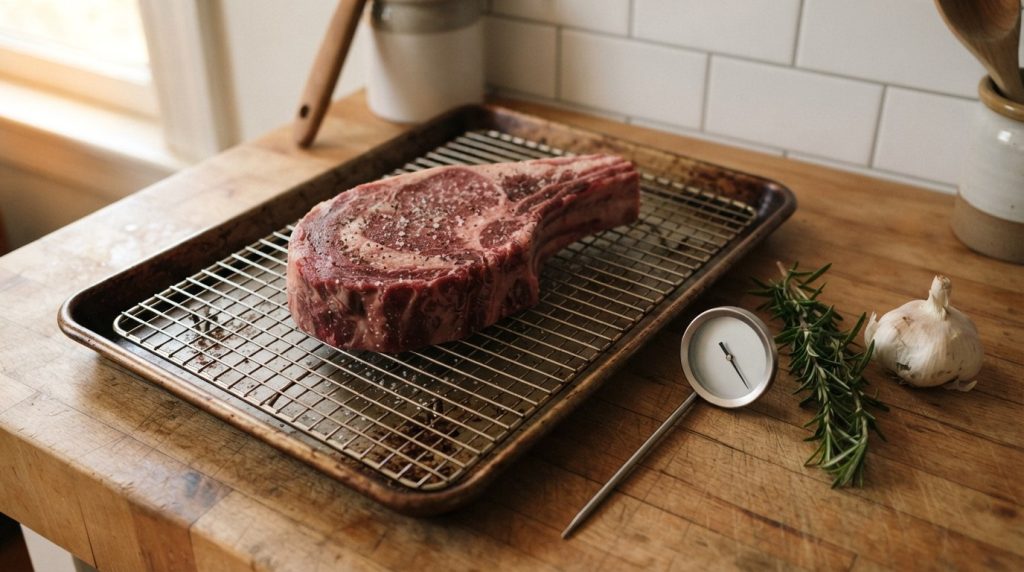
Set a stainless steel wire cooling rack inside a rimmed baking sheet. Resting the protein on the elevated wire mesh guarantees that chilled air reaches every square millimeter of the surface. This full exposure prevents soggy base zones, ensures uniform salt penetration from bottom to top, and eliminates the need to flip heavy roasts midway through their rest.
Respect the critical contact timeline for deep absorption
Salt diffuses through cold mammalian and avian muscle tissue at an average pace of roughly one millimeter per hour. Attempting a dry brine thirty minutes before cooking produces the worst possible culinary result. That brief interval allows the salt to pull moisture out to the surface, but gives it zero time to dissolve and reabsorb. Throwing a steak into a searing skillet at that forty-minute mark guarantees spitting grease, charred gray meat, and lost flavor.
Plan your preparation backward from dinner time. Thin pork chops and half-inch steaks require a minimum of two to four hours. Thick bone-in steaks and whole chickens demand twelve to twenty-four hours. Massive cuts like prime ribs, whole briskets, or large heritage turkeys reward a full forty-eight hours of resting in the cold. Respecting these diffusion windows ensures that the sodium ions reach the core rather than concentrating exclusively on the outer rim.
Balance ambient airflow with humidity management
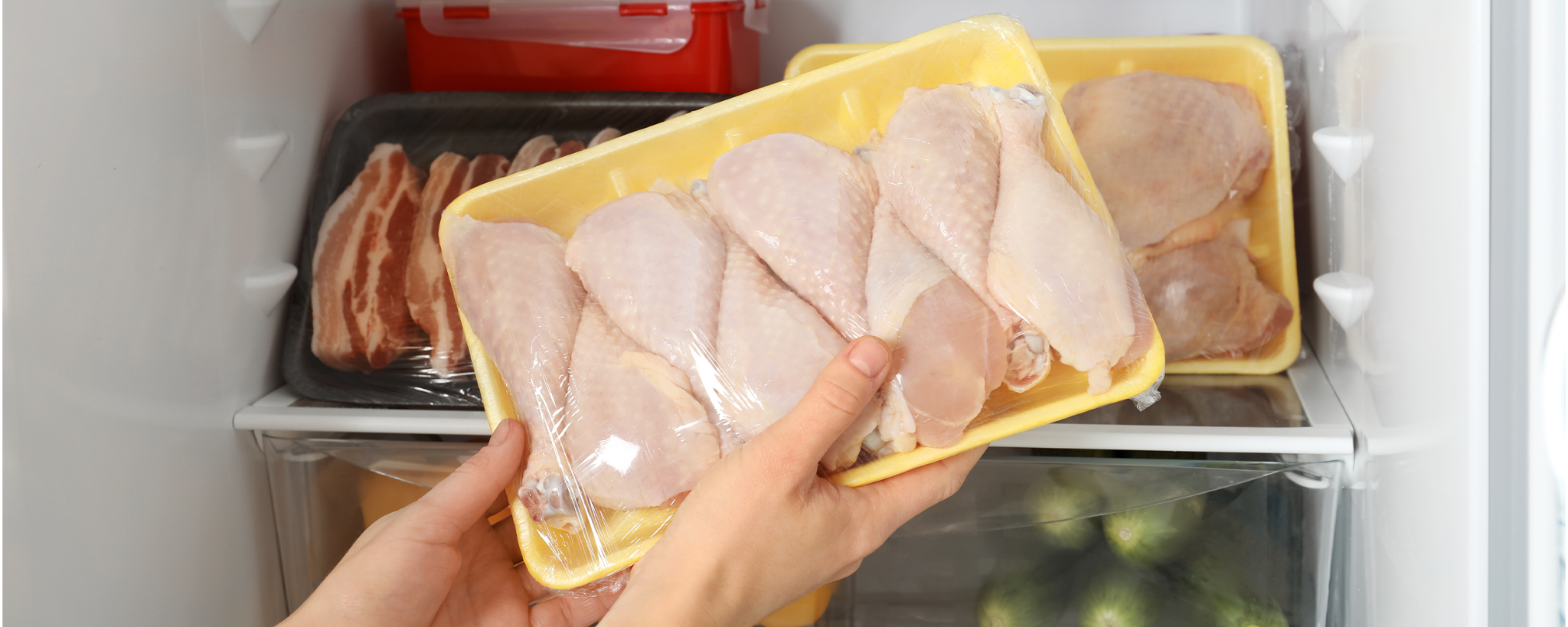
Never cover a dry-brining roast with plastic wrap or aluminum foil. Trapping evaporating moisture beneath a plastic tent creates a high-humidity greenhouse that sabotages surface desiccation. The meat needs the naturally arid, circulating environment found inside a modern domestic refrigerator.
This dehydration phase represents the second half of dry brining mechanics, creating a tacky surface known as a pellicle. As surface water evaporates into the refrigerator chamber, dissolved proteins concentrate on the exterior, drying into a thin, glassy veneer. When this pellicle encounters intense heat later on, it browns almost instantaneously, sealing in moisture and creating a blistered, crunchy crust with zero trapped steam.
Classic misconceptions that ruin perfectly good cuts
Despite the indisputable science supporting the practice, several persistent myths continue to ruin expensive proteins. Chief among these is the antiquated belief that salting meat hours in advance dries it out. This misconception originated from watching curing salts draw moisture out of charcuterie over several weeks. A twenty-four-hour rest in a residential kitchen does nothing of the sort; the small fraction of evaporated water comes almost entirely from the exterior skin, leaving the deep muscle tissues significantly juicier than an unsalted control cut.
Amateur cooks frequently sabotage dry brining mechanics by trapping cuts under non-breathable plastic film. They fear their meat will absorb stray odors from the refrigerator or dry out into leathery jerky. In reality, a standard refrigerator chilling cycle is far too brief to turn fresh muscle tissue into leather. The fat and connective tissues remain entirely protected underneath.
Panic in the kitchen often leads to rash actions, much like in high-stakes investigations where parsing forensic reality requires looking past snap judgments. Examining the chaotic details behind Zach Hickerson and 4 Critical Revelations Behind the Tragic Hayden Panettiere 911 Audio reveals how emotional panic distorts facts; similarly, seeing initial drops of moisture bead on a raw roast often triggers unnecessary intervention. Trusting the chemical cycle requires stepping back and letting physical laws run their course.
Another dangerous mistake involves rinsing the meat before it hits the pan. Some cooks mistakenly treat dry brining like a curing rub that must be washed away before cooking. Running tap water over the salted roast completely negates your hard work, flooding the surface cells with unwanted moisture and instantly ruining the delicate pellicle you spent twenty-four hours cultivating.
Transforming kitchen intuition into predictable culinary science
Cooking is often romanticized as an intuitive art governed entirely by instinct, but the most reliable kitchen results stem from an unyielding respect for food chemistry. When you drop an untreated piece of cold meat into a roaring hot pan, you fight against physics. Trapped water boils, muscle filaments contract violently, and natural moisture escapes onto the plate.
Applying these dry brining mechanics shifts your kitchen workflow from guesswork to predictable culinary mastery. By giving simple sodium ions the space and time to unwind tight protein chains, you permanently alter how that cut behaves under intense thermal stress. You guarantee tender meat, uniform interior seasoning, and blistering restaurant-quality crusts every single time you step up to the stove.