Maria Sakkari Pursues 3 Major Wuhan Milestones Amid Fierce Return
Returning to the courts of her earliest WTA 1000 glory, Maria Sakkari confronts both a rising challenger and her own storied history in Wuhan. Here is the investigative breakdown of her pivotal campaign.
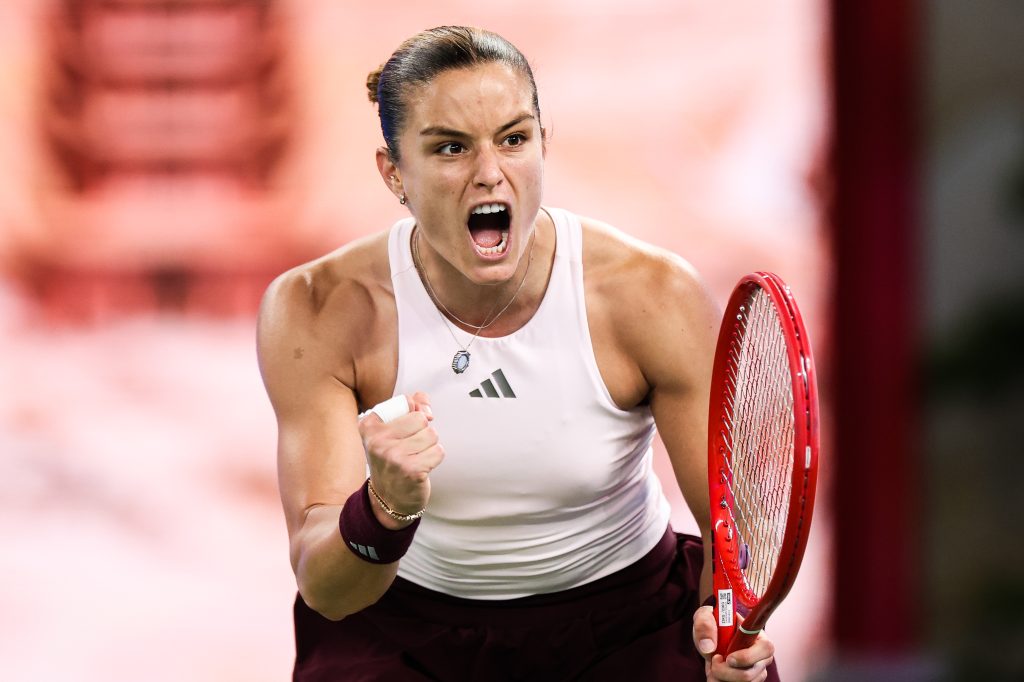
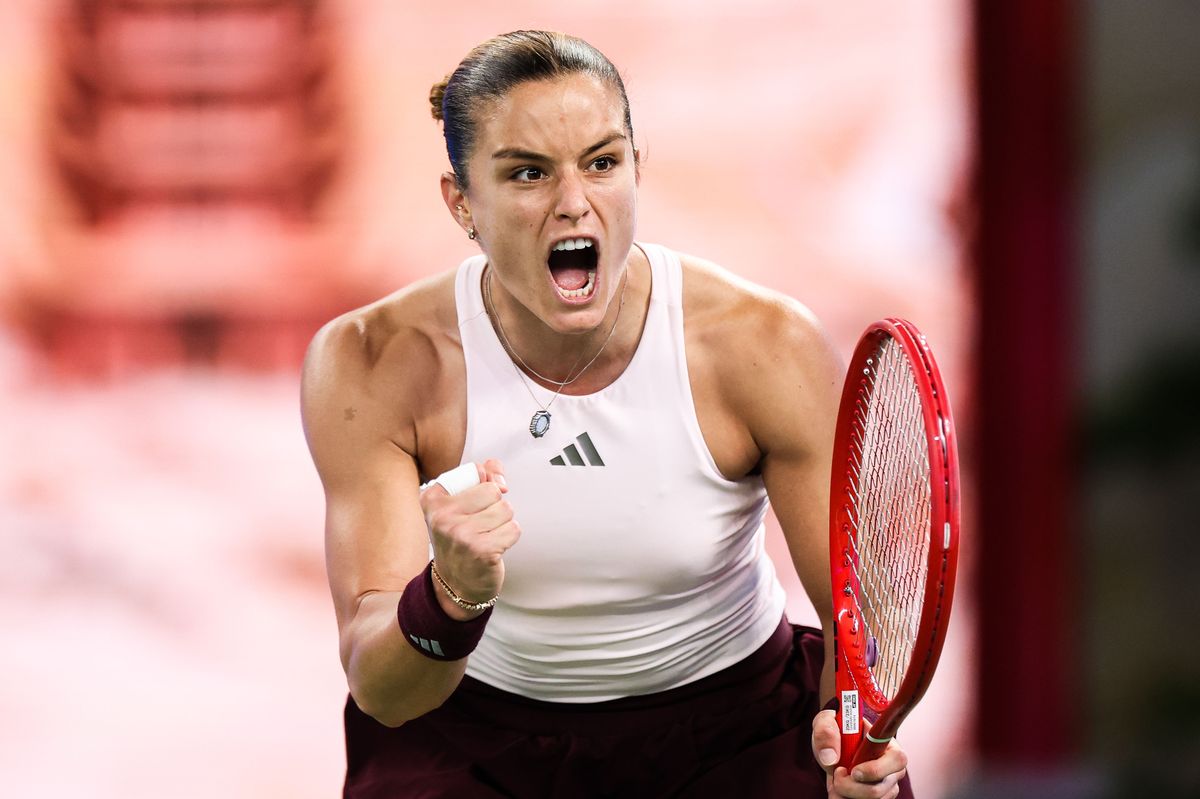
WUHAN, CHINA - OCTOBER 13: Maria Sakkari of Greece celebrates against Marta Kostyuk on day two of Wuhan Open at Optics Valley International Tennis Center on October 13, 2026 in Wuhan, China. (Photo by Di Yin/Getty Images)
When Greek tennis star maria sakkari stepped onto the hard courts at the Dongfeng Voyah Wuhan Open this week, long-time observers immediately recognized the historical significance of the moment. The tournament represents far more than just another stop along the demanding Asian swing. For the Greek Olympian, the venue serves as the geographic birthplace of her ascent into tennis royalty. As search interest surged across North America following her latest masterclass, the narrative surrounding her return captured a unique intersection between nostalgia and elite athletic persistence.
Spectators tuning into live broadcasts on Sky Sports and tracking point-by-point developments on Tennis.com found themselves watching an athlete straddling two distinct eras of her career. Nearly a decade after her first seismic splash on these very grounds, she is no longer an unknown qualifier battling through obscure preliminary rounds. Instead, she enters the arena as an established heavyweight tasked with defending her ground against a relentless wave of emerging global talent. The resulting drama has ignited conversations throughout the sporting landscape, illuminating what it takes to sustain elite momentum in modern professional tennis.
The Sudden Spike in Global Tennis Attention
Spikes in digital engagement rarely happen in a vacuum. The surge in public interest surrounding the Greek star stems directly from a high-stakes Round 3 clash at the Dongfeng Voyah Wuhan Open. Tennis enthusiasts tracking live updates witnessed her squaring off against Slovakian prospect Mia Pohankova, a matchup highlighted across international platforms including Tennis Majors and Sky Sports. The generational contrast between a seasoned top-tier stalwart and an ambitious newcomer created an irresistible spectacle for global audiences.
Beyond the immediate excitement of tournament brackets, the scheduling of the Asian swing creates a unique dynamic for viewers in the Western hemisphere. Matches taking place in Wuhan unfold during late-night and early-morning hours in the United States and Europe. Fans who woke up to discover commanding scorelines immediately took to search engines and tennis forums to unpack the context of her run. This sudden influx of attention underscores the enduring appeal of competitive hard-court tennis, where single match outcomes can dramatically alter season-ending point distributions.
Furthermore, the Dongfeng Voyah Wuhan Open holds premier WTA 1000 status, carrying substantial ranking points and substantial financial stakes. Every victory at this late juncture of the tennis calendar carries outsized weight for qualification standings and year-end world rankings. As commentators on international sports networks noted during match previews, watching an established competitor reassert dominance under high-pressure conditions offers a gripping study in athletic temperament.
Recounting the Breakthrough That Feels Like a Century Ago
To fully appreciate the significance of this campaign, one must revisit the autumn of 2017. As detailed by WTA Tennis and corroborated by Tennis World USA, that historic tournament remains a defining chapter for Maria Sakkari, who arrived in Central China as an unseeded qualifier ranked outside the upper echelon of the sport. Against overwhelming odds, she strung together seven consecutive match victories, stunning established top-tier names and clawing her way into her maiden Premier 5 semifinal.
Reflecting on that unforgettable breakthrough in an interview published by WTA Tennis, she expressed a mix of fondness and disbelief, remarking that those formative memories feel as if they took place a century ago. That candid admission struck a chord with tennis purists. In 2017, she relied on raw athletic instinct, unbridled energy, and the fearless posture typical of an underdog with nothing to lose. Today, the institutional memory of that performance lingers as a testament to her foundational grit.
The physical and psychological toll of staying near the pinnacle of professional tennis for nine consecutive years cannot be overstated. Players from her 2017 cohort have faced severe injuries, burnout, or outright retirement. Maintaining the explosive mobility and emotional resolve required to consistently reach the second week of premier tournaments is a rare feat. Her honest reflection highlights the sheer volume of competitive miles logged across continents since that initial breakthrough.
3 Crucial Tactical Factors Shaping the Campaign
Sustaining competitive supremacy through grueling tournament draws requires more than sentimental motivation. Navigating the current campaign for Maria Sakkari demands sharp tactical execution, physical endurance, and adaptive game planning against opponents who analyze her every tendency.
Clashing with Rising Talent Mia Pohankova
Stepping onto the court against Mia Pohankova introduces a tactical dynamic filled with volatility. For an unheralded opponent, facing off against Maria Sakkari presents a monumental opportunity to score a signature upset on a global stage without carrying the burden of outside expectation. Pohankova represents the modern baseline prototype, utilizing heavy topspin and fearless groundstrokes off both wings.
To defuse such aggressive shotmaking, the Greek veteran relies on superior court positioning and depth management. Rather than engaging in reckless baseline slugfests, she systematically targets angles that pull emerging power-hitters away from their comfort zones. By varying ball heights and changing the pace of rallies, she forces younger opponents into rushed decision-making, extracting unforced errors during critical break-point opportunities.
Transitioning from Unseeded Underdog to Tour Anchor
Psychological posture dictates match outcomes just as much as kinetic mechanics. Back in 2017, playing without expectations allowed her to swing freely on decisive points. Today, entering matches as the clear favorite creates a distinct psychological burden. Opponents bring peak motivation, treating every game against a decorated Olympian as a potential career-defining breakthrough.
Managing this pressure requires emotional discipline. Across her recent appearances, she has showcased a refined mental approach, refusing to panic when baseline exchanges turn contentious. By leaning into her extensive resume of WTA 1000 and Grand Slam battles, she consistently manufactures composure during high-leverage service games, turning narrow deficits into decisive momentum swings.
Navigating the Demands of Late Season Asian Hard Courts
The playing conditions in Wuhan present unique environmental and mechanical challenges. The outdoor hard courts at Optics Valley International Tennis Center feature a surface pace that rewards explosive first-step quickness, yet the autumn climate can bring fluctuating humidity levels that impact ball bounce and string tension.
Handling these elements requires constant micro-adjustments in footwork and swing paths. Players who fail to adapt often struggle with shot depth, hitting long or leaving balls sitting short in the strike zone. Her exceptional physical conditioning enables her to absorb heavy groundstrokes deep behind the baseline and immediately reset points with lunging, open-stance defensive recoveries.
Methodical Preparation and the High Cost of Modern Elite Play
Behind the highlight reels and broadcast coverage lies an exacting regimen of athletic preparation that casual observers rarely see. The competitive resilience of Maria Sakkari is built on rigorous physical conditioning, disciplined recovery windows, and strict nutritional protocols designed to ward off fatigue over an grueling ten-month calendar year.
Athletic longevity at the WTA level demands an obsessive dedication to foundational process over immediate gratification. In elite sports science, this dedication mirrors other disciplined technical crafts where skipping baseline steps ruins the final output. Just as mastering dry brining mechanics and 4 proven rules that prevent tough chewy meat relies on osmotic chemistry and structured patience rather than rushing the sear, a tennis professional’s longevity depends on daily tissue care, recovery protocols, and neuromuscular pacing. Cutting corners during offseason conditioning or post-match rehabilitation inevitably leads to breakdown under the oppressive heat of competitive play.
By treating recovery as a science rather than an afterthought, she preserves the explosive lateral acceleration that has defined her career. In an era where baseline rallies are faster and more physically punitive than ever before, this physiological durability serves as her most formidable competitive advantage against younger rivals who have yet to build identical physical foundations.
What Lies Ahead on the Road Through Wuhan
The closing stages of the tennis season always carry an undercurrent of urgency. As the tournament advances, Maria Sakkari continues to demonstrate that past achievements do not diminish her hunger for contemporary silverware. Navigating the remaining rounds in Wuhan requires surviving a gauntlet of elite baseline tacticians, each vying for crucial points to solidify their year-end standings.
Regardless of how the final bracket shakes out, her presence in the later rounds of the Dongfeng Voyah Wuhan Open reaffirms her stature as one of the most reliable performers of her generation. Nearly a decade after an unseeded Greek qualifier stunned the sporting world in Central China, her return serves as a compelling reminder that enduring brilliance in professional tennis is earned through relentless reinvention and unbreakable competitive spirit.