Culinary emulsion mechanics and 4 proven rules that prevent disastrous sauce separation
Discover the physical chemistry that governs silky pan sauces and glossy hollandaise. These four proven rules of emulsion stability ensure your kitchen creations never break.
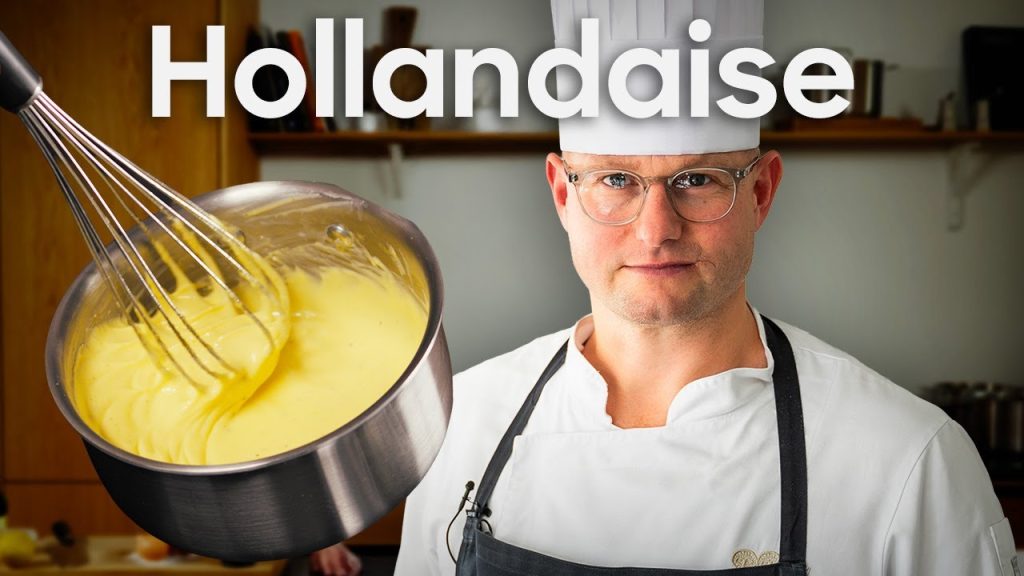
Mastering culinary emulsion mechanics transforms cooking from anxious guesswork into absolute physical precision. Every cook remembers their first catastrophic split. You whisk vigorously over gentle steam, watching golden egg yolks thicken into a glossy ribbon, only for the entire mixture to curdle into greasy yellow gravel in a single second. Or perhaps you deglaze a searing stainless steel skillet with white wine, drop in chilled butter cubes, and end up with translucent puddles of clarified fat floating helplessly above thin pan juices.
Sauce separation feels like an ambush. It strikes when your concentration wavers for three seconds, wasting costly ingredients and destroying confidence at the stove. Yet emulsions are not mystical culinary accidents. They are delicate colloidal suspensions governed by rigid thermodynamic laws. Oil and water do not naturally share space. When forced together without proper mechanical energy and chemical mediation, their thermodynamic mandate is immediate: separate into the lowest possible energy state to minimize the surface area where they touch.
By dismantling the microscopic forces at play, you strip away the superstition of the split. You stop relying on kitchen folklore like stirring strictly clockwise or muttering over a double boiler. Instead, you manipulate interfacial tension, dispersed volume, droplet diameter, and thermal thresholds with deliberate, repeatable authority.
The microscopic chaos behind silky smooth sauces
Every classic emulsion represents an unnatural alliance between sworn enemies. In their baseline state, polar water molecules cling tightly to one another through strong hydrogen bonds, generating high surface tension. Nonpolar lipid molecules, bound by van der Waals forces, prefer the company of their own hydrophobic kind. When you pour fat into water, the water molecules pull together so forcefully that they squeeze the fat out, pushing it toward the surface where it pools into unified slicks.
An emulsion overcomes this mutual repulsion by forcing one liquid to break apart and suspend itself throughout the other. In culinary applications, almost every classic sauce operates as an oil-in-water suspension. Mayonnaise, béarnaise, hollandaise, vinaigrettes, and butter-mounted pan sauces all require hydrophobic lipids to float comfortably as isolated droplets within an aqueous continuous phase.
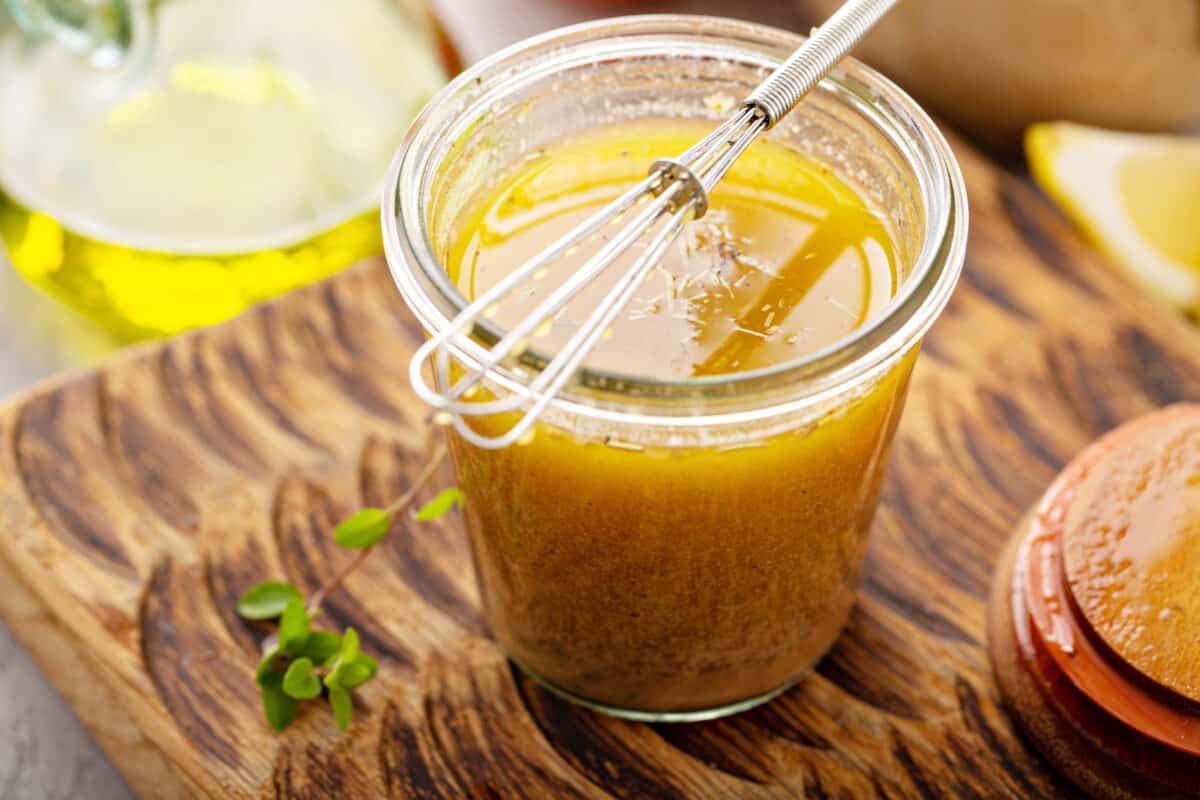
The secret lies in mechanical distribution. If you shake oil and water inside a glass jar with enough ferocity, the oil shatters into thousands of visible droplets. The mixture turns momentarily cloudy and thick. But leave that jar on the counter for sixty seconds, and the droplets collide, fuse together, and recreate two distinct layers. To achieve permanence, mechanical energy alone is never enough. The suspension requires an intermediary capable of changing how the two opposing liquids interact at their borders.
The physical chemistry of dispersed droplets and surfactant bridges
When you dissect culinary emulsion mechanics at the molecular tier, you witness a constant struggle between surface tension and chemical bridges. That bridge is built by amphiphilic molecules known as surfactants or emulsifiers. These microscopic mediators possess dual chemical personalities: a hydrophilic, water-attracting polar head and a lipophilic, fat-attracting hydrocarbon tail.
When agitated into a nascent sauce, surfactants rush to the boundary between the two liquids, known to food scientists at the Harvard Science and Cooking Program as the interfacial layer. The lipophilic tails plunge deep inside the fat droplet, while the hydrophilic heads project outward into the surrounding water. This orientation creates an electrostatic and steric barrier around every individual lipid droplet.
Because the outward-facing polar heads carry matching electrical charges, adjacent fat droplets physically repel one another when they drift close. Without this protective halo, wandering droplets smash together, merge into larger globules through coalescence, and rapidly trigger phase separation. Common culinary emulsifiers include the phospholipid lecithin found in egg yolks, the caseins and whey proteins naturally present in dairy butter, and the complex mucilage polysaccharides suspended in prepared Dijon mustard.
Four proven rules that guarantee permanent emulsion stability
Applying sound culinary emulsion mechanics requires four non-negotiable physical parameters. If any single variable falters, interfacial tension overcomes surfactant repulsions, and the suspension collapses into a greasy ruin. Master these mechanical fundamentals, and your sauces will withstand intense kitchen service without flinching.
Control temperature boundaries to protect delicate molecular shields
Temperature serves as both the creator and the executioner of stable sauces. If an emulsion drops too cold, saturated fats within butter solidify into rigid, jagged crystals. These sharp microscopic structures puncture the surfactant film, forcing water out and precipitating a greasy break. Conversely, excessive heat permanently denatures the proteins acting as interfacial protectors, causing them to curl up and release their trapped lipids.
Egg yolk suspensions inhabit a narrow thermal window between 55°C and 65°C. Below 55°C, yolk viscosity climbs drastically while butterfat stiffens, making it nearly impossible to smash incoming fat into tiny droplets. Above 68°C, egg proteins undergo irreversible thermal coagulation. They knit tightly into solid breakfast curds, abandoning their duty as protective barriers. Keep your double boiler at a gentle simmer, and if the metal bowl becomes uncomfortable to touch with your bare forearm, lift it off the steam immediately while whisking across a cool marble counter to drop the core temperature back from the brink.
Establish the continuous phase before introducing the lipid stream
In the framework of culinary emulsion mechanics, fat must yield to water, never the reverse. A common amateur blunder is tossing egg yolks, acid, and melted butter into a pan all at once, expecting brute force with a whisk to whip them into shape. This approach invites phase inversion, a catastrophic condition where water droplets become hopelessly marooned inside an ocean of fat, creating a thin, greasy slick instead of a luxurious cream.
The continuous aqueous phase must always occupy the bowl first. For mayonnaise, whisk your yolk with lemon juice or vinegar and a pinch of salt before introducing a single droplet of oil. The water inside the yolk and citrus juice provides the physical room required to house incoming lipid spheres. Introduce the fat drop by drop, beating aggressively until each microscopic dose is entirely absorbed. Only after establishing a thick, opaque nucleus can you expand the stream into a steady, thin ribbon.
Apply mechanical shear to smash droplet diameters down to microscopic scale
Emulsion permanence depends directly on droplet diameter. The smaller you break your oil droplets, the greater their total surface area becomes, and the more viscous and durable the resulting sauce will remain. Massive droplets possess higher kinetic momentum; they collide forcefully and readily rupture delicate surfactant membranes. Microscopic droplets, by contrast, become trapped in Brownian motion, suspended indefinitely within the viscous drag of the continuous phase.
Achieving this extreme size reduction demands unrelenting mechanical shear. A balloon whisk applies shear through rapid fluid friction, tearing fat ribbons apart as they pass between thin wire loops. However, human wrists have strict mechanical ceilings. An immersion blender spinning at thousands of revolutions per minute produces localized shear rates that shatter lipids down to sub-micron diameters in seconds. This intense mechanical reduction explains why stick-blender emulsions feel remarkably thicker and remain impervious to separation compared to hand-whisked versions.
Enlist cooperative surfactant blends for resilient interfacial films
Single-agent emulsions remain inherently fragile. Relying exclusively on the lecithin in an egg yolk or the native milk proteins in whole butter leaves your preparation susceptible to minor thermal spikes or salinity swings. Professional kitchens construct durable emulsions by layering multiple distinct surfactants that support one another across the oil-water frontier.
Take a classic pan sauce mounted with butter. Deglazing roasted meat fond with reduced stock and wine introduces gelatin and organic acids. Whisking in a teaspoon of Dijon mustard supplies polysaccharide mucilage and sinigrin glucosinolates. Finishing with chilled butter delivers milk proteins and phospholipid fragments. Gelatin acts as a steric stabilizer, thickening the water phase so that dispersed butterfat droplets physically cannot travel fast enough to collide. By pairing proteins with plant polysaccharides, you construct an interfacial fortress that prevents sauce failure before the dish reaches the table.
Diagnostic mechanics for rescuing broken pan sauces and custards
When failure happens, understanding culinary emulsion mechanics reveals that a broken sauce is rarely ruined forever. A split sauce is not chemically decomposed; its components have simply uncoupled and clustered into separate phases. The fat is still fat, the water is still water, and the emulsifiers are still hovering in the mix. You do not need to discard the pan and start from scratch. You simply need to re-establish the continuous phase and reapply mechanical shear.
If a butter-mounted pan sauce separates into an oily puddle, the primary cause is almost always moisture exhaustion. The pan was kept on high heat too long, evaporating the water phase until the butterfat ran out of liquid housing. The remedy is instantaneous: pull the skillet completely off the burner, add a tablespoon of cold water or unsalted stock, and whisk vigorously. The cold liquid drops the temperature below the separation threshold and restores the continuous phase volume, allowing the fat to snap back into velvety suspension within seconds.
For a curdled hollandaise or split mayonnaise, employ the clean yolk reset. Take a fresh bowl, add a single egg yolk and a splash of warm water, and whisk until slightly frothy. Treat your broken, greasy mixture as if it were raw oil, dripping it slowly into the fresh yolk base under aggressive whisking. The fresh surfactants immediately encapsulate the scattered oil droplets, reorganizing the chaotic fluid into a pristine emulsion.
Just as thematic rhythm structures a symphony—a dynamic explored deeply in our breakdown of Film score leitmotif mechanics and 4 proven rules that forge unforgettable cinema—the rhythmic addition of fat creates structural harmony across every layer of flavor. Rushing the process destroys the composition, but deliberate tempo guarantees a masterpiece.
Developing instinctive muscle memory at the stove
Translating physical chemistry into kitchen reflexes requires training your senses to recognize critical inflection points before disaster strikes. You cannot hold an infrared thermometer or an electron microscope over your sauté pan during dinner service. You must rely on tactile resistance, audible shifts, and visual cues.
Listen to your pan. When an emulsion forms correctly, the aggressive sizzle of searing fat softens into a muted, creamy simmer. The liquid stops spitting against the metal and begins coating the pan walls in a cohesive, clinging film. Watch the surface luster. A balanced emulsion displays an opaque, satiny finish. If you detect tiny translucent droplets gathering around the rim or a high-gloss, glassy sheen spreading across the center, your sauce is overheating and desperately needs moisture.
Pay attention to the drag on your whisk or wooden spoon. As oil droplets multiply and crowd the continuous phase, the sauce exhibits non-Newtonian shear-thinning properties. The liquid resists movement, leaving defined tracks that hold their shape for a fraction of a second before leveling out. This resistance is the physical proof that billions of microscopic spheres are pressing tightly together.
Once these culinary emulsion mechanics become second nature, the anxious cook vanishes. You no longer view vinaigrettes as temperamental gambles or pan sauces as high-stakes stress tests. You become a confident mechanic of fluids, commanding immiscible elements with ease and engineering rich, stable textures that define extraordinary cooking.