The New Press Secretary Takes the Podium Facing 5 Major West Wing Battles
Donald Trump’s latest podium representative Katie Zacharia makes her high-stakes debut in the White House briefing room. From loyalist roots to media friction, here is what her appointment signals for West Wing communications.
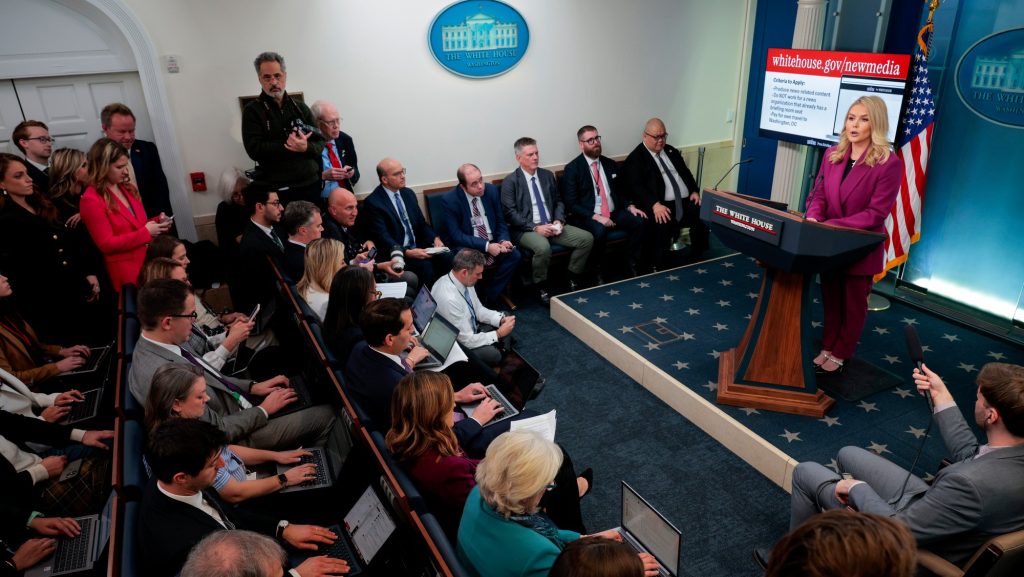
When the James S. Brady Press Briefing Room welcomes a new press secretary, the political atmosphere in Washington shifts instantly under heightened scrutiny. The small, carpeted theater inside the West Wing has broken experienced political operators and minted national figures overnight. With Donald Trump directing the executive branch, that podium transforms into one of the most visible media battlegrounds on earth. All eyes turned toward that blue backdrop as Katie Zacharia prepared to address the White House press corps for her inaugural televised briefing.
Major networks moved quickly to broadcast the event across international airwaves. As reported by the BBC and Fox News, live video feeds were established early in anticipation of her debut appearance at the microphone. Meanwhile, The Washington Post confirmed that her term had officially begun, marking a decisive changing of the guard within the administration’s media operations. Behind the live television graphics and clicking camera shutters lies a calculated political shift that signals how the administration intends to communicate its agenda to an intensely divided public.
A High Stakes Debut in the James S Brady Briefing Room
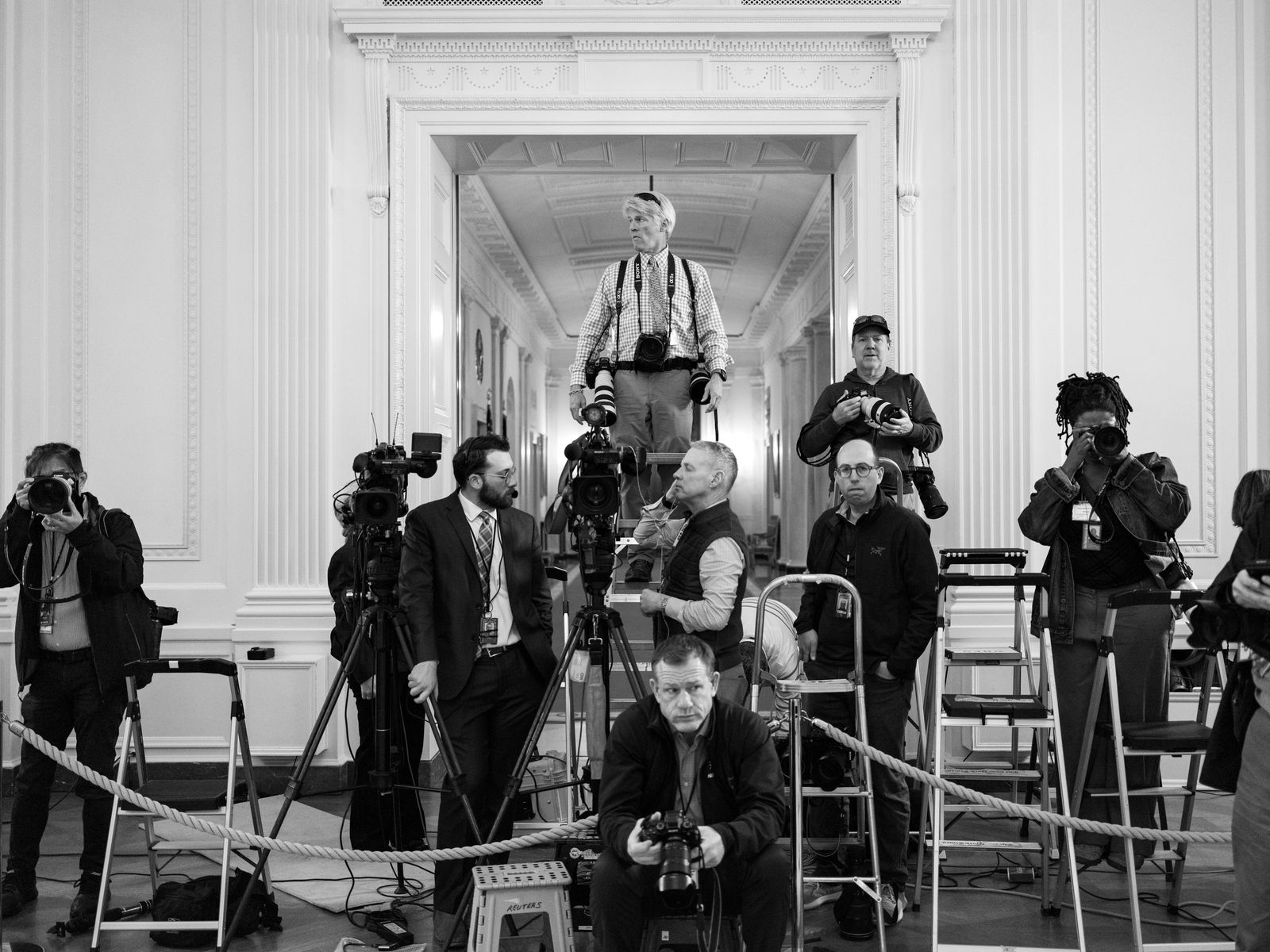
The transition behind the lectern is never purely operational. In modern executive governance, the arrival of this new press secretary represents a calculated reset in presidential communications. Live coverage across PBS NewsHour and Fox News captured the packed conditions in the West Wing theater, where wire service reporters, television correspondents, and print journalists assembled to test the administration’s newest spokesperson. Every seat was occupied, and the aisles brimmed with broadcast cameras eager to capture the initial back-and-forth exchanges.
The briefing room operates with distinct institutional dynamics. While correspondents sit in assigned rows determined by the White House Correspondents’ Association, the spokesperson standing at the podium commands the room’s tempo, dictates who speaks, and decides when to deflect or engage. For a debut briefing, the stakes are elevated because initial impressions set the ground rules for months of future interactions. Seasoned political observers recognize that early missteps or hesitations can embolden an already aggressive press corps, whereas a controlled and assertive performance establishes executive authority right out of the gate.
The Ideological Blueprint and Political Posture of Katie Zacharia
To understand the strategic calculation behind this West Wing appointment, one must examine the ideological alignment of the person behind the microphone. An investigative profile published by NPR characterized Zacharia as an unabashedly devoted fan of Donald Trump and the broader MAGA movement. This dynamic is central to the modern communications playbook of the Trump administration, which routinely prioritizes ideological fidelity over conventional Washington public relations credentials.
In historical administrations, spokespersons occasionally attempted to present themselves as nonpartisan translators of executive policy, keeping a professional distance between personal politics and official announcements. That model has largely vanished. As NPR’s reporting highlighted that the new press secretary brings an unapologetic personal alignment with the MAGA movement, the White House is signaling that its communications will be defined by direct advocacy and political loyalty. This posture ensures that presidential policy proposals, executive orders, and populist messaging are defended without internal ambiguity or institutional hesitation.
The 5 Major Podiums Pressures Redefining White House Media Strategy
Stepping up to the most famous lectern in international politics involves confronting distinct structural hurdles. As Zacharia assumes command of the podium, her performance will be measured against five defining challenges that shape day-to-day operations inside the executive communications apparatus.
Calibrating the First Live Exchange With the Press Corps
The initial interaction between a spokesperson and the White House press corps establishes baseline expectations for credibility and stamina. Veteran journalists from major legacy outlets typically open briefings with complex, multi-part inquiries designed to probe vulnerabilities in executive decision-making. Simultaneously, alternative and digital media outlets in the room pursue ideological angles that test the administration’s coherence. The challenge lies in surviving the initial barrage without producing contradictory statements that could destabilize other executive agencies or dominate the evening cable news circuit.
Navigating Sharp Ideological Scrutiny Across Leading Outlets
The polarization of the American media landscape ensures that no podium response is evaluated through a unified lens. While conservative outlets assess the spokesperson’s ability to challenge mainstream media narratives, traditional and center-left platforms focus heavily on factual precision and institutional protocol. Operating successfully in this bifurcated environment requires rhetorical agility, as the new press secretary works to bridge executive directives with sharp journalistic questioning while maintaining narrative consistency across disparate audiences.
Translating Uncompromising West Wing Loyalty Into Daily Answers
Serving an executive who communicates directly and frequently via social media platforms creates a unique set of operational demands. A press secretary cannot simply repeat standardized talking points when presidential remarks can instantly redefine administration policy. Balancing fierce loyalty to Donald Trump’s political doctrine with the practical requirement of providing substantive information to government agencies requires non-stop coordination with West Wing senior advisers. Any perceived discrepancy between what is spoken at the briefing lectern and what the president posts online will be exploited instantly by reporters seeking inconsistencies.
Balancing Fast Breaking Policy Shocks Against Market Stability
Podium remarks carry immense economic weight, influencing global financial exchanges, international commodity pricing, and bond yields. When a White House spokesperson addresses foreign trade policies, regulatory rollouts, or public debt, global capital markets adjust positions within seconds. Institutional investors evaluate administration announcements with extreme caution, analyzing executive rhetoric for signs of fiscal instability. In financial sectors, managing volatility requires rigorous analytical discipline. Institutional traders continuously assess how Bond duration mechanics and 4 proven rules that prevent devastating portfolio losses can shield long-term capital from macro fluctuations, and they view unscripted podium declarations as potential triggers for regulatory and interest rate volatility. Consequently, while the new press secretary fields immediate queries on executive actions and domestic policy, she must deliver economically coherent remarks that avoid rattling nervous global markets.
Sustaining Narrative Control Across an Unforgiving 24-Hour Cycle
The modern information environment moves at a tempo that outpaces traditional news conferences. By the time a live briefing concludes, video fragments have already generated millions of impressions across social networks, triggering real-time responses from opposition lawmakers and international observers. Maintaining message discipline across multiple consecutive days demands relentless mental endurance. A spokesperson must manage rolling domestic crises, unexpected international conflicts, and routine governance without losing strategic focus or allowing the media to dictate the administration’s primary talking points.
How the Global Press Evaluates Executive Communications
The ramifications of White House briefings reach far beyond the borders of the United States. International news organizations monitor every briefing for subtle shifts in foreign policy, trade agreements, and military posture. The coverage by the BBC underscored how foreign correspondents watching the new press secretary from abroad parse every deliberate pause and factual assertion to understand the administration’s broader geopolitical priorities.
Diplomatic corps in foreign capitals routinely review briefing transcripts as early indicators of administrative intent. When the White House speaks, foreign ministries assess the degree of cohesion between cabinet departments and the Oval Office. For international observers, a spokesperson who communicates with unwavering alignment to the president offers predictability, even if the underlying policies generate geopolitical tension. The ability of the communications team to articulate coherent foreign policy stances under pressure remains a key measure of administrative competence globally.
The Road Ahead for the West Wing Communications Machinery
As the initial flurry of live television broadcasts subsides, the substantive work of managing day-to-day presidential messaging begins. The West Wing press shop operates in an environment where temporary goodwill is rare and operational friction is structural. Over the coming weeks will reveal how the new press secretary adapts to relentless media scrutiny while advancing the core tenets of the MAGA platform from the world’s most scrutinized lectern.
The measure of success for this media strategy will not be determined by a single briefing, but rather by long-term narrative endurance. If Katie Zacharia can successfully defend administration initiatives, withstand persistent questioning from veteran correspondents, and preserve trust among the president’s base, she will solidify her standing as a cornerstone of Trump’s communications apparatus. The James S. Brady Briefing Room remains a relentless crucible, and its newest occupant now steps directly into the center of the political arena.