Bond convexity mechanics and 4 proven rules that prevent devastating portfolio losses
Linear duration models fail when interest rates swing wildly. Discover the second-order mathematics of bond curvature and how to protect your fixed income portfolio from asymmetric downside risk.
Mastering bond convexity mechanics separates institutional risk managers from retail investors who mistakenly assume interest rate risk follows a neat, straight line. Modified duration offers a convenient first-order approximation of how bond prices respond to shifts in benchmark interest rates. If a portfolio carries an effective duration of seven years, conventional wisdom dictates that a one-hundred-basis-point drop in yields will elevate asset prices by roughly seven percent. Conversely, a one-hundred-basis-point surge should trim portfolio value by the same margin.
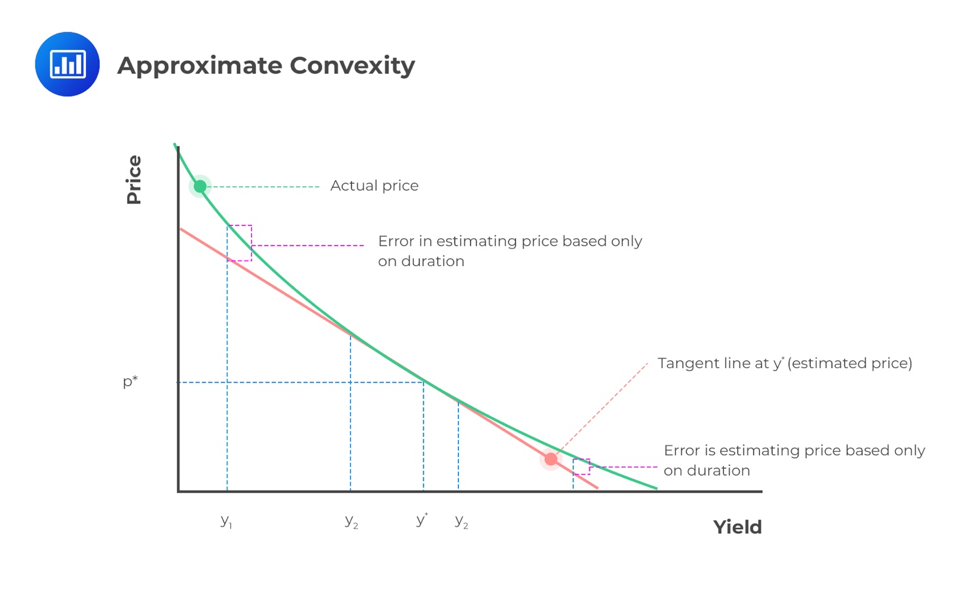
In the real world, capital markets rarely adhere to neat linear geometry. Bond price-yield relationships trace a distinct hyperbolic curve rather than a flat slope. Duration calculates only the tangent line at a single fixed coordinate on that curve. The moment interest rates swing dramatically—whether prompted by emergency central bank actions, sovereign debt issuance shocks, or abrupt inflationary spikes—the linear approximation disintegrates. The divergence between what simple duration forecasts and what a fixed income portfolio actually gains or loses is governed entirely by curvature. When yields drop, a bond with positive curvature gains more value than duration predicts; when yields spike, it sheds significantly less. Failing to account for this structural reality leaves institutional and private portfolios vulnerable to sudden balance sheet impairments.
The linear illusion of standard bond duration
Most market participants begin their fixed income education with duration because it provides an intuitive, singular metric. Duration acts as an effective yardstick for sensitivity, condensing coupon schedules, maturity timelines, and reinvestment assumptions into an easily digestible number of years. Yet every model built purely on linear duration rests on an unspoken fiction: that the rate of change in bond prices remains constant across all yield environments.
When yields oscillate violently, relying strictly on Macaulay or modified duration ignores the foundational reality of bond convexity mechanics. Bond cash flows are discounted exponentially, not proportionally. As yields approach zero, each marginal discount factor grows disproportionately powerful, driving bond prices upward along an accelerating trajectory. Conversely, as yields climb higher into restrictive territory, the present value of future cash flows decays at a diminishing rate. A straight tangent line cannot capture this acceleration.
Treating duration as an exhaustive risk metric creates dangerous blind spots during monetary regime changes. If an investor models portfolio exposure based purely on a straight line, they will systematically underestimate upside appreciation during aggressive easing cycles and overestimate capital destruction during mild tightening. More dangerously, in scenarios involving structural curve twists, butterflies, and steepeners, linear projections fail entirely. Much like how ignoring the intricate chemical transformation of Maillard reaction mechanics and 4 proven rules that unlock unbelievable savory depth ruins a sear, ignoring the structural nonlinearities of fixed income math blinds investors to the true forces governing portfolio returns under pressure.
How curvature alters fixed income behavior under volatile yields
At its mathematical core, bond convexity mechanics describe the second derivative of price with respect to yield. If modified duration represents velocity, convexity represents acceleration. It measures how quickly the duration of a bond shifts as interest rates traverse up and down the macroeconomic landscape.
A plain-vanilla, fixed-rate government bond possesses positive convexity. This mathematical property acts as an organic, self-adjusting cushion. As benchmark yields fall, the bond price climbs, and its duration automatically lengthens, compounding capital appreciation. As yields rise, the bond price falls, but its duration automatically contracts, thereby softening subsequent losses. This asymmetric payoff profile means that an investor holding high positive convexity captures more upside than downside for any identical basis-point shift in prevailing rates.
However, positive curvature is not a free lunch handed out by benevolent debt markets. Market participants pay for convexity through lower current yields. Institutional traders frequently refer to this tradeoff as the convexity premium or the convexity drag. In stagnant, low-volatility interest rate environments where yields crawl sideways inside a narrow corridor, carrying excessive convexity can generate an ongoing performance penalty compared to higher-yielding linear instruments. The economic payoff only crystallizes when volatility accelerates and market yields break out of their historical ranges.
Four proven rules to harness bond curvature and protect your capital
Translating abstract calculus into resilient portfolio construction requires understanding four core disciplines shaped by bond convexity mechanics.
Map the second derivative across asymmetric rate shocks
Fixed income risk analysis must systematically incorporate second-order Taylor series expansions instead of relying solely on baseline duration metrics. Standard risk reports that report risk simply as DV01 (dollar value of a basis point) mask severe portfolio vulnerabilities during outsized macroeconomic moves. When stress-testing exposures against a fifty-basis-point shock, the error term between duration and reality remains negligible. At two hundred basis points, that error term expands exponentially.
Risk frameworks must quantify price changes using the combined formula of modified duration and convexity adjustment. By calculating half of the portfolio convexity multiplied by the square of the yield change, analysts capture the true shape of the balance sheet payoff. Portfolio managers who integrate this second derivative across non-parallel curve scenarios identify hidden vulnerabilities early. They know precisely where capital preservation holds firm and where structural exposure begins to deteriorate before market liquidity evaporates.
Separate positive convexity from negative mortgage prepayment drag
Not all debt instruments share the benign curvature of unadorned government treasuries. Structured debt, callable corporate bonds, and mortgage-backed securities frequently display severe negative convexity. In mortgage pools, homeowners possess the embedded financial option to refinance their mortgages whenever prevailing interest rates drop. When rates decline, refinancing activity accelerates, forcing bondholders to receive early principal repayments precisely when reinvestment yields are least attractive.
Here, negative bond convexity mechanics penalize the investor at both extremes of the economic spectrum. When interest rates plummet, mortgage duration shrinks, cutting off price appreciation just when capital gains should flourish. When interest rates rocket upward, homeowners stay put, prepayment rates freeze, and the effective duration of the mortgage asset extends outward, exposing the holder to catastrophic price drops. Recognizing the presence of embedded options within fixed income assets prevents managers from blindly reaching for optical yield while absorbing devastating, unhedged downside exposure.
Balance barbell structures against bullet maturities
Curvature provides the analytical foundation for designing barbell strategies that systematically outperform intermediate bullet portfolios. A barbell configuration combines short-duration cash equivalents or ultra-short paper with ultra-long, high-duration bonds. Conversely, a bullet strategy concentrates the entire capital allocation into an intermediate maturity that shares the exact same overall duration as the barbell.
While both portfolios carry identical linear duration, their curvature differs substantially. Because convexity increases exponentially with maturity, the long end of the barbell imparts an enormous amount of positive convexity to the total structure. If the yield curve experiences substantial non-parallel shifts or extreme yield volatility, the barbell consistently generates superior risk-adjusted returns over the bullet maturity. The ultra-long bonds surge during flight-to-safety episodes, while the short-end bucket provides immediate reinvestment flexibility and shields total portfolio liquidity.
Stress test portfolios beyond parallel yield curve assumptions
Conventional bond modeling routinely assumes that yield curve shifts happen uniformly across all tenors. In actual trading environments, parallel shifts are the exception rather than the norm. Yield curves steepen, flatten, twist, and invert based on shifting term premia, central bank policy adjustments, and inflation expectations.
Robust fixed income architecture requires decomposing convexity along distinct key rate tenors. A portfolio might exhibit positive aggregate convexity on a broad consolidated balance sheet, yet hold acute negative convexity concentrated specifically in the five-to-seven-year segment of the curve. By stress-testing how intermediate kinks and shifts interact with underlying option-adjusted spreads, investors eliminate latent maturity mismatches. Portfolios engineered against segmented yield shifts withstand complex economic downturns that break simplistic duration-matched allocations.
Navigating real market environments without theoretical blind spots
Ignoring bond convexity mechanics during periods of sharp monetary policy transitions leaves balance sheets exposed to compounding errors. Consider the historic bond routs where rapid-fire central bank rate hikes demolished fixed income values across global asset classes. Portfolios holding unhedged negative convexity or long-duration debt with insufficient curvature to buffer the shock experienced drawdowns comparable to high-risk equity selloffs.
The academic research published in the CFA Institute analysis on fixed income risk and return dynamics clarifies that convexity is the defining factor dictating resilience during monetary regime inflections. When central banks pivot aggressively from quantitative easing to quantitative tightening, the structural curvature of a debt holding dictates whether an asset manager remains liquid or faces forced liquidations.
Furthermore, institutional liquidity conditions amplify these mathematical dynamics. When volatility surges, bid-ask spreads for structured instruments expand rapidly, preventing investors from rebalancing their duration hedges in real time. Investors who built portfolios with organic positive convexity ride out these liquidity dry spells because their structural math works in their favor without requiring continuous active intervention.
Building resilient fixed income strategies for volatile cycles
Relying exclusively on duration in modern capital markets is equivalent to steering a vehicle while watching only a stationary speedometer, completely oblivious to road inclination and acceleration. Duration describes a static snapshot in time, whereas bond markets exist in perpetual kinetic motion.
Achieving long-term capital preservation requires viewing every fixed income allocation through a dual lens of linear duration and nonlinear curvature. Investors must systematically monitor the convexity premium they surrender, ruthlessly purge uncompensated negative convexity from credit exposures, and tactically leverage barbell designs when macro volatility threatens baseline asset returns. A disciplined grasp of bond convexity mechanics transforms portfolio defense into an asymmetric advantage, turning market turbulence into measurable resilience.