Disneyland News Exposes 5 Critical Changes Alarming Anaheim Visitors
A rapid succession of security scares, sidewalk unrest, and multi-billion-dollar planning revisions has thrust the Anaheim theme park into an unprecedented operational spotlight. Here is the full breakdown of how new developments are reshaping the guest experience.
Unpacking the latest disneyland news reveals a volatile mix of security scares, visitor unrest, and ambitious multi-billion-dollar development blueprints altering the legendary California resort. For millions of annual vacationers, the perimeter surrounding Harbor Boulevard has historically functioned as a clean partition between mundane street life and cinematic storytelling. Over the past seventy-two hours, that carefully manufactured boundary has faced severe stress tests from external disruptions and massive internal corporate realignments.
From bomb squad investigations immediately outside the gates to intensifying sidewalk demonstrations and significant revisions to the $1.9 billion DisneylandForward master plan, the resort district is experiencing acute friction. Understanding these overlapping stories requires untangling municipal public property laws, aggressive real estate positioning, and sweeping changes to how loyal passholders access the gates.
High Anxiety at the Gates and Perimeter Security Responses
The cascade of disneyland news arrived abruptly on Monday when local authorities scrambled to address a potential explosive threat near the resort perimeter. According to real-time reporting from NBC Los Angeles, a suspicious device found near Disneyland prompted law enforcement to respond directly to the theme park district. Anaheim police units and perimeter security specialists mobilized immediately to cordon off the area, establishing a cautious safety buffer around approaching pedestrians and incoming transport shuttles.
While theme park operations within the turnstiles continued under heightened vigilance, the incident rattled families arriving for morning rope drops. The Anaheim Police Department routinely coordinates with corporate security teams, yet any disruption in the dense pedestrian artery connecting regional bus drop-offs to the security screening tents triggers massive logistical bottlenecks. Although investigators quickly contained the scene and evaluated the object, the immediate police deployment served as a stark reminder of the security vulnerabilities confronting open urban resort perimeters.
Five Major Shifts Reshaping the Anaheim Resort Experience
Beyond isolated tactical responses, structural transformations across the resort have created widespread debate among locals, industry analysts, and regular tourists. Five distinct developments capture the sudden operational pivot taking place inside and outside the theme park borders.
Heightened Law Enforcement Mobilization Over a Suspicious Device
The Monday morning security alert covered by NBC Los Angeles illustrated how fragile the entry corridors into the property can be. When officers arrived to investigate the unattended device, standard perimeter protocols forced immediate detours around public walkways. Disney invests heavily in private security canine units, metal detectors, and high-resolution surveillance, yet the property lines terminate at public city sidewalks. When an anomaly occurs on municipal pavement, jurisdiction transfers instantly to the Anaheim Police Department, reminding travelers that Disney cannot fully insulate its surrounding perimeter from standard metropolitan hazards.
Escalating Sidewalk Turmoil and Agitators Along Harbor Boulevard
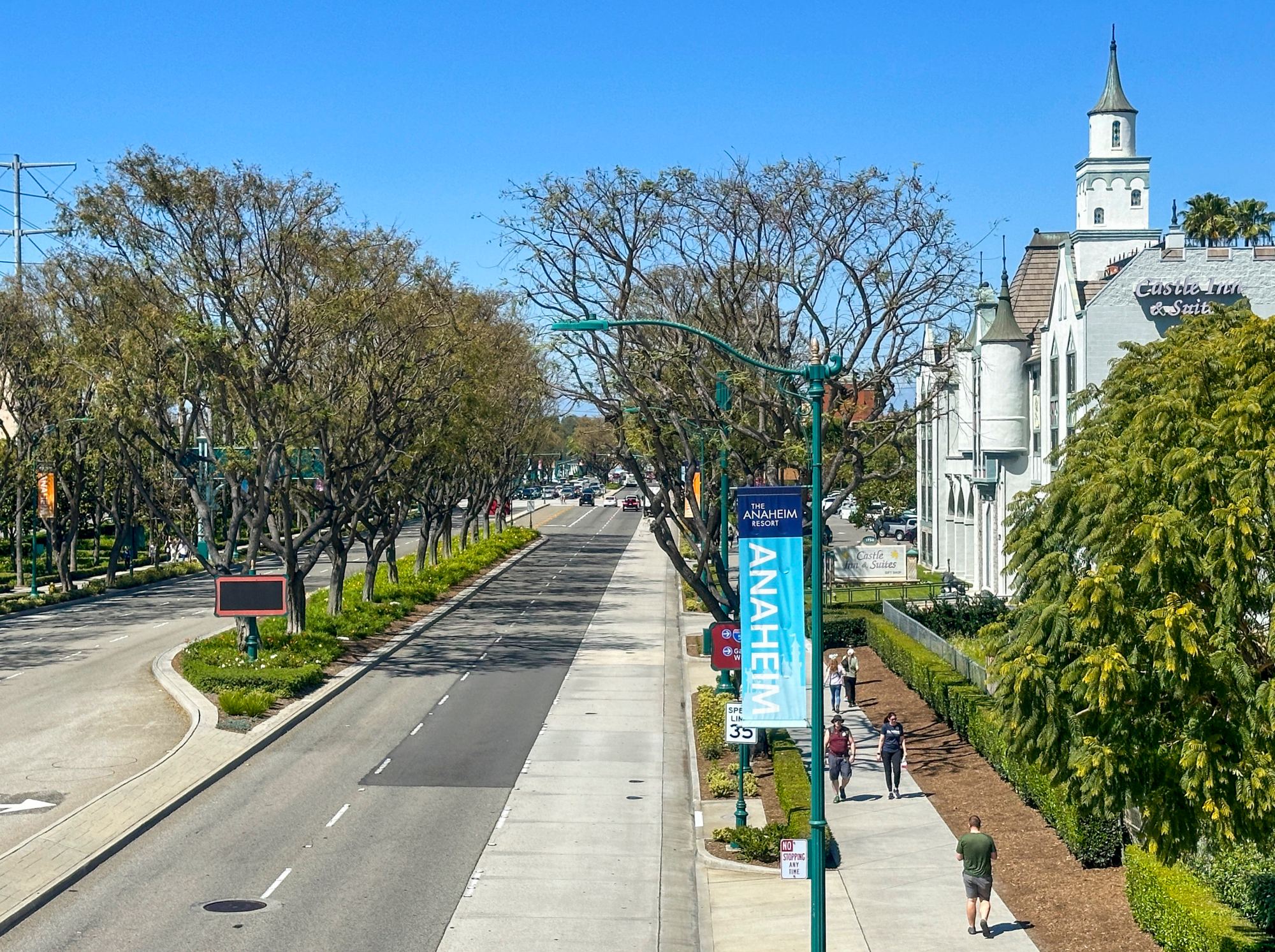
Beyond perimeter security, recent disneyland news has centered on the increasingly hostile environment confronting visitors on public sidewalks outside the main gates. An investigative dispatch published by the New York Post exposed a deteriorating situation where aggressive street preachers, megaphone agitators, and unregulated commercial hawkers line the public paths along Harbor Boulevard. Visiting families have lodged escalating complaints, describing verbal harassment, explicit religious damnation broadcast through high-decibel amplifiers, and physical intimidation as they guide young children toward security checkpoints.
Because the wide sidewalks outside the resort boundary are public municipal easements protected by First Amendment jurisprudence, private security cannot eject demonstrators or loud vendors. The New York Post highlighted that vacationers now find themselves forced through a gauntlet of confrontational rhetoric before ever reaching ticket scanners. This friction has generated mounting calls for the City of Anaheim to implement targeted noise ordinances and pedestrian buffer zones without infringing on constitutional civil liberties.
DisneylandForward Adjustments and the Scaled Down Parking Structure
Infrastructure planning behind the scenes is moving just as aggressively. The Orange County Register reported that Disneyland has officially reduced the size of its proposed east-side parking structure, settling on a 7-level, 6,000-space facility. This strategic redesign paves the path forward for the massive $1.9 billion DisneylandForward zoning initiative approved earlier this year by the Anaheim City Council.
The altered footprint reflects a calibrated compromise between capacity requirements, regional traffic mitigation, and structural setback rules. By downsizing the parking footprint while preserving critical guest vehicle throughput, the company clears essential real estate to merge retail, hospitality, and immersive theme park expansions over the coming decades. Analysts view this structural revision as tangible proof that the resort is transitioning from conceptual zoning battles into concrete architectural engineering.
The Magic Key No Show Repeal and Shifting Ticketing Economics
For annual passholders, the most consequential disneyland news focuses on long-awaited administrative relief within the reservation network. Detailed operational reporting from MiceChat revealed that Disneyland has officially eliminated its controversial Magic Key no-show penalty policy. Previously, reservation holders who failed to scan into a park three times within a rolling 90-day window faced a punitive 30-day reservation freeze, a policy that drew fierce criticism from local consumers facing unpredictable life schedules.
While passholders celebrated the end of attendance penalties, the relief arrived alongside subtle upward nudges in day-ticket pricing and ongoing operational shifts across the resort. MiceChat also documented the quiet disappearance of traditional hand-crank pressed penny machines, which are systematically being swapped for cashless digital kiosks. The combination of policy leniency on reservations and higher price floors underscores a corporate strategy determined to maximize yield while softening bureaucratic friction for its most lucrative local customer base.
Aggressive Land Acquisitions and Real Estate Diversification
The physical boundaries of Disney’s Southern California empire are expanding well beyond the berm. Statewide corporate reporting compiled by Patch documented Disneyland’s quiet purchase of a 25-acre parcel, signaling ongoing land banking designed to support logistical overflow, office administrative hubs, or backstage employee infrastructure. Complementing this acreage move, MiceChat highlighted an expansive $115 million corporate campus acquisition in nearby Cypress, California.
These regional maneuvers reflect broader California disneyland news as the resort prepares its operational infrastructure for the decades ahead. The aggressive corporate footprint expansion arrives concurrently with public reflections from former Disney chief executive Bob Chapek, whose candid observations in upcoming memoir materials have reignited debate over post-pandemic pricing models, park reservation systems, and executive philosophy surrounding theme park monetization.
Atmospheric Immersion and the Disruption of the Park Threshold
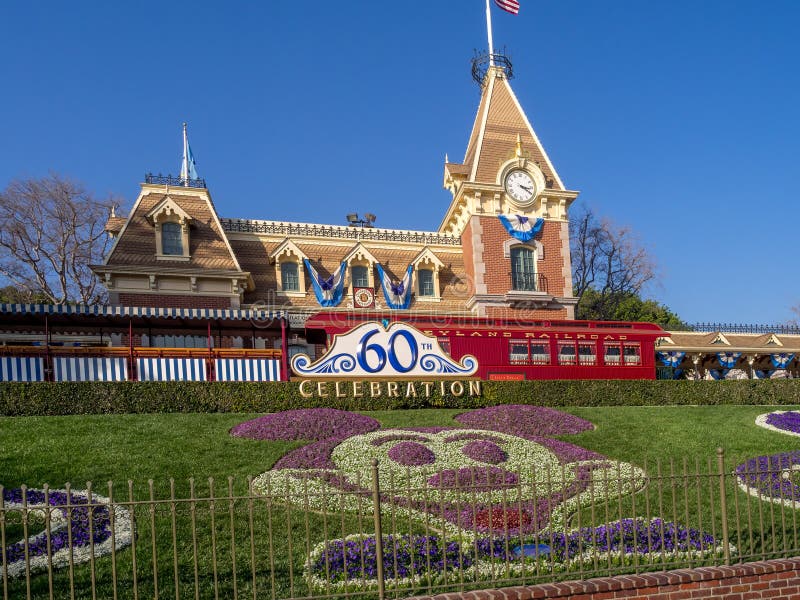
Walt Disney famously conceived the entrance of Disneyland as a theatrical curtain, designing a deliberate spatial transition that detached guests from commercial reality. The architectural compress-and-release dynamic under the Main Street train station was engineered to reset sensory inputs entirely. Imagine transitioning from an urban thoroughfare into a meticulously curated world where architectural sightlines and audio design operate precisely like Film score leitmotif mechanics and 4 proven rules that evoke unforgettable emotional resonance, only to have that sensory bubble shattered before reaching the turnstiles.
The chaotic sidewalk gauntlet documented along Harbor Boulevard represents a failure of that acoustic and visual buffering. When amplified denunciations and street vendor disputes echo directly into the ticket plaza, the psychological shift from urban tension into storybook fantasy short-circuits. Walt Disney solved the architectural clutter of 1950s Anaheim by buying massive acreage when constructing Walt Disney World in Florida. In Anaheim, however, the corporation remains hemmed in by the city grid, leaving park guests vulnerable to urban realities until they pass physical turnstiles.
Operational Realities Facing Anaheim Guests and Passholders
Analyzing the broader implications of disneyland news highlights the tightrope corporate leadership walks between managing immediate public security and executing long-range municipal expansion. The $1.9 billion DisneylandForward blueprint requires cordial relations with the Anaheim municipal government, local business associations, and nearby residential neighborhoods. If public sidewalks become synonymous with hostility and police cordons, tourist goodwill erodes faster than new attractions can open.
For travelers planning upcoming visits, the practical takeaways are straightforward. Early arrivals must account for potential security backups at Harbor Boulevard perimeter checkpoints, where private guards and municipal officers operate with elevated scrutiny. Passholders benefit immediately from the elimination of Magic Key no-show sanctions, offering greater flexibility during peak seasonal crowds, even as base admission prices creep steadily upward.
Navigating this evolving wave of disneyland news requires tourists and passholders alike to plan with heightened vigilance. As Anaheim continues wrestling with public property regulations and Disney accelerates heavy construction for its multi-decade expansion, the line separating magical escapism from modern urban complexity will remain one of the most contested thresholds in international tourism.