Bond duration mechanics and 4 proven rules that prevent devastating portfolio losses
Investors often mistake a bond’s maturity date for its true financial lifespan, exposing their wealth to brutal interest rate swings. Unpacking the mathematical physics of duration and convexity reveals how to immunize capital against unexpected monetary shocks.
Mastering bond duration mechanics separates investors who preserve generational wealth from those who watch capital evaporate during abrupt monetary tightenings. Most market participants intuitively understand that when interest rates climb, bond prices fall. Yet surprisingly few grasp the exact rate of that decline, mistaking the calendar date stamped on a bond certificate for the actual timeline of their financial exposure. A thirty-year bond does not behave like thirty individual one-year investments stacked in a row, nor does a ten-year note always exhibit greater price volatility than an eight-year debenture with a lower payout.
Fixed income assets are living streams of discounted cash flows. Each coupon payment arriving early pulls the asset’s economic center of gravity closer to the present day, while backloaded principal repayments drag that center deeper into an uncertain future. When central banks manipulate baseline borrowing costs, they do not merely nudge yields; they fundamentally alter the present value discount applied to every future dollar. Dissecting the internal machinery of duration unlocks the ability to forecast, measure, and control that vulnerability before market volatility exacts a costly toll.
The hidden fulcrum governing fixed income sensitivity
In 1938, economist Frederick Macaulay set out to solve a fundamental riddle in financial analysis. He observed that comparing bonds purely by their stated maturity dates gave an incomplete, often misleading picture of risk. A bond maturing in ten years that pays an eight percent annual coupon returns a massive portion of its capital well before year ten. Conversely, a zero-coupon bond maturing in ten years returns absolutely nothing until the final day. While both share an identical legal maturity, their economic vulnerability to shifting interest rates is radically different.
A deep dive into bond duration mechanics reveals that a bond is not simply an IOU; it is a balance beam where cash flows represent weights placed at different distances along a timeline. Macaulay duration calculates the exact point where that seesaw balances. It measures the weighted average time until an investor receives the present value of every promised cash flow. For a zero-coupon bond, the balance point rests precisely on its maturity date because there are no intermediary payments to shift the center of mass forward. For coupon-bearing instruments, the fulcrum shifts leftward toward the present, shortening the duration relative to the final calendar maturity date.
This balance point is what dictates price volatility. When interest rates fluctuate, the cash flows scheduled furthest in the future suffer the heaviest discounting penalties due to the compounding mechanics of time value of money. An asset with a long duration carries an extended lever arm. Even a tiny upward nudge in benchmark rates exerts massive downward torque on the bond price. Understanding this spatial relationship allows institutions to look past nominal maturities and evaluate the true temporal exposure embedded within their fixed-income holdings, as detailed in this CFA Institute analysis on fixed income risk and return dynamics.
How interest rate shifts distort linear expectations
Macaulay duration measures cash flow timing in years, but financial managers require an operational translation into dollars and percentages. This necessity gave rise to modified duration, which divides Macaulay duration by one plus the bond’s yield per period. Modified duration yields a direct sensitivity metric, providing a clean rule of thumb indicating that for every one percent shift in market yields, a bond’s price will move inversely by approximately that duration percentage. A portfolio carrying a modified duration of seven years will drop roughly seven percent if prevailing yields rise by one hundred basis points.
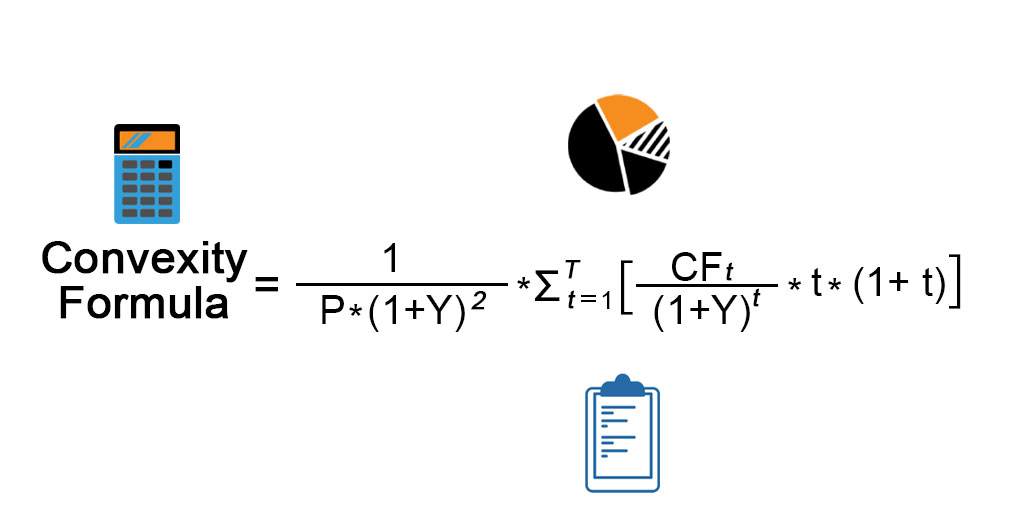
When dissecting bond duration mechanics, one quickly discovers that price changes are never purely linear. Plotting a bond’s price against varying interest rates does not yield a straight diagonal line; it produces a curved trajectory known as convexity. Modified duration serves merely as the tangent line to that curve at a single yield snapshot. For minor interest rate tremors of five or ten basis points, the linear approximation works well enough. However, when macro shifts trigger sweeping yield adjustments, linear predictions diverge sharply from market reality.
Convexity represents the second derivative of the price-yield relationship, capturing how duration itself morphs as interest rates swing. In standard option-free bonds, this curvature is positive, acting as an asymmetric shield. As yields plummet, the bond price climbs faster and higher than duration alone predicts. When yields surge, the price declines more gradually than expected because higher discount rates shrink the duration, effectively pulling the asset’s temporal exposure inward. Failing to account for convexity leads analysts to drastically overestimate losses during severe sell-offs and underestimate gains during rapid rate cuts.
Four essential strategies for mastering portfolio interest rate risk
Implementing disciplined bond duration mechanics requires moving beyond textbook definitions into active balance sheet defense. Institutional managers, sovereign wealth desks, and disciplined private investors employ specific protocols to tame the mathematical forces that govern fixed-income repricing.
Map the true cash flow horizon rather than final maturity dates
Never rely on stated maturity dates when constructing an asset allocation framework. A high-yield corporate bond carrying a nine percent coupon and a seven-year maturity often carries a far shorter effective duration than an ultra-low-coupon municipal bond maturing in five years. Calculate the cash-flow-weighted timing for every individual holding, recognizing that heavy upfront coupon payments systematically insulate a portfolio from duration risk. By mapping the portfolio by duration contribution rather than nominal maturity, investors eliminate the blind spots that leave balance sheets vulnerable to swift central bank actions.
Exploit positive convexity to cushion aggressive yield spikes
Convexity is the ultimate shock absorber in fixed income management. High-coupon bonds offer reliable income streams, but zero-coupon and low-coupon long-term bonds generate exceptional convexity per dollar invested. Balancing risk across varied bond maturities requires an ear for harmony similar to how audio engineers blend micro-textures. Just as studying Foley sound design mechanics and 4 proven rules that create unforgettable cinematic realism reveals how imperceptible background layers generate an unmistakable illusion of physical weight, tracking cash flow timing uncovers the true structural gravity anchoring financial instruments. Maintaining strong positive convexity ensures that your portfolio gains upside acceleration during monetary easing while automatically stiffening its resistance against escalating yields.
Immunize liabilities through precise dollar duration matching
Asset-liability matching represents the gold standard of capital preservation for entities with known future payout obligations, such as pension trusts, insurers, or individuals planning retirement disbursements. Market participants often assume that purchasing assets that mature exactly on the date a bill comes due guarantees solvency. This approach fails when market shocks force early liquidations or reinvestment shifts. Portfolio immunization requires matching the dollar duration of assets to the dollar duration of liabilities. When dollar durations match, any loss in asset capital value resulting from a rate spike is mathematically offset by the increased reinvestment yield earned on incoming coupon cash flows over the investment horizon.
Stress test portfolio baselines against non parallel yield curve shifts
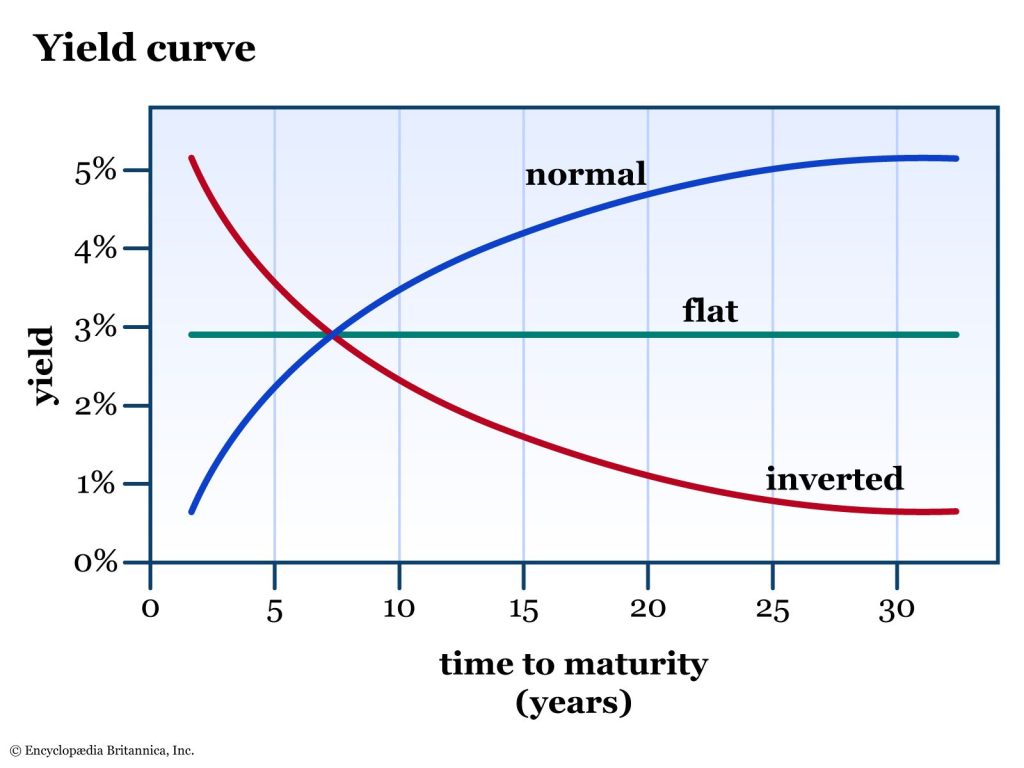
Textbook duration formulas operate under the convenient fantasy that yield curves shift in perfect parallel lines, with two-year, ten-year, and thirty-year rates moving by identical amounts. Reality rarely behaves with such tidy symmetry. Real-world markets twist, steepen, flatten, and invert under distinct macroeconomic crosscurrents. Advanced risk management relies on key rate duration, which decomposes overall sensitivity into distinct maturity buckets along the curve. Stress testing a portfolio against sharp steepeners or flattening pressures illuminates concentrated exposures that standard aggregate duration metrics obscure entirely, ensuring that localized rate spikes do not dismantle an otherwise diversified portfolio.
Navigating the psychological traps of fixed income management
Market psychology often fractures because investors misunderstand bond duration mechanics during prolonged bull runs. When interest rates hover near historic lows for years, duration stealthily inflates across fixed-income markets. Because coupons are tiny, the temporal center of gravity for newly issued debt drifts further into the future. Investors seeking yield willingly extend their maturity profiles, completely unaware that low-coupon long-term bonds carry historic levels of duration sensitivity. When rates inevitably snap back, the resulting capital destruction catches conservative allocators completely off guard.
This vulnerability is compounded by the yield illusion. An investor drawn to an instrument offering a slightly higher yield often overlooks that the extra yield comes bundled with multiple additional years of duration. A fifty basis point yield pickup is entirely meaningless if an unexpected twenty-five basis point rate hike wipes out two years of accumulated interest in an afternoon. Fixed income safety is never an inherent property of the asset class itself; safety is a mathematical condition established by matching your cash flow requirements to the duration profile of your balance sheet.
Another common psychological pitfall involves treating paper losses on long-duration bonds as purely theoretical. Investors console themselves with the belief that holding a bond to its distant maturity eliminates risk since par value will eventually be returned. While principal may indeed be repaid upon maturity, the opportunity cost incurred by holding frozen, low-yielding paper in a high-rate environment is a permanent economic loss. Purchasing power decays relentlessly, and the investor loses the ability to deploy capital into higher-yielding opportunities, proving that ignored duration risk always carries a tangible cost.
Building resilient portfolios through mathematical discipline
The machinery governing fixed income does not depend on market sentiment, corporate earnings surprises, or consumer trends. It operates on the immutable arithmetic of discounted cash flows. A bond portfolio is a dynamic structure balancing promised payments across time against the shifting opportunity cost of capital. When investors recognize that time itself functions as a leverage amplifier, the chaotic gyrations of global debt markets suddenly resolve into predictable mechanics.
Ultimately, mastering bond duration mechanics demands a humble appreciation of how interest rates warp time and value. By looking beyond nominal maturity markers, quantifying curvature through convexity, and rigorously matching duration to liability time horizons, investors strip uncertainty from their fixed-income strategies. The resulting portfolio transforms from a passive victim of central bank policy into an engineered fortress built to withstand any monetary climate.