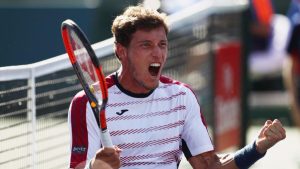
Casper Ruud Faces 3 Crucial Battles as Shanghai Masters Drama Intensifies
Following a painful late-summer withdrawal in New York, Casper Ruud returns to elite hard-court competition in Shanghai against American challenger Learner Tien. Here is what the high-stakes clash signals for the Norwegian star’s ranking and health.
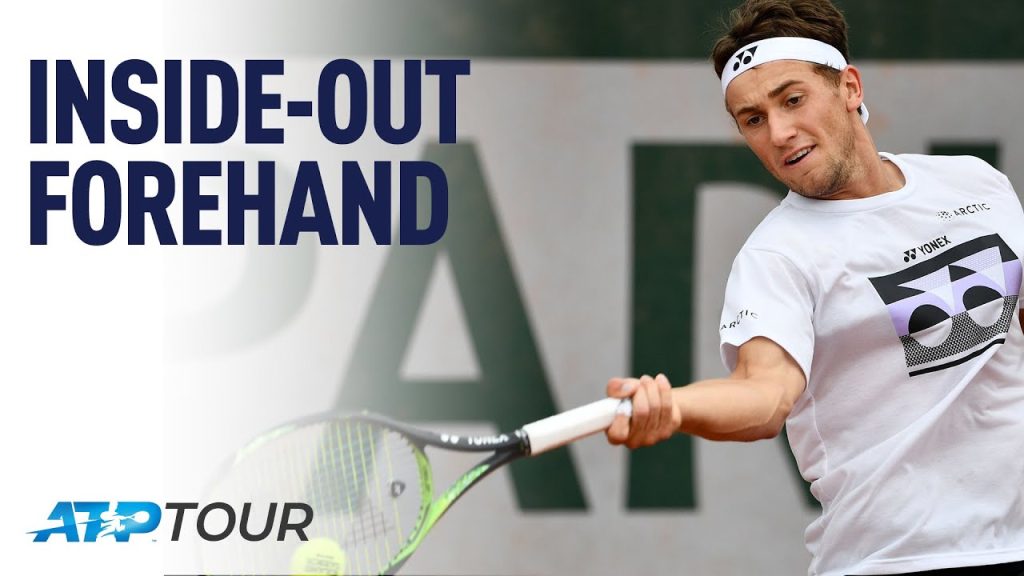
When Casper Ruud stepped onto the stadium court in Shanghai, global tennis observers immediately focused on the Norwegian contender’s physical condition and tactical resilience. The sudden surge in search volume across sports desks and analytical feeds reflects more than casual curiosity. It marks a critical juncture in the calendar where physical durability collides with late-season ranking calculations, drawing widespread attention from fans, analysts, and market forecasters alike.
The current spotlight surrounds Ruud’s third-round engagement at the Rolex Shanghai Masters, where he meets nineteen-year-old American prospect Learner Tien. For a player who has reached three Grand Slam finals and maintained an elite presence near the summit of the men’s game, an ATP Masters 1000 third-round fixture would ordinarily be standard business. Yet coming off a jarring late-summer setback in New York and facing an unpredictable young opponent, the encounter has transformed into a high-leverage evaluation of his recovery and form.
The High Stakes Shanghai Showdown Against Learner Tien
The Rolex Shanghai Masters occupies an uncompromising position on the international tennis calendar. Played on demanding outdoor hard courts, the tournament demands relentless lateral baseline coverage and rapid kinetic recovery. As documented by Tennis.com, the third-round clash pairing American upstart Learner Tien against Casper Ruud elevated the stakes for both competitors, offering broadcast coverage and live metric tracking to an international audience eager to evaluate their contrast in styles.
Coverage from Tennis Majors underscored the magnitude of this third-round encounter within the main draw bracket. Tien, an agile southpaw known for his flat ball-striking, compact counterpunching, and deceptive court craft, represents precisely the profile that tests an established baseliner. While Ruud relies on an explosive heavy-topspin forehand and deep physical endurance to wear down opponents across protracted exchanges, fast Asian hard courts reward quick-strike aggression and flat changes of direction.
Beyond traditional match previews, modern spectator interest has taken on an analytical edge. Market platforms like Robinhood introduced active prediction contracts tracking individual set winners for the fixture, reflecting how digital audiences now analyze micro-outcomes within individual frames. When every service game is parsed by real-time prediction models, the pressure on an established top-tier seed intensifies under the global microscope.
The Lingering Shadow of the US Open Withdrawal
To understand why this Shanghai campaign carries immense gravity, one must look back to the final Grand Slam tournament of the season. As reported by ESPN, Casper Ruud withdrew from the US Open in New York just before his scheduled start due to a persistent back injury. That withdrawal sent ripples through the tennis landscape, depriving the tournament of its 2022 men’s singles finalist.
Back injuries in professional tennis are notoriously treacherous. The modern kinetic chain depends heavily on lumbar flexion and thoracic rotation to generate service power, baseline topspin, and explosive lateral deceleration. For a player whose baseline game thrives on violent heavy topspin mechanics, any restriction in the lower back compromises both serving output and reactive footwork. Missing a major championship where he had previously reached the final was an agonizing reality, highlighting the delicate margins professional athletes navigate during an unrelenting eleven-month season.
Rebuilding court fitness after spinal or muscular distress requires deliberate physical pacing and flawless neuromuscular mechanics. Conditioning coaches often point to structural cadence and movement economy as fundamental safeguards against re-injury. The biomechanical discipline required to maintain endurance without overloading vulnerable tissue mirrors the principles outlined in Distance Running Cadence and 4 Proven Rules That Build Extraordinary Endurance, where sustainable rhythmic output protects the kinetic chain under intense cardiovascular duress.
3 Strategic Crossroads Defining the Season for the Norwegian Contender
Navigating late-season competition requires a multidimensional strategy. For an athlete fighting to defend elite status, three distinct challenges dictate how the coming weeks will unfold on court.
1 Calibrating Kinetic Health and Back Recovery
The foremost hurdle remains anatomical durability. Hard courts offer zero forgiveness to an athlete managing back issues. Every abrupt slide, serve torsion, and low defensive dig sends shockwaves upward through the knees and spine. In Shanghai, observing how deep into the court Ruud can sit and how freely he drives through his service motion provides immediate diagnostic data on his physical rehabilitation. If his trunk rotation remains unrestricted, his baseline depth naturally pushes opponents behind the baseline.
2 Countering Rising Challengers in Masters 1000 Formats
The second challenge is tactical adaptation against fearless next-generation talent. Players like Learner Tien arrive on court with tactical freedom, possessing nothing to lose and everything to gain against an established world star. Countering an aggressive left-handed opponent requires sharp directional discipline, particularly redirecting the ball into the open court without coughing up short balls. Ruud must dictate baseline tempo rather than allowing youthful aggression to dictate court position.
3 Rebuilding Clay Court Momentum Toward the Rio Open
Even as the hard-court swing reaches its peak, strategic scheduling for future swings is already locked in place. Tournament officials at the Rio Open confirmed that Casper Ruud will return to Rio de Janeiro for its upcoming 13th edition, ensuring that the Norwegian world top-twenty stalwart will anchor their prestigious ATP 500 clay-court field. This forward-looking commitment demonstrates a balanced calendar approach, securing proven strongholds on red clay while fighting for hard-court ranking points in Asia.
Navigating Market Pressures and Tour Expectations
The intense spotlight on this Shanghai third-round tie also highlights a dramatic shift in how sports fans interact with professional tennis. Prediction platforms such as Robinhood offering binary derivative contracts have introduced a new layer of real-time scrutiny to tour matches. Instead of simply tuning in to discover who advances, market participants monitor subtle momentum shifts, pricing contracts on whether Casper Ruud or Tien would capture specific intermediate frames like Set 2.
This heightened analytical scrutiny places every tactical decision under immediate dissection. When an elite player drops a service game or adjusts their return positioning, market swings reflect real-time public sentiment. For tour veterans, tuning out external noise has always been an essential survival skill. However, modern tour life requires handling not only physical discomfort and court conditions, but also the pervasive buzz of global betting and speculative exchanges that follow every point.
The Broader Implications for Global Tennis Leadership
As the ATP Tour approaches its annual finish line, points accrued at Masters 1000 tournaments carry immense weight in determining end-of-year standings and qualification scenarios. Every victory logged against dangerous prospects cements a player’s footing against a relentless chasing pack. Conversely, unexpected early exits can compress ranking margins and compromise tournament seedings heading into the new season.
Maintaining world top-twenty status requires Casper Ruud to navigate both physical fragility and relentless opposition with equal measures of composure and tactical resolve. His performance in Shanghai reveals an elite athlete actively rebuilding momentum, demonstrating that resilience on the professional tour is forged not in effortless victories, but in the gritty determination to overcome physical setbacks and reassert authority on the world stage.