Dry Brining Meat and 4 Proven Secrets for Unbeatable Flavor
Ditching watery baths for a simple dry salt cure fundamentally rewrites the rules of home cooking. Discover the molecular mechanics that lock in moisture and produce impossibly crisp skin every time.
Mastering dry brining meat transforms tough, moisture-depleted roasts into supremely tender culinary centerpieces through the elegant physics of osmotic pressure and protein denaturing. For decades, home cooks and professional chefs wrestled with rubbery poultry skin, gray pan-seared steaks, and bone-dry pork loins. The standard advice was to soak proteins in enormous buckets of salty water spiced with herbs and peppercorns. Yet that messy, cumbersome ritual frequently yielded diluted flavor profiles and soggy surfaces that refused to brown.
Dry brining flips that dynamic on its head. By applying coarse crystalline salt directly to the raw exterior of the cut and letting time do the heavy lifting, you unlock a cascade of microscopic biochemical events. The process preserves the concentrated essence of the protein while engineering a microscopic environment built for tenderness, juiciness, and blistering sear performance.
The Molecular Journey of Osmosis and Protein Denaturation
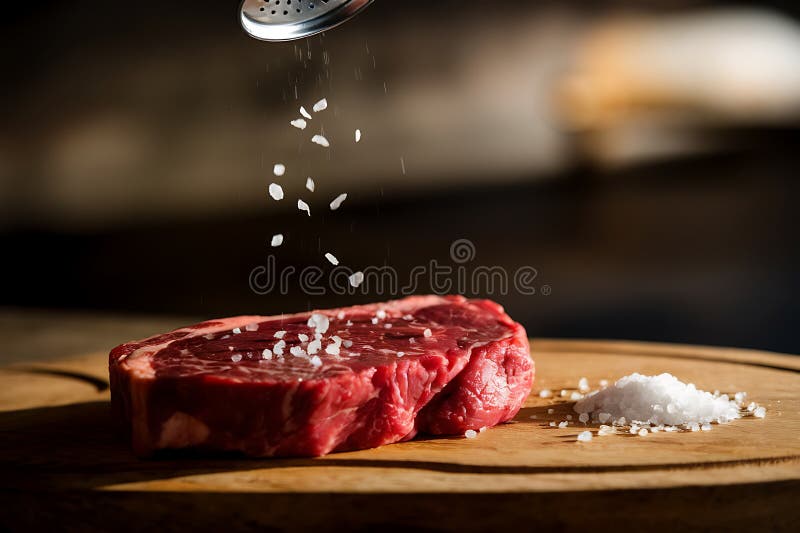
The transformation begins the second solid sodium chloride touches animal tissue. Salt is intensely hygroscopic, meaning it attracts ambient water molecules with magnetic vigor. Within fifteen minutes, the salt pulls cellular moisture outward through the semi-permeable cell walls via basic osmosis. Your cut suddenly looks wet and glistening, covered in an ultra-concentrated layer of surface brine. Many beginners panic at this stage, assuming the salt is draining the meat of its vital juices. That fear misunderstands the temporal rhythm of the technique.
Given sufficient time, the chemical gradient forces that concentrated mineral slurry to reverse direction through cellular diffusion. As the dissolved sodium and chloride ions travel back into the deep muscle tissue, they alter the physical structure of actin and myosin filaments. According to fundamental Exploratorium culinary science research on meat proteins, dissolved salt ions loosen the tightly wound protein bundles, causing them to relax and unwind.
Once these protein fibers denature, their matrix expands like a microscopic sponge. Instead of wringing out moisture as the muscle fibers tighten under hot skillet heat or oven radiation, the relaxed proteins trap water droplets between their rearranged chains. The result is a cut that retains up to forty percent more internal liquid during the cooking cycle compared to an untreated control.
Why Traditional Wet Brining Waterlogs Cellular Architecture
When evaluating dry brining meat against the legacy tradition of submerging poultry in buckets of salty water, the chemistry reveals a stark divergence. Wet brines do add weight to a bird or roast, but that added mass is almost entirely flavorless tap water. The liquid sits trapped loosely in extracellular voids rather than bound within the protein matrix itself.
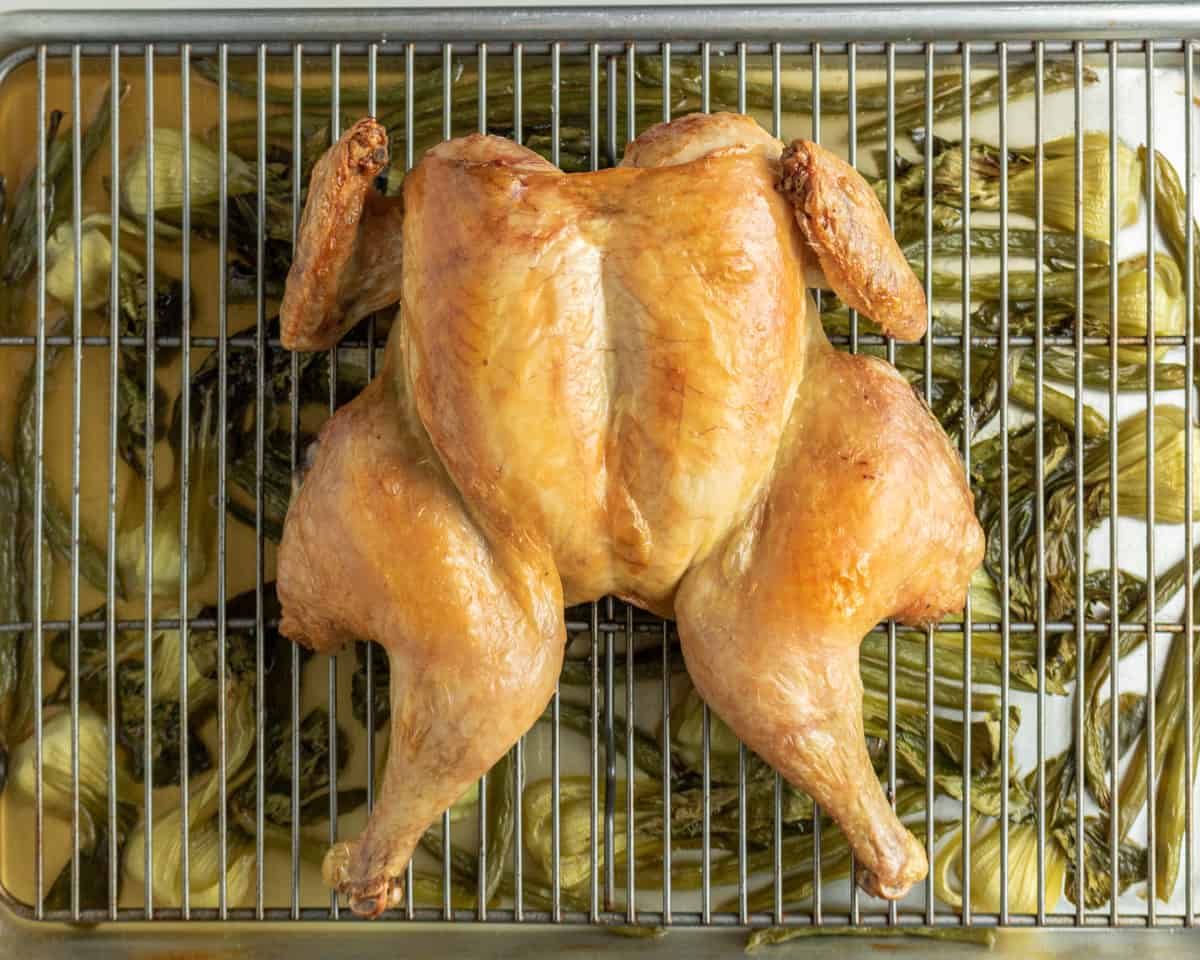
When that waterlogged bird meets the dry heat of an oven, disaster strikes. As the temperature climbs past the boiling point, that trapped extracellular reservoir rushes to the exterior as steam. Water requires an enormous amount of thermal energy to vaporize—roughly 2,260 kilojoules per kilogram. So long as liquid water is escaping from the surface, the skin temperature cannot rise above the boiling threshold. The skin stews in its own exhaust, turning flabby and pale instead of achieving the deeply blistered, golden-brown crackle characteristic of the Maillard reaction.
Four Proven Secrets for Mastering the Salt Cure
Executing dry brining meat with repeatable excellence requires understanding four fundamental mechanics that separate mediocre cooking from world-class execution.
Choosing the Correct Grain Geometry and Exact Salting Ratios
Not all salts behave identically across an irregular cut of protein. Table salt features tiny, dense cubic crystals that pack tightly together, making it absurdly easy to over-salt your food if measuring by volume. A single tablespoon of fine table salt weighs nearly double the same volume of flaky kosher salt. For consistent results, rely on weight measurements or use a coarse kosher salt with hollow, flattened crystal structures.
The benchmark ratio sits comfortably between one-half to three-quarters of a teaspoon of coarse kosher salt per pound of meat, or roughly one to one-and-a-half percent of the protein’s total mass by weight. These wider flakes cling to vertical surfaces, dissolve gradually without shocking the surface tissue, and distribute their ionic charge uniformly across the exterior landscape.
Harnessing Uncovered Refrigerator Air for Superior Surface Crisping
The magic of the technique occurs during the chilling stage. Never wrap the salted protein in plastic wrap or seal it inside an airtight container. Trapping ambient moisture creates a humid microclimate that saturates the surface tissues, undoing half the benefits of the technique.
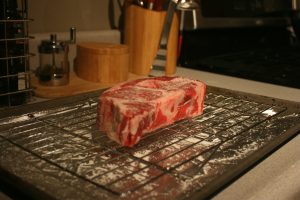
Instead, place your seasoned cut on a stainless steel wire rack set inside a rimmed baking sheet. Slide that assembly onto the lowest, coldest shelf of your refrigerator completely uncovered. Modern residential refrigerators act as efficient dehumidifiers, constantly cycling dry air across their cooling coils. As cold air circulates around the elevated protein, it evaporates lingering exterior liquid, forming a thin, tacky surface barrier known as a pellicle. This ultra-dry exterior ensures immediate Maillard browning the instant the meat hits hot oil or roaring oven heat.
Allowing Structural Equilibrium Before Applying High Thermal Energy
Patience represents the central currency of cellular transformation. A thick ribeye steak requires at least twelve hours on the wire rack to complete the cycle of moisture extraction, salt dissolution, and interior reabsorption. A massive holiday turkey or bone-in pork shoulder demands between twenty-four and forty-eight hours to allow sodium ions to migrate all the way to the skeletal structure.
If you cook the meat too early—say, within the first hour—you expose the cut when all its internal moisture sits trapped on the outside surface. You end up searing a puddle of salty water, scorching your pan, and leaving the interior flesh completely unseasoned. Give the protein the quiet hours it needs to reach complete osmotic equilibrium.
Strategic Timing for Fat Soluble Spices and Dry Rubs
Seasoned cooks approach dry brining meat not as a one-step seasoning ritual, but as a deliberate two-stage biochemical process. Salt is water-soluble and easily permeates deep into muscle tissue. Organic aromatics like black pepper, paprika, garlic powder, and dried rosemary contain complex, fat-soluble flavor molecules that cannot dissolve in water, meaning they cannot travel past the outer cell layers.
Dusting an expensive roast with heavy spices forty-eight hours in advance simply exposes those delicate organic volatile oils to drying air, causing them to oxidize and lose their vibrant punch. Apply your pure salt first to run the cure. Reserve your aromatic spice blends, cracked peppercorns, and herb pastes for the final hour before the protein goes into the heat, lightly brushing the dry skin with a thin film of oil to carry those aromatics across the exterior crust.
Critical Missteps That Undermine Cellular Moisture Retention
The most common failure in home kitchens is applying the technique to meats that industrial processors have already chemically treated. Many commercially packed pork loins, supermarket chickens, and frozen turkeys carry fine-print labels indicating they have been enhanced with solutions of water, salt, and sodium phosphate. Applying an intentional salt cure to these pre-pumped cuts results in an aggressive, unpalatable salt lick with a mushy, spongy interior texture.
Rushing this process mirrors the trap of impatient execution seen across disciplines. Just as sustaining legendary mastery requires methodical strategic shifts—a dynamic illustrated when Lionel Messi inspires global awe with 4 major shifts after emotional Argentina farewell—re-engineering your foundational culinary instincts requires abandoning frantic last-minute marinades in favor of disciplined temporal control.
Another common mistake involves rinsing the meat after the cure finishes. Some cooks instinctively believe they must wash off residual salt before cooking. Rinsing reintroduces surface water right back into the pristine, dehydrated exterior you spent twenty-four hours perfecting. The salt has already dissolved and retreated inside. Never let tap water touch your cured protein.
Building a Reliable Muscle Memory Framework for Every Cut
Incorporating dry brining meat into your everyday culinary workflow starts with simple timing rules keyed to muscle mass. Thin pork chops, boneless chicken breasts, and skirt steaks need only two to four hours of uncovered resting to achieve optimal surface dryness and deep seasoning. Thick bone-in steaks benefit most from eight to twenty-four hours. Large, dense birds and whole primals require thirty-six to forty-eight hours.
The real beauty of dry brining meat lies in its forgiving margin of error. Unlike an aggressive wet brine that turns flesh into mush if left soaking an hour too long, an uncovered dry cure simply continues to dry out the outer skin without degrading internal tissue integrity. It gifts the home cook logistical freedom, letting you prep your roasts days ahead of a dinner party.
Once you embrace dry brining meat as your default preparation, boiled textures and rubbery chicken skin vanish permanently from your table. You gain a deeper appreciation for culinary thermodynamics, turning simple grocery cuts into extraordinary feasts through nothing more than a pinch of coarse salt, cool moving air, and the quiet magic of kitchen patience.