
Running Economy and 4 Proven Principles That Transform Distance Speed
Maximum oxygen uptake gets the headlines, but true distance mastery depends on how thriftily your body spends every breath. Discover the biological levers that turn raw effort into fluid speed.
Understanding and refining your running economy is the definitive difference between surviving the final miles of a race and attacking them with effortless speed. Two runners can stand side by side on a starting line with identical body weights, matching heart rates, and equal maximal oxygen uptake values. Yet thirty miles later, one glides over the pavement while the other shuffles forward in agonizing exhaustion. The disparity rarely stems from grit or willpower. Instead, it reflects how efficiently each human frame converts metabolic energy into forward momentum.
Think of endurance performance as an automotive equation. Maximal aerobic capacity represents the displacement of your engine, dictating the ceiling of energy your system can burn. Economy, by contrast, is your vehicle’s fuel mileage. A muscle-bound engine that drinks fuel at an unsustainable rate will always stall out long before an aerodynamically sleek chassis running on precise mechanics. When you optimize the way your tendons store tension and your cells process oxygen, every step demands fewer calories, less oxygen, and reduced cardiovascular strain.
The Hidden Engine Behind Sustainable Speed
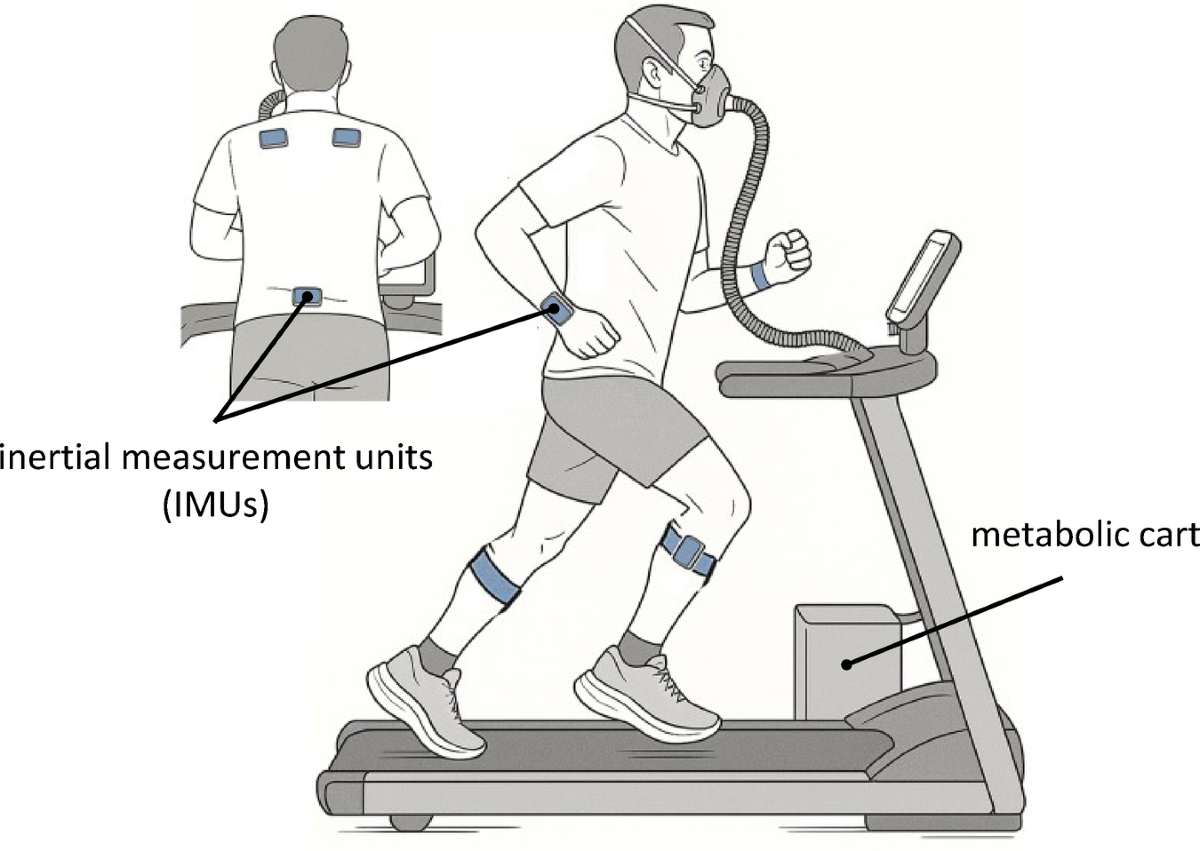
In clinical laboratory testing, evaluating running economy boils down to measuring the volume of oxygen an athlete consumes at a given submaximal velocity. If Runner A requires forty-five milliliters of oxygen per kilogram of body weight to cruise at a six-minute-mile pace, but Runner B consumes fifty-two milliliters at that exact same tempo, Runner A possesses a massive physiological advantage. Runner A operates at a smaller fraction of their absolute biological ceiling, leaving deeper reserves for late surges or brutal headwinds.
This metric explains why pure oxygen uptake capacity often fails to predict race winners among elite distance runners. At competitive levels, most athletes boast exceptionally strong cardiovascular pumps. What separates champions is how thriftily they spend that internal currency. Decades of peer-reviewed research published in the Journal of Applied Physiology confirm that economy varies by up to thirty percent across athletes who share virtually identical aerobic ceilings. That variation represents minutes over a half marathon and hours over an ultramarathon course.
Crucially, this metabolic thrift is neither fixed by genetics nor reserved for world-class competitors. It represents an adaptable mechanical and enzymatic quality. Every runner possesses untapped potential across their structural architecture, connective tissues, and cellular pathways that can drastically reduce the physiological cost of every footstrike.
Why Maximum Aerobic Capacity Is Only Half the Equation
Biomedical discussions in endurance sports have historically fixated on aerobic capacity. Training programs loaded runners with endless anaerobic threshold intervals, chasing higher peak numbers on clinical metabolic carts. Yet pushing your absolute ceiling higher yields diminishing returns once your cardiac output nears its genetic zenith. Shifting attention toward economy unlocks a completely different dimension of athletic potential.
Biomechanists and coaches often observe that running economy hinges far more on mechanical architecture than raw cardiovascular volume. Consider the physics of ground impact. Each time a foot collides with the earth, the human body absorbs forces equal to two to three times its own mass. A runner with sloppy mechanics bleeds that force into joint shear, excessive vertical bounce, and lateral hip sway. They essentially brake against their own momentum with every single stride.
An efficient athlete, conversely, treats the ground as a kinetic launchpad. Their connective tissue acts like a tuned coil, capturing gravitational impact forces and instantly redirecting them into propulsion. This elastic recycling bypasses metabolic cost entirely. Tendons do not burn glycogen to spring back into shape; they obey passive structural mechanics. Learning how to cultivate that recoil changes everything.
Four Proven Principles That Radically Upgrade Running Economy
Targeting a superior running economy requires treating the musculoskeletal system as an elastic spring rather than a fragile machine that simply burns fuel. You cannot dramatically improve metabolic efficiency through mindless junk miles alone. You need deliberate adaptations across tendon stiffness, neuromuscular firing, stride cadences, and cellular machinery.
Tendon Stiffness and the Physics of Free Elastic Recoil
Human distance running evolved around the extraordinary spring-like architecture of the Achilles tendon and the plantar fascia. When your foot strikes the earth, these thick collagen structures stretch under load, storing kinetic strain energy. As your body rolls forward over the midfoot, that stored energy snaps back, propelling your center of mass forward with zero oxygen consumption.
A compliant, overly flexible tendon absorbs force like wet foam, forcing your calf and hamstring muscles to contract actively just to keep you upright. A stiff, resilient tendon operates like a high-tension steel coil, rebounding instantly off hard surfaces. You cultivate this stiffness through low-volume plyometrics, bounding drills, and isometric calf holds. Over time, collagen cross-linking tightens the tendon sheath, maximizing free propulsion on every single stride.
Heavy Resistance Training for Neuromuscular Recruitment
The persistent myth that endurance runners should avoid heavy weights remains one of the most destructive fallacies in sports. High-repetition, lightweight circuit training only builds local muscular fatigue without stimulating meaningful neurological adaptations. Heavy resistance lifting directly sharpens running economy by reducing muscle slack and training the central nervous system to fire motor units with synchronous precision.
When you perform heavy barbell squats, trap-bar deadlifts, or weighted step-ups at eighty-five percent of your single-rep maximum, you teach your brain to recruit high-threshold motor units rapidly. This neuromuscular adaptation shortens your ground contact time. Because your nervous system coordinates muscle activation faster, your lower limbs form a rigid pillar upon footstrike, completely preventing the energy leaks caused by collapsing knees or sinking hips.
Cadence Adjustments to Eliminate Destructive Braking Forces
Overstriding remains the most common mechanical error in recreational running. Landing with your heel far out in front of your center of mass creates an instantaneous deceleration vector. Your quadriceps must fire eccentrically to stop you from collapsing, burning massive amounts of metabolic energy merely to halt your forward velocity before you can push off again.
Shortening your stride length and elevating your step rate toward an optimal cadence pulls your foot landing back beneath your hips. This shifts the landing force from a jarring brake into an immediate pivot. While the ideal cadence varies based on limb length and running speed, most athletes who bump their turnover by five to eight percent experience an immediate drop in vertical oscillation. Every millimeter of energy you avoid wasting in vertical bounce is energy preserved for pure horizontal travel.
Aerobic Volume and Mitochondrial Density in Slow Twitch Fibers
While mechanical stiffness handles energy recycling, cellular machinery dictates how cleanly your muscles process fuel when work must be done. Truly economical runners possess dense networks of mitochondria within their slow-twitch muscle fibers. These microscopic cellular furnaces convert oxygen and fatty acids into adenosine triphosphate with minimal metabolic waste.
Building this dense mitochondrial landscape requires patience and low-intensity volume. Long, strictly conversational runs stimulate the gene expression responsible for mitochondrial biogenesis and capillary beds surrounding working muscle fibers. Richer capillary beds mean oxygen diffuses into muscle tissue faster and with less resistance, reducing the cardiovascular workload needed to sustain cruising speeds over multi-hour efforts.
Metabolic Efficiency and the Truth About Athletic Fatigue
Endurance athletes pursuing an elite running economy frequently overlook the crucial relationship between fuel partitioning and fatigue. At submaximal paces, your body relies on a delicate balance between burning glycogen and oxidizing fats. Glycogen stores are finite, holding roughly two thousand calories of energy before hitting catastrophic depletion. Fat reserves, even on the leanest athlete, represent tens of thousands of readily available calories.
When your mechanics are inefficient, the heightened physical effort drives your heart rate up and pushes your muscular system toward rapid carbohydrate consumption. This accelerates cellular fatigue and triggers premature exhaustion. Athletes frequently misunderstand the biochemical signals that accompany this shift, falling victim to outdated dogmas regarding muscular burning. In reality, modern exercise science has completely dismantled old assumptions about metabolic waste; as detailed in our analysis of how Lactic Acid Causes Muscle Soreness and 4 Costly Myths Ruining Athlete Recovery, lactate is a valuable intracellular fuel rather than a damaging poison.
True economic mastery ensures that your muscles recycle intermediate metabolites smoothly through the mitochondrial matrix. By training your body to operate smoothly below your threshold, you preserve precious glycogen stores for the inevitable tactical surges, steep hills, or blistering finishing sprints where raw output matters most.
Building a Sustainable Framework for Lifelong Running Efficiency
Sustained improvements in running economy emerge not from isolated weeks of intense track intervals, but from the cumulative structural adaptations built over seasons. Tendons remodel far slower than muscle tissue, requiring months of consistent, progressive load to increase collagen density safely without triggering overuse inflammation.
Begin by integrating short, explosive hill sprints once or twice per week into your training regimen. Sprinting up an eight-percent gradient at maximum effort for eight to ten seconds forces your neuromuscular system into complete recruitment without subjecting your lower legs to severe impact forces. Pair these sessions with heavy, compound lifts in the gym, focusing on movement quality and explosive intent rather than exhaustion.
Audit your biomechanics through slow-motion video rather than guesswork. Look at your posture, the angle of your shin upon impact, and the stability of your pelvis. Eliminating excessive upper-body tension, relaxing your shoulders, and stabilizing your core reduces extraneous energy expenditures that accumulate over tens of thousands of repetitive steps.
Speed is not simply a byproduct of how hard you can force your lungs to pant or your heart to beat. It is an art of conservation, structural spring dynamics, and cellular elegance. When you respect the physics of the stride and construct a body that refuses to waste energy, distance stops being an obstacle and becomes an arena of effortless power.