Dry Brining Meat and 4 Proven Secrets That Build Extraordinary Flavor
Ditching wet marinades for salt and cold air unlocks steakhouse-quality sear and tenderness at home. Discover the molecular physics that turn simple kitchen salt into culinary magic.
Mastering the practical science of dry brining meat is the single most transformative upgrade any home cook can make to their kitchen repertoire. For generations, conventional wisdom urged cooks to salt their cuts immediately before dropping them into a screaming hot skillet. The result was almost always an uneven gray band of overcooked flesh surrounding a tepid, under-seasoned center, accompanied by furious splattering as trapped moisture boiled off into the pan. Understanding how sodium chloride interacts with cellular proteins shatters these old kitchen habits. Instead of relying on guesswork, salting raw proteins hours or even days ahead transforms both the exterior crust and interior tenderness through predictable physical chemistry.
The Hidden Molecular Magic Behind Salt and Muscle Fibers
Raw animal muscle is composed of roughly seventy-five percent water trapped inside a dense mesh of protein filaments, primarily actin and myosin. When exploring the biochemical dynamics of dry brining meat, one discovers that salt operates not merely as a seasoning, but as an active structural architect. When sodium chloride crystals land on the surface of raw tissue, they do not simply sit there. Salt is hygroscopic, meaning it naturally attracts water molecules from the surrounding environment. Within minutes, the ambient moisture on the cut draws out a modest amount of internal water through osmosis, dissolving the salt into a concentrated surface brine.
Here is where amateur cooks panic. Seeing liquid pool across the surface of a prized prime ribeye often prompts an instinct to wipe it dry with paper towels. Doing so discards the very vehicle of flavor. If given adequate time, a remarkable reversal occurs. Through natural diffusion, that concentrated brine migrates back across the cellular gradient into the protein interior. As sodium and chloride ions penetrate the muscle matrix, they disrupt the tightly bound electrical charges holding the filament chains together. The proteins denature slightly, unwinding and loosening their rigid alignment. In this relaxed configuration, the muscle fibers trap water far more tenaciously during cooking, preventing excessive moisture loss when thermal contraction occurs. As outlined in the Michigan State University Extension research on brining chemistry, this ionic alteration fundamentally alters protein gel formation, resulting in cuts that retain up to forty percent more intracellular fluid after cooking.
Why Traditional Wet Marinades Frequently Ruin Expensive Cuts
The enduring culinary myth that submerging steaks in flavored liquids yields superior tenderness has ruined countless high-end dinners. Liquid brines certainly have their place in lean, neutral meats like holiday turkeys or pork chops, where massive structural hydration compensates for inherently low fat reserves. However, submersing dense, marbled red meat in water, soy sauce, and acidic marinades causes significant structural drawbacks. Wet marinades flood the outer tissue with excess liquid, creating the exact opposite effect of dry brining meat, which prioritizes structural moisture retention beneath a bone-dry exterior.
Water possesses an immense latent heat of vaporization. When wet meat touches a hot pan, thermal energy does not immediately sear the meat; instead, it goes entirely toward boiling off the standing surface water at one hundred degrees Celsius. Because true browning requires temperatures well past one hundred and fifty degrees, your steak effectively steams in its own juices during those critical first minutes. By the time the moisture finally evaporates and browning commences, the gray overcooked zone beneath the crust has expanded deep toward the core. Furthermore, heavy acidic marinades break down surface collagen into mush, producing an unpleasant spongy outer layer rather than a crisp, savory sear.
Four Proven Principles That Elevate Every Roast and Steak
Approaching dinner with scientific intentionality means recognizing that dry brining meat requires respect for thermodynamic and biological thresholds. You are managing two parallel systems: deep internal seasoning through diffusion and deliberate exterior dehydration via ambient airflow. Achieving mastery demands adhering to four uncompromised physical principles that guide how proteins behave under refrigeration.
Muscle Density Dictates the Optimal Salting Window
Time is the primary variable that cannot be rushed. A thin half-inch pork cutlet reaches full internal osmotic equilibrium within two to three hours, whereas a four-bone standing rib roast requires up to seventy-two hours for sodium ions to travel into its core. As a baseline guideline, calculate roughly twenty-four hours of resting time per inch of protein thickness. If you rush the window and apply heat after only thirty minutes, the extracted liquid remains stranded on the surface, leaving you with the worst possible outcome: diluted internal flavor and a sopping wet exterior. Giving the meat sufficient sanctuary allows the sodium ions to travel roughly two to three millimeters inward every twelve hours, ensuring uniform taste throughout every bite.
Coarse Crystal Geometry Regulates Surface Dissolution
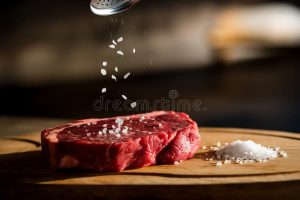
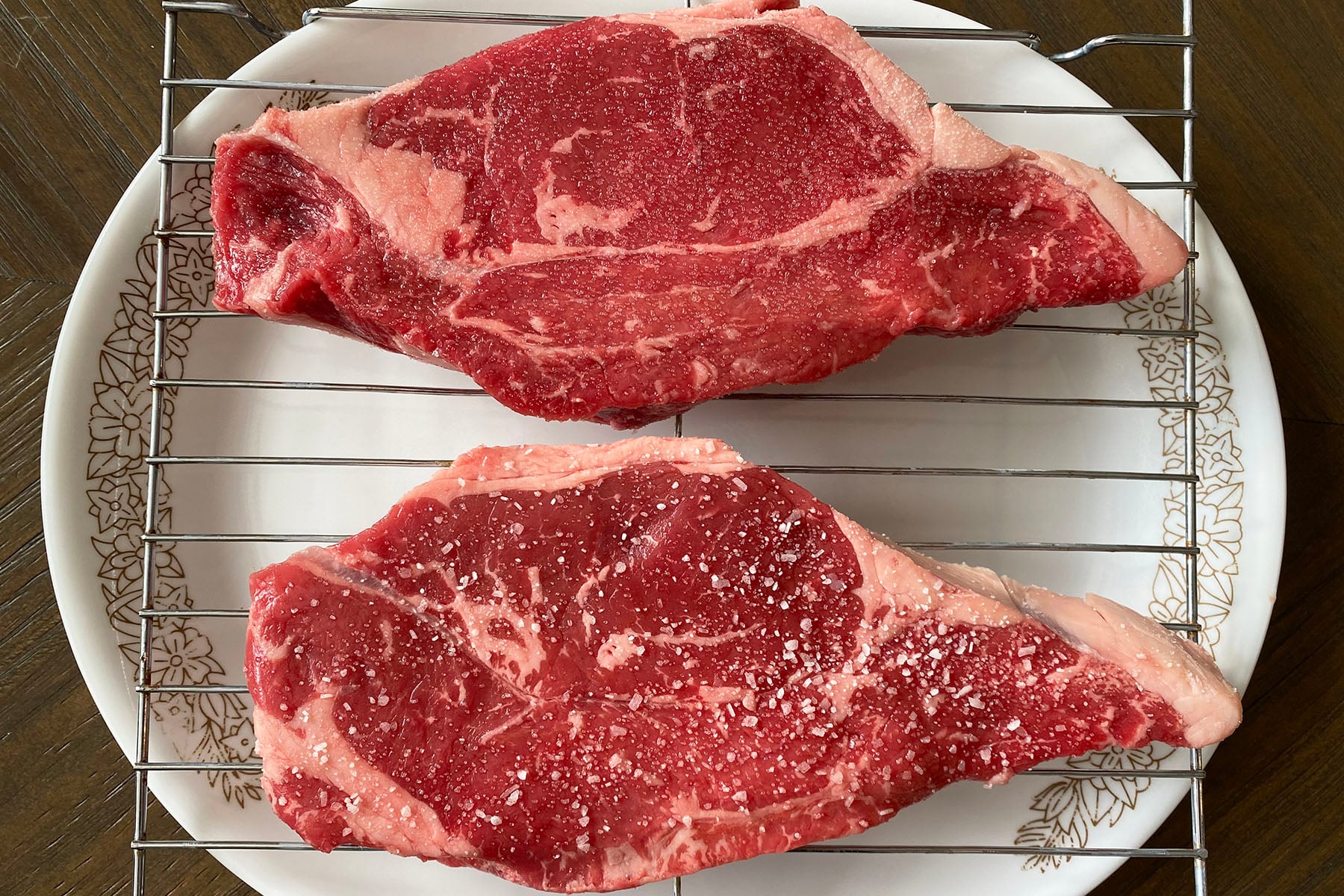
The physical shape of your salt crystals determines how evenly moisture draws out and redissolves. Fine table salt is a disastrous choice for this procedure because its microscopic cubic granules dissolve too rapidly, dumping an overwhelming burst of sodium on the exterior before controlled osmotic balance can form. Coarse kosher salt, with its hollow, flaked crystals, adheres gently to rough protein contours without melting prematurely. Because coarse crystals occupy greater volume with lower mass per tablespoon, they provide a forgiving safety margin against over-salting. Target approximately three-quarters of a teaspoon to one full teaspoon of kosher salt per pound of bone-in meat, distributing the flakes evenly from an elevated height of twelve inches to achieve an uninterrupted snow-dusted distribution.
Elevated Wire Racks Facilitate Complete Surface Dehydration
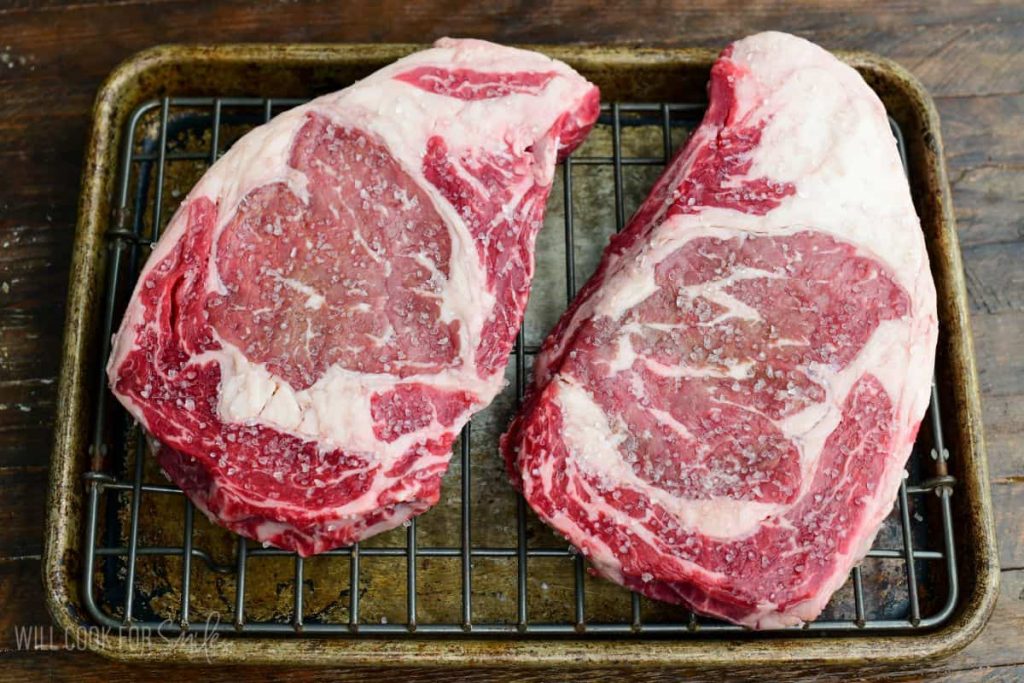
Air circulation is the unsung engine of superior texture. Resting raw proteins directly on flat ceramic plates or cutting boards traps moisture underneath, creating an anaerobic, soggy puddle that suffocates the bottom side. Always position your cuts atop a sturdy stainless wire cooling rack set inside a rimmed baking sheet. This configuration allows chilled air to circulate freely beneath, around, and over the cut. As water vapor is continuously swept away by the refrigerator fan, the outer dermal cells dehydrate to form a paper-thin, glossy surface skin known as a pellicle. This evaporation is a crowning achievement in dry brining meat, transforming damp meat surfaces into parchment-like canvases primed for blistering heat.
Thermal Equilibrium Enhances the Final Maillard Reaction
Taking a dry-brined cut directly from a chilly three-degree Celsius refrigerator and throwing it into a smoking cast iron pan causes a sharp thermal shock. Cold meat dramatically drops the surface temperature of the cookware, delaying browning and encouraging heat to travel inward before the outer crust can form. Allowing smaller steaks to rest on the counter for twenty to thirty minutes before cooking moderates the temperature gradient. The completely dry pellicle created during cold storage remains pristine, meaning every calorie of thermal energy from the pan instantly ignites the Maillard reaction without being wasted on moisture vaporization.
Navigating Safe Refrigeration and Avoiding Common Kitchen Pitfalls
Food safety and hygiene are paramount when managing uncovered raw proteins in a domestic refrigerator. A recurring miscalculation during dry brining meat involves premature cooking or wrapping the protein in tight plastic film. Wrapping meat in film traps rising humidity, completely neutralizing the dehydration phase and turning the pellicle into a slick, damp surface. Leave the protein completely uncovered on the bottom shelf of your refrigerator, away from ready-to-eat produce, dairy, or cooked foods to eliminate any risk of cross-contamination.
Ensure your refrigerator operates consistently below four degrees Celsius to halt bacterial proliferation while the brine does its work. Much like how complex rule sets in modern simulations evolve unpredictably—an idea explored when analyzing how AI Games Unleash Major Chaos Across 5 Critical Frontiers—culinary science demonstrates that simple starting inputs trigger remarkably intricate cascading effects across cellular structures. If you leave poultry or pork uncovered for longer than forty-eight hours, the exterior can over-dry into tough leather; balance is key. A whole chicken thrives between twelve and twenty-four hours, yielding shatteringly crisp glass-like skin, whereas robust beef roasts comfortably withstand forty-eight to seventy-two hours without losing structural integrity.
Transforming Your Everyday Kitchen Craft Into Masterful Cookery
Moving away from last-minute cooking habits toward deliberate kitchen preparation reshapes your relationship with food. Once you internalize how salt, cold air, and time cooperate at a microscopic level, complex and expensive marinades lose their artificial luster. You no longer need heavy spice pastes or chemical tenderizers to mask moisture loss or patch over uneven seasoning.
Ultimately, the quiet elegance of dry brining meat rests upon patience and fundamental chemistry rather than complicated gear. An inexpensive wire rack, a box of coarse kosher salt, and a day of refrigerated rest will reliably outperform any high-end gadget or complicated gadgetry. When that deeply seasoned, golden-brown crust finally cracks open under your carving knife to reveal glistening, ruby-red interior juices, the triumph belongs entirely to an unhurried dance of physics that never fails to deliver.