Emulsifying Pan Sauces and 4 Costly Errors That Destroy Silky Texture
A velvety skillet sauce relies on colloidal physics rather than culinary luck. Discover the science of emulsification and the four common missteps that cause restaurant-style pan sauces to break.
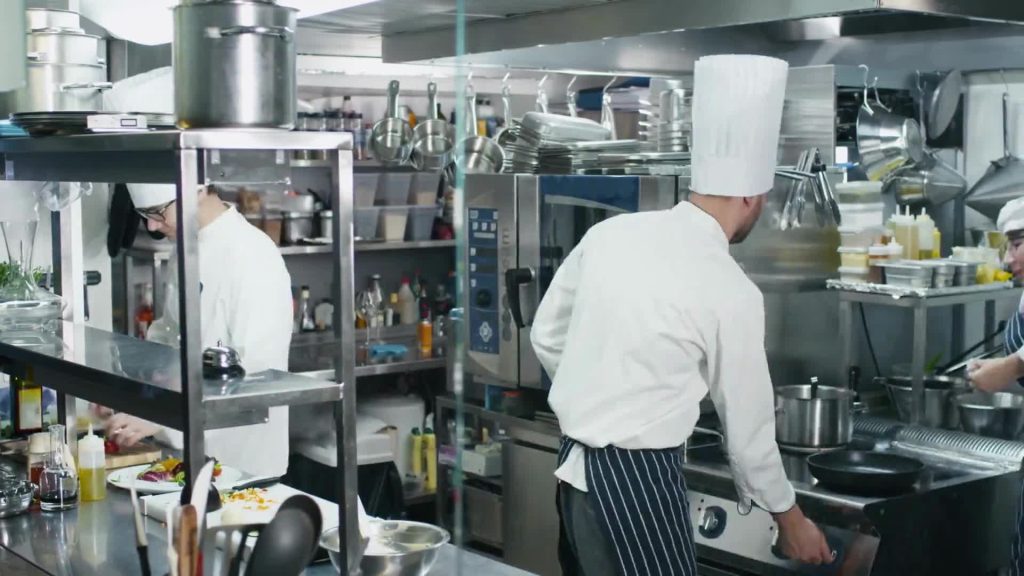
Mastering the delicate discipline of emulsifying pan sauces separates hurried home cooking from the sublime alchemy of professional kitchens. You pull a golden, seared protein from a smoking skillet, look down at the caramelized brown debris welded to the steel, and envision a glossy, spoon-coating reduction worthy of a Parisian bistro. Yet all too often, the liquid in the pan separates into an unappetizing puddle of colored water surrounded by an oily, shimmering ring of melted grease. What was supposed to be luxurious velvet turns into greasy soup.
That heartbreaking failure is rarely an issue of seasoning or culinary talent. It is almost always a failure of applied physics. A pan sauce is not a stew or a simple reduction. It is a temporary colloidal suspension, a fragile mechanical marriage where billions of microscopic fat droplets are trapped evenly throughout an aqueous liquid. When you understand the underlying molecular forces governing this balance, your everyday skillet dinners undergo a radical transformation.
The Hidden Physics Behind a Flawless Skillet Glaze
When emulsifying pan sauces, you are actively defying basic thermodynamics by forcing stubborn lipids into a microscopic water suspension. Oil and water are sworn enemies on a molecular level. Water molecules are polar and cling tightly to one another through strong hydrogen bonds. Lipids, composed of nonpolar triglyceride chains, cannot participate in this electrostatic embrace. Left to their own devices, fat molecules inevitably coalesce, float to the top because of lower density, and form a continuous slick.
To overcome this natural thermodynamic separation, a cook must introduce three fundamental components: thermal moderation, mechanical shear, and surfactant molecules. Surfactants are microscopic mediators equipped with a split personality. One end of the molecule is hydrophilic, seeking out water, while the other end is lipophilic, anchoring itself firmly inside fat droplets. When these compounds wrap around dispersed fat particles, they create an electrostatic barrier that prevents the droplets from bumping into each other and fusing back together.
In classical cooking, these miraculous mediators come primarily from hydrolyzed collagen, known as gelatin, as well as milk proteins such as casein found in whole butter. Without enough surfactants and adequate mechanical agitation, the energy required to maintain tiny fat droplets suspended in liquid proves unsustainable. The system collapses, yielding the dreaded broken sauce that coats the tongue with greasy residue instead of clean, concentrated flavor.
Why Home Kitchens Struggle While French Pantries Thrive
Professional kitchens rarely rely on magic to produce mirror-like pan finishes. They rely on prep foundations that make emulsion virtually idiot-proof. The typical restaurant stockpot simmers for twelve to twenty-four hours, loaded with roasted marrow bones, trotters, and collagen-rich connective tissue. As heat breaks down this collagen through sustained hydrolysis, the liquid becomes saturated with natural gelatin. When a line cook ladles an ounce of this concentrated stock into a skillet, they are adding a massive reservoir of natural emulsifiers and viscosity builders.
In contrast, the home cook frequently deglazes a skillet using commercial boxed broth or water mixed with bouillon paste. Commercial broths are largely composed of water, sodium, yeast extract, and artificial flavorings, containing virtually zero hydrolyzed gelatin. Without that critical structural scaffolding, the home cook is operating without a safety net. The liquid remains as thin as water, possessing neither the viscosity to slow down droplet movement nor the surface-active proteins needed to shield fat molecules from collision.
Four Costly Traps That Break Pan Sauces Instantly
Understanding the underlying mechanics makes it much easier to avoid the specific errors that turn emulsifying pan sauces into oily disasters. Even with great ingredients, execution errors at the stove will rapidly destabilize your emulsion.
Dumping Cold Butter All at Once Into a Boiling Pan
The most common impulse when finishing a pan reduction is taking a generous knob of butter directly from the refrigerator and dropping the entire slab into a skillet that is still actively bubbling over high heat. This creates catastrophic thermal shock. Butter is already a delicate emulsion consisting of roughly 80 percent milkfat, 16 to 18 percent water, and a tiny percentage of milk solids. When an entire cold block hits extreme heat, the fat liquefies instantaneously before the milk solids have a chance to disperse into the surrounding reduction.
The result is a rapid release of pure liquid butterfat that overwhelms the small volume of deglazing liquid. Instead of integrating, the melted fat floods the surface. Professional cooks always cut cold butter into small, uniform dice and incorporate them piece by piece. Introducing small cubes ensures that the fat melts gradually, releasing its internal water and natural milk solids incrementally so the developing emulsion can absorb the incoming lipid volume without choking.
Neglecting Natural Gelatin and Surface Active Molecules
If your cooking liquid lacks inherent gelatin, expecting a clean emulsion from butter and wine alone is a treacherous gamble. Much like the herd behavior unpacked in our analysis of Pack Journalism and 4 Hidden Pressures That Corrupt Objective News, home cooks frequently follow crowd-sourced social media recipes without scrutinizing the underlying physics. A viral video might instruct you to deglaze with white wine, reduce until dry, and whisk in butter, omitting the crucial reality that the creator was using an unctuous, collagen-heavy demi-glace off-camera.
If you must use supermarket boxed chicken stock or plain water, you have to compensate for the missing physics. The simplest secret weapon is unflavored powdered gelatin. Blooming half a teaspoon of powdered gelatin into your boxed stock ten minutes before cooking completely alters the liquid’s surface tension. When that stock reduces in your pan, it behaves identically to a twelve-hour veal reduction, wrapping fat droplets in protective protein coats and delivering an astonishing gloss.
Failing to Regulate Skillet Heat Below the Boiling Point
Heat is both the builder and the executioner of culinary emulsions. While high heat is essential for boiling down wine, scraping the fond, and evaporating excess water during the initial reduction stage, maintaining that fiery temperature during the fat-incorporation stage guarantees failure. Violent bubbling shatters fragile micelle formations, which is why successfully emulsifying pan sauces requires reducing the thermal energy well below 212 degrees Fahrenheit.
When water boils, rapid steam formation creates violent mechanical turbulence that tears the protective protein films surrounding fat droplets apart. Simultaneously, high temperatures cause the protective milk proteins from butter to denature and precipitate out, losing their emulsifying properties entirely. Once you finish reducing your cooking liquid down to a syrupy consistency, take the skillet completely off the active burner for thirty seconds. Let the furious bubbling subside into a gentle, steaming stillness before introducing any finishing fats.
Ignoring the Mechanical Force of Vigorous Whisking
An emulsion cannot form by polite observation. Thermodynamic equilibrium demands that oil and water stay apart unless kinetic energy forces them together. Simply tilting a skillet gently from side to side is rarely sufficient to shear bulk butterfat down into the micrometer-scale spheres required for true colloidal suspension. Without physical shearing force, the fat pools rather than suspends.
You need decisive agitation. Using a small silicone-coated wire whisk or a flexible wooden spatula, you must swirl the liquid in tight, aggressive circular motions the instant the butter contacts the warm pan. This rapid shearing motion stretches bulk fat into elongated strands and snaps them into billions of microscopic droplets. Simultaneously, it distributes the liquid phase evenly over the bottom of the pan, allowing ambient air to assist in cooling the liquid down into the optimal temperature zone for stable suspension.
The Precise Chemistry of Monter au Beurre
The classical French technique known as monter au beurre remains the quintessential foundation for emulsifying pan sauces without heavy starches. Rather than relying on flour-based roux or cornstarch slurries that dull delicate flavors, monter au beurre leverages the inherent physical properties of chilled butter to build body and sheen simultaneously.
Cold butter behaves as a natural temperature regulator. As you whisk cold cubes into warm reduction, the phase change of melting absorbs excess thermal energy from the pan, anchoring the sauce precisely in the sweet spot between 130 and 150 degrees Fahrenheit. If you use room-temperature or clarified butter, this thermal buffer disappears, the fat melts far too quickly, and the delicate suspension breaks. Furthermore, whole butter contains natural phospholipids like lecithin within its milk solids. As documented in the public curricula of the Harvard University Science and Cooking public lectures, biological emulsifiers like phospholipids and unfolded proteins dramatically lower interfacial tension between immiscible phases, allowing home cooks to achieve velvety stability without laboratory equipment.
Practical Rescue Strategies for a Broken Skillet Emulsion
Even when an attempt at emulsifying pan sauces appears completely broken, the underlying physical system can usually be reconstructed in seconds. If you see fat separating into clear grease while the pan base curdles into dark sludge, do not pour it down the sink. The chemical ingredients are still present; they have simply lost their spatial organization.
The first and fastest remedy is water and temperature drop. Pull the pan off the stove immediately. Add a single tablespoon of cool water or drop in a single small ice cube. The sudden temperature reduction halts the denaturing of milk proteins, while the fresh moisture restores the continuous water phase that evaporated away. Whisk furiously across the pan surface. In many cases, the sudden influx of liquid and vigorous shear re-establishes the emulsion instantly, transforming the split mess back into glossy satin.
If the sauce refuses to come together, reach for a secondary surfactant. A half-teaspoon of Dijon mustard contains abundant natural mucilage and plant surfactants that possess extraordinary stabilizing power. Whisking mustard into a separate warm bowl and slowly drizzling your broken pan drippings into it will rebuild the suspension without overpowering the flavor profile of poultry, pork, or beef.
Lifelong Kitchen Habits for Restaurant Caliber Pan Glazes
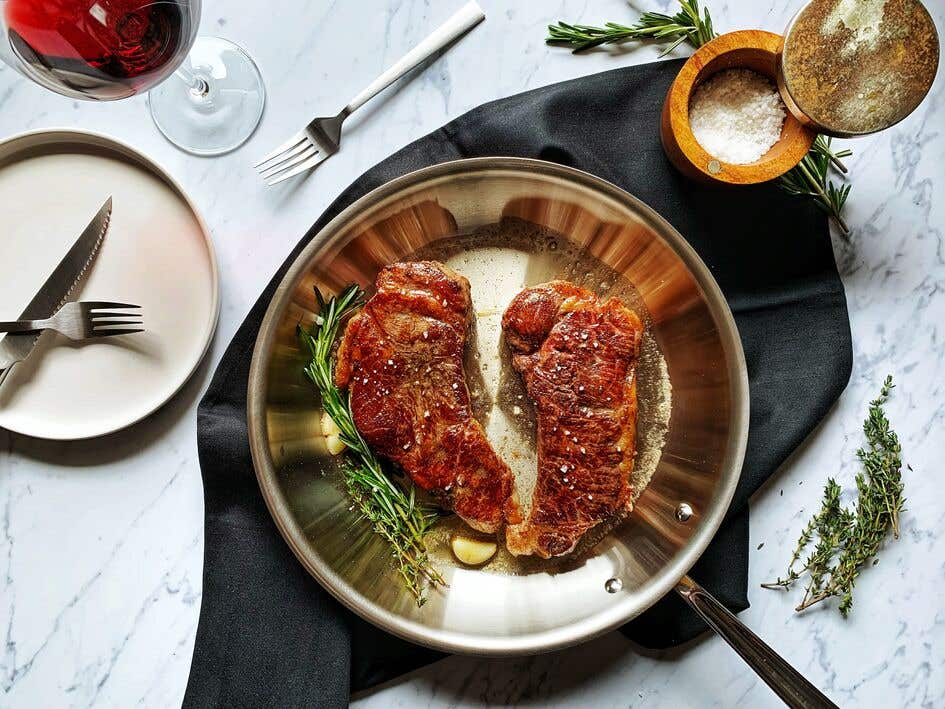
Consistent mastery at the stove comes down to building deliberate sensory habits. When you sear proteins in stainless steel or cast iron, embrace the caramelized fond at the base of the metal as concentrated gold. Pour off excessive rendered frying grease before deglazing, leaving only a thin film to carry fat-soluble aromatics. Add acidic fluids like wine, verjuice, or stock to dissolve the sticky Maillard proteins, and reduce that liquid until your spatula leaves a clear trail across the metal bottom.
From that moment forward, let patience replace haste. Kill the flame, breathe for thirty seconds, and allow the furious skillet heat to subside. Drop in your chilled butter dice, whisk with deliberate mechanical rhythm, and watch the transformation take place before your eyes. By respecting thermodynamic thresholds and mechanical agitation, emulsifying pan sauces becomes an instinctive reflex rather than a stressful gamble. You will never view a dirty sauté pan the same way again.